

The best ingredients for Filipino lechon sauce create a balance of tangy vinegar, brown sugar, and savory liver. One homemade version combines ¾ cup of vinegar and ¾ cup of brown sugar with 1 cup of cooked, mashed chicken livers, 8 cloves of minced garlic, and 1 1/2 cups of water. The result is a thick, savoury-sweet sauce for roasted meat.
That balance gives the sauce its distinctive character, but getting the sweetness, acidity, and texture right can take some care. This guide explains what lechon sauce is, what each ingredient contributes, and how to adjust the flavours while keeping its Filipino character.
Prepare the ingredients, blend them into a smooth sauce, then fine-tune the seasoning. You’ll also learn how a version made with liver spread differs from one made with chicken liver, so you can choose a method that suits your pantry and taste.
Key Takeaways
- Start with the vinegar and sugar balance, then season gradually so the sauce stays tangy and savoury rather than overly sweet or sharp.
- Adjust thickness by changing the liquid or thickening ingredients a little at a time, tasting as you go.
- Blend the cooked ingredients thoroughly, then check for a consistent texture before serving.
- Choose fresh Filipino ingredients and pantry staples that suit your recipe; Shift 2 Fresh offers Filipino Pantry Items and Mobile App Ordering.
Vinegar, sugar, and seasoning proportions
- Measure the sweet-and-sour pairing before cooking. One version uses ¾ cup of vinegar and ¾ cup of brown sugar. Keep these amounts together as a starting recipe, rather than combining them with another version’s quantities. Vinegar brings sharpness, while brown sugar softens it and adds deeper sweetness. These ingredients for Filipino lechon sauce work as a balanced pair.
- Choose one recipe’s vinegar style and proportion. A lechon sarsa version uses ⅔ cup of white vinegar, while a lechon manok version uses 10 to 12 tablespoons. These are separate approaches, not amounts to add together. White vinegar gives direct tang; sugar and seasonings also shape the overall balance.
- Use the matching sugar amount for your chosen version. One sauce uses ⅓ or ¼ cup of brown sugar, while the lechon manok version uses 8 to 10 tablespoons. Treat these as recipe-specific quantities, not one fixed formula. Begin with the listed amount, then taste before making adjustments.
- Boil the vinegar before adding brown sugar and water. This order appears in a lechon sauce method and helps the ingredients combine during cooking. Stir as you add sugar, then let it dissolve into the liquid. Taste the cooked mixture instead of judging the balance from dry ingredients.
- Season with the salt and pepper amounts listed for your recipe. One ingredient list includes ¼ teaspoon of pepper; another uses 1 tablespoon of salt. Those amounts belong to different ingredient sets, so don’t transfer them blindly. When choosing ingredients for Filipino lechon sauce, keep each recipe’s seasoning proportions together.
- Adjust the flavour only after tasting the cooked sauce. If vinegar dominates, add brown sugar gradually; if sweetness feels heavy, let the vinegar’s tang stand out. Stir thoroughly between tastes and note each change. This preserves the recipe’s starting proportions while helping you find a balance suited to your lechon.
Adjusting sauce flavor and consistency
- Taste the cooked sauce before making changes. Notice whether sweetness, acidity, salt, or liver flavour stands out most. Adjust one quality at a time, stirring well before tasting again. This makes it easier to tell which change helped instead of masking one imbalance with another.
- Thin a sauce that feels pasty by adding water gradually. Recipes use different water amounts, including 1 1/2 cups, 2 cups, and 3 cups. Treat these as recipe-specific quantities, not a combined target. Add a small splash, stir, then check whether the sauce coats a spoon without feeling stiff.
- Thicken a loose mixture with breadcrumbs, added in small portions. Recipe amounts vary, with ⅔ cup in one version and ⅓ or ½ cup in another. Simmer breadcrumbs in the sauce mixture for about 2 minutes, then allow them to absorb liquid before deciding whether more is needed.
- Reduce a thin sauce over medium heat, stirring across the bottom of the pan so the liver and breadcrumbs don’t settle or stick. Let excess liquid evaporate gradually. High heat can reduce the sauce unevenly before its texture smooths out, so lower the heat if it starts bubbling vigorously.
- Balance a strong liver flavour with small, measured changes rather than rewriting the recipe. A little water can soften concentrated savouriness, while extra breadcrumbs can give the sauce more body. If it becomes too thick after simmering, loosen it with water instead of automatically adding vinegar or sugar.
- Blend again after adjusting the texture. A blender or food processor can break down remaining liver and breadcrumb pieces for a more even consistency. Pause to scrape down the sides, then blend briefly again. Check the sauce before serving, as a smooth surface can conceal thicker pockets underneath.
- For consistent results, note each change beside the recipe. Record whether you added water, breadcrumbs, or seasoning, and describe the final texture. These notes make it easier to recreate your preferred balance next time without guessing or changing several parts of the sauce at once.
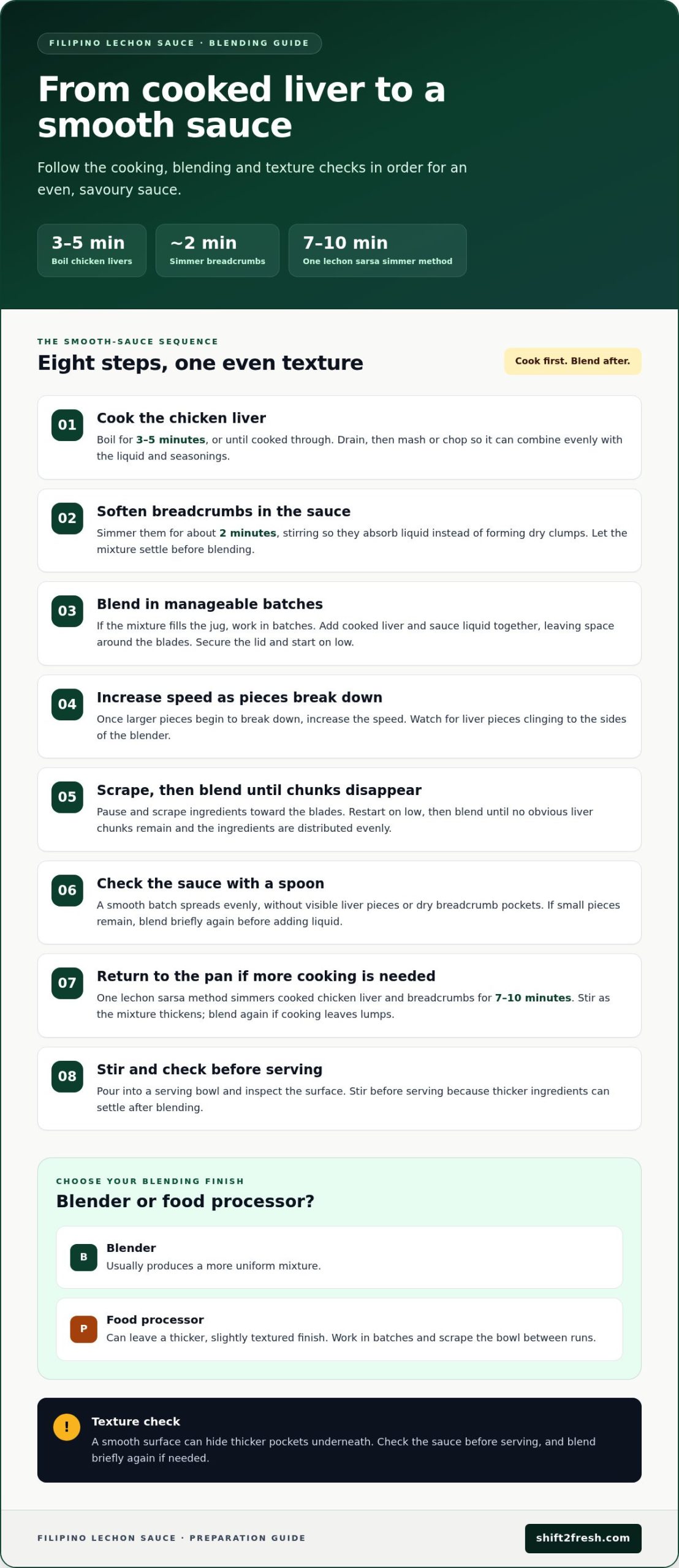
Blending the sauce until smooth
- Cook the liver before blending. Chicken livers can be boiled for 3 to 5 minutes, or until cooked through. Drain them, then mash or chop them. This prepares the liver to combine evenly with the liquid and seasonings.
- Soften breadcrumbs in the sauce mixture before blending. One method simmers them for about 2 minutes. Stir while they cook, so they absorb liquid rather than form dry clumps. Let the mixture settle before transferring it to a blender.
- If the mixture fills the blender jug, work in manageable batches. Add the cooked liver and sauce liquid together, leaving space around the blades. Secure the lid and start at a low setting. Increase the speed once the larger pieces begin to break down.
- Watch the mixture as it blends. If liver pieces cling to the sides, pause and scrape them toward the blades. Restart at a low setting, then blend until no obvious chunks remain. The ingredients for Filipino lechon sauce should be distributed evenly throughout.
- Check the sauce with a spoon. A smooth batch spreads evenly, without visible liver pieces or dry pockets of breadcrumbs. If small pieces remain, blend briefly again. Check the texture before adding liquid, since another short blend may be enough.
- Return the blended sauce to the pan if it needs more cooking. One lechon sarsa method simmers cooked chicken liver and breadcrumbs for 7-10 minutes. Stir as the mixture thickens. If cooking leaves lumps, blend the sauce again before serving.
- Choose a food processor for a thicker, slightly textured finish. A blender usually produces a more uniform mixture, while a processor may leave small pieces. Work in batches and scrape the bowl between runs to help the ingredients for Filipino lechon sauce blend evenly.
- Pour the sauce into a serving bowl and check its surface. Stir before serving, as thicker ingredients can settle after blending. For an especially smooth finish, pass the sauce through a fine sieve and gently press it through with a spoon.
Ingredients for homemade Filipino lechon sauce
Choose a liver-based or liver-free version, then gather the ingredients for that method. The proportions and thickening ingredients shape the sauce’s flavour and texture.
Select ingredients for homemade sauce
Gather 1 cup of cooked, mashed chicken livers, 1 chopped onion, 8 cloves of minced garlic, 1 1/2 cups of water, ¾ cup of vinegar, and ¾ cup of brown sugar. For pork liver, use a liver-based recipe’s specified amount instead. To replace pork liver, choose cooked chicken liver or liver spread. For a vegetarian version, omit liver and use breadcrumbs for body, adjusting water to suit.
Consider regional recipe variations
Compare recipes by their vinegar, sweetener, and thickener rather than assuming one formula represents every Filipino region. Versions may use white or cider vinegar, brown or Muscovado sugar, liver, or breadcrumbs. The recipes here don’t link these differences to specific regions, so don’t treat one ingredient combination as a regional rule. Serve lechon kawali with whichever version you prefer.
Make a Mang Tomas-style sauce from scratch
For a liver-spread-style sauce, combine one small can of Reno liver spread with ⅓ cup of toasted breadcrumbs, ⅓ cup of cider vinegar, and ⅓ cup of Muscovado sugar. Add chopped onion if desired and season to taste. Cook and stir until combined, then adjust thickness with water. This is a homemade interpretation, not a packaged sauce.
Make lechon sauce without liver
Skip liver and build body with breadcrumbs, then combine them with vinegar, brown sugar, garlic, onion, and water. Simmer until the breadcrumbs thicken the mixture, stirring to prevent sticking. Add water if it becomes too thick. For Filipino pantry staples used in your recipe, explore Filipino pantry items.
The client says homemade lechon sauce can be refrigerated in an airtight container for up to 3 days. Label the container with its preparation date, and serve the sauce from a clean dish.
Shift 2 Fresh: Seasonal Filipino Fruits
Shift 2 Fresh is a natural next stop after making lechon sauce, whether you’re planning a Filipino meal or choosing something fresh to serve alongside it. Browse Seasonal Filipino Fruits for a fruit pairing, or explore Filipino Pantry Items for ingredients that complement Filipino cooking. Asian Vegetables can also help round out a meal beyond the sauce.
Use Mobile App Ordering to browse these offerings as you plan your shopping. Turn to Shift 2 Fresh when you want Filipino pantry staples or seasonal fruit in the UAE, rather than when you need restaurant service or a prepared meal.
For your next Filipino-inspired shop, visit shift2fresh.com.
Make your next Filipino meal your own
Make the sauce your own, whether you prefer sharper tang, deeper sweetness, or a thicker finish. Note the changes you enjoy and use them to guide your next batch. The ingredients for Filipino lechon sauce can also inspire a wider Filipino-inspired meal, with pairings suited to your table.
For your next shopping list, Shift 2 Fresh offers Seasonal Filipino Fruits, Asian Vegetables, and Filipino Pantry Items. These options can help you bring more Filipino ingredients into your home cooking and plan beyond the sauce.
Contact Shift 2 Fresh today to explore options for your next meal. Enjoy experimenting, and make the next batch your own.
Frequently Asked Questions
What is lechon sauce?
Lechon sauce is a Filipino condiment served with lechon and other roasted or fried meats. Its flavour often combines savoury ingredients with sweetness and acidity, while liver or breadcrumbs add body. Use it as a dip or spoon it over the meat at the table. Serve it separately with lechon kawali so everyone can choose how much to add.
What are the main ingredients in traditional Filipino lechon sauce?
Common ingredients include liver, vinegar, a sweetener, garlic, onion, and a thickener such as breadcrumbs. Recipes vary in their choice of liver, vinegar, and sugar, so “traditional” doesn’t mean there is only one formula. Think of the ingredients as a combination of savoury base, tang, sweetness, and texture, and follow one recipe’s proportions rather than mixing several versions.
What ingredients are used in homemade liver-based lechon sauce?
Homemade liver-based versions use cooked chicken or pork liver, aromatics, and a sweet-and-sour liquid base. Some cooks grill pork liver before blending it; others boil chicken liver. Liver spread offers another option. Choose one method first: fresh liver and prepared liver spread differ in texture and seasoning, so they may need different adjustments as the sauce cooks.
What are the ingredients in Cebu-style lechon sauce?
For a soy-based dipping sauce, combine ⅓ cup of dark soy sauce, ¼ cup of vinegar, 1 medium chopped red onion, 1-2 tablespoons of chopped garlic, 1-2 red or green chilis, and 1 tablespoon or more of brown sugar. Let it sit for 25 minutes or overnight. Treat this as a dipping-sauce variation, not a definitive ingredient list for every Cebu-style recipe.
0 comments