

Crispy lechon kawali starts with skin-on pork belly and properly dried skin. Shift 2 Fresh’s lechon kawali recipe uses 2 lbs of pork belly with the skin on. Boil the pork for 30 to 45 minutes until fork-tender, air-dry it for at least 30 minutes, then fry it in oil heated to 350F (175C).
Pork belly and crisp skin are the stars, but seasonings, dipping sauce, and sides round out the meal. Ingredient swaps can also help you adapt the recipe to what you have on hand, while keeping the key step in focus: drying the skin before frying.
Here, you’ll learn what to look for in pork belly, how salt and aromatics add flavor, and which sauces and sides pair well with the finished dish. You’ll also find practical tips for drying and salting the skin, along with ingredient substitutions.
Key Takeaways
- Choose pork belly with an even balance of meat, fat, and intact skin for satisfying texture.
- Use aromatics thoughtfully: peppercorns and bay leaves add depth without overpowering the pork.
- Pair the rich, crispy pork with a sharp dipping sauce and fresh sides to balance each bite.
- Adapt seasonings and accompaniments with practical swaps while keeping the dish’s savory, tangy balance.
Drying and salting pork skin before frying
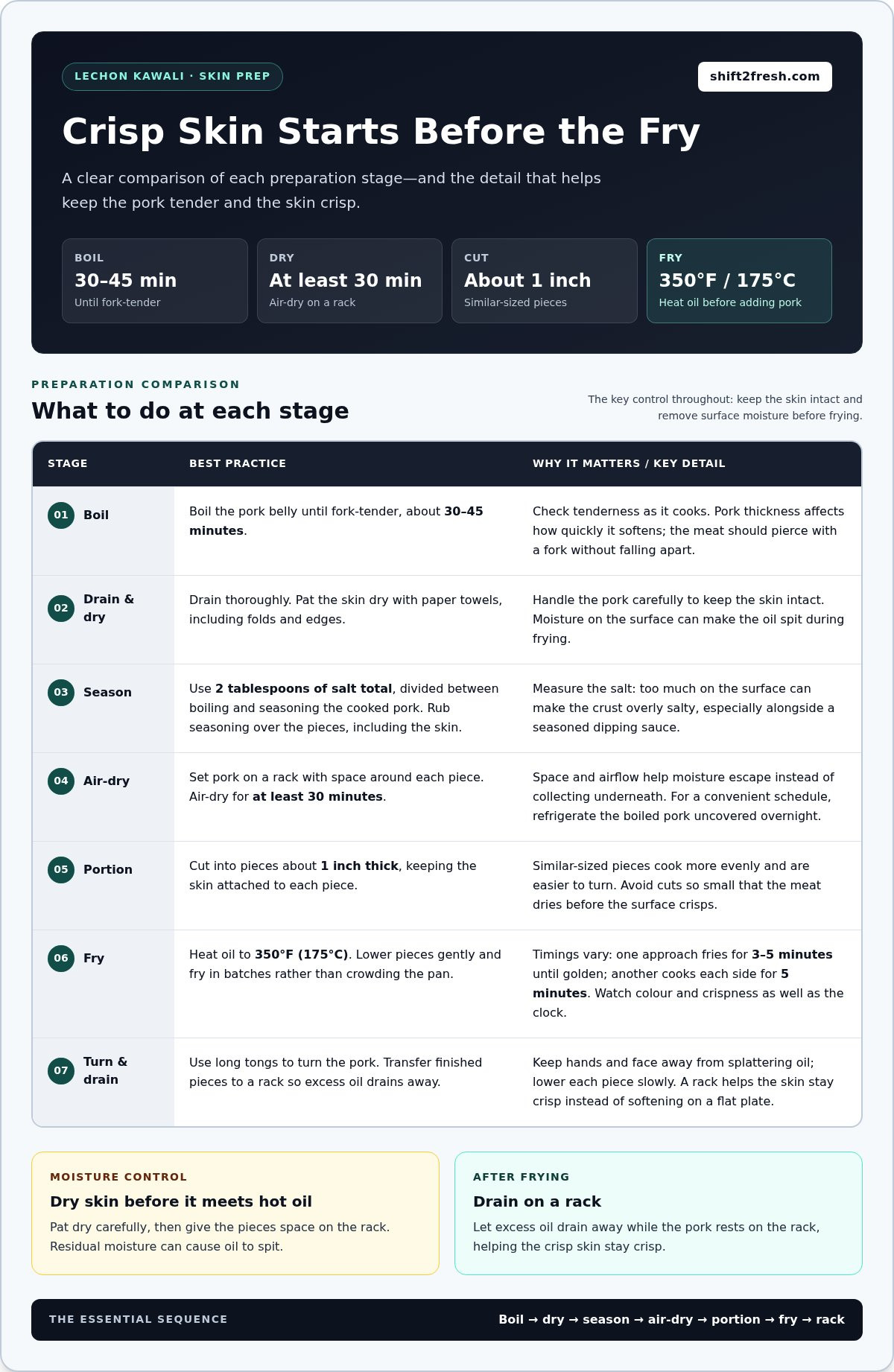
- After boiling the pork belly, drain it thoroughly. Pat the skin dry with paper towels, including the folds and edges. Any moisture left on the surface can make the oil spit during frying. Handle the pieces carefully to keep the skin intact so it can crisp evenly.
- Use 2 tablespoons of salt in total, divided between boiling and seasoning the pork. Rub the seasoning over the cooked pieces, paying attention to the skin. Keep the salt measured: excess on the surface can make the finished crust too salty, especially when served with a seasoned dipping sauce.
- Set the pork on a rack with space around each piece. Air-dry it for at least 30 minutes before frying. Airflow helps moisture escape from the skin rather than collect underneath. For a more convenient schedule, refrigerate the boiled pork uncovered overnight, then prepare it for frying.
- Cut the pork into pieces about 1 inch thick. Similar-sized pieces cook more evenly and are easier to turn. Keep the skin attached to each piece, and avoid cuts so small that the meat dries before the surface turns crispy.
- Heat the cooking oil to 350F (175C) before adding pork. Lower pieces gently, and fry in batches rather than crowding the pan. Recipe timings vary: one approach fries pieces for 3 to 5 minutes until golden, while another cooks each side for 5 minutes. Watch the colour and crispness as well as the clock.
- Use long tongs to turn the pork, keeping your hands and face away from splattering oil. Lower each piece slowly to limit splashes from any remaining moisture. Transfer the finished pork to a rack so excess oil drains away and the skin stays crisp instead of softening on a flat plate.
Pork belly, salt, peppercorns, and bay leaves
Choose skin-on pork belly, the cut best suited to lechon kawali. Traditional ingredients include pork belly, salt, peppercorns, and bay leaves, which season the meat as it boils.
Choosing a Cut of Pork
Choose skin-on pork belly, the cut used for lechon kawali. One recipe uses 2 lbs, which you can portion after boiling. Look for a continuous skin layer over visible meat and fat, rather than trimmed, skinless pieces. The layers give you succulent meat and skin that can crisp later. Keep the slab intact during boiling if it fits your pot, then cut it into serving pieces.
Gathering Pork Belly and Seasonings
Measure the salt before cooking so the pork is seasoned without guesswork. Use 2 tablespoons total, divided between boiling and seasoning the cooked pork. Add whole peppercorns and dried bay leaves to the pot; they infuse the cooking liquid with aromatic flavor. Garlic is another common boiling aromatic. Keep the seasonings balanced, since the pork’s richness and any dipping sauce will also shape the finished taste.
Boiling Pork Belly Until Fork Tender
Place the pork in a pot, add water to cover, and stir in the salt, peppercorns, and bay leaves. Bring the liquid to a boil, then simmer until the meat is fork-tender. One recipe gives a boiling time of 30 to 45 minutes; begin checking tenderness as it cooks, since the thickness of the pork affects how quickly it softens. A fork should pierce the meat without making it fall apart.
Lift the pork from the seasoned liquid and let it drain before the next preparation step. For a fresh contrast alongside the rich, savory meat, consider seasonal Filipino fruits.
Another version simmers the skin until tender for 35 to 45 minutes, while the recipe advises about 30-50 minutes depending on the meat. It uses 4 cups of water, 4 pounds of whole pork belly, and 1 tablespoon of peppercorns.
Dipping sauces and side dishes
Choose a dip that cuts through lechon kawali’s rich, crispy pork. Filipino spiced vinegar adds acidity, garlic, shallot, and chili to each serving.
- Make spiced vinegar by combining ½ cup cane vinegar with one chopped shallot, two minced garlic cloves, and two minced bird’s eye chili peppers. Stir well, then let the mixture stand so the aromatics can flavor the vinegar. Serve it in a small bowl, leaving the chili pieces visible for guests who enjoy heat. This sharp, savory dip complements the pork without coating it.
- Serve the vinegar sauce on the side rather than pouring it over the pork. This keeps air around the fried crust and lets each person control the tang and chili in every bite. Place a dipping bowl near the platter, and serve the pork in easy-to-pick-up pieces. A good dip adds contrast without hiding the crisp skin.
- Balance the plate with plain rice and a fresh vegetable side. Rice gives the meal a mild base, while crisp vegetables provide a lighter texture alongside the fried pork. Keep wet vegetables and sauces separate from the platter so the pork stays crunchy. Arrange the sides around the main dish, with room for both vinegar and rice.
- Set out the sauce before bringing the pork to the table, and serve the pieces soon after frying. To accommodate different heat preferences, leave the bird’s eye chili in the vinegar bowl so guests can choose how much to scoop. For a milder dip, spoon some vinegar mixture into a second bowl before adding chili. This simple setup suits a range of tastes.
Ingredient substitutions
- Keep skin-on pork belly as the foundation, since another cut will change the texture. Shoulder can work when belly isn’t available, but it won’t have the same broad skin layer or fat distribution. For crisp skin, stick with belly and adjust the seasonings instead. Pieces of similar size also cook more evenly.
- When choosing lechon kawali recipe ingredients, swap whole peppercorns for ground black pepper if needed. Add ground pepper sparingly to the boiling liquid: it disperses throughout the broth and can create a stronger flavor. Whole peppercorns give a milder infusion and are easy to remove after cooking.
- Use dried bay leaves if fresh ones aren’t available. Bay leaves bring herbal aroma, while garlic adds savory depth. If you don’t have garlic, leave it out rather than increasing the salt. These lechon kawali recipe ingredients each play a different role, so one seasoning won’t fully replace another.
- For the dipping sauce, rice vinegar can replace cane vinegar for a milder taste. Sample the mixture before serving, then adjust the shallot, garlic, and bird’s eye chili to taste. If fresh chili isn’t available, omit it for less heat rather than adding an unrelated seasoning.
- Keep salt separate from seasoning swaps. Salt seasons the pork, while pepper, garlic, and bay leaves contribute aroma. Change one ingredient at a time and taste the cooking liquid before adding more. For Filipino pantry staples to complement your recipe, explore Filipino pantry items.
Shift 2 Fresh: Seasonal Filipino Fruits
Shift 2 Fresh can help round out a lechon kawali meal with seasonal Filipino fruits, Asian vegetables, and Filipino pantry items. Choose fruit for a fresh finish after the rich pork, or add vegetables to bring more color and contrast to the table. Filipino pantry items can also help stock ingredients for future meals, including Filipino-inspired dishes and dipping sauces.
Use Mobile App Ordering to browse grocery items as you plan your next meal. It’s a practical next step once you’ve chosen your pork and seasonings and want to add complementary produce or pantry staples to your shopping list.
Visit shift2fresh.com to explore the available grocery offerings.
Plan Your Next Filipino Meal
Build on what you enjoyed by pairing the main dish with a fresh side or a different flavor. As you plan lechon kawali recipe ingredients for another occasion, consider how produce and pantry staples can help shape a complete Filipino-inspired menu. A fruit-based finish, vegetable side, or familiar pantry ingredient offers a new direction without changing how you prepare the pork.
Shift 2 Fresh offers seasonal Filipino fruits, Asian vegetables, and Filipino pantry items for home meal planning. Choose what fits the dishes you want to make, then add those ingredients to your grocery plans.
Contact Shift 2 Fresh today to explore its offerings. Your next Filipino meal can start with one simple ingredient choice, so enjoy planning what to serve.
Frequently Asked Questions
What is Lechon Kawali?
Lechon kawali is Filipino pork belly that’s boiled, then deep-fried until the skin turns crisp. Unlike whole-roast lechon, it’s cooked in pieces in a pot, making it practical for a home meal. The name refers to the cooking method, so the defining feature is crisp-fried pork belly, not a fixed seasoning blend or dipping sauce.
How much pork, salt, pepper, garlic, and bay leaves does a standard recipe use?
There isn’t one fixed standard for every ingredient. One recipe uses 2 lbs of skin-on pork belly and 2 tablespoons of salt, while other versions list 2 teaspoons of peppercorns, 5 cloves of garlic, and 5 bay leaves. Treat those as recipe-specific amounts, not a universal formula. Keep the pork and salt quantities together when following a chosen version.
What ingredients are needed for lechon kawali dipping sauce?
Filipino spiced vinegar combines cane vinegar, chopped shallot, minced garlic, and minced bird’s eye chili. The vinegar brings sharpness, while the aromatics add savory and spicy notes. Stir everything together and taste a small amount with pork before serving. This helps you judge whether the tang and heat balance the richness.
Can lechon kawali be made with pork belly substitutes?
Yes, but a substitute changes the texture and may not produce the same crisp skin. Skin-on pork belly is the best fit for the dish’s characteristic contrast between crackling skin and rich meat. A leaner cut can still be fried, but it won’t recreate that balance. If crispness is your priority, choose a cut with the skin attached.
How do Filipino recipes vary in lechon kawali ingredients?
Recipes differ in their aromatic quantities and seasoning choices. For example, listed versions use 2 or 5 bay leaves, and garlic amounts range from 3 crushed cloves to 5 cloves or a whole head. Peppercorns also vary by recipe. Compare each version as a complete set, rather than combining every quantity, to keep the boiled pork’s flavor balanced.
What ingredients help make lechon kawali skin crispy?
Skin-on pork belly and salt are the key ingredients, but preparation matters more than adding extra seasoning. Dry the cooked pork thoroughly before frying: surface moisture interferes with crisping and can make hot oil spit. Use fresh oil and avoid crowding the pan so the temperature can recover. Garlic, pepper, and bay leaves flavor the meat, not the crust.
0 comments