

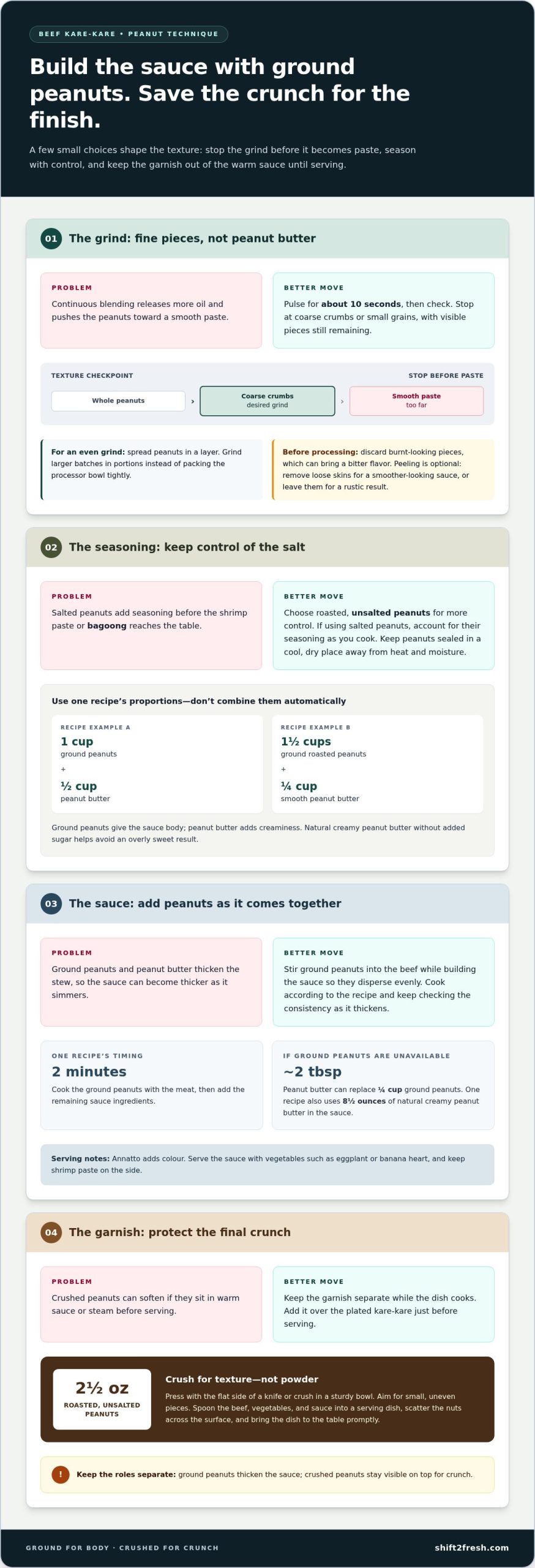
The best use of roasted peanuts for kare-kare isn’t limited to the sauce: crushed peanuts also make a satisfying finishing garnish. For this beef kare-kare method, grind roasted peanuts for the sauce, then crush 2 1/2 ounces of roasted, unsalted peanuts to sprinkle over the finished dish. That way, the peanuts help thicken the sauce and add a final layer of texture.
Getting the grind right matters: pulse the peanuts briefly until they form fine pieces, not peanut butter. Learn how to prepare them, when to stir them into the beef kare-kare sauce, and how to use crushed peanuts as a garnish. These steps also explain how peanut butter can complement the sauce and how to adjust its texture as it cooks, from the first grind to the final sprinkle.
Key Takeaways
- Use ground peanuts to build body in the beef kare-kare sauce, then adjust the consistency as it cooks.
- Process the peanuts in short bursts and stop before they become a smooth paste.
- Choose roasted, unsalted peanuts for a garnish that adds crunch without making the dish too salty.
- Pick a peanut butter that complements the sauce’s savoury flavour, and learn what to consider when choosing your peanuts.
Using ground roasted peanuts in beef kare-kare
Build the sauce with ground roasted peanuts, then balance its richness with measured peanut butter and savoury seasonings. Follow these steps to add them at the right stage and manage flavour and texture.
Choose the Roasted Peanut Type
Select roasted peanuts with a clean, nutty flavour for the sauce. Unsalted peanuts are a practical choice because bagoong, also called shrimp paste, contributes salt at serving. If using salted peanuts, account for that seasoning as you cook. Kare-kare recipes vary: one uses 1 cup of ground peanuts with 1/2 cup of peanut butter, while another uses different proportions.
- Choose unsalted peanuts. Should roasted peanuts for kare-kare be salted or unsalted? Unsalted peanuts give you more control over seasoning, especially alongside shrimp paste or bagoong.
- Store them sealed. Keep peanuts in an airtight container in a cool, dry place, away from heat and moisture. Close the container after each use to help preserve their flavour and texture.
Add Ground Peanuts to Kare-Kare
Stir the ground peanuts into the beef while building the sauce. One beef kare-kare recipe cooks them with the meat for 2 minutes, then combines them with the remaining sauce ingredients. For a separate version, the recipe calls for 1 1/2 cups of ground roasted peanuts and 1/4 cup of smooth peanut butter. Add annatto for colour, then cook until the sauce thickens.
- Follow one recipe’s proportions. Don’t combine quantities from different recipes automatically. Peanut butter adds creaminess, while ground peanuts give the sauce body; natural creamy peanut butter without added sugar helps avoid an overly sweet result.
- Add peanuts during cooking. When should ground roasted peanuts be added to kare-kare? Add them with the beef as the sauce comes together, and stir so they disperse evenly.
- Adjust the consistency. Ground roasted peanuts or peanut butter thicken the stew. Serve it with vegetables, such as eggplant or banana heart, and keep shrimp paste on the side.
If ground peanuts are unavailable, about two tablespoons of peanut butter can replace 1/4 cup of ground peanuts. This recipe uses 8 1/2 ounces of natural creamy peanut butter in the sauce.
Grinding peanuts without turning them into peanut butter
Use a food processor and short pulses to make ground peanuts, not a smooth paste. Should you peel the peanuts before making kare-kare? Peeling is optional: remove loose skins for a smoother-looking sauce, or leave them on for a more rustic result.
- Prepare the peanuts. Measure the roasted peanuts for your recipe and check for loose skins or pieces that look burnt. Discard burnt pieces, which can bring a bitter flavor to the sauce. If the peanuts are salted, remember that bagoong or shrimp paste will also season the finished kare-kare.
- Load the processor evenly. Add the peanuts to the bowl in a layer that lets the blades reach them. For a larger batch, grind in portions rather than packing the bowl tightly. This helps the pieces break down evenly instead of leaving whole peanuts beside oily, finely ground clumps.
- Pulse briefly. Process for about 10 seconds to create fine pieces without turning them into paste. Check the texture before processing again. Stop when the peanuts look like coarse crumbs or small grains; continuous blending releases more oil and moves the mixture toward peanut butter.
- Check the grind. For a grainy kare recipe, keep visible small pieces. If the sauce needs a finer texture, pulse briefly again, then inspect the bowl. Avoid running the processor continuously. Ground peanuts thicken as they simmer, so the finished peanut sauce can become thicker than it first appears.
- Add them with the other ingredients. Stir the ground peanuts into the beef mixture, then cook according to your recipe. Onions, toasted rice, annatto, and tender beef each contribute their own texture or flavor. Serve the sauce with vegetables, including Asian vegetables such as eggplant or green beans, for a hearty Filipino cuisine meal.
Quick processing of roasted peanuts in a food processor can give kare-kare sauce a grainy texture. Keeping that texture in mind can help guide how far to grind the peanuts: stop while small pieces remain visible, rather than continuing until the mixture is smooth. The ground peanuts can then be stirred into the beef mixture and cooked with the other ingredients, allowing the sauce to come together while retaining some texture.
Roasted peanuts as a kare-kare garnish
Crushed peanuts give kare-kare a satisfying crunch against its thick sauce. This Filipino finishing touch works with beef or vegetable versions.
- Measure the garnish. Use 2 1/2 ounces of roasted, unsalted peanuts, crushed, for this recipe’s finishing topping. Keep these peanuts separate from the ground nuts stirred into the sauce. That distinction preserves a crisp garnish instead of letting every piece soften during cooking.
- Crush, don’t grind. Place the peanuts on a board and press them with the flat side of a knife, or crush them in a sturdy bowl. Aim for small, uneven pieces, not powder or paste. Larger bits give each serving crunch, while very fine crumbs can disappear into the sauce.
- Finish the vegetables first. Cook the eggplant and string beans until they reach the texture you want. Bok choy can also accompany a vegetable version. Keep the crushed peanuts aside while the vegetables simmer, so steam and sauce don’t soften the topping before serving.
- Transfer the kare-kare carefully. Spoon the beef, vegetables, and peanut sauce into a serving dish before adding the garnish. Sprinkle the crushed nuts across the surface rather than stirring them through. This keeps the topping visible and lets diners choose how much crunch they want in each bite.
- Add the garnish at the table. Scatter the peanuts just before the dish is served. The warm sauce may soften them if they sit too long, so bring them to the table promptly. Garlic, annatto powder, and bagoong contribute their own flavour; keep the peanut topping distinct instead of mixing it into those ingredients.
- Adapt the final presentation. For a family-style version, garnish the whole dish. For individual bowls, divide the crushed peanuts among servings. Either approach gives the Filipino stew a crunchy contrast without changing the sauce’s seasoning or colour.
What type of roasted peanuts are best for kare-kare?
Choose plain roasted peanuts with a clean, nutty taste and no sweet coating. The best choice depends on whether you’re grinding them into the sauce or crushing them for a topping.
- Choose unsalted peanuts for seasoning control. A kare-kare recipe uses ½ cup of unsalted, dry peanuts. Unsalted nuts let you season the sauce separately, especially when serving it with salty shrimp paste or bagoong.
- Check the ingredient list. Pick peanuts without sugar, honey, or spice coatings. Sweetened coatings can change the savoury balance of the sauce, while added spices may compete with annatto and the dish’s other seasonings.
- Match the roast to the recipe. Use roasted peanuts for a ready-to-grind nut flavour. Avoid pieces that taste burnt, since their bitter edge can carry through the sauce. If the recipe specifies dry peanuts, choose that style rather than an oil-coated snack.
- Choose a texture for the job. For sauce, select whole or broken roasted peanuts that can be ground into small pieces. For a topping, keep some larger pieces to add crunch. A single batch can serve both purposes if you separate the portions before grinding.
- Keep peanut butter distinct from ground nuts. Some kare-kare recipes combine ground peanuts with peanut butter, but the proportions vary. Natural creamy peanut butter without added sugar suits a savoury sauce; commercial-style sweetened peanut butter can make it noticeably sweet.
- Use the recipe’s quantity as your guide. One recipe calls for ½ cup of unsalted, dry peanuts, while another uses 1 1/2 cups of ground roasted peanuts. These amounts belong to different recipes, so don’t combine them automatically. Follow one recipe’s proportions for a balanced sauce.
Shift 2 Fresh: Seasonal Filipino Fruits
Shift 2 Fresh is a natural next step when you’re planning a Filipino meal and want ingredients beyond the peanut sauce. Explore seasonal Filipino fruits, Asian vegetables, and Filipino pantry items to complement your home cooking. For kare-kare, vegetables can round out the meal, while pantry items help stock your kitchen for other Filipino dishes. Mobile app ordering offers another way to browse these grocery categories in the UAE. Choose what suits your menu, whether you’re gathering ingredients for a family meal or planning what to cook next. To explore the available grocery options, visit Shift 2 Fresh online.
Bring Your Next Filipino Meal to the Table
Let your kare-kare become the starting point for another Filipino meal at home. Once you’ve found a rhythm with roasted peanuts for kare-kare, choose a new dish or build a menu around ingredients you enjoy cooking with. Shift 2 Fresh offers Seasonal Filipino Fruits, Asian Vegetables, and Filipino Pantry Items, giving you options for fresh sides and pantry staples as you plan what to make next.
Think about the meal you want to make, then choose ingredients to match. Try a vegetable-led dish, a fruit to serve afterward, or a pantry item for another Filipino favourite. Experiment at your own pace and let familiar flavours inspire your next recipe.
Contact Shift 2 Fresh today to explore ingredients for your next meal. Enjoy bringing another comforting Filipino dish to your table.
Frequently Asked Questions
How many roasted peanuts are needed for kare-kare?
Use the amount specified by your recipe: one version calls for 1 cup of ground peanuts and 1/2 cup of peanut butter, while another uses 1 1/2 cups of ground roasted peanuts with 1/4 cup of smooth peanut butter. These recipes have different proportions, so don’t combine their quantities. For roasted peanuts for kare-kare, measure the nuts after grinding if your recipe gives a ground-peanut amount.
How to grind roasted peanuts into a kare-kare sauce?
Grind roasted peanuts in a food processor until they form small, even pieces, then stir them into the sauce. Process for about 10 seconds to keep the texture grainy rather than turning the nuts into paste. For a small amount, pause and scrape down the bowl before another brief pulse. This helps bring larger pieces into contact with the blades without overprocessing the rest.
How to thicken kare-kare sauce with roasted peanuts?
Stir ground roasted peanuts into the sauce and cook until it thickens, stirring to prevent the nuts from settling or clumping. Peanut butter can add body, while ground toasted rice offers another thickening option. If adjusting a prepared sauce, add the peanuts gradually and cook briefly before checking the consistency. The sauce will continue to thicken as the ingredients combine.
0 comments