

A clear bulalo broth depends less on a rolling boil than on careful preparation and a gentle simmer. To learn how to make clear bulalo soup, parboil the beef and bones for about 10 minutes, discard that water, then simmer them in fresh water and skim off foam as it rises. Cook until the beef is tender before adding corn and cabbage.
If you’ve ever made a rich broth that turned cloudy, you know how much its texture can affect the finished soup. Learning how to make clear bulalo soup starts with keeping the broth at a gentle simmer and skimming impurities as they rise.
This guide explains how to prepare the bones and shank, build a clean-tasting broth, and cook the beef until tender. You’ll also learn when to add corn and cabbage so they cook through without losing their texture or flavor.
Key Takeaways
- Parboil the bones and beef for about 10 minutes, then start the broth with fresh water for a cleaner result.
- Skim foam as it rises and keep the broth at a gentle simmer to help it stay clear.
- Cook the beef until tender before adding vegetables, so the corn and cabbage don’t overcook.
- Rinsing and soaking the marrow bones and shanks helps prepare them for a clearer-tasting broth.
- Use a pressure cooker when you want a faster cooking method, adjusting the process so the beef still becomes tender.
Parboiling bones and beef for clear broth
Begin with a separate boil to remove impurities before making the soup’s main broth.
Clear bulalo broth is gently simmered and skimmed, while cloudy beef bone broth has fat and particles dispersed through it. Parboiling the meat, using fresh water, and controlling the heat help keep the finished soup clear.
Parboil the Bones and Beef
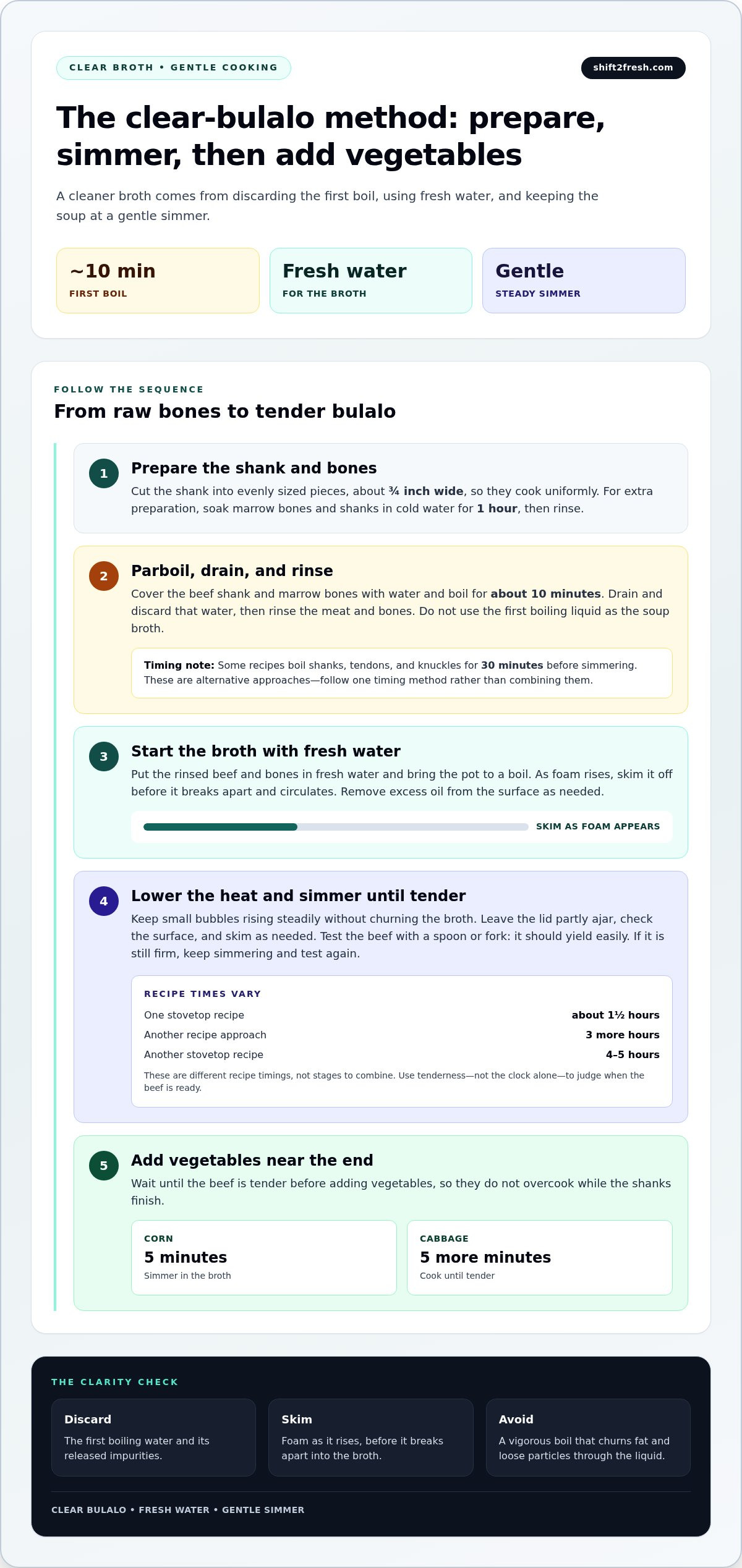
Place the beef shank and marrow bones in a pot, cover them with water, and boil for about 10 minutes. This first boil draws out impurities that could cloud the finished broth. Drain the pot, discard that water, and rinse the bones and beef before continuing. Don’t use the parboiling liquid as the soup’s cooking broth.
Skim Impurities from the Broth
Cover the rinsed beef and bones with fresh water, then bring the pot to a boil. As foam rises, skim it off before it breaks apart and circulates. Keep an eye on the surface while the broth cooks, removing foam and excess oil as needed. A steady, gentle simmer makes impurities easier to spot than a vigorous boil.
Use the Two-Boil Technique
Use the first boil to release impurities, then make the second boil with fresh water for the broth. Some recipes boil beef shanks, tendons, and knuckles for 30 minutes before simmering; others parboil for about 10 minutes. Follow one timing approach rather than treating both as required stages. Drain and rinse after the initial boil.
- Build a vegetable-trimming broth separately when you want added flavor. After an initial 10-minute boil, simmer vegetable trimmings and corn cobs for 30 minutes, then strain the liquid. Add this strained broth to the cleaned beef and bones. Remove the solids so loose bits don’t cloud the soup during its longer simmer.
- For a Batangas-style pot, use 3 to 4 pounds of beef shank with extra bones and 8 to 10 cups of water. Add 4 medium sliced red onions, 1 tablespoon whole peppercorn, and 1 ½ tablespoons rock salt or coarse sea salt. Parboil and drain the beef first, then add these ingredients to fresh water. Skim during boiling, especially before the marrow fat blends into the broth.
Before parboiling, cut the shank into evenly sized pieces. The recipe recommends pieces about ¾ inch wide so they cook uniformly. Consistent cuts are easier to handle after boiling and rinsing. Set the shank aside with the bones, ready for the fresh-water simmer, and discard the first boiling water instead of using it in the broth.
Marrow bones can also be prepared by roasting: bulalo marrow bones are roasted for about 20 minutes until browned and soft. This adds a preparation step for the bones, while the shank is handled through the parboiling process. Keep the roasted bones with the cleaned beef when assembling the broth, then continue to watch the surface as it heats. The focus remains on clean ingredients and gentle cooking, helping the finished liquid stay clear rather than carrying loose residue or excess fat.
Simmering bulalo until the meat is tender
Once the broth is ready, simmer the shanks gently so the connective tissue softens without a rolling boil. Stovetop timings vary between bulalo recipes, so judge the beef by its tenderness, not the clock alone.
Should bulalo simmer covered or uncovered? Keep the pot partly covered, with the lid slightly ajar, while the beef cooks. This lets steam escape and makes it easier to watch the surface and skim foam.
Simmer the Beef on the Stovetop
Bring the pot to a boil, then lower the heat and let the beef simmer. One recipe recommends browning the shanks on all sides for about 5 minutes before simmering, which adds a browned surface to the soup. If you brown them, turn the pieces as they cook, then add them to the broth and bring it back to a gentle simmer.
Keep the Beef at a Low Simmer
Adjust the heat until small bubbles rise steadily without churning the broth. A vigorous boil moves marrow fat and loose particles through the liquid, making it harder to keep the surface clear. Check regularly, skim foam as it appears, and add water if evaporation leaves the beef insufficiently covered.
- Use recipe timings as a starting point, not a universal rule. One stovetop recipe recommends simmering bulalo for 4-5 hours, while another recommends about 1 ½ hours until tender. A separate method boils the beef for 3 more hours after adding onion, peppercorn, salt, and fish sauce. These are different recipe approaches, not stages to combine automatically.
- As the shank cooks, press it gently with a spoon or fork to test for tenderness. The meat should yield easily, rather than feel firm or resist the utensil. If it is still tough, continue simmering and test again. The size and structure of the pieces affect how quickly they soften.
- Keep the lid partly ajar during the long cook, and avoid frequent stirring. Stirring can disturb the broth and break softened meat into smaller pieces. For a recipe that lists a 4 hrs 21 mins cook time, begin checking tenderness before serving rather than assuming every shank finishes at the same moment.
- Once the beef is tender, add vegetables near the end of cooking so they don’t turn soft while the shanks finish. For example, a recipe simmers corn for 5 minutes and cabbage until tender for another 5 minutes. Serve when the beef yields easily and the vegetables have reached the texture you prefer.
Rinsing and soaking marrow bones and beef shanks
Soak marrow bones and beef shanks in cold water for 1 hour, then rinse them before cooking. For one recipe, use 2 ½ pounds of beef shank, 1 pound of beef bone marrow, and 8 cups of water; other recipes use different combinations.
- Choose bone-in beef shank for meat and marrow in one cut, or combine shank with separate marrow bones. One recipe uses two bone-in beef shanks weighing about 2 1/2 pounds. Another calls for 1 kg of beef marrow bones, bone-in cross-cut beef shank, or a combination. Select pieces that fit comfortably in your pot.
- Place the marrow bones and shanks in a large bowl, cover them with cold water, and soak for 1 hour. This step lets blood and loose residue move into the soaking water. Keep the meat submerged, then pour off the water. Rinse each piece under clean water before putting it into the cooking pot.
- Match the water to your chosen beef quantity and recipe. A combination using 2 ½ pounds of beef shank and 1 pound of bone marrow calls for 8 cups of water. A different recipe uses 1 kg of marrow bones, bone-in cross-cut shank, or both. Don’t combine quantities from separate recipes without adjusting the pot.
- Pat the rinsed beef dry before searing if you want a browned surface. Heat 3 tablespoons of neutral oil in a pot, then brown the shanks on all sides for about 5 minutes. Turn them as needed, and avoid crowding the pot. Searing adds browned notes, while the later simmer softens the beef and releases marrow flavor.
- Add aromatics after searing to build flavor in the same pot. Cook garlic and onions until the garlic turns golden and the onions become translucent, about 3 minutes. Add the liquid and beef according to your chosen recipe, then simmer. For a simpler broth, add onion and whole peppercorns directly with the beef and water.
- Cook the beef and bones together so the shank contributes meat and the marrow enriches the broth. Check the shank as it simmers, since cooking times vary with the recipe and cut. If using separate marrow bones, leave them in the pot while the beef cooks, then serve the soup with the marrow and shank portions.
Timing can differ across recipe instructions: the bulalo recipe lists 1 hr 15 for soaking and cooling. Treat that as the timing attached to that recipe, while keeping the method above distinct: its soaking step is 1 hour, followed by rinsing. The key is to follow one recipe’s sequence and quantities consistently, rather than blending the timing or water amounts from separate versions. Once the soaking water has been discarded and the pieces rinsed, the bones and shanks are ready for the cooking method you selected. If you plan to brown the beef, dry its surface first; if you are making a simpler broth, proceed with the onion and peppercorn approach described above. This keeps preparation aligned with the chosen recipe.
Pressure-cooker cooking time
A pressure cooker can shorten the stovetop process, but bulalo recipes use different cooking times. Prepare the beef and aromatics first, follow one recipe’s timing, and check that the shank is tender.
Cook Bulalo in the Pressure Cooker
Add the prepared beef shank, bones, water, onions, and seasonings to the pressure cooker. Follow one recipe’s liquid amount and ingredient proportions rather than combining different recipes. Close the cooker as its instructions specify, then bring it to high pressure. Do not fill past the marked limit, and set the vegetables aside until the beef is cooked.
Set the Pressure-Cooker Cooking Time
Choose a recipe’s stated time as your starting point: pressure-cooker bulalo may cook at high pressure for 1 hour, or another recipe may use 1 ½ hours. Other recipes list cooking times of 2 hours or 2 hours 30 minutes. These are separate recipe timings, not steps to add together.
- Account for what each recipe means by cooking time. A listed cooking time may not equal the full time from preparation to serving, since the cooker must reach pressure and the process includes finishing the soup. One recipe lists a total preparation and cooking time of 2 hours 50 minutes. Keep that total distinct from the cooker’s pressure-cooking interval.
- Use the beef cut and recipe method to guide your timing choice. Bone-in shank, marrow bones, and the amount of beef affect how the recipe cooks. Follow the timing that accompanies your chosen ingredient quantities. Don’t take the 1-hour method from one Filipino recipe and apply it automatically to a different recipe’s larger beef portion.
- After cooking, check the shank instead of relying only on the timer. The meat should yield easily when pressed with a fork. If it remains firm, it needs more cooking. Once tender, add the corn and cabbage according to the recipe’s finishing steps, so the vegetables do not cook under pressure for the full time needed by the beef.
- Keep the pressure cooker’s operating instructions at hand while following the recipe. Use them to close the cooker, bring it to pressure, and open the lid after cooking. Never force the lid or guess how to release pressure. Once the cooker is open, check the beef and broth, then finish seasoning before serving the Filipino soup.
How do you make bulalo broth clear and not cloudy?
After parboiling, use fresh water, skim foam as it rises, and maintain a gentle simmer. These steps limit the loose particles and fat that can make bulalo broth cloudy.
- After parboiling the beef, start with a clean pot and fresh water. Discard the first boiling water rather than using it as stock. Rinse the bones and shank, then return them to the pot. This removes residue from the first boil before it disperses through the soup.
- Watch the broth closely as it approaches a boil. Foam and impurities rise to the surface, so lift them out with a spoon before they break apart. Keep a small bowl nearby for the skimmed material. Continue checking as the pot heats, since more foam may appear after the first layer is removed.
- Lower the heat once the broth boils and maintain a gentle simmer. A rolling boil churns the liquid, dispersing fat and particles and making the broth less clear. Look for small, steady bubbles. Adjust the burner if the surface turns turbulent, and avoid stirring unnecessarily.
- Keep the broth’s surface visible while the beef cooks. Leave the lid partly open so you can spot and skim foam without interrupting the simmer. Remove excess oil as it collects, taking care not to scoop out the broth. Hold a spoon near the surface to lift foam while leaving the liquid behind.
- Strain vegetable-trimming broth before adding it to the beef pot. One method boils the trimmings and corn cobs for an initial 10 minutes, then simmers them for 30 minutes. Straining catches the solids that could cloud the finished soup. Add the clear strained liquid, not the cooked scraps.
- When learning how to make clear bulalo soup, add ingredients gently once the broth is clear. Lower the corn or cabbage into the pot instead of dropping it from a height, which can disturb the surface. Maintain a steady simmer and avoid vigorous stirring to keep vegetable pieces and loosened particles from circulating through the broth.
- Knowing how to make clear bulalo soup also means finishing with care. For fresh vegetables to complete the meal, explore fresh ingredients and add them near the end of cooking. Keep checking the broth as they soften, since stirring or a hard boil can lift particles from the bottom. Serve once the beef is tender and the vegetables have reached the texture you want.
Shift 2 Fresh: Seasonal Filipino Fruits
Shift 2 Fresh can help you find Filipino ingredients to complement home-cooked bulalo. Turn to its range of Asian Vegetables when you’re planning the soup’s vegetables, or browse Filipino Pantry Items for ingredients suited to Filipino cooking. Seasonal Filipino Fruits offer another option for rounding out a meal after the soup.
With Mobile App Ordering, you can browse the offerings and place grocery orders. Choose ingredients for your cooking plans, whether you’re preparing bulalo or other Filipino dishes at home.
For Filipino fruits, vegetables, and pantry items, visit shift2fresh.com or contact Shift 2 Fresh.
Make Your Next Filipino Meal Your Own
Once you know how to make clear bulalo soup, make the next meal your own. Choose ingredients to suit the flavors and textures your household enjoys. Fresh produce and familiar Filipino pantry items can make home cooking feel personal, whether you’re preparing a relaxed family meal or planning a menu for guests.
Before your next cooking day, make a short list of the produce and pantry ingredients you want to use. Choose combinations to suit the meal and the people you’re cooking for. Jotting down which ingredients you enjoyed can make future menu planning easier, while leaving room to try a new pairing.
Shift 2 Fresh offers Seasonal Filipino Fruits, Asian Vegetables, and Filipino Pantry Items to browse for your cooking plans. Contact Shift 2 Fresh to take the next step. Bring your own preferences to the table and enjoy making each meal your own.
Frequently Asked Questions
What beef cuts are best for clear bulalo soup?
Bone-in beef shank is a practical choice because it combines meat with bone for the broth. Add separate marrow bones if you want marrow served alongside the shank. For example, one recipe pairs 2 ½ pounds of beef shank with 1 pound of beef bone marrow. Choose pieces that fit your pot and leave room for water to circulate around them.
Should you blanch beef bones before cooking bulalo?
Yes, blanching, or parboiling, helps remove loose residue before you make the main broth. Bring the bones and beef to a boil, then drain and rinse them before adding fresh water. One approach parboils for about 10 minutes. Avoid transferring the first cooking water into the finished soup, since it carries the impurities released during blanching.
How long should beef shanks and marrow bones simmer for bulalo?
Simmer them until the shank yields easily to a fork, because recipes use different timings. Stovetop recipes range from about 1 ½ hours to 4-5 hours, depending on the method and cut. Keep the heat low and test a thick piece before serving. If it still feels firm, continue cooking and check again rather than relying on time alone.
How do you skim foam and fat from bulalo broth?
Use a shallow spoon to lift foam from the surface as it gathers, especially when the broth first boils. Foam looks airy, while fat forms shiny droplets or a slick. Skim gently to remove surface material without taking much broth. If fat continues to collect, let the pot settle briefly, then skim again before serving.
0 comments