

What if Filipino food for a healthy diet didn’t mean giving up rice, family favourites, or the flavours you grew up with? Filipino meals can fit into balanced everyday eating. Generous rice portions, salty sauces, and rich coconut milk may raise questions, but no traditional dish is automatically off the table. What matters is how meals come together over time.
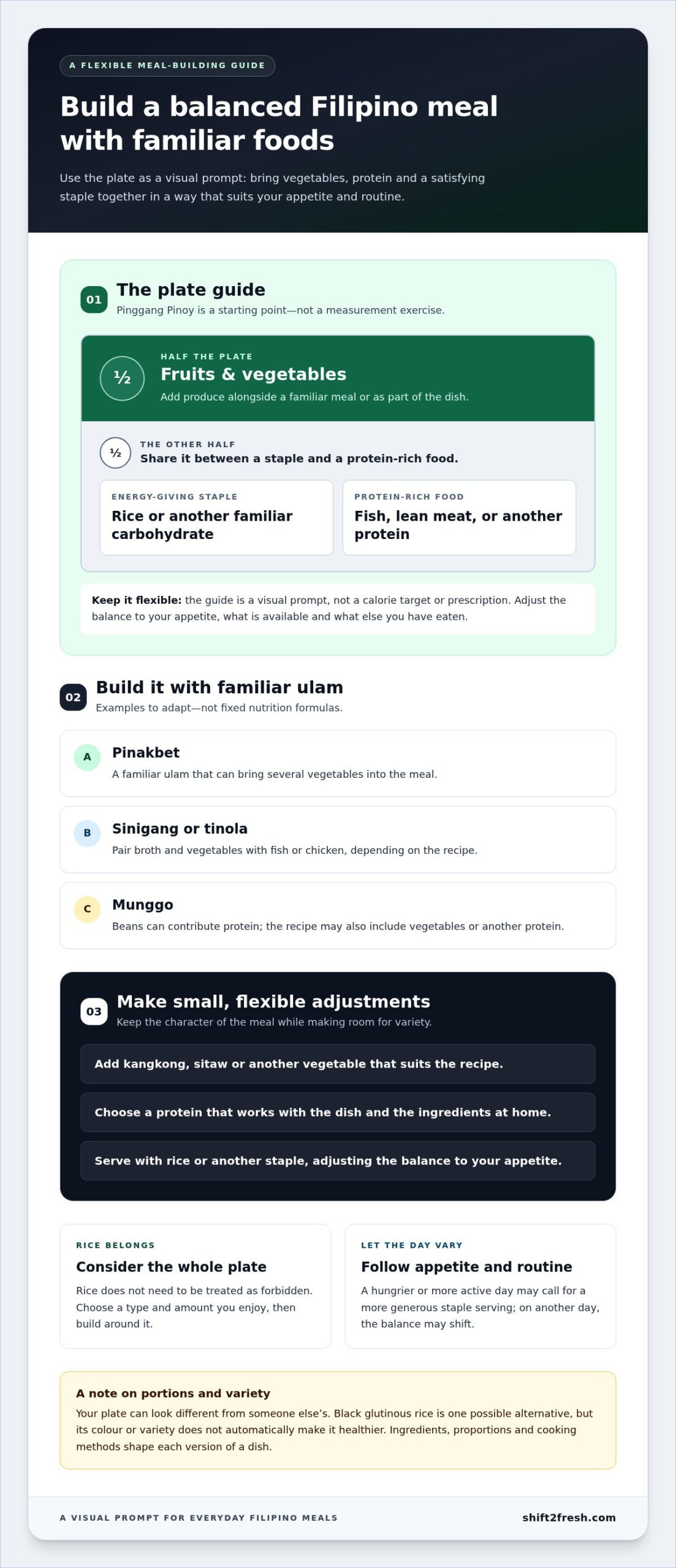
A useful starting point is Pinggang Pinoy, the Filipino Food and Nutrition Research Institute’s plate guide. It suggests filling half your plate with fruits and vegetables, then dividing the other half between energy-giving foods such as rice and protein-rich foods such as fish or lean meat. Use it as a visual prompt, not a measurement exercise: for example, pair rice and grilled fish with vegetables, or serve a vegetable-rich soup alongside a familiar ulam.
This guide shows how to build satisfying plates with Filipino dishes, balance rice, vegetables, and protein, and make flexible recipe adjustments without losing the flavours that make a meal feel like home. You’ll also find practical ideas for adding variety with familiar produce and pantry ingredients, including when cooking in the UAE.
Key Takeaways
- Filipino food for a healthy diet can include familiar favourites as part of a flexible approach to everyday eating.
- Use a visual meal-building guide as a starting point, then adjust portions to suit your appetite and needs.
- Small recipe changes can bring more variety to meals while keeping the flavours and character you enjoy.
- A simple planning routine can help you prepare versatile ingredients and use leftovers in future meals.
- In the UAE, Shift 2 Fresh imports fresh fruits and vegetables weekly from the Philippines, offering a way to bring familiar produce into home cooking.
Can Filipino Food Be Part of a Healthy Diet?
Eating well doesn’t have to mean leaving Filipino favourites behind. A comforting bowl of rice, a family recipe, or a celebratory dish can have a place in your eating routine. Filipino food for a healthy diet is less about labelling individual foods as “good” or “bad” and more about the choices that make up your meals across days and weeks.
A healthy diet is a flexible pattern, not a verdict on a cuisine. Ingredients, portions, cooking methods, and what else is on the plate all shape a meal. A dish prepared with one balance of ingredients may be served differently in another home, and one meal doesn’t define someone’s overall way of eating. No cuisine is inherently healthy or unhealthy; balance depends on the ingredients, preparation, portions, and eating pattern around it.
That perspective matters because Filipino cooking is varied, shaped by regional traditions, household preferences, and different influences. The broad overview of Filipino cuisine offers context for its range of ingredients and dishes, but no single recipe can represent every Filipino table. Instead of asking whether a whole cuisine is healthy, consider how a favourite meal fits your routine and what you want alongside it.
Why no single Filipino dish defines the whole diet
Everyday meals and celebratory foods can both belong. A special-occasion dish may be richer or served in a larger portion than an ordinary lunch, but enjoying it at a gathering doesn’t require guilt or a compensatory restriction afterwards. Recipes also vary between regions and households. Cooks may choose different proteins, vegetables, seasonings, and methods, so one version isn’t a rule for everyone.
Keep familiar flavors while making room for balance
Garlic, vinegar, ginger, and calamansi can bring a familiar Filipino character to a meal. Keep the flavours you love, then consider what could round out the plate: vegetables alongside a comfort-food favourite, or a satisfying protein to make the meal feel complete. These are options, not rules. Paying attention to appetite and enjoyment can support a more intuitive, non-restrictive approach to eating, though it isn’t a treatment for a medical condition.
Think in small, adaptable choices rather than a strict list of foods to avoid. You might keep a treasured recipe as it is for a family occasion and make a different everyday meal more vegetable-forward. Or serve a familiar dish with a side that adds colour and texture. The aim is to make room for nourishment and pleasure together, while letting household traditions and personal preferences guide the details.
Build a Balanced Filipino Meal with Familiar Foods
A useful meal-building framework has three parts: vegetables, a protein source, and a satisfying staple. The staple might be rice or another familiar carbohydrate, while protein could come from fish, chicken, eggs, tofu, or beans. Build a balanced Filipino meal by bringing vegetables, protein, and a satisfying staple together in a way that suits your appetite and routine.
Think of the plate as a visual prompt, not a medical prescription or a calorie target. The Philippines’ Nutritional Guidelines for Filipinos offer a culturally relevant starting point for thinking about variety. Your own meal can look different depending on what’s available, how hungry you are, and what else you’ve eaten that day. There’s no need to measure every ingredient to make a thoughtful plate. If one meal is mostly rice and ulam, vegetables can come in a side dish or soup rather than being built into the main recipe.
Pair rice and other staples with the rest of the meal
Rice can comfortably sit alongside vegetables and protein; it doesn’t need to be treated as forbidden. Consider the whole plate rather than singling out one food. On a day when you’re hungrier or more active, you may want a more generous serving of a staple. On another day, the balance might shift toward the ulam or vegetables. Appetite, schedule, and preference all have a place in that decision.
White rice isn’t the only option. You could serve black glutinous rice, for example, as a familiar or interesting alternative, without assuming that its colour or variety makes it automatically healthier. The useful questions are whether the staple suits the meal and whether it’s satisfying. Choose the type and amount you enjoy, then build around it.
Add vegetables and protein through familiar ulam
Ulam can make this framework easy to adapt. Pinakbet may bring several vegetables into the meal; sinigang or tinola can pair broth and vegetables with fish or chicken; munggo can contribute beans and, depending on the recipe, vegetables or another protein. These are meal ideas, not fixed nutrition formulas. The actual ingredients, proportions, and cooking methods shape what each version contributes.
Use recipe flexibility to add variety without changing a dish beyond recognition. For example:
- Add kangkong, sitaw, or another vegetable that suits the recipe.
- Choose a protein that works with the dish and the ingredients you have at home.
- Serve the ulam with rice or another staple, adjusting the balance to your appetite.
In the UAE, familiar ingredients can help make these everyday combinations easier to plan. Shift 2 Fresh imports fresh fruits and vegetables weekly from the Philippines, and its Filipino produce can inspire ways to bring culturally familiar ingredients into home meals.
Make Filipino Favorites More Balanced Without Losing Their Character
Small recipe adjustments can help a meal suit your preferences without turning a familiar dish into something unrecognisable. You might add a vegetable, choose a different cooking method, or vary the main ingredient. These are options, not rules for cultural authenticity. A family’s original recipe can remain just as meaningful, and adapting it doesn’t make it more or less Filipino.
There’s no single adjustment that guarantees a particular health outcome. What a dish contributes depends on its ingredients, amounts, preparation, and serving context. Use the ideas below as flexible choices, not a ranking of foods as “good” or “bad.”
| Choice | Familiar approach | Optional adjustment |
|---|---|---|
| Add vegetables | Prepare a soup, stew, or sautéed dish as the household usually does. | Add vegetables that suit the recipe, such as extra greens in soup or vegetables in a sauté. |
| Change the cooking method | Fry an ingredient for the texture your family enjoys. | Try grilling, steaming, or simmering when it works for that dish, while keeping frying as an option too. |
| Vary the main ingredient | Use the protein or vegetables called for in your usual version. | Consider fish, poultry, beans, or other ingredients that complement the seasonings and cooking style. |
Adjust cooking methods and ingredients to suit your needs
Different methods create different textures and flavours. Steaming can keep ingredients tender, simmering lets them take on broth and seasoning, grilling adds a charred note, and frying creates a crisp finish. Changing the method may also change the dish’s overall nutritional profile, but the result depends on the full recipe. Pick an approach for taste, convenience, or preference, not because one method makes every dish automatically healthy.
For example, sinigang and tinola are simmered soups that can accommodate vegetables alongside their customary ingredients. Adobo can also be made with vegetables as part of the dish, or served with them on the side. Each household’s version will differ, so consider the recipe in front of you rather than assuming all versions have the same nutritional qualities.
Keep Filipino flavor while varying the balance
Build on the flavours you already enjoy. Add vegetables to a soup, stew, or sauté where they fit naturally, and use the seasonings that give the dish its character. Fish, poultry, and beans can each suit particular recipes, but none is a required replacement for another. A meatless or lower-fat version may appeal to some cooks and not others.
Try one change at a time, then decide whether it works for your household. You could keep the familiar method but add a vegetable, or use the usual ingredients and adjust how they’re cooked. For ideas that fit filipino food for a healthy diet, think of recipe changes as ways to add choice and variety, not tests of whether a meal is acceptable. The best adjustment is one you enjoy and can see yourself making again.
Plan Everyday Filipino Meals with Variety and Practical Prep
A little planning can make familiar meals easier to put together, even when your schedule changes. Rather than mapping out every meal, use a loose sequence: decide what you might cook, choose a mix of ingredients, prepare a few useful components, then adjust as the week unfolds. This keeps filipino food for a healthy diet practical, not another rigid routine to maintain.
- Plan a few meal ideas. Think about the dishes you already enjoy and which ingredients could work across more than one meal.
- Choose varied ingredients. Include vegetables, a protein option, and a staple, with room to swap ingredients based on preference and what’s on hand.
- Prepare components if helpful. Wash or cut vegetables, cook a batch of rice, or prepare a soup or stew that can be served in different ways.
- Adjust as you go. Use leftovers in a new combination, or change the plan if your appetite, schedule, or ingredients shift.
Use meal preparation to make balanced choices easier
Advance preparation is optional, not a requirement for eating well. If it suits your routine, prepare versatile components rather than complete, identical meals: cooked beans can go into one dish and accompany another, while washed vegetables can be added to soup, a stew, or a quick sauté. Keep raw ingredients separate from cooked food. Refrigerate leftovers promptly in shallow, covered containers, and reheat only the portion you plan to eat until it’s steaming hot. Follow local food-safety guidance for storage and handling.
Leftovers can become a starting point, not a repeat of yesterday’s plate. Add remaining vegetables to a broth, serve cooked protein with a different side, or combine small portions into a meal that suits your appetite. Freezing suitable portions can also help, provided they’re stored safely and reheated thoroughly. Choose the preparation habits that genuinely save you time; there’s no need to batch-cook if fresh cooking works better for your household.
Choose Filipino ingredients with flexibility
In the UAE, seasonal Filipino produce can bring familiar variety to home cooking. Use vegetables in soups, stews, sautéed dishes, or simple sides according to what you find and what the recipe needs. For ideas on choosing and using them, explore this essential Asian vegetables guide. Seasonal fruit can be enjoyed on its own or alongside meals; the seasonal Filipino fruits guide offers UAE-focused context.
Keep pantry staples in the mix, too. A few familiar seasonings can help ingredients work across different dishes, and the essential Filipino pantry ingredients guide can help you think through what to keep on hand. For Filipino produce and pantry items to support meal planning in the UAE, browse Shift 2 Fresh’s online store.
Enjoy Filipino Food in the UAE with Shift 2 Fresh
Putting the ideas in this guide into practice can start with ingredients that feel familiar. For home cooks in the UAE, Shift 2 Fresh offers Filipino produce and pantry items through its online store. The company imports fresh fruits and vegetables weekly from the Philippines, including seasonal produce. Use the range as inspiration for meals you already enjoy, rather than treating any ingredient as essential to a balanced plate.
Bring seasonal Filipino ingredients into home cooking
A vegetable you recognize might find a place in a favourite soup, stew, sauté, or side dish. Fruit can be enjoyed as a snack or included alongside a meal, adding variety without turning any single ingredient into a health promise. Browse the Filipino produce guide for the UAE for context on seasonal fruit and ideas for enjoying it at home.
When planning, start with the dishes you already like, then choose produce that works with their flavours and preparation. A leafy vegetable could suit a soup or quick sauté; another ingredient might work better as a side. You don’t need to redesign every recipe. Trying an unfamiliar seasonal ingredient in one familiar dish can bring variety to your regular cooking.
Use a simple approach to make produce purchases practical:
- Choose ingredients that fit meals you already expect to cook.
- Consider how one vegetable might work in more than one recipe.
- Let your household’s preferences guide what you prepare and how often.
Shift 2 Fresh also carries Filipino pantry items and specialty ingredients, which can help you bring familiar flavours into home cooking. Pairing pantry staples with produce gives you room to adapt dishes to the ingredients you have, your schedule, and the tastes of the people sharing the meal. A balanced pattern doesn’t depend on finding one perfect ingredient; it can grow from varied meals that feel satisfying and familiar.
Take a flexible next step
There’s no need to treat cultural foods as a barrier to eating well. Keep the dishes and traditions you enjoy, and make choices that suit your needs, preferences, and appetite. For more ideas on using seasonal Filipino fruit in the UAE, the guide can help you explore possibilities without prescribing a particular menu.
Explore Shift 2 Fresh’s current Filipino produce and grocery offerings to find ingredients that suit the meals you want to make.
Let Your Next Meal Start with What You Enjoy
Your next step doesn’t need to be a complete menu makeover. Choose one familiar meal and consider a small change that sounds appealing, such as trying a different vegetable, adjusting the sides, or preparing a favourite ingredient in a new way. Keep what makes the dish meaningful to you, and let your appetite and preferences guide the rest.
That’s the heart of filipino food for a healthy diet: making room for nourishment, enjoyment, and cultural connection without turning meals into a set of strict rules. Over time, simple choices can help you discover combinations that suit your household and everyday routine.
Ready to bring a familiar ingredient into your next meal? Explore Filipino produce and pantry items at Shift 2 Fresh, then choose something that works with a dish you already love.
Frequently Asked Questions
Is Filipino food healthy?
Yes, Filipino food can fit into a balanced way of eating, but no single label describes every dish or meal pattern. A home-cooked vegetable soup, a bean-based dish, and a rich dessert offer different ingredients and portions. Consider the whole day rather than judging a cuisine by one recipe. For filipino food for a healthy diet, variety and personal preferences matter more than blanket rules.
Can I eat rice and still have a balanced Filipino diet?
Yes, rice can be part of a balanced Filipino diet. If you’re deciding what to serve for lunch, consider what would make the meal satisfying alongside the rice, such as a vegetable side or a protein-rich ulam. Your appetite and routine can guide how much feels right. If you have a medical condition that affects food choices, ask a qualified health professional for advice tailored to you.
How can I make Filipino adobo more balanced?
Keep the adobo you enjoy, then make a small change that suits your taste. You might serve it with a vegetable side, include vegetables in the recipe, or adjust the amount of sauce on your plate. Try changes gradually so you can judge the flavour and texture for yourself. Ingredient choices and cooking methods affect a recipe’s nutritional profile, but no single tweak guarantees a particular health result.
Is sinigang a healthy Filipino dish?
Sinigang can be part of a balanced meal, but its nutritional profile depends on how it’s made and served. A bowl with fish and vegetables differs from one prepared with other ingredients, and seasoning and serving size matter too. Look at the recipe and the rest of the meal rather than relying on the dish’s name. You can enjoy the version your household prefers without assuming every version is nutritionally identical.
Can Filipino food be vegetarian?
Yes, Filipino meals can be vegetarian, and familiar seasonings can complement vegetables, beans, or other meat-free ingredients. Check individual recipes carefully if you avoid animal products: broth, fish sauce, shrimp paste, or other condiments may be included even when a dish looks vegetable-based. You can adapt a recipe to your needs while recognizing that the result may differ from another household’s traditional version.
Is ube a healthy food?
Ube is a purple yam used in many preparations, from desserts to other foods. Whether an ube dish suits your preferences depends on the full recipe, including added ingredients and how it’s prepared. A purple colour alone doesn’t tell you what a finished dish contains. If you enjoy ube, consider the particular preparation and how it fits among the foods you eat, rather than judging it by one ingredient.
0 comments