

What makes smooth ube halaya isn’t stirring harder, but preparing the ube properly before it reaches the pan. If you’re wondering how to make ube halaya from fresh ube, a few early steps can make the difference between creamy halaya and a mixture that stays lumpy or turns too thick.
Cooking time and stirring both matter, but so do choosing the right yam, cooking it until tender, and mashing or grating it evenly. This guide walks you through the process, from preparing fresh ube to judging the final texture, so you’ll know what to look for as the mixture cooks and when to take it off the heat.
You’ll also find practical ways to troubleshoot lumps and thickness using familiar kitchen tools. Shift 2 Fresh imports fresh fruits and vegetables weekly from the Philippines, bringing Filipino ingredients closer to everyday home cooking in the UAE. Read on for a clear, step-by-step approach to making this Filipino favourite with fresh ube.
Key Takeaways
- Learn how to identify and prepare fresh ube, from cleaning the tuber to mashing its cooked flesh.
- Follow the step-by-step method for how to make ube halaya from fresh ube, with cues to judge the mixture as it cooks.
- Choose the right fix for lumps, whether they come from the mashed ube or develop during stovetop cooking.
- Recognize when halaya is ready to cool and how its texture changes as it sets.
- Find serving ideas and ways to explore Filipino ingredients for home cooking in the UAE.
What Is Ube Halaya, and What Makes Fresh Ube Different?
Ube halaya is Filipino purple yam jam, made by cooking mashed ube with sweet ingredients until the mixture becomes thick, smooth, and spreadable. Its flavour is gently sweet, earthy, and often lightly nutty. Enjoy it on its own or use it as a filling or ingredient in other Filipino desserts.
Ube is the purple-fleshed yam Dioscorea alata, not taro or purple sweet potato. These are different root vegetables with their own flavours and cooking qualities. The distinction matters at the market and in the kitchen: purple colour alone isn’t enough to identify a tuber, and the names shouldn’t be used interchangeably.
Is ube the same as taro or purple sweet potato?
No. Ube, taro, and purple sweet potato are botanically distinct. Ube is a yam; taro belongs to a separate plant group, while purple sweet potato is a variety of sweet potato. Their flavours and textures differ, so substituting one for another can change the result of a recipe.
Appearance can offer clues, but it isn’t a foolproof test. Ube’s skin and flesh can vary, and not every purple-fleshed root is ube. When buying a whole tuber, use its name and reliable identification, not colour alone, to guide your choice. That small check helps ensure you’re starting with the ingredient the recipe calls for.
Why choose fresh ube for homemade halaya?
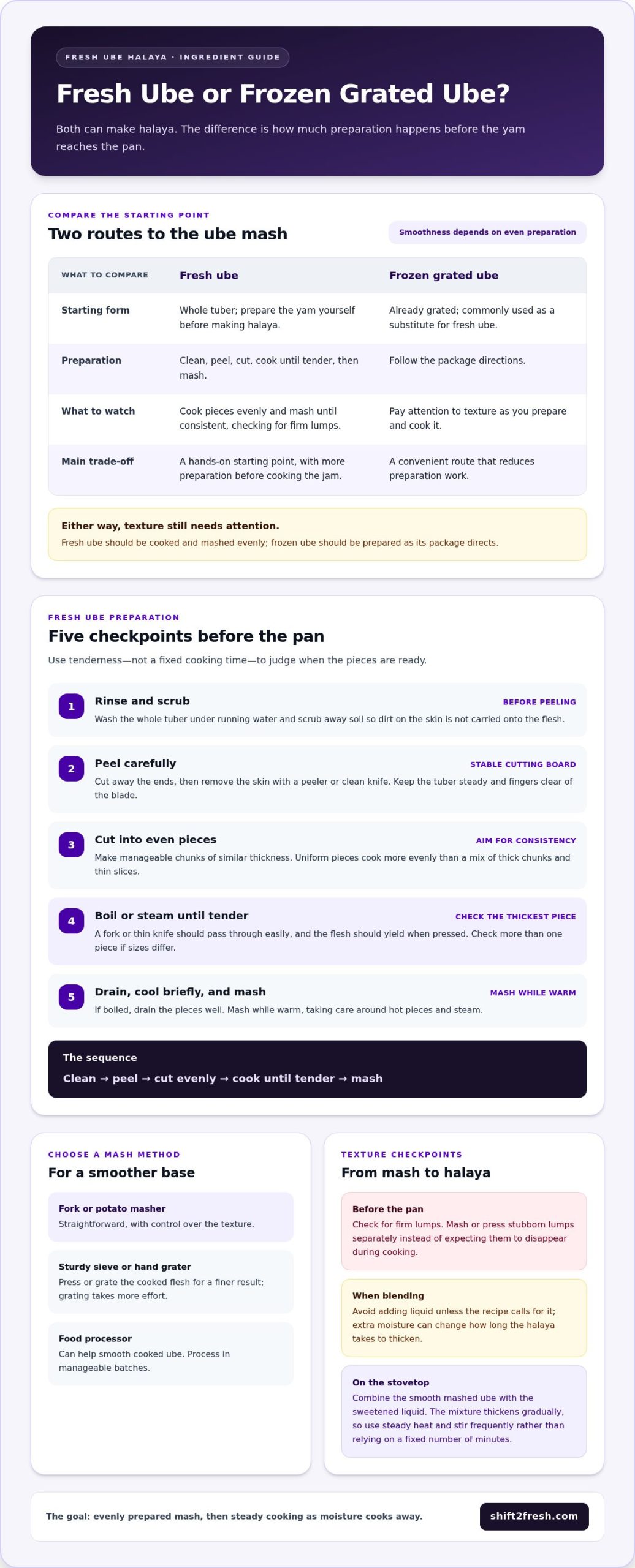
Fresh ube gives you a hands-on starting point and lets you prepare the yam yourself. The process begins before making the jam: clean and cook the tuber, remove and mash the tender flesh, then use that mash to make halaya. Fresh ube isn’t ready to stir into the pan straight from the market; preparing it is part of the recipe.
Frozen grated ube offers a different, convenient route. It’s already grated and is widely used as a substitute for fresh ube, reducing prep work while still making halaya. Neither option removes the need to pay attention to texture: fresh ube must be cooked and mashed evenly, while frozen ube should be prepared as its package directs.
For how to make ube halaya from fresh ube, look beyond the final purple colour. A vivid shade doesn’t guarantee lump-free jam or tell you when it’s ready. Smoothness depends on well-prepared mash and steady cooking, with the mixture stirred as it thickens. Expect the fresh-tuber method to involve a little more preparation before you reach that creamy, spoonable finish. Shift 2 Fresh imports fresh fruits and vegetables weekly from the Philippines, bringing Filipino ingredients to home cooks in the UAE.
How to Prepare Fresh Ube Before Making Halaya
Fresh ube needs to be cooked and softened before it can become the base for halaya. Prepare it evenly and the pieces will tenderize at a similar pace, making them easier to mash into a consistent mixture. Cooking time depends on the tuber’s size and the pieces you cut, so test the ube as it cooks rather than relying on a universal time.
How should you clean, peel, and cut fresh ube?
Wash the whole tuber under running water and scrub away any soil before peeling. Use a clean knife, peeler, board, and hands, and keep the ube steady as you work. Cut away the ends, peel the skin, then cut the flesh into similarly sized pieces. Uniform pieces cook more evenly than a mix of thick chunks and thin slices.
- Rinse and scrub. Clean the whole ube under running water before using a knife or peeler, so dirt on the skin isn’t carried onto the flesh.
- Peel carefully. Set the tuber on a stable cutting board and remove the skin with a peeler or knife, keeping your fingers clear of the blade.
- Cut into even pieces. Make manageable chunks of roughly similar thickness. The exact size can vary, but consistency helps the pieces cook at about the same rate.
- Cook until tender. Boil or steam the pieces until a fork or thin knife passes through the thickest one easily and the flesh yields when pressed. Check more than one piece if their sizes differ.
- Drain, cool briefly, and mash. Once tender, drain the pieces well if boiled. Mash them while warm, taking care around hot pieces and steam.
In short, clean, peel, cut evenly, cook until tender, then mash the ube before starting the halaya. This preparation sequence is the foundation for how to make ube halaya from fresh ube, but it doesn’t set a fixed cooking time. The tuber’s size, the cut size, and the cooking method all affect how long it takes to become tender.
How do you cook and mash fresh ube for halaya?
Mashing with a fork or potato masher is straightforward and gives you control over the texture. For a finer result, press the cooked flesh through a sturdy sieve or grate it with a hand grater. Grating takes more effort but can break up pieces a masher leaves behind. Whichever method you use, check for firm lumps before adding the ube to the pan.
If you find stubborn lumps, mash or press them separately rather than expecting them to disappear during cooking. A food processor can also help smooth cooked ube. Process it in manageable batches and avoid adding liquid unless your recipe calls for it, since extra moisture can change how long the halaya takes to thicken. For Filipino produce and pantry ingredients, explore Filipino ingredients in the UAE.
How to Make Ube Halaya from Fresh Ube on the Stovetop
Once the cooked ube has been mashed smooth, the stovetop stage is about combining it evenly with the sweetened liquid and managing the heat as moisture cooks away. The mixture thickens gradually, so steady heat and frequent stirring matter more than following a fixed number of minutes.
What ingredients and equipment do you need?
Ingredient choices and proportions vary by recipe. The balance of ube, sugar, and milk affects both sweetness and how long the mixture takes to thicken, so use a recipe tested with fresh ube and follow its measurements. A heavy-bottomed pan helps distribute heat, and a sturdy spoon makes it easier to scrape the base as the mixture thickens.
- Prepared fresh ube: cooked, mashed, and checked for firm lumps.
- Sweetener: use the type and measured quantity specified by your recipe.
- Milk or coconut component: follow the recipe’s chosen type and amount. Condensed milk, evaporated milk, and coconut milk are recipe-specific options, not a required combination.
- Optional additions: add butter or cheese only if your recipe calls for them.
How can you tell when the halaya is ready?
Look for a thick, cohesive mixture that moves together as you stir. The exact appearance depends on the recipe and pan, so use the recipe’s visual cues alongside the movement of the halaya rather than treating cooking time as a guarantee. It will continue to firm as it cools.
- Combine smoothly. Add the measured milk and sweetener to the pan as directed by your recipe. Stir to dissolve or distribute the sweetener, then add the mashed ube in several portions, stirring each one in before adding the next. This helps prevent dense pockets of yam.
- Heat gently. Set the pan over low to medium-low heat, following your recipe’s directions. Don’t turn the heat high to speed things up; the mixture can catch on the bottom before it thickens evenly.
- Stir often, scraping the base. As the liquid reduces, the halaya becomes heavier and more likely to stick. Stir frequently, sweeping the spoon across the bottom and into the pan’s edges. If it begins to sputter, lower the heat and stir carefully.
- Check the texture. Follow the tested recipe’s endpoint cues. In general, the mixture should be thick and unified, not pour like milk or leave a watery pool when moved. Stop before it becomes as firm as you want it to be when cold.
- Cool before judging the final consistency. Transfer the halaya to a heat-safe dish and let it cool. It will set further, so its warm texture won’t match its cooled texture exactly.
Properly cooked halaya looks thick and cohesive, moving as one soft mass when stirred while still settling gently in the pan. For how to make ube halaya from fresh ube reliably, use a recipe tested with the size and amount of ube you have. Don’t substitute untested quantities or timing.
How to Fix Lumpy, Runny, or Overly Thick Ube Halaya
Texture problems are easier to diagnose when you consider when they appeared. Lumps carried over from the cooked ube need a different fix from unevenness that develops in the pan. A loose mixture may need more gentle cooking, while a firm one may simply need to cool before you judge it. Longer stirring alone won’t correct every issue, especially if the ube wasn’t mashed evenly to begin with.
| Problem | Likely cause | What to try |
|---|---|---|
| Lumps before cooking | Some cooked ube pieces weren’t fully mashed or grated. | Work the mash through again, pressing stubborn pieces with a masher or through a sieve before adding it to the pan. |
| Lumps during cooking | The ube may not have been incorporated evenly, or the mixture may be heating too quickly. | Lower the heat and stir thoroughly, sweeping across the base and sides. Don’t assume extra stirring will break down firm pieces of yam. |
| Halaya seems runny | The mixture may need more time to reduce, or it may still be hot. | Continue gentle cooking if the tested recipe’s texture cues indicate it needs thickening. Let it cool before deciding whether it’s still too loose. |
| Halaya seems overly firm | It may have cooked too far, or its cooled texture may be firmer than its hot texture. | Allow it to cool before judging. If it remains too firm, use only a tested recipe adjustment rather than adding an arbitrary amount of liquid. |
Why is homemade ube halaya lumpy?
Start by checking the mash, not the pan. If lumps are visible before cooking, mash or grate the cooked ube more thoroughly and remove firm pieces before combining it with the other ingredients. If the mixture was smooth at first but becomes uneven on the stove, stir it gently and consistently over lower heat. A blender isn’t essential; choose a tool that suits the amount and texture of your ube.
These two sources of lumps call for different responses. Re-mashing can address pieces that never broke down, while careful stirring helps distribute the mixture during cooking. If a lump stays firm, don’t keep cooking the whole batch in the hope that it will disappear. The rest of the mixture may thicken or catch before that piece softens.
What if the halaya is too runny or too firm?
For a loose batch, first check whether it’s still hot. Halaya thickens as it cools, so judge it at the stage specified by your tested recipe. If it remains loose and the recipe’s endpoint cues haven’t been reached, continue over gentle heat, stirring and checking frequently. High heat can make the bottom catch before the rest thickens evenly.
If the cooled halaya feels firmer than you wanted, don’t automatically add milk or water. Extra liquid changes the recipe’s balance, and an untested amount may make it loose again. Follow an adjustment that has been tested with the same recipe. For Filipino pantry ingredients to use in home cooking, explore Filipino ingredients from Shift 2 Fresh.
Serve Fresh-Ube Halaya and Find Filipino Ingredients in the UAE
Once the halaya has cooled, choose a serving that suits its consistency. A thicker batch is easy to spread or shape, while a softer one can be spooned into desserts. Its uses go beyond serving it by itself, so make the most of the texture you achieved rather than trying to force every batch into the same form.
How can you serve homemade ube halaya?
Spread thick halaya on toast for a simple snack, or spoon a softer portion over halo-halo. You can also use it as a filling or flavour layer in Filipino-style desserts, cakes, and ice cream. If adding it to another recipe, consider whether the halaya’s sweetness and consistency suit that dish, then adjust the rest of the recipe accordingly.
For a dessert topping, let the halaya cool enough to hold its shape, then add a spoonful where you want concentrated ube flavour. A softer batch works well when you want it to blend into a bowl or dessert; a firmer one is easier to spread in a defined layer. Serve it chilled or at room temperature according to the dish, and use a clean spoon each time you take some from its container.
How should you cool and store homemade halaya?
Transfer the finished halaya to a clean, shallow container so it can cool and be stored covered. Don’t leave it at room temperature for an extended period. USDA food-safety guidance advises refrigerating perishable food within two hours, and using shallow containers helps food cool more quickly. Keep it covered in the refrigerator and use it within three to four days, the USDA’s general guidance for refrigerated leftovers. Recipe-specific storage limits may vary.
After chilling, check the texture before serving. Cold halaya will feel firmer than it did warm, so let it sit briefly if you want a softer spread. If it has been left out too long or shows signs of spoilage, discard it rather than tasting it to check.
Where can UAE home cooks explore Filipino ingredients?
Making halaya is one way to bring Filipino flavours into a UAE kitchen. Shift 2 Fresh imports fresh fruits and vegetables weekly from the Philippines and offers Filipino pantry items, including black glutinous rice and tablea. These ingredients can complement other Filipino dishes and give you more ways to explore home cooking.
If you’re exploring how to make ube halaya from fresh ube, you may also enjoy discovering the wider range of ingredients used in Filipino cooking. Explore Filipino ingredients through Shift 2 Fresh’s UAE online grocery store.
Bring More Filipino Flavours to Your Kitchen
Your first batch is a chance to learn how fresh ube behaves in your kitchen. Make a note of the tuber’s texture and how the halaya sets as it cools, then use those observations to guide your next attempt. That small bit of kitchen experience can make traditional Filipino desserts feel more approachable and inspire new ways to use the ingredients you enjoy.
Shift 2 Fresh has operated since 1975 and imports fresh fruits and vegetables weekly from the Philippines. Its online store also offers Filipino pantry items such as black glutinous rice and tablea, alongside seasonal produce and Asian vegetables. Explore Filipino produce and ingredients for your next meal or dessert.
With a little patience and practice, you can build confidence in how to make ube halaya from fresh ube. Enjoy the process, share what you make, and keep exploring Filipino cooking one dish at a time.
Frequently Asked Questions
Is ube the same as taro?
No. Ube is purple yam, while taro is a different root vegetable with its own flavour and texture. They aren’t interchangeable just because both may have a purple appearance. If a recipe calls for ube, using taro can change the taste and the way the mixture cooks. Check the ingredient name when buying, since colour alone isn’t a reliable way to identify a root.
Can I use frozen ube instead of fresh ube for halaya?
Yes. Frozen grated ube is a widely used alternative and can save you the work of peeling, cooking, and grating a fresh tuber. Follow the package directions for thawing or cooking, and use a recipe written for frozen ube if possible, since its moisture and preparation may differ from fresh. If adapting a fresh-ube recipe, expect the cooking time and texture to vary.
How do I know when fresh ube is cooked enough to mash?
Test one of the largest pieces with a fork or thin knife. It should pass into the centre easily, and the piece should crush under gentle pressure rather than feel firm or crunchy. If the outside is soft but the centre resists, keep cooking and test again. Doneness matters more than the clock, since pieces cut to different sizes won’t soften at the same rate.
Why does ube halaya take so long to cook?
Ube halaya thickens as moisture cooks away from the mixture, and that gradual change takes time over gentle heat. The amount of ube, pan size, and ingredient proportions all affect how quickly it reduces. Turning up the heat may scorch the bottom before the whole batch thickens. For how to make ube halaya from fresh ube, plan for attentive cooking, not a quick stir-and-finish.
Can I make ube halaya ahead of time?
Yes. Making it ahead can be convenient if you want to use the halaya as a filling or topping later. Transfer it to a clean container, cover it, and refrigerate it promptly once cooled. Before serving, check its texture: chilling firms it, so a brief rest at room temperature can make it easier to spread. Use clean utensils when portioning to help keep the remaining halaya fresh.
Can I freeze homemade ube halaya?
Yes, you can freeze it, though thawed halaya may not have exactly the same smooth texture as a fresh batch. Pack it in a freezer-safe, airtight container, leaving a little room at the top, and label it with the date. Thaw it in the refrigerator, then stir gently before serving. If the texture has changed, try it as a dessert filling or topping rather than expecting it to spread identically.
What can I serve with ube halaya?
Serve it with plain bread or warm pandesal, or use a spoonful to add ube flavour to a simple dessert. It can also complement halo-halo or work as a layer in a cake. A softer batch is easy to spoon over a dish, while a firmer one can be spread in a neat layer. Pair it with less-sweet components so the halaya remains the focus.
0 comments