

A fish ball sauce recipe authentic to Filipino street-cart style depends on balance: sweetness, savory depth, a little tang, and optional heat. No single ingredient should overpower the others. Too much sugar can mask the savory notes, while a sauce that is too thin or salty may not deliver the familiar street-food flavor.
If you want to recreate the dip served with skewered fish balls, this guide walks you through a straightforward home-cooked version using soy sauce, brown sugar, vinegar, garlic, and cornstarch. You’ll learn how each ingredient contributes, how to thicken the sauce without lumps, and how to adjust the finished dip while keeping its Filipino street-food character.
You’ll also find practical serving and storage guidance, plus pairing ideas for squid balls or kwek-kwek. The result is a flexible dip you can make for a snack to share or whenever you’re craving the street-cart experience.
Key Takeaways
- Balance sweet, savory, tangy, and optional spicy notes instead of letting one flavor dominate.
- Use this fish ball sauce recipe authentic guide to understand how the ingredients shape flavor and texture.
- Correct a sauce that is too thick, thin, sweet, salty, or spicy in small steps, tasting between adjustments.
- Serve the sauce with hot, cooked fish balls, and offer extra chili or acidity separately so everyone can customize their dip.
- Keep serving and storage practical by separating dipping portions from leftovers.
What Makes Filipino Fish Ball Sauce Taste Authentic?
Filipino fish ball sauce is a street-style dip served with hot fish balls. It balances sweetness, savory depth, tang, and optional chili heat. It is not a creamy or delicate seafood dressing. The sauce should lightly coat the fish balls and complement their flavor, rather than cover it.
Fish balls are a popular street food across parts of Southeast Asia, with ingredients and preparation varying among food traditions. In Filipino street-food settings, the dipping sauce is part of the experience. Diners may dip skewered fish balls into a shared sauce or add sauce to their serving. At home, use a separate bowl so everyone can serve and customize their portion.
Is there one truly authentic fish ball sauce recipe?
There is no single formula that defines every Filipino fish ball sauce. Vendors, households, and regions may favor different levels of sweetness, chili heat, and thickness. One version may be mild and pourable; another may be sweeter, hotter, or thick enough to coat a fish ball.
Authenticity is best understood as a recognizable street-style flavor, not one exact set of measurements. This fish ball sauce recipe authentic to that familiar style is a flexible starting point, not a claim that every vendor makes the sauce the same way. Adjust it to your taste while keeping the flavors in balance.
How does Filipino street-style sauce balance its flavors?
Think of the sauce as a combination of adjustable elements. Sweetness rounds out sharper notes, savory depth gives the dip body, tang keeps it lively, and chili adds heat if you want it. The elements do not need to be equally strong. Aim for a blend where no single taste overwhelms the fish balls.
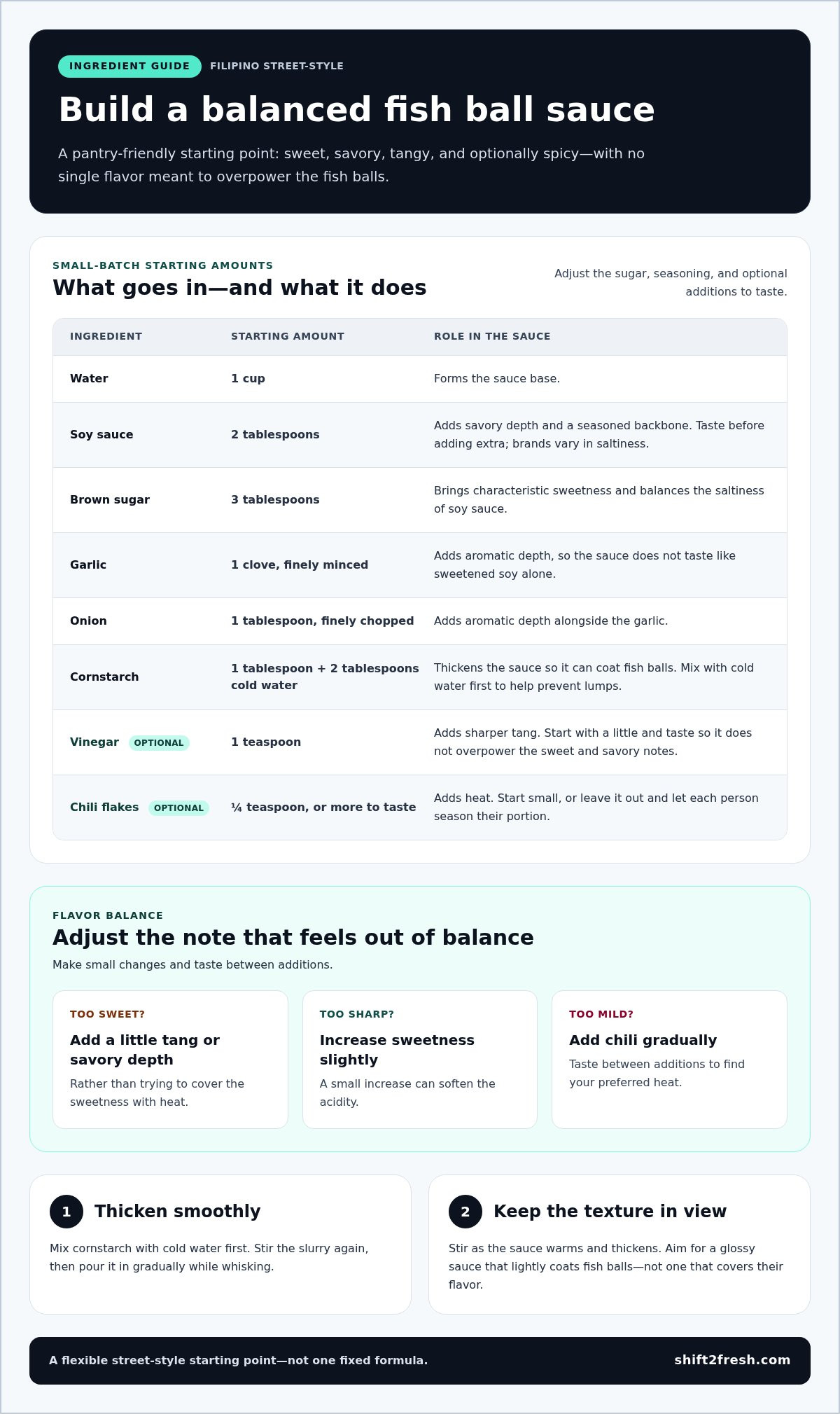
- Too sweet? Add a little tang or savory depth instead of trying to cover the sweetness with heat.
- Too sharp? A small increase in sweetness can soften the acidity.
- Too mild? Add chili gradually and taste between additions.
Make small adjustments and taste after each one. Flavors can become more pronounced as the sauce cooks, so avoid making several large changes at once. This gradual approach helps you find the balance you enjoy, whether you prefer a gentle dip or a bolder, spicier one.
Which Ingredients Build a Balanced Fish Ball Sauce?
This small-batch fish ball sauce recipe authentic to Filipino street-food style starts with pantry basics. Use the quantities below as a starting point, then adjust the sugar, seasoning, and optional additions to taste.
- 1 cup water
- 2 tablespoons soy sauce
- 3 tablespoons brown sugar
- 1 garlic clove, finely minced
- 1 tablespoon finely chopped onion
- 1 tablespoon cornstarch mixed with 2 tablespoons cold water
- Optional for tang: 1 teaspoon vinegar
- Optional for heat: ¼ teaspoon chili flakes, or more to taste
Brown sugar rounds out the sauce, soy sauce brings savory depth, and chili adds a lively kick when you want heat. Use those roles as a guide, making small adjustments rather than adding more of every ingredient at once.
What does each core ingredient contribute?
Brown sugar gives the sauce its characteristic sweetness and balances the saltiness of soy sauce. Soy sauce supplies a savory, seasoned backbone. Because brands vary in saltiness, taste the sauce before adding extra. Garlic and onion add aromatic depth, keeping the sauce from tasting like sweetened soy alone.
Water forms the base, while cornstarch thickens the sauce so it can coat fish balls. Mix the starch with cold water first to help prevent lumps, then add the slurry gradually as the sauce cooks. Filipino cuisine reflects a cuisine of many influences, and home cooks can adapt familiar flavors to their preferences.
Which optional ingredients can personalize the sauce?
Chili flakes are optional. Start with a small amount for gentle heat, or leave them out and let guests season their own portions. Vinegar gives the sauce a sharper tang. Add a little at first and taste, since too much can overpower the sweet and savory notes. A squeeze of citrus can also brighten the sauce, but it has a fresher flavor than vinegar, so treat it as a substitution rather than an identical swap.
For more inspiration for Filipino pantry cooking, browse the Filipino pantry essentials from Shift 2 Fresh. You can also tailor this recipe with ingredients you already have at home.
How to Make Authentic-Style Fish Ball Sauce Step by Step
Use the ingredient amounts above and let the texture guide you more than the clock. The sauce thickens as it heats and firms up a little more as it cools. A gentle simmer and steady stirring help the cornstarch blend smoothly and keep the sauce from scorching on the bottom of the pan.
How should you mix and cook the sauce?
- Measure everything first. In a small bowl, mix the cornstarch with cold water until smooth. Set the optional vinegar and chili aside so you can adjust the flavor after cooking.
- Combine the base. In a small saucepan, stir together the water, soy sauce, brown sugar, garlic, and onion until the sugar starts to dissolve.
- Warm it gradually. Set the pan over medium heat and stir as the mixture warms. When it begins to simmer gently, lower the heat if needed to prevent a vigorous boil or sticking.
- Thicken slowly. Stir the cornstarch slurry again, then pour it into the pan in a thin stream while whisking. Keep stirring until the sauce looks glossy and thickens evenly. If it still seems thin, let it cook a little longer over low heat before adding more slurry.
- Check the texture. Dip a spoon into the sauce and lift it out. The sauce should lightly coat the spoon but still run off easily.
- Cool, taste, and serve. Take the pan off the heat and let a small spoonful cool slightly before tasting. Stir in vinegar or chili a little at a time, if using, then serve with cooked fish balls.
For a pourable dip, stop cooking once the sauce lightly coats the back of a spoon but still flows freely. It will thicken further as it cools, so do not wait for it to reach its final consistency in the pan. Foxy Folksy also shares a detailed authentic fishball sauce recipe for another Filipino-style preparation.
When should you adjust the flavor?
Make your main flavor adjustments after cooking, once the sauce has cooled slightly. Add brown sugar for more sweetness, a little soy sauce for savory depth, or a small splash of vinegar for tang. For heat, add chili flakes in pinches and taste between additions. Avoid correcting several flavors at once. Small changes make it easier to find the balance you want.
Cooling affects texture as well as taste. If the sauce gets thicker than you like, stir in a little warm water until it loosens. This fish ball sauce recipe authentic to Filipino street-food style is easiest to tailor at the end, when you can judge both its cooled consistency and its full flavor.
How Can You Fix Fish Ball Sauce That Is Too Thick, Thin, or Strong?
A sauce that looks right in the pan may thicken as it cools, so check its consistency before making a major correction. Adjust in small steps, stir well, and taste again. This measured approach helps preserve the sweet-savory balance of a fish ball sauce recipe authentic to Filipino street-food style.
How do you correct the sauce’s consistency?
- If it’s too thick: Stir in a little warm water, then reassess before adding more. Warm liquid loosens the sauce without cooling it suddenly or thinning it all at once. If the flavor becomes muted, taste before adding a small amount of seasoning.
- If it’s too thin: Let it simmer gently, stirring often, until some liquid evaporates and the sauce reaches your preferred texture. If it needs more thickening, mix cornstarch with cold water to make a smooth slurry, then add it gradually while stirring. Let the sauce heat and thicken before deciding whether it needs another small addition.
Do not sprinkle dry starch directly into the pan. It can clump when it hits hot liquid, leaving lumps that are difficult to smooth out. Stirring also helps prevent the sauce from sticking to the bottom as it reduces or thickens.
How do you balance sweetness, saltiness, and heat?
Change one flavor at a time so you can tell what made the difference. If the sauce is too sweet, a little water can soften its overall intensity. If it is too salty or spicy, dilute it gradually with water and taste again. To add sweetness, seasoning, tang, or heat, stir in a small amount of the relevant ingredient and sample before adding more.
Extra liquid also changes thickness. If you loosen the sauce to balance a strong flavor, let it stand briefly and check the texture again. If needed, return it to a gentle simmer or use a little prepared slurry. Add either gradually instead of trying to correct everything at once.
Small, deliberate adjustments are more reliable than guessing at an exact correction. For Filipino cooking ingredients and pantry inspiration, explore Filipino pantry essentials from Shift 2 Fresh.
How to Serve and Store Filipino Fish Ball Sauce at Home
Serve the sauce as a dip alongside hot, fully cooked fish balls. Use a clean bowl and serving spoon, or individual dipping picks, so everyone can serve themselves without putting used skewers into a shared container. Set extra chili and vinegar or citrus on the side so guests can adjust heat or tang in their own portions.
What should you serve with fish ball sauce?
Fish balls are the main pairing. The sauce should complement them, not cover them completely. Set out the dip while the fish balls are warm, with skewers or picks for serving. You can also offer squid balls or kwek-kwek, but they are optional. Fish balls alone make a simple street-food-style snack.
For cleaner serving, transfer the amount you expect to use into a small bowl instead of dipping directly into the storage container. Keep extra sauce covered and separate. This limits contact between leftovers and used skewers, food, or serving utensils.
How should you store leftover sauce?
Cool leftover sauce and refrigerate it promptly in a clean, covered container. Do not leave it out while the meal continues, and keep it separate from sauce used for dipping. Storage time can depend on preparation and handling, so follow current food-safety guidance for your location rather than relying on a guessed shelf life.
Reheat only the portion you plan to use, warming it gently and stirring so it heats evenly. The sauce may thicken after chilling. Loosen it with a little water while reheating, adding gradually until it reaches a dip-friendly consistency. If its appearance or smell seems unusual, or you are unsure whether it was handled safely, discard it rather than tasting it to check.
A fish ball sauce recipe authentic to Filipino street-food flavors is easy to make your own. Serving chili or acidity separately gives each person room to customize their dip. For more Filipino home-cooking inspiration, explore Filipino pantry essentials from Shift 2 Fresh.
Make Your Next Street-Food Snack at Home
A memorable Filipino-style fish ball sauce comes down to balance, not a rigid formula. Start with the measured ingredients, thicken gradually, then taste and adjust one flavor at a time. If the sauce turns too thick, thin it with a little warm water. If it tastes too strong, make a small correction and taste again. These habits help you make a fish ball sauce recipe authentic to the sweet, savory, tangy, and optionally spicy street-food style.
Serve it alongside hot, cooked fish balls, with extra chili or acidity on the side for guests who want to customize their dip. Store leftovers in a clean, covered container in the refrigerator and handle them carefully.
For your next Filipino-inspired meal, explore Filipino pantry essentials with Shift 2 Fresh, an online grocery store offering Filipino pantry items and seasonal produce in the UAE.
Frequently Asked Questions
Is there one authentic Filipino fish ball sauce recipe?
No single formula represents every Filipino fish ball sauce. Vendors, households, and individual preferences influence how sweet, savory, tangy, spicy, or thick each version tastes. This recipe is a flexible street-food-inspired starting point, not a definitive standard. Taste it as you cook, then adjust gradually. Small additions make it easier to find your preferred balance without making the sauce too salty, sweet, or sharp.
What is Filipino fish ball sauce made of?
This recipe uses water, soy sauce, brown sugar, garlic, onion, and a cornstarch slurry. Brown sugar provides sweetness, soy sauce adds savory depth, and the aromatics build flavor. Cornstarch thickens the sauce. Vinegar and chili flakes are optional for extra tang and heat. Ingredients vary between recipes, so these describe this version rather than every Filipino sauce. Adjust seasonings gradually, since soy sauce can vary in saltiness.
How do you make fish ball sauce thick and glossy?
Mix cornstarch with cold water before adding it gradually to the warm sauce while stirring. Keep the sauce at a gentle simmer and stir consistently so the thickener combines smoothly and does not stick or clump. Look for a glossy texture that lightly coats a spoon but still flows easily. Avoid adding dry starch directly to the pan. The sauce may thicken as it cools, so leave it easy to dip.
Can I make fish ball sauce without chili?
Yes. Leave out the chili flakes for a mild sauce. Brown sugar, soy sauce, garlic, and onion still provide the sweet and savory character that pairs well with fish balls. If guests have different heat preferences, offer chili separately so each person can add their own. Taste the sauce before making other adjustments. Adding extra seasoning to compensate for omitted chili could make it too salty or sweet.
How do I fix fish ball sauce that tastes too sweet?
Adjust the sauce gradually, changing one thing at a time. A little water can soften the overall intensity, while a small splash of vinegar adds tang. A little soy sauce may deepen the savory flavor, but it also increases saltiness. Stir and taste after each addition. Avoid adding large amounts of several ingredients at once, which can replace excessive sweetness with a sauce that tastes too salty or sharp.
Can I prepare fish ball sauce ahead of time?
Yes. Prepare it ahead, then cool it and refrigerate it promptly in a clean, covered container. For a specific storage duration, follow current food-safety guidance rather than relying on a guess. Reheat the sauce gently, stirring to restore an even texture. If it has thickened more than you like, stir in a little water gradually. Keep any portion used for dipping separate from stored leftovers.
What can I serve with Filipino fish ball sauce?
Serve the sauce as a dip with hot, cooked fish balls. Place it in a clean, separate bowl so everyone can choose how much to use, and provide a spoon or individual dipping picks. Other snacks are optional. Set out extra chili or a little vinegar separately so guests can customize the heat or tang without changing the flavor of the whole batch.
0 comments