

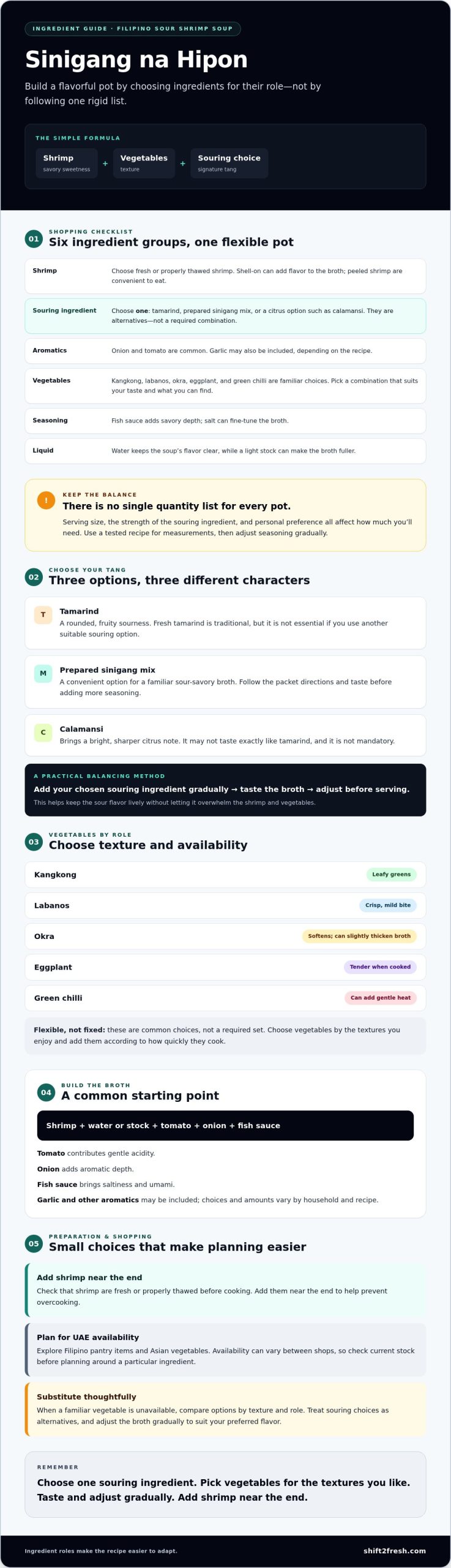
A flavorful sinigang na hipon doesn’t depend on following one exact ingredient list. Instead, choose ingredients by role: shrimp for a savory sweetness, vegetables for texture, and a souring ingredient for the broth’s signature tang. Knowing what each ingredient contributes makes it easier to adjust the recipe while keeping its Filipino character.
If you’re unsure which sinigang na hipon ingredients are essential, or whether a substitute will make the soup too mild or too sour, you’re not alone. Finding familiar Filipino vegetables and souring ingredients can also take planning in the UAE, where availability may vary between shops.
This guide gives you a practical shopping checklist and explains what each key ingredient brings to the pot. Learn how to choose shrimp and vegetables, which ingredients are flexible, and how to make sensible substitutions while balancing the soup’s sour flavor. Whether you’re cooking from scratch or using a prepared souring mix, you’ll know what to look for and how the ingredients work together.
Key Takeaways
- Shop by category with this sinigang na hipon ingredients checklist to see what’s essential and what’s flexible.
- Choose one souring option, such as tamarind, sinigang mix, or citrus, then adjust it to suit your preferred broth flavor.
- Compare vegetables by texture and role to find practical substitutes when a familiar Filipino vegetable isn’t available.
- Check shrimp freshness before cooking and add the shrimp near the end to help prevent overcooking.
- For UAE shopping, explore Filipino pantry items and Asian vegetables, and check current stock before planning your recipe.
Sinigang na Hipon Ingredients: The Essential Shopping Checklist
Sinigang na hipon is a Filipino sour soup made with shrimp and vegetables in a tangy broth. The souring ingredient gives the soup its defining flavor, while aromatics, seasoning, and vegetables round it out. Recipes vary by cook and household. For a broader overview of the dish and its variations, see Sinigang.
The core sinigang na hipon ingredients fall into six groups: shrimp, a souring ingredient, aromatics, vegetables, seasoning, and water or stock.
- Shrimp: Choose fresh or properly thawed shrimp. Shell-on shrimp can add flavor to the broth, while peeled shrimp are convenient to eat.
- Souring ingredient: Use tamarind, prepared sinigang mix, or a citrus option such as calamansi. These are alternatives, not ingredients you need to combine.
- Aromatics: Onion and tomato are common. Garlic may also be included, depending on the recipe.
- Vegetables: Kangkong, labanos, okra, eggplant, and green chilli are familiar choices. Choose a combination that suits your taste and what you can find.
- Seasoning: Fish sauce is a common way to add savory depth. Salt can be used to fine-tune the broth.
- Liquid: Water keeps the soup’s flavor clear, while a light stock can make the broth fuller.
There’s no single quantity list for every pot. Serving size, the strength of the souring ingredient, and personal preference all affect how much you’ll need. Use a tested recipe for measurements, then adjust the seasoning gradually as you cook.
Which ingredients form the base of shrimp sinigang?
Shrimp, water or stock, tomato, onion, and fish sauce make a common starting point. Tomato contributes gentle acidity, onion adds aromatic depth, and fish sauce brings saltiness and umami. Garlic and other aromatics may also be used, but choices and amounts vary between households and recipes. The defining sourness comes from the chosen souring ingredient. Garnishes and extra seasonings are optional.
Which vegetables commonly go into sinigang na hipon?
Kangkong adds leafy greens, labanos brings a crisp, mild bite, and okra softens and can slightly thicken the broth. Eggplant becomes tender as it cooks, while green chilli can add gentle heat. These are common options, not a required set. Choose vegetables based on the textures you enjoy and what’s available, then add them according to how quickly they cook.
Tamarind, Calamansi, or Mix: Choosing a Souring Ingredient
Tamarind, prepared sinigang mix, and calamansi can each give the broth its characteristic tang, but they differ in preparation and flavor. Tamarind offers a rounded, fruity sourness, prepared mix is convenient and consistent, and calamansi brings a bright citrus note. Choose one as your main souring ingredient rather than combining all three by default.
The right balance depends on the ingredient and your preference. Add your chosen souring ingredient gradually, taste the broth, and adjust before serving. This helps keep the sour flavor lively without letting it overwhelm the shrimp and vegetables. For proportions and preparation steps, follow a tested recipe or the package directions for a mix.
Does sinigang na hipon need fresh tamarind?
No. Fresh tamarind is one traditional way to build sinigang’s sour profile, but it isn’t essential if you’re using another suitable souring option. Tamarind can give the broth a rounded, fruity flavor, though the result depends on the ingredient and how it’s prepared. Preparation methods and amounts vary, so use a reliable, tested recipe rather than guessing. Fresh tamarind availability may also vary between UAE shops and seasons.
Can prepared sinigang mix or calamansi work instead?
Yes. Prepared sinigang mix is a convenient way to make a familiar sour-savory broth. Follow the packet directions, then taste before adding more seasoning. Calamansi is another option if you prefer a sharper citrus character, but it isn’t mandatory and may not taste exactly like tamarind. Treat the options as alternatives and adjust gradually to suit the soup.
If you’re deciding which pantry staples to keep on hand, browse this guide to essential Filipino pantry items. Shift 2 Fresh offers Filipino pantry items through online ordering in the UAE. Check current availability rather than assuming a particular souring ingredient is in stock. For a separate reference on shrimp’s nutritional profile, see the FDA’s nutritional value of shrimp information.
Sinigang Vegetables: Best Uses and Substitutes
There isn’t one fixed vegetable combination for sinigang na hipon. Kangkong, labanos, okra, and eggplant are commonly used, while green chilli and other additions are optional. Choose vegetables for the textures you enjoy. Treat swaps as flexible home-cooking choices, since a substitute may serve a similar role without tasting or cooking exactly like the original.
| Vegetable | Texture and role | Possible substitute |
|---|---|---|
| Kangkong | Leafy greens that soften quickly and add a tender, fresh contrast. | Spinach can provide leafy greens, though its texture differs. |
| Labanos | White radish with a crisp bite that softens in the broth. | Daikon or another mild white radish is a close practical option. |
| Okra | Softens during cooking and gives the soup a slightly thickened feel. | Green beans add a vegetable with a firmer bite, but won’t thicken the broth in the same way. |
| Eggplant | Turns tender and absorbs the sour broth. | Zucchini can offer a similarly soft texture, though its flavor is different. |
| Green chilli | An optional addition for gentle heat. | Use a mild chilli if available, or leave it out for a less spicy soup. |
What do kangkong, labanos, okra, and eggplant add?
Kangkong brings leafy greens to the bowl and is often added near the end so it doesn’t cook for too long. Cut labanos thicker if you prefer it to retain a firmer bite. Okra softens and can lend the broth a little body, while eggplant turns tender and absorbs the soup. Cooking times depend on the cut and the recipe, so follow the sequence in your chosen recipe.
What can you substitute when a vegetable is unavailable?
Match the role as closely as possible: try spinach for leafy greens, daikon for labanos, or zucchini for a soft-cooking vegetable like eggplant. Green beans can replace okra as a vegetable, but they won’t recreate its texture in the broth. These are convenient kitchen swaps, not exact traditional equivalents. Add substitutes according to how quickly they cook, and check your recipe for timing.
Filipino and Asian vegetable availability can vary across UAE retailers. For more guidance on recognizing and using produce, explore this essential Asian vegetables guide, and check current stock before planning your shopping list.
How to Choose Fresh Shrimp and Prepare the Ingredients
Shrimp is the main protein, while the souring ingredient gives the soup its flavor foundation. Since shrimp cooks quickly, the order you prepare and add the sinigang na hipon ingredients matters: build the broth first, cook vegetables according to their needs, then add the shrimp near the end.
How should you select and prepare shrimp for sinigang?
Buy shrimp from a reliable seller and follow its storage and handling guidance. Choose shell-on shrimp if you prefer the flavor the shells can add to the broth, or peeled shrimp for easier serving. Before cooking, check the package and shrimp for signs of damage or spoilage, and don’t use them if you’re unsure they’ve been kept safely. Rinse and prepare them as your tested recipe directs.
In what order should the ingredients go into the pot?
Start with the broth and aromatics, then add the souring ingredient and season the liquid to taste. Add vegetables in stages according to how quickly they soften. Follow your chosen recipe for the specific order, since cut size and cooking time can vary.
- Check what you have. Inspect the shrimp and produce, read package directions for any prepared souring mix, and set out your ingredients.
- Prepare the vegetables. Wash and cut them according to the recipe, keeping quicker-cooking leaves separate from firmer vegetables.
- Build the broth. Simmer the liquid with aromatics, then add your chosen souring ingredient and adjust the seasoning gradually.
- Cook the vegetables. Add firmer vegetables first and more delicate ones later, following the timing in your tested recipe.
- Add the shrimp last. Simmer until thoroughly cooked, using your recipe’s guidance. Avoid leaving shrimp in the pot for the full cooking time of vegetables that need longer, as it can become tough and less tender.
Keep the timing flexible, but follow food-safety guidance. If shrimp is frozen, thaw and handle it according to the package or trusted food-safety guidance, and avoid relying on a guessed storage time. For vegetables and Filipino pantry items that may help round out your shopping list, explore Shift 2 Fresh’s mobile app and check current availability.
Where to Find Sinigang na Hipon Ingredients in the UAE
Shopping for sinigang na hipon ingredients in the UAE may mean checking more than one retailer. Specialty vegetables and Filipino pantry staples aren’t available everywhere, and stock can change. Sort your list into fresh produce, shrimp, and pantry items, then check each retailer’s current listings and delivery area before planning the meal.
Which ingredients may need a Filipino or Asian grocery shop?
Fresh produce: Kangkong, labanos, okra, and other Asian vegetables may be easier to find through retailers that carry Asian produce. If a preferred vegetable isn’t listed, choose a similar-texture substitute before shopping rather than changing the recipe at the last minute.
Shrimp: Check a seafood counter or grocery retailer’s chilled or frozen selection. Review product details and handling instructions, and choose the form, such as shell-on or peeled, that suits your recipe.
Pantry items: Filipino grocery sections and specialty shops may carry souring mixes or other Filipino cooking staples. Availability varies, so search for the exact item and check the listing rather than assuming it’s in stock. For a wider overview of ingredients used in Filipino cooking, see this guide to Filipino ingredients for authentic dishes.
How can UAE shoppers make ingredient sourcing easier?
Start with the ingredient that defines the dish’s flavor, then build the rest of your list around what you can find. If a vegetable is unavailable, choose a substitute with a similar role and texture. Check the retailer’s current listing, delivery area, and product notes before placing an order, especially if you’re cooking for a particular day.
Shift 2 Fresh is an online grocery store in the UAE offering Filipino pantry items and Asian vegetables through its mobile app. It’s one place to explore while planning, but check current availability for specific ingredients. Browse Filipino and Asian groceries and confirm what’s listed before relying on it for your recipe.
Before you shop or cook, check this list:
- Choose one souring ingredient and confirm you have enough for your tested recipe.
- Check for shrimp and review its storage and preparation guidance.
- Pick the vegetables you want, plus a practical substitute for any hard-to-find option.
- Make sure you have aromatics, seasoning, and water or stock.
- Recheck current stock and delivery details with each retailer.
Gather Your Ingredients and Get Cooking
A flavorful pot starts with a few thoughtful choices, not a rigid shopping list. Use the sinigang na hipon ingredients checklist to cover the essentials, choose one souring ingredient to shape the broth, and select vegetables for the textures you enjoy. If a vegetable is unavailable, a practical substitute can still make the soup your own. Adding shrimp near the end helps keep it tender.
Ready to plan your next meal? Shift 2 Fresh offers online ordering for Filipino pantry items and Asian vegetables in the UAE, with more than 45 years of experience in the food industry. Ingredient availability can vary, so check current listings as you build your shopping list.
Explore Filipino and Asian groceries at Shift 2 Fresh and find ingredients for your next bowl. Happy cooking!
Frequently Asked Questions
What are the main ingredients in sinigang na hipon?
The main ingredients are shrimp, a souring ingredient, water or stock, tomato, onion, fish sauce, and vegetables. Common vegetable choices include kangkong, labanos, okra, and eggplant, but there’s no single required combination. Think of the sinigang na hipon ingredients in groups: shrimp for protein, a souring ingredient for the defining tang, aromatics and seasoning for depth, and vegetables for varied texture.
Does sinigang na hipon need tamarind?
No, sinigang na hipon doesn’t have to use tamarind. Tamarind is a traditional way to create the soup’s sour flavor, but prepared sinigang mix or a citrus option such as calamansi can also provide tang. Choose one as your main souring ingredient, then add it gradually and taste the broth. The best option depends on your preferred flavor and what’s available.
Can I use sinigang mix instead of fresh tamarind?
Yes, prepared sinigang mix can replace fresh tamarind and is a convenient way to season the broth. Follow the packet directions because products and recommended amounts can differ. Stir it in, taste the soup, and adjust before adding more seasoning. You don’t need to combine the mix with tamarind or calamansi unless you’re intentionally adapting a tested recipe to create a different balance.
What vegetables go in sinigang na hipon?
Common choices include kangkong, labanos, okra, and eggplant. Green chilli is an optional addition for heat. Each brings a different texture, from leafy, tender greens to firmer radish or soft-cooking eggplant. Choose according to preference and availability rather than using every vegetable. Follow your recipe’s cooking order so quicker-cooking vegetables don’t spend too long in the broth.
Can I make sinigang na hipon without kangkong?
Yes, kangkong isn’t essential. You can leave it out or use another leafy green, such as spinach, as a flexible home-cooking substitute. The replacement may soften differently and won’t be an exact match, so add it according to its cooking needs and your recipe. The soup’s defining sour flavor comes from its souring ingredient, not from any one vegetable.
How much shrimp do I need for sinigang na hipon?
The amount depends on your serving size, the size of the shrimp, and how substantial you want each bowl to be. Use a tested recipe that states how many people it serves, then follow its shrimp quantity rather than relying on a universal measure. If changing the batch size, adjust the other ingredients too, especially the liquid and souring ingredient, so the broth stays balanced.
When should I add shrimp to sinigang?
Add shrimp near the end, after the broth has developed flavor and the vegetables that need longer have started cooking. Shrimp is delicate, so it shouldn’t simmer for the same length of time as firmer vegetables. Cook it thoroughly according to your tested recipe, then remove the pot from the heat once it’s done to help prevent a tough, overcooked texture.
0 comments