

What if the secret to better adobo isn’t a stricter recipe, but knowing when to adjust? The mistakes to avoid when cooking adobo often come down to balance and timing. Too much vinegar or soy sauce can overpower the dish, while rushing the braise can leave the meat tough or unevenly cooked.
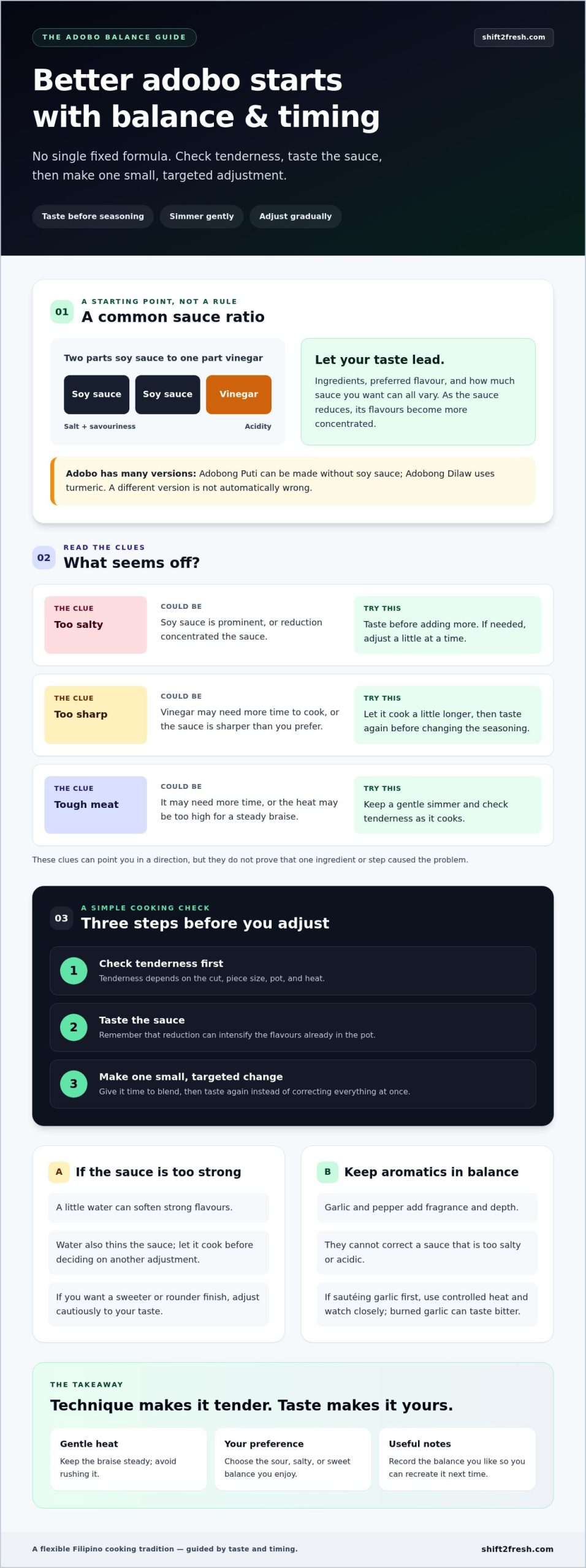
If you’ve heard conflicting advice about browning the meat, marinating it, or stirring the pot, you’re not alone. Adobo has many personal and regional variations, so one formula won’t suit every cook or ingredient. A common starting point is two parts soy sauce to one part vinegar, but treat that as a guide and let your taste lead.
This article covers the missteps that affect flavour and texture, and how to respond as the dish cooks. You’ll learn when browning is optional, how to handle vinegar, and how to keep the meat tender while adjusting the sauce. The goal isn’t perfect-by-the-book adobo. It’s a version you can confidently make your own.
Key Takeaways
- Adobo has no single fixed formula, so use taste and timing rather than treating one recipe as a rule.
- The mistakes to avoid when cooking adobo are easier to fix when you identify the main flavour imbalance before adjusting the sauce.
- Use a gentle simmer and check the meat as it cooks. Tenderness depends on the cut, piece size, pot, and heat.
- When something seems off, check tenderness first, taste the sauce, then make one small, targeted adjustment.
- Keep notes on the balance you enjoy so you can recreate your preferred version next time.
Mistakes to Avoid When Cooking Adobo Start With Misunderstanding the Dish
Many adobo problems can be handled by checking flavour and texture before making changes. A sauce that seems too sharp may mellow as it cooks, while meat that still feels firm may need more time over gentle heat. Before assuming dinner is ruined, work out whether the issue is technique or simply a flavour preference.
Adobo is a Filipino cooking style, not one fixed recipe. Household and regional versions vary in ingredients and method. Adobong Puti, for example, can be made without soy sauce, while Adobong Dilaw uses turmeric. The Filipino adobo tradition reflects this range, so a version that tastes different from the one you grew up with isn’t automatically wrong.
There’s no single mandatory household formula for adobo. The right balance is the one you enjoy. That doesn’t mean every result comes down to taste. Preference determines how sour, salty, or sweet you like the sauce. Technique affects whether the meat becomes tender and the flavours come together.
Why adobo recipes do not all use one fixed formula
Cooks make different choices about proportions, aromatics, meat, and how much sauce they want. No single vinegar, soy sauce, or protein is required for every version. Treat a recipe as a starting point: follow its method, then taste the sauce as it cooks before deciding whether to adjust it. This helps you distinguish a preference for more tang from a genuine imbalance.
Which adobo problems are easiest to recognize?
Look at the result, then consider what might have contributed. These clues are useful, but they don’t prove that one ingredient or step caused the problem:
- Overly salty sauce: The soy sauce may be prominent, or the sauce may have become more concentrated as it reduced.
- Harsh acidity: The vinegar may need more time to cook, or the sauce may simply be sharper than you prefer.
- Tough meat: It may need more time, or the heat may have been too high for a steady braise.
These are among the mistakes to avoid when cooking adobo, but they’re often manageable. Heat, cooking time, and sauce reduction all affect the final dish. Taste before adding more seasoning, check tenderness as you go, and make changes gradually. The next sections explain how to balance the sauce and keep the meat tender.
Avoid Adobo Flavour Mistakes by Balancing Vinegar, Soy Sauce, and Aromatics
Vinegar brings acidity; soy sauce adds salt and savouriness. The sauce changes as it cooks: liquid evaporates, flavours concentrate, and a balance that tastes mild early on may become more intense later. A common starting point is two parts soy sauce to one part vinegar, but it’s a guide, not a rule. Your ingredients and preferred flavour matter, so taste before adding more seasoning.
One of the mistakes to avoid when cooking adobo is adding extra salty ingredients before the sauce has reduced. More soy sauce may seem like an easy way to boost savouriness, but it can leave the finished dish overpoweringly salty. Add strong seasonings in small amounts, give them time to blend, then taste again.
How to prevent adobo from becoming too salty or too sour
Taste the sauce during cooking, remembering that reduction intensifies what’s already in the pot. If it’s too salty or sharp, make a small adjustment and taste again rather than trying to correct it all at once. A little water can soften strong flavours, but it also thins the sauce. After adding water, let the sauce cook before deciding whether it needs another adjustment.
If the sauce tastes too sour, consider whether it needs more cooking time before adding anything else. Vinegar’s sharpness may mellow as it cooks. If you prefer a sweeter or rounder finish, adjust cautiously to your taste rather than assuming every version should have the same profile.
Do not overlook garlic, pepper, and other aromatics
Garlic and pepper give adobo fragrance and depth, but they can’t correct a sauce that’s too salty or acidic. Think of aromatics as supporting flavours, not substitutes for balanced seasoning. If you sauté garlic first, use controlled heat and watch it closely. Burned garlic can add bitterness that’s difficult to disguise.
Adjusting seasoning is a small correction; changing the dish’s whole flavour profile is a deliberate variation. For example, Coconut Milk Chicken Adobo shows how coconut milk can create a creamier style. If you’re exploring Filipino ingredients beyond this dish, the Filipino pantry essentials guide offers broader context. You can also explore Filipino pantry items as you plan what to cook, checking current availability for specific ingredients.
Cooking Adobo Mistakes That Affect Tenderness and Sauce Texture
Heat control has a big effect on how adobo turns out. A steady, gentle simmer gives the meat time to soften while the sauce cooks down gradually. A vigorous boil can cook the meat unevenly, drive off liquid quickly, and leave some pieces dry before others are tender. Cooking time also depends on the cut, piece size, pot, and heat, so check the meat rather than relying on a guaranteed time.
Why boiling adobo too hard can leave meat tough
Keep the liquid at a gentle simmer, with small bubbles rather than a rolling boil. Check a piece periodically for tenderness, and lower the heat if the liquid is bubbling aggressively. If the meat is still firm, give it more time and check again. Increasing the heat isn’t always the answer. These texture-related mistakes to avoid when cooking adobo are easier to catch when you pay attention to the pot as it cooks.
When browning or marinating helps, and when it is optional
Browning the meat first can add a deeper, roasted flavour, but it’s optional. Marinating can influence how the seasoning reaches the meat, though it doesn’t replace cooking it properly. Family methods differ: some cooks prefer these extra steps, while others build flavour in the pot. If you choose to brown the meat, let the surface sear rather than crowding the pan so the pieces steam. Use browning or marinating to shape the flavour, not as a rule every adobo must follow.
Use the result to guide your next move:
| Symptom | Possible cause | Sensible next adjustment |
|---|---|---|
| Meat is still firm | It may need more time, or the simmer may be too vigorous. | Lower the heat and continue cooking, checking tenderness periodically. |
| Some pieces are dry while others are tender | Pieces may differ in size, or the pot may be boiling unevenly. | Keep the heat gentle and check pieces individually. |
| Sauce is reducing before the meat is tender | Heat may be too high or the pot may be uncovered. | Lower the heat and monitor the liquid as the meat cooks. |
Adobo methods vary, so browning, marinating, and simmering choices can be adapted to your ingredients and preferred texture. Focus on steady heat and the tenderness of the meat, rather than forcing every batch to follow the same timing or technique.
How to Fix Common Adobo Problems While the Dish Is Cooking
Pause before reaching for another ingredient. A quick check can stop a small imbalance from becoming harder to fix, especially as the sauce reduces and concentrates. Follow this sequence: check whether the meat is tender, taste the sauce, identify the strongest problem, then make one small adjustment and taste again.
- Check tenderness before deciding whether the meat needs more cooking.
- Taste a little sauce, letting it cool briefly so you can judge it comfortably.
- Name the dominant issue: too salty, too sharp, too thin, or meat that seems dry or firm.
- Make one gradual change, then give the dish time to respond before adjusting again.
This measured approach helps prevent a small issue from becoming harder to correct as the dish cooks.
What to do when adobo tastes too salty, sour, or thin
If the sauce is too salty, don’t add more soy sauce or other salty seasoning. A little water can dilute the saltiness, but it also thins the sauce, so add it sparingly and reassess. If the flavour is sharply acidic, keep the pot at a gentle simmer and taste again before making another change. The vinegar’s edge may soften as it cooks.
For a watery sauce, let it reduce carefully, keeping an eye on both its saltiness and the meat’s tenderness. You can remove cooked meat before reducing the liquid, which helps prevent it from continuing to cook while the sauce thickens. Adding water and reducing sauce have opposite effects on concentration, so avoid switching rapidly between the two.
How to rescue meat that seems dry or under-tender
Firm meat may simply need more gentle cooking, depending on its cut and size. Check a piece before increasing the heat. If it’s already dry, avoid a vigorous boil and serve it with some sauce to add moisture at the table. Further aggressive cooking is unlikely to improve its texture.
Handle raw poultry separately from ready-to-eat food, and wash your hands, utensils, and surfaces after contact. Use a food thermometer and follow current UAE food-safety guidance for safe cooking temperatures; colour alone isn’t a reliable way to check doneness. Refrigerate leftovers promptly and follow local food-safety guidance for storage.
For your next batch, explore Filipino pantry items and check current availability when planning your ingredients.
Make Adobo Your Own With Better Ingredients and a More Confident Finish
A confident finish comes from paying attention to the pot, not trying to make every batch taste identical. Keep the heat controlled, taste the sauce as it reduces, and adjust in small increments. The mistakes to avoid when cooking adobo become easier to manage when you notice how each change affects the finished dish.
Try this final check before serving:
- Check the meat: Make sure it’s tender and safely cooked. For chicken, use a food thermometer and follow reliable food-safety guidance rather than judging doneness by colour alone.
- Taste the sauce: Decide whether you’d like more savoury depth or acidity, and make a small adjustment only if needed.
- Choose the texture: Serve with a reduced, concentrated sauce or leave it more plentiful for spooning over rice. Neither choice defines whether your adobo is authentic.
After the meal, jot down what you used and what you’d change next time. You might note that you prefer a sharper sauce, less reduction, or a gentler simmer. Those practical details help you repeat the balance you enjoy while leaving room to adapt to a different cut of meat or the ingredients in your kitchen.
A simple final check before serving adobo
Give the meat and sauce separate attention: tenderness doesn’t tell you whether the sauce tastes right, and a well-balanced sauce doesn’t confirm that chicken is safely cooked. Once both are ready, choose how much sauce to serve. Some cooks like it thick enough to cling to the meat; others prefer extra liquid to accompany rice. Make it your call.
Where to learn more about Filipino cooking ingredients
If you’re curious about ingredients used across Filipino cooking, the guide to authentic Filipino ingredients offers optional further reading. Shift 2 Fresh has a Filipino pantry range, though specific ingredient availability can vary. For your next cooking project, explore Shift 2 Fresh and check current listings for the items you’re looking for.
Cook Your Next Adobo With Confidence
Adobo doesn’t need one perfect formula. A good result comes from paying attention: keep the heat steady, taste as the sauce cooks down, and make small adjustments instead of trying to correct everything at once. These habits help you avoid the most common mistakes to avoid when cooking adobo while leaving room for the flavours you enjoy.
A sharper sauce or a little more savouriness may simply reflect your preference. Check the meat’s tenderness, taste before adding more seasoning, and note what you’d change next time. Each batch gives you another chance to find your own balance.
If you’re planning a Filipino meal, Shift 2 Fresh brings more than 45 years of food-industry experience to its Filipino pantry offerings, with online ordering and delivery in the UAE. Explore Shift 2 Fresh and browse what’s available for your next cooking project.
Trust your taste, make thoughtful adjustments, and enjoy making adobo your own.
Frequently Asked Questions
What is the most common mistake when cooking adobo?
A common mistake is adding more soy sauce or other seasoning before the sauce has finished reducing. As liquid evaporates, salt and other flavours become more concentrated, so an early taste can be misleading. Let the adobo cook, taste again, then adjust gradually. The mistakes to avoid when cooking adobo aren’t the same for every cook, but tasting before adding more seasoning helps prevent an overly salty or intense sauce.
Why does my chicken adobo taste too sour?
Chicken adobo may taste too sour if the vinegar flavour hasn’t had enough time to mellow, or if the vinegar’s intensity is stronger than you prefer. Keep the pot uncovered at a gentle simmer for a little longer, then taste again before making another change. If it’s still too sharp, adjust in small increments. Avoid adding a large amount of another ingredient at once, since that can create a different imbalance.
Can you overcook adobo?
Yes. Meat left cooking too long can become dry or lose its pleasant texture, especially if the sauce is boiling vigorously. Cooking time varies with the cut and size of the pieces, the pot, and the heat, so check tenderness periodically rather than relying on a fixed time. Once the meat is tender, you can remove it while the sauce reduces separately, which helps keep the meat from continuing to cook.
Should you stir adobo after adding vinegar?
Some methods recommend letting the vinegar boil uncovered briefly without stirring so its sharpest aroma can cook off. After that initial step, you can stir as needed to combine ingredients and prevent uneven cooking. This is a technique choice, not a universal rule for every household version of adobo. Follow your recipe’s method, keep the heat controlled, and avoid stirring so vigorously that you break up tender pieces of meat.
Should you brown meat before cooking adobo?
Browning meat before braising is optional. It can add a deeper, roasted flavour and colour, but adobo can still be flavourful without this step. If you choose to brown the meat, work in batches if needed so it sears rather than steams, then continue with your chosen cooking method. Treat browning as a way to shape the flavour, not a test of whether the dish is authentic.
How do you fix adobo that is too salty?
Stop adding salty ingredients and check whether the sauce has reduced more than you intended. Add a little water to dilute the saltiness, then taste again. Remember that extra liquid also makes the sauce thinner. You can let it simmer carefully afterward, but reduction will concentrate the salt again. Make one small adjustment at a time, and avoid trying to correct the entire dish with a large addition.
Can you make adobo without marinating the meat?
Yes, marinating isn’t required to make adobo. It can influence the flavour, but you can add the meat directly to the cooking liquid and let it braise until tender. Follow safe handling practices for raw meat, and cook chicken to a safe internal temperature using a food thermometer rather than relying on colour alone. Choose whether to marinate based on your schedule and the flavour you prefer.
0 comments