

Imagine your child reaches for a generic chocolate bar in a Dubai supermarket, completely unaware that a world of sweet lansones and zesty calamansi is just a mobile app tap away. With over 780,000 Filipinos now calling the UAE home, many parents worry that the next generation is growing up disconnected from the vibrant traditions of the islands. It is a common struggle to find authentic filipino snacks for kids that are both healthy and culturally meaningful when you are living far from the local markets of Manila.
You likely believe that teaching heritage shouldn’t feel like a boring classroom lecture. We agree that the most lasting memories are often made at the kitchen table through shared flavors and stories. This article shows you how to turn snack time into a cultural adventure that connects your children to their Filipino roots through authentic, fresh flavors. We will explore ten creative ways to use seasonal fruits and pantry staples to share your family history, making heritage both accessible and delicious for your family in Dubai and Sharjah.
Key Takeaways
- Discover why the tradition of Merienda is more than just a meal, serving as a vital social tool for teaching children about their community and roots.
- Learn how to use taste and smell to create lasting sensory memories that connect your kids to the Philippines even while living abroad.
- Find out how to choose healthy filipino snacks for kids by prioritizing seasonal fruits like lansones and calamansi over processed alternatives.
- Get a step-by-step guide to hosting engaging ‘Snack and Learn’ sessions at home that focus on different Philippine island regions.
- Understand the importance of using specialized importers in Dubai and Sharjah to ensure you are getting authentic, high-quality produce for your cultural lessons.
Why Filipino Snacks for Kids are the Best Cultural Teachers
For Filipino families, food is the primary language of love. Merienda, the traditional mid-morning or mid-afternoon break, serves as a cornerstone of social life in the Philippines. It isn’t just about refueling; it’s a ritual for storytelling and building community. When you introduce filipino snacks for kids, you aren’t just giving them a treat. You’re inviting them into a centuries-old tradition that values shared moments over solitary eating. This cultural institution helps children understand that food is a bridge to people, helping them feel rooted in a heritage that spans thousands of miles.
The Power of Sensory Learning
Children learn best when all their senses are engaged. While a history book might explain the Spanish or Malay influences on Filipino cuisine, a bite of a ripe, seasonal mango or a piece of ube cake does the work instantly. These flavors trigger natural curiosity. Why is this fruit so sweet? Why does this snack smell like jasmine? By building a flavor vocabulary early, you help your child develop a biological connection to their heritage. Sensory memories are incredibly durable. The scent of calamansi or the texture of glutinous rice can ground a child’s identity more effectively than any classroom lesson because it’s an experience they can taste and feel.
Connecting to the Motherland from the UAE
Raising “Global Filipinos” in Dubai or Sharjah presents unique challenges. With approximately 780,000 Filipinos residing in the UAE, the community is vast, yet the physical distance from the islands is a constant reality. It’s easy for kids to feel disconnected when they don’t see the specific fruits of their parents’ childhood in their local neighborhood supermarkets. Using authentic ingredients is vital for bridging this gap.
When you use the Shift 2 Fresh mobile app to bring seasonal items like lansones or specialty pantry staples into your home, you create a tangible link to family members back home. These filipino snacks for kids become the perfect conversation starters. You can talk about life in the provinces or the bustling markets of Manila while enjoying the exact same flavors your parents once did. This practice validates your effort to keep culture alive, ensuring heritage remains a living, breathing part of their daily life in the Emirates rather than just a story from the past.
Exploring the Three Pillars of Filipino Snack Culture
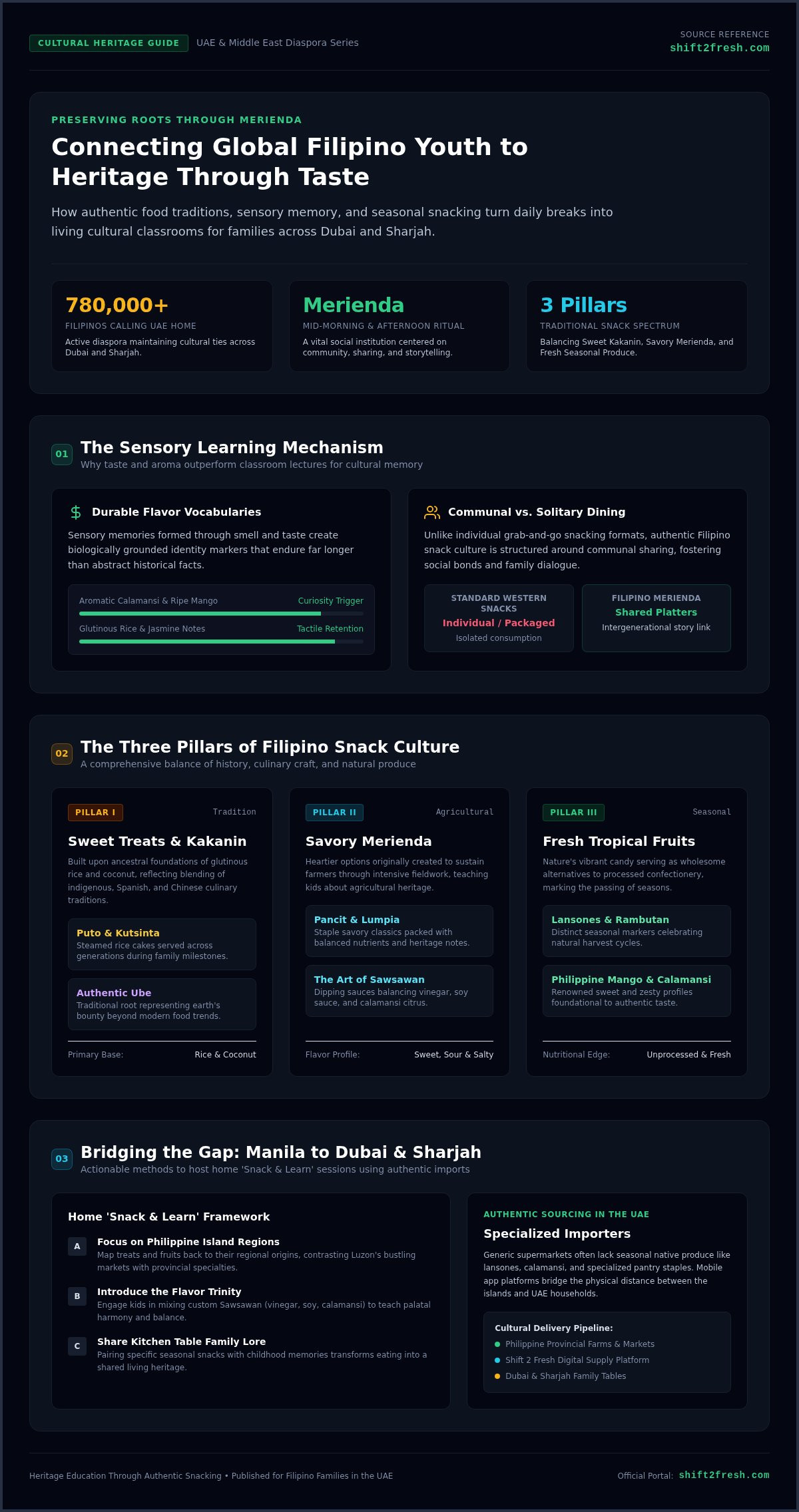
To truly understand Filipino heritage, you have to look at the three main categories of snacking: sweet, savory, and fresh. Unlike Western snacks that are often grabbed for individual consumption, filipino snacks for kids are almost always communal. Whether it’s a platter of rice cakes or a bowl of seasonal fruit, these treats are designed to be shared among friends and family. This reflects a deep-rooted cultural value where food serves as the glue for social interaction. By introducing these three pillars, you give your children a balanced view of the archipelago’s history and agricultural roots.
Sweet Treats and Kakanin
Rice and coconut are the building blocks of most traditional sweets, collectively known as kakanin. Treats like Puto (steamed rice cakes) and Kutsinta have been staples at celebrations for generations. These snacks tell the story of Traditional Filipino Food and Culture, showcasing how indigenous ingredients blended with Spanish and Chinese influences over time. Ube, while currently a global “purple trend,” is a traditional flavor that represents the earth’s bounty. Teaching kids about these rice-based treats helps them appreciate the transition from ancient traditions to the modern favorites they see today.
Savory Merienda Favorites
Savory snacks, or merienda, often lean toward heartier options like Pancit or Lumpia. These dishes were historically meant to sustain farmers through a long workday, reflecting the Philippines’ agricultural history. A key part of the experience is the “sawsawan,” or dipping sauce. Teaching children how to balance vinegar, soy sauce, and calamansi helps them understand the complex flavor profiles unique to the islands. It’s a hands-on way to learn about the “sweet, sour, salty” balance that defines the local palate.
Fresh Tropical Fruits as Nature’s Candy
The most vibrant pillar of snack culture is nature’s candy. Seasonal favorites like Lansones, Rambutan, and the world-famous Philippine Mango offer a healthy alternative to processed sweets. Because these fruits are seasonal, they become special markers of time throughout the year, making their arrival a cause for celebration. For families living in Dubai or Sharjah, finding these items at peak freshness is a treat in itself. You can check The Ultimate Guide to Seasonal Filipino Fruits in the UAE to see what is currently in season. If you want to start your own cultural snack session, you can easily order authentic pantry staples and fresh produce through the Shift 2 Fresh app for direct delivery to your home.
Balancing Tradition and Health: Choosing the Right Snacks
Parents often hesitate when introducing traditional sweets because of the perceived high sugar content. While it’s true that many packaged treats are indulgent, you can easily shift the focus toward nutrient-dense options. Choosing the right filipino snacks for kids involves prioritizing whole foods over processed alternatives. By focusing on fresh produce, you provide a natural source of vitamins while still celebrating cultural flavors. This approach ensures that heritage lessons don’t come at the cost of a balanced diet.
The Nutritional Value of Filipino Fruits
Fresh fruits aren’t just delicious; they’re nutritional powerhouses. Calamansi, for example, is packed with Vitamin C, which is essential for supporting young immune systems in the UAE’s changing climate. Seasonal fruits like lansones and rambutan provide high fiber content, making them a much better “clean” snack for active children than sugary granola bars or chips. Because these fruits are imported directly, they retain the authentic taste that connects kids to the soil of the Philippines without the need for artificial flavorings. They serve as nature’s candy, offering sweetness without the blood sugar spikes associated with factory-made treats.
Mindful Snacking with Pantry Staples
Making snacks at home is the best way to control what goes into your child’s body. When you stock up on Filipino Pantry Items like black glutinous rice or pure tablea, you’re choosing ingredients that are naturally rich in antioxidants and minerals. Instead of buying pre-mixed champorado with high fructose corn syrup, you can use authentic black rice to create a hearty, fiber-rich version. Using these authentic ingredients allows you to adjust the sweetness with natural alternatives like honey or coconut sugar, ensuring the snack remains healthy.
In the UAE, all imported food must have Arabic labeling and show production and expiry dates clearly. When you shop through specialized importers like Shift 2 Fresh, you’re guaranteed that the items meet strict safety standards and have at least 50% of their shelf life remaining upon arrival. This ensures that the filipino snacks for kids you prepare are as fresh and safe as possible. Introducing complex flavors like the tartness of calamansi or the deep bitterness of tablea can also help picky eaters expand their palate, turning snack time into a healthy exploration of their heritage.
How to Host a ‘Snack & Learn’ Session at Home
Transforming your kitchen into a cultural classroom is easy when you have a plan. A structured “Snack & Learn” session keeps children engaged without making them feel like they are doing schoolwork. By focusing on sensory experiences, you can create an interactive environment where filipino snacks for kids serve as the main lesson tools.
Here is a simple five-step guide to hosting your first session at home:
- Step 1: Choose a theme. Pick a specific topic like “The Islands of Luzon” or “Fruit Harvest” to give the session focus.
- Step 2: Source your ingredients. Order authentic items using an online supermarket Dubai service to ensure you have fresh produce and genuine pantry staples.
- Step 3: Create a sensory station. Set up bowls with different textures and smells, allowing kids to touch the rough skin of a rambutan or smell the sweet aroma of ube before tasting.
- Step 4: Share the origin story. Tell a quick tale about where the snack comes from, connecting the food to a specific region or tradition.
- Step 5: Incorporate regional words. Introduce basic Tagalog vocabulary naturally as you eat.
Storytelling through Food
Every fruit and snack has an origin story tied to Philippine geography and climate. For example, you can explain how the volcanic soil of certain provinces helps produce the sweetest mangoes in the world. When introducing a unique fruit like durian, tell the story of its distinct aroma and how it grows high in the trees of Mindanao. This connects the flavor to a real place on a map. To make the experience interactive, encourage your children to draw or journal about their flavor journey, rating the sweetness or tartness of each item.
Language Lessons in the Kitchen
Snack time provides a low-pressure environment for language learning. Use the labels on your imported pantry items to teach food names in Tagalog, practicing words like “mangga” for mango or “gatas” for milk. You can also introduce common phrases used during Merienda, such as “Kain tayo!” (Let’s eat!) or “Masarap!” (Delicious!). This interactive approach makes language learning feel like a natural part of the meal rather than a chore. Ready to plan your first cultural snack afternoon? You can download the Shift 2 Fresh mobile app today to browse available seasonal fruits and pantry items for your kitchen classroom.
Sourcing Authentic Filipino Snacks and Produce in the UAE
Finding true, fresh agricultural goods from the Philippines in standard local supermarkets across the Emirates can be incredibly difficult. Most mainstream grocers carry generic varieties that lack the distinct sweetness and aroma of home. Busy parents often lack the time to visit multiple physical shops in search of genuine goods. Specialized importers with over 45 years of food industry experience are essential for sourcing authentic ingredients that pass strict UAE food regulations. Utilizing a dedicated gourmet food delivery Dubai service ensures that these delicate items arrive at your doorstep in perfect condition, ready to be transformed into healthy snacks.
Freshness from the Philippines to Sharjah and Dubai
Maintaining a strict cold chain is necessary for delicate fruits to survive the journey across the ocean. When produce is harvested and shipped according to its natural growth cycle, it retains its full nutritional profile and peak flavor. All imported items arrive with required Arabic labeling and clear shelf-life tracking, giving parents complete peace of mind regarding safety. Sourcing through these specialized channels allows expat families to actively support a robust Philippine supermarket ecosystem abroad. This setup ensures that traditional agricultural communities back home continue to thrive while your children get the highest quality ingredients for their merienda.
Using Technology to Stay Connected
Modern e-commerce makes it simple for busy expat families to maintain their cultural traditions. The Shift 2 Fresh mobile app acts as a digital inventory, letting you effortlessly restock essential Filipino Pantry Items like black glutinous rice or specialty tablea. Parents can set real-time notifications for highly anticipated seasonal arrivals like fresh ube or lansones. This feature ensures you never miss a short harvest window, allowing you to plan your next home learning session seamlessly.
Every authentic treat you share with your children brings them one step closer to understanding their roots. It turns an ordinary afternoon break into a meaningful celebration of identity. Providing genuine filipino snacks for kids has never been more accessible for families living in Dubai and Sharjah.
Bring the Flavors of the Islands to Your UAE Kitchen
Connecting your children to their heritage doesn’t require complex lesson plans or long flights back home. By transforming daily merienda into a creative “Snack & Learn” session, you can use the three pillars of sweet, savory, and fresh food to build lasting memories. Prioritizing fresh, seasonal fruits like lansones or nutrient-dense pantry staples allows you to introduce authentic flavors while keeping snack time healthy and balanced for your household.
Sourcing genuine ingredients in Dubai and Sharjah is simpler than ever with the right partner. Backed by over 45 years of food industry expertise, Shift 2 Fresh directly imports authentic seasonal fruits and pantry staples from the Philippines, ensuring compliance with strict local regulations. You can enjoy free delivery on orders over AED 500, making it incredibly convenient to stock your kitchen with high-quality goods that tell a story.
Every bite of a traditional treat is a meaningful step toward anchoring your child’s cultural identity. Start your cultural journey today by ordering fresh filipino snacks for kids on the Shift 2 Fresh App. Your next kitchen adventure is just a few taps away.
Frequently Asked Questions
What are the healthiest Filipino snacks for kids?
Fresh, seasonal fruits are the healthiest filipino snacks for kids because they offer natural vitamins without added sugars. Focus on Vitamin C-rich calamansi or fiber-filled items like lansones and rambutan. Unlike processed packaged goods, these whole foods provide sustainable energy for active children. You can also prepare homemade treats using black glutinous rice, which is high in antioxidants, to control the amount of sweetener used in traditional recipes.
Where can I buy fresh Filipino fruits like Lansones in Dubai?
You can purchase fresh, seasonal lansones in Dubai through the Shift 2 Fresh mobile app. Finding these specialty fruits in standard local supermarkets is difficult because they require direct import from the Philippines to maintain their unique flavor. Shift 2 Fresh specializes in bringing these seasonal treasures to the UAE market. By ordering online, you ensure the fruit is handled by experts with over 45 years of experience in the food industry.
How do I introduce my kids to exotic flavors like Durian?
Start by making the experience interactive and low-pressure. Instead of serving a large portion, let your children smell the fruit first and describe its unique aroma. You can mix small pieces of durian into a familiar base like a smoothie or homemade ice cream to soften the intensity of the flavor. Sharing the origin story of how it grows in Mindanao helps build curiosity, turning a strange taste into a cultural adventure.
What is the best way to teach Tagalog using food?
Use snack labels and mealtime interactions to teach basic vocabulary naturally. Practice words like mangga for mango or masarap for delicious while your children are eating their favorite filipino snacks for kids. You can introduce common phrases such as Kain tayo! during your afternoon break. Making the language part of a sensory experience helps children retain the words more effectively than traditional rote memorization or repetitive classroom drills.
Are there any Filipino snacks that are naturally gluten-free?
Many traditional Filipino treats are naturally gluten-free because they rely on rice and coconut rather than wheat. Kakanin, such as Puto and Kutsinta, are excellent options made from ground rice. Fresh tropical fruits like mangoes and rambutan are also safe choices. When using pantry staples like black glutinous rice or tablea for homemade snacks, you can create delicious, heritage-rich treats that accommodate dietary restrictions without sacrificing authentic taste or texture.
How can I get Filipino groceries delivered in Sharjah?
Shift 2 Fresh offers convenient e-commerce delivery services throughout Sharjah, including areas near their warehouse in Industrial Area 6. You can use their dedicated mobile app to browse seasonal produce and pantry staples from your phone. They provide free shipping on orders over AED 500, making it easy to stock up on essentials. Their trained staff ensures that delicate fruits and vegetables are delivered to your location in peak condition.
What is Merienda and why is it important for Filipino kids?
Merienda is a traditional mid-morning or mid-afternoon snack break that serves as a vital social institution in Philippine culture. It’s more than just a meal; it’s a dedicated time for family bonding and storytelling. For children growing up in the UAE, participating in Merienda helps them feel connected to a communal ritual practiced by millions back home. It provides a daily opportunity to anchor their cultural identity through shared flavors and conversation.
Can I find authentic Filipino ube in the UAE?
Yes, you can find authentic ube in the UAE through specialized importers like Shift 2 Fresh. While many local stores sell purple yam varieties, true Philippine ube is a seasonal specialty that is often hard to find in mainstream grocers. By using the Shift 2 Fresh app, you can track the arrival of seasonal ube and set alerts for when it becomes available. This ensures you are getting the genuine ingredient for your traditional recipes.
0 comments