

Can a standard glass of Chardonnay actually stand up to the bold, vinegary punch of a classic Chicken Adobo? Most people assume that the intense saltiness and sourness of Pinoy cuisine make it impossible to pair with anything other than a basic soda. If you’ve ever felt that your drink was fighting your meal rather than complementing it, you’re not alone. Understanding what to drink with filipino food requires a shift in perspective, focusing on the balance of “Anghang, Asim, Alat” (Spicy, Sour, Salty) that defines these iconic dishes.
This 2026 guide helps you master these complex flavor profiles using everything from crisp lagers to traditional fruit refreshments. You’ll learn how to balance rich stews with high-acidity pairings and why fresh, seasonal ingredients are the secret to the perfect palate cleanser. Despite rising logistics costs affecting availability in 2026, we’ve included practical tips for sourcing fresh calamansi and buko right here in the UAE. Whether you’re ordering through a mobile app in Dubai or looking for pantry staples in Sharjah, you’ll soon have the perfect beverage to elevate every Filipino meal.
Key Takeaways
- Master the “Holy Trinity” of Filipino flavors-salty, sour, and sweet-to understand why certain beverages enhance or clash with your favorite dishes.
- Learn exactly what to drink with filipino food to balance the intense vinegar notes of Adobo or the savory richness of fried favorites.
- Discover why fresh calamansi and buko are essential for authentic refreshments and how their natural acidity acts as the ultimate palate cleanser.
- Explore expert beer and wine pairings that avoid the bitterness of high tannins, favoring crisp lagers and off-dry whites to complement Asian spices.
- Find out how to source seasonal Filipino fruits and pantry staples for your drinks through mobile app delivery across Dubai and Sharjah.
The Science of Filipino Flavors: Why Pairing Matters
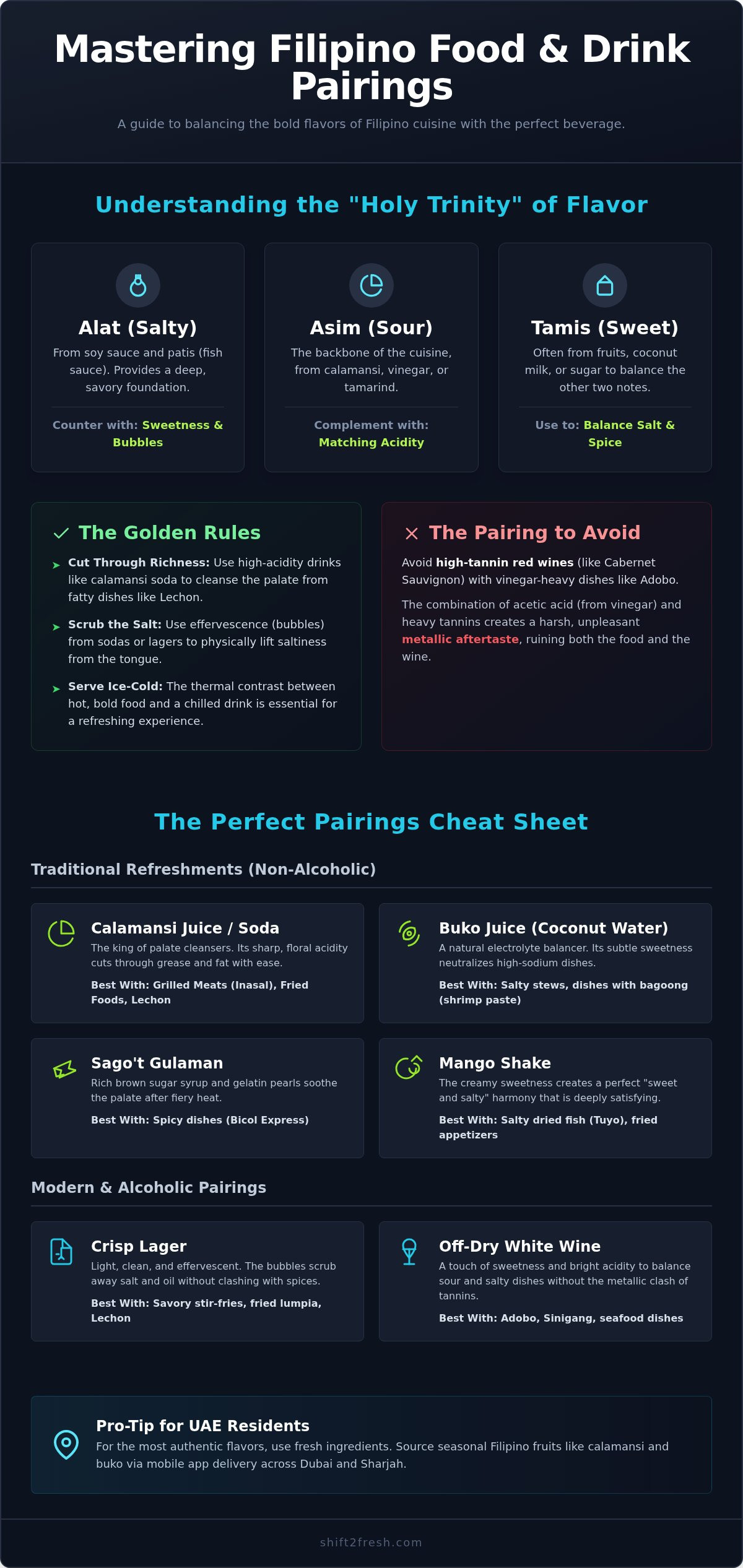
Filipino food is rarely about a single note. It is a vibrant tug-of-war between the “Holy Trinity” of tastes: alat (salty), asim (sour), and tamis (sweet). When you are deciding what to drink with filipino food, you have to look at the chemistry of the plate. Unlike many Western cuisines that rely on heavy fats or creams, Filipino cuisine builds complexity through fermentation and high-acid vinegars. This creates a specific challenge for standard pairings.
This is exactly why high-tannin red wines often fail at the Filipino table. When the acetic acid in a dish like Pork Adobo meets the heavy tannins of a Cabernet Sauvignon, it creates a harsh, metallic aftertaste that ruins both the wine and the meal. Instead, the beverage should act as a palate cleanser. For a fatty, rich dish like Lechon, you need something to cut through the oil. Tropical fruits like mango or calamansi provide natural sugars and acids that refresh the tongue between every rich, savory bite.
Taming the ‘Asim’ (Sourness)
Sourness is the backbone of the Filipino palate. Whether it is the sharp citrus of calamansi, the earthy tang of tamarind in Sinigang, or the punchy bite of kamias, asim is everywhere. While it seems counterintuitive, acidic drinks actually complement these flavors by matching their intensity. A drink with low acidity will taste flat and watery next to a sour stew. Palate fatigue occurs when the heavy, fermented funk of bagoong (shrimp paste) overwhelms your taste buds, making it difficult to distinguish other flavors without a sharp, refreshing drink to reset your senses.
Balancing the ‘Alat’ (Saltiness)
Saltiness from soy sauce and patis (fish sauce) is best countered with sweetness and effervescence. Bubbles physically scrub the salt from your tongue, while sugar rounds out the sharp edges of the sodium. This balance is crucial when enjoying savory stir-fries loaded with Asian Vegetables like sitaw or ampalaya. In the humid heat of the UAE, temperature is the final piece of the puzzle. Filipino food is bold and served hot, so your drink must be ice-cold. This provides a necessary thermal contrast that keeps the meal enjoyable from the first bite to the last. Finding the right balance ensures that the drink supports the meal rather than competing with it.
Tropical Refreshments: Traditional Non-Alcoholic Pairings
When considering what to drink with filipino food, the first place many look is the vibrant “Palamig” culture. These street-style refreshments are more than just sugary treats; they are designed to survive tropical humidity, which makes them perfectly suited for the UAE climate. Buko juice, or fresh coconut water, serves as a natural electrolyte balancer. Its subtle sweetness and mineral content help neutralize high sodium levels found in dishes seasoned with bagoong or soy sauce. For those craving a textural contrast, Sago’t Gulaman uses a rich brown sugar syrup and gelatin pearls to soothe the palate after the fiery heat of a coconut-milk-based Bicol Express.
The Power of Calamansi
Fresh calamansi is the undisputed king of the Filipino table. Unlike bottled concentrates that often lose their bright notes during processing, fresh fruit provides a sharp, floral acidity that cuts through heavy grease. You can elevate a simple meal by creating a “Calamansi Soda,” which involves mixing fresh juice with sparkling water and a touch of honey or agave. This sophisticated mocktail works beautifully with grilled meats like Inasal. To ensure you get that authentic zing, sourcing Seasonal Filipino Fruits is essential for any home cook in Dubai or Sharjah who wants to replicate these traditional flavors accurately.
Creamy vs. Refreshing: Fruit Shakes and Milks
Fruit shakes offer a thicker, more indulgent way to balance specific flavor profiles. A classic Philippine Mango shake, made with ripe yellow mangoes, is the perfect companion to salty dried fish like tuyo. The creamy sweetness creates a “sweet and salty” harmony that is deeply satisfying. For a lighter option, Melon Sa malamig features shredded cantaloupe in a chilled, sweetened water or milk base, offering a cooling effect during hot afternoons. While Ube-based drinks are incredibly popular, they are best reserved for merienda or as a dessert course due to their density and earthy, nutty sweetness. You can easily find the ingredients for these refreshments by browsing the Shift 2 Fresh mobile app for direct delivery to your home, ensuring your fruits are as fresh as those found in a Manila market.
Beer, Wine, and Spirits: The Modern Filipino Table
While traditional fruit juices are staples, the modern dining scene has expanded the definition of what to drink with filipino food. Alcoholic pairings are deeply rooted in the “Pulutan” tradition, where savory, often fatty snacks are served alongside cold drinks to facilitate conversation. In the UAE, where international dining is the norm, understanding how to match a premium bottle with a home-cooked feast elevates the experience from a simple meal to a curated event. The goal is always to find a beverage that can stand up to the intense salt and vinegar profiles without being overwhelmed.
Beer: The Ultimate Pulutan Companion
Pale Pilsners are the undisputed champions of the Filipino table. Their light body and crisp carbonation act like a scrub brush for the palate, which is essential when eating fatty favorites like Sisig or Crispy Pata. The subtle bitterness of the hops provides a necessary counterpoint to the smoky richness of grilled meats like Chicken Inasal. While the “Gin-Bulag” culture remains a nostalgic part of provincial life, modern mixology has moved toward artisanal gin twists. These often incorporate fresh pantry staples like calamansi or mango to create balanced cocktails that reflect the tropical heritage of the Philippines.
Wine Selection for Vinegar-Based Dishes
Pairing wine with Filipino dishes requires unlearning some standard Western rules. Most experts suggest red wine for meat, but this is often a mistake for vinegar-heavy dishes. The high acetic acid in Adobo makes the tannins in a Cabernet Sauvignon feel harsh and metallic on the tongue. Instead, the secret weapons for Asian spice and sourness are off-dry whites like Riesling or Gewürztraminer. These wines possess enough residual sugar to tame heat and enough acidity to match the “asim” (sourness) of the food.
- Sauvignon Blanc: Its herbaceous and citrusy notes make it a natural partner for the tamarind base of Sinigang.
- Pinot Noir: This light-bodied red is a rare exception that works well with tomato-based stews like Kaldereta.
- Sparkling Wine and Rose: These are the perfect match for Lechon. The bubbles and bright fruit notes cut through the fatty skin effortlessly.
When crafting cocktails at home, remember that the quality of your fruit base defines the drink. Using fresh ingredients from the Philippines ensures that your rum or gin infusions maintain their authentic tropical character, even when prepared in a kitchen in Dubai or Sharjah.
Pairing by Dish: A Cheat Sheet for Your Next Feast
Choosing what to drink with filipino food becomes much simpler when you match the beverage to the specific cooking method of the dish. For the national favorite, Chicken or Pork Adobo, the goal is to complement the soy-vinegar braise. A chilled glass of San Miguel Beer is the traditional choice, but a crisp, off-dry Riesling offers a sophisticated alternative that stands up to the heavy garlic notes. If you’re serving Sinigang, the iconic sour soup, stay within the acidic family. Freshly squeezed calamansi juice or a citrus-forward Sauvignon Blanc will mirror the tamarind’s tang without being overshadowed by the broth’s intensity.
Rich, celebratory dishes like Lechon (roasted pig) require a drink that can cut through significant amounts of fat. Sparkling wine is an excellent choice for its palate-scrubbing bubbles, while a glass of Sago’t Gulaman provides a sweet, textured contrast to the crispy skin. For the peanut-based richness of Kare-Kare, consider a hot pot of Pandan tea. The earthy, nutty aroma of the tea aligns with the peanut sauce, while a light lager can also work to keep the palate refreshed between bites of bagoong-heavy vegetables.
Seafood and Vegetable Pairings
Grilled Bangus (milkfish) often carries a smoky, fatty flavor that pairs beautifully with iced lemongrass tea. The herbal notes brighten the fish, especially when it’s stuffed with tomatoes and onions. When serving vegetable-heavy dishes like Pinakbet or Ginisang Gulaman, the natural sweetness of buko juice is your best friend. It provides a clean finish to the fermented shrimp paste used in these recipes. You can easily find the necessary ingredients for these pairings, including fresh Asian Vegetables, by ordering through a reliable local importer.
Spicy Bicolano Dishes
Heat management is the priority for dishes like Laing and Bicol Express. Since these recipes rely heavily on coconut milk and siling labuyo (bird’s eye chili), coconut-based drinks or thick fruit shakes are essential. The fats in a mango or avocado shake help dissolve the capsaicin on your tongue, providing immediate relief from the spice. The natural sweetness in these drinks neutralizes the fire better than water ever could. Pro Tip: Always serve these drinks extra cold. The lower temperature helps numb the palate slightly, making the intense heat of Bicolano cuisine more manageable for everyone at the table.
Ready to host your own Filipino feast in Dubai or Sharjah? You can order fresh calamansi, mangoes, and vegetables directly through the Shift 2 Fresh app to ensure your pairings are as authentic as possible.
Making Authentic Filipino Drinks in the UAE
Finding the right ingredients to decide what to drink with filipino food can be a challenge when you are living in Dubai or Sharjah. While local markets carry various citrus fruits, they often lack the specific floral punch of authentic calamansi or the unique sweet-tart balance of dalandan. Shift 2 Fresh bridges this gap by directly importing seasonal produce from the Philippines, ensuring that your home-cooked meals have the same refreshing companions you would find back home. With 45 years of experience in the food industry, the brand focuses on maintaining the integrity of these specialty items during transit. You can even stock up on essential Filipino Pantry Items like gulaman and sago to create DIY drink kits, making it easier to whip up a batch of Sago’t Gulaman whenever the craving hits.
The convenience of the Shift 2 Fresh mobile app simplifies the process of sourcing these hard-to-find items. Instead of driving to multiple specialty shops, you can order your drink garnishes and fruits with just a few taps. This reliability is especially important in 2026, as rising logistics costs have made the availability of imported goods less predictable. By utilizing a direct importer, you ensure that your kitchen stays stocked with the high-quality ingredients necessary for a truly authentic dining experience.
Sourcing Fresh vs. Frozen
Fresh fruit is always superior to frozen or bottled versions because of its delicate aromatics. When you squeeze a fresh calamansi, the essential oils from the skin release a scent that bottled concentrates simply cannot replicate. This aromatic quality is what helps the drink stand up to the bold flavors of Pinoy cuisine. To keep your fruits at their best for a dinner party, store them in the crisper drawer of your refrigerator to maintain their moisture. For more tips on selecting the best components for your kitchen, check out the Philippine Supermarket Guide.
Hosting the Perfect Filipino Night
If you are hosting an event, setting up a dedicated “Palamig Bar” is a fantastic way to engage your guests. Provide different syrups, jellies, and fresh juices so everyone can customize their refreshments to match their meal. Given the UAE’s high temperatures, ensure you have an abundant supply of ice and consider using insulated glassware to keep your drinks from becoming watered down too quickly. Ordering your Fresh Fruits and Vegetables in bulk through the app simplifies the logistics of event planning. This allows you to focus on the cooking and the company, knowing that your authentic refreshments are handled.
Elevate Your Next Pinoy Feast
Mastering what to drink with filipino food is about more than just quenching thirst; it’s about respecting the delicate balance of salt, vinegar, and spice. You now know that a crisp lager can scrub away the richness of fatty meats and that an off-dry Riesling is the secret to taming a punchy Adobo. By choosing drinks that mirror the acidity of the dish or provide a sweet contrast to its saltiness, you ensure every bite remains as vibrant as the first.
Authenticity starts with the right ingredients. Don’t settle for bottled substitutes when you can have the real thing delivered to your doorstep in Dubai or Sharjah. With 45 years of food industry expertise, Shift 2 Fresh provides the seasonal produce that’s often missing from local UAE markets. Whether you need fresh calamansi for a homemade soda or ripe mangoes for a creamy shake, the quality of your fruit defines the success of your pairing.
Ready to host? You can Order Fresh Filipino Fruits for Your Next Meal at Shift 2 Fresh and enjoy free shipping on orders over AED 500. It’s time to bring the true taste of the islands to your table.
Frequently Asked Questions
What is the best drink for Chicken Adobo?
A crisp, light lager or an off-dry Riesling are the best choices for Chicken Adobo. The dish’s heavy reliance on soy sauce and vinegar creates a profile that is both salty and sour. A Riesling has enough residual sugar to tame the saltiness while its high acidity matches the vinegar. If you prefer non-alcoholic options, a cold glass of calamansi juice provides a similar acidic balance that refreshes the palate between savory bites.
Can I pair red wine with Filipino food?
You can pair red wine with Filipino food, but you must avoid high-tannin varieties like Cabernet Sauvignon. Tannins often clash with the vinegar and fish sauce common in Pinoy dishes, resulting in a harsh, metallic aftertaste. Instead, choose light-bodied reds like Pinot Noir or Gamay. These work exceptionally well with tomato-based meat stews such as Kaldereta or Mechado, where the fruitiness of the wine complements the savory sauce without being overwhelmed by the salt.
What are some non-alcoholic Filipino drinks?
Traditional non-alcoholic options include buko juice, calamansi juice, and sago’t gulaman. For something creamier, fruit shakes made from ripe Philippine mangoes or avocado are popular choices. Melon sa malamig, which features shredded cantaloupe in sweetened water, is another refreshing option. These drinks are essential when deciding what to drink with filipino food because their natural sweetness and cooling properties help balance the bold, salty, and often spicy notes of the cuisine.
Why is Calamansi juice served with almost every meal?
Calamansi juice is a staple because its high acidity acts as a natural palate cleanser. Filipino meals are often rich, fatty, or heavily seasoned with fermented ingredients like bagoong. The sharp, citrusy notes of fresh calamansi cut through the grease and refresh the tongue between every bite. It also provides a floral aromatic quality that enhances the scent of grilled meats, making it the most versatile beverage to serve at any traditional breakfast or dinner.
Where can I buy fresh Philippine mangoes in Dubai?
You can buy authentic, seasonal Philippine mangoes through the Shift 2 Fresh mobile app or website. Unlike many varieties found in local UAE supermarkets, these are direct imports that maintain their signature sweetness and buttery texture. Shift 2 Fresh specializes in bringing specialty produce from the Philippines to residents in Dubai and Sharjah. They offer delivery across the UAE, with free shipping on orders over AED 500, ensuring your fruit arrives at peak ripeness.
What drink goes best with Lechon?
Sparkling wine or a chilled Rose are the top alcoholic pairings for Lechon because the bubbles and acidity cut through the roasted pig’s fatty skin. If you are looking for a non-alcoholic option, Sago’t Gulaman is the traditional favorite. The sweetness of the brown sugar syrup and the texture of the jelly provide a satisfying contrast to the savory meat. These beverages ensure the richness of the dish doesn’t overwhelm your taste buds during a celebratory feast.
How do I make Sago’t Gulaman at home?
To make Sago’t Gulaman, start by creating a simple syrup called arnibal using melted brown sugar and water. Mix this with chilled water and add cooked sago pearls along with cubed gulaman jelly. You can find these essential Filipino pantry items through specialized importers like Shift 2 Fresh in the UAE. Serve the mixture over plenty of crushed ice to keep it refreshing. It is a simple way to provide a sweet, cooling balance to any savory meal.
Is beer common with Filipino dinner?
Beer is extremely common with Filipino dinner, especially when the meal includes “pulutan” style dishes like Sisig or grilled meats. Light, pale lagers are the standard choice because their crisp carbonation helps wash down salty and fried foods. When people ask what to drink with filipino food, beer is often the first suggestion for social gatherings. Its ability to stand up to strong garlic and vinegar flavors makes it a permanent fixture at the table.
0 comments