

Imagine you’ve invited your closest friends for a traditional Salu-Salo, but your local UAE supermarket only stocks the basics, leaving you without the fresh Calamansi or real Ube needed for an authentic feast. Planning a Filipino themed dinner party in the Middle East often feels like a puzzle, especially when you’re trying to recreate the exact flavor of home. You want that perfect balance of salty, sour, and sweet, but sourcing the right seasonal fruits and vegetables can be a major hurdle for even the most experienced home cooks.
We understand that the secret to true “Lutong Bahay” taste lies in the freshness of the ingredients, not just the recipe. This guide will help you master the art of Filipino hospitality by providing a comprehensive roadmap for your next gathering. You’ll learn how to source authentic specialty items through convenient mobile apps, discover the secrets of traditional hosting etiquette, and explore a curated menu designed to impress. From understanding Kamayan serving styles to building a stress-free shopping list, we’re covering everything you need to host a celebration that feels like a trip back to the islands.
Key Takeaways
- Understand the core values of Filipino hospitality by embracing the spirit of Salu-Salo and the authenticity of home-cooked flavors.
- Learn how to balance the complex salty, sour, and sweet profiles of the cuisine to design a menu that delights every guest.
- Simplify the process of planning a filipino themed dinner party by using mobile apps to source fresh, imported ingredients that are often unavailable in local supermarkets.
- Master traditional presentation techniques like the Boodle Fight to turn your dinner into a communal and visually stunning celebration.
- Follow a professional three-day countdown to manage your preparation, ensuring you stay relaxed while the flavors of your dishes develop perfectly.
Understanding the Spirit of Salu-Salo: More Than Just a Meal
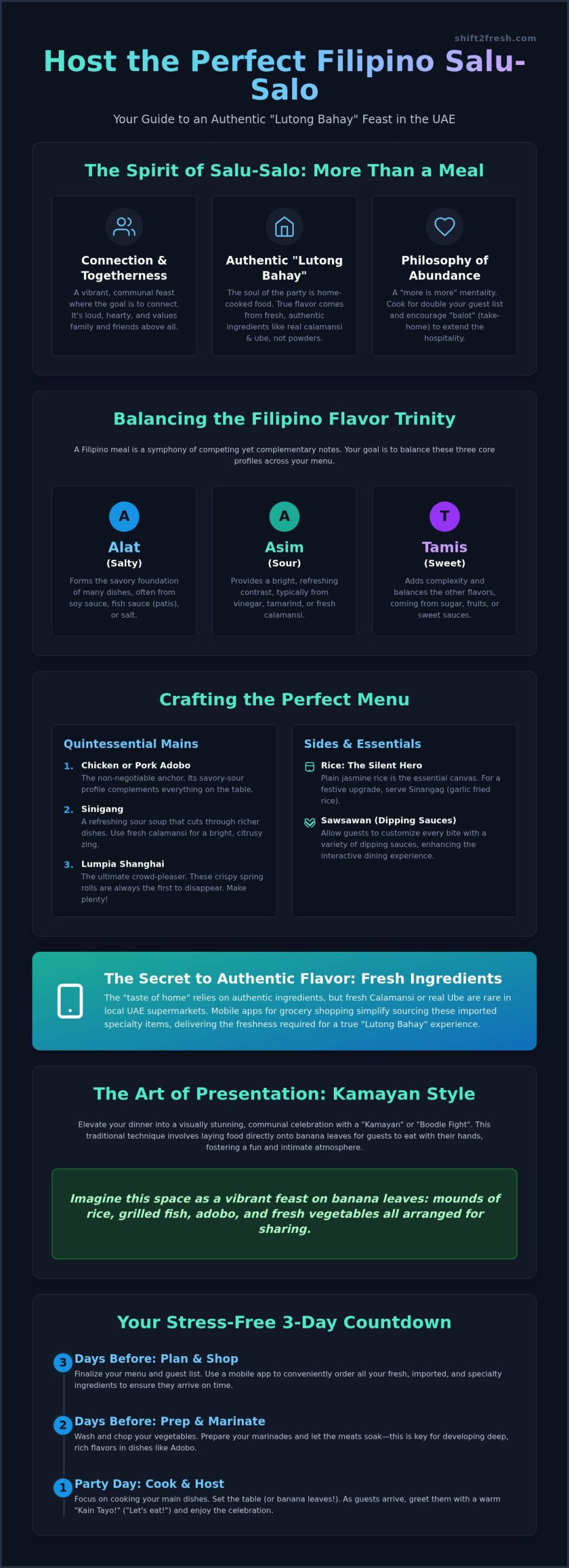
At its core, a Salu-Salo is a communal feast where the act of eating is secondary to the act of connecting. When planning a filipino themed dinner party, you are inviting people into a tradition that values togetherness above all else. This isn’t a stiff, formal affair with assigned seating and hushed whispers. Instead, it’s a vibrant, multi-generational gathering where the conversation is as loud and hearty as the food on the table. Understanding these cultural nuances is the first step in planning a filipino themed dinner party that feels genuine rather than performative.
The soul of this gathering is “Lutong Bahay,” or home-cooked food. In the Filipino kitchen, authenticity isn’t just about following a recipe; it’s about the emotional labor and the quality of the ingredients. For hosts in the UAE, achieving that specific “taste of home” relies heavily on the freshness of imported vegetables and fruits. Using real calamansi instead of bottled juice or fresh ube instead of powder makes the difference between a simple meal and a true cultural experience. It’s the freshness of these imported staples that brings the spirit of the islands to a desert table.
The Philosophy of Abundance
Filipino hosting is defined by a “more is more” mentality. If you invite ten people, you cook for twenty. This isn’t about waste; it’s about ensuring no guest ever feels hesitant to take a second or third helping. A successful party is often measured by the “balot” or take-home culture. Providing containers for guests to carry leftovers home is a standard practice that extends the hospitality long after the night ends. It creates a relaxed environment where people feel truly cared for and encouraged to stay as long as they like, often late into the evening.
Filipino Hospitality Etiquette for Hosts
The phrase “Kain Tayo,” which translates to “Let’s eat,” is the most important invitation you’ll offer. It’s a core cultural gesture that signals the start of the social bond. While you should be mindful of guest dietary preferences, the goal is to maintain the traditional salty, sour, and sweet profiles that define the cuisine. Visual presentation also plays a massive role in the festive atmosphere. Whether you are serving individual plates or organizing a communal Kamayan feast on banana leaves, the spread should look like a celebration of nature’s bounty. Guests often arrive with “Pasalubong,” or small gifts as a token of gratitude. Accepting these with warmth is just as important as the meal you’ve spent days preparing, as it completes the circle of generosity.
Designing Your Filipino Menu: Balancing the Big Three Flavors
Creating a memorable spread starts with understanding the “Holy Trinity” of the Filipino palate: Salty (Alat), Sour (Asim), and Sweet (Tamis). Unlike Western courses that often focus on a single dominant profile, a Filipino meal is a symphony of these three competing yet complementary notes. When planning a filipino themed dinner party, your goal is to ensure no single flavor overwhelms the table. Understanding the cultural significance of these pairings is essential, as explored in research on Filipino Food, Dietary Customs, and Health Beliefs. To achieve this balance, structure your menu with a mix of heavy mains, light soups, and crisp appetizers, all supported by “Sawsawan” (dipping sauces) that allow guests to customize every bite to their liking.
Adobo stands as the versatile anchor of any Filipino dinner party, providing a savory-sour foundation that complements every other dish on the table. It’s the reliable starting point for any host, but the true magic happens when you layer in variety.
The Quintessential Main Dishes
Every celebration needs a centerpiece. Chicken or Pork Adobo is the non-negotiable standard, but adding a sour soup like Sinigang provides a refreshing counterpoint. The key to a great Sinigang is the souring agent; while many use tamarind, using fresh calamansi offers a bright, citrusy zing that is hard to replicate with powders. For the ultimate crowd-pleaser, Lumpia Shanghai is a must. These crispy, golden spring rolls are the first things to disappear from the plate, so make sure you’ve prepared a generous batch. You can easily find the necessary specialty items for these dishes by using a mobile app for stress-free party prep shopping.
Side Dishes and the Importance of Rice
Rice is the silent hero of the meal. Plain jasmine rice acts as a clean canvas, soaking up the rich sauces of your mains. For a festive upgrade, Sinangag (garlic fried rice) adds an aromatic depth that pairs beautifully with grilled meats. To keep the palate sharp, serve Achara (pickled papaya). Its crisp texture and sweet-sour brine act as a palate cleanser, cutting through the richness of fried or fatty dishes.
Sweet Endings: Iconic Filipino Desserts
No Salu-Salo is complete without a grand finale. Halo-Halo offers a fun, interactive experience where guests mix shaved ice, milk, and various sweet beans and fruits. For a more traditional touch, Ube Halaya showcases the vibrant natural purple of imported yams. Finally, a silky Leche Flan provides a decadent, creamy finish. Achieving that perfect texture requires patience, but the result is a dessert that guests will remember long after the party ends.
Sourcing Authentic Ingredients in the UAE
The biggest hurdle when planning a filipino themed dinner party in the Middle East is often the grocery run. Local UAE supermarkets carry the basics, but they rarely stock the specific cultivars that define the Filipino palate. If you’ve ever tried substituting a lemon for calamansi or using frozen, fibrous yam instead of fresh ube, you know the frustration. These substitutes often fail to capture the “Lutong Bahay” essence because they lack the specific acidity and texture of the real thing. To achieve a truly authentic flavor, you need ingredients that haven’t been sitting in a generic warehouse for weeks.
Shift 2 Fresh solves this problem by importing Seasonal Filipino Fruits and vegetables directly to the UAE. With over 45 years of food industry experience, we ensure that the produce on your table has the same flavor profile as what you’d find in a market in Manila or Cebu. Direct imports mean better nutritional value and a texture that holds up during the slow-cooking processes required for many traditional recipes.
Essential Fresh Produce to Order
Your shopping list should prioritize items that provide the “Asim” (sour) and “Alat” (salty) balance. Fresh Calamansi is the non-negotiable secret to an authentic Sinigang or a bright dipping sauce. Unlike bottled extracts, fresh citrus provides an aromatic oil from the rind that elevates the entire dish. You should also look for world-renowned Philippine Mangoes, which offer a sweetness and buttery texture that local varieties can’t match. For your vegetable dishes, sourcing authentic Asian Vegetables like ampalaya (bitter melon) and sitaw (long beans) ensures your Pinakbet or Ginisang Munggo has the correct crunch and bitterness.
Stocking Your Filipino Pantry
A well-stocked pantry is your insurance policy for a successful feast. Beyond the fresh items, you’ll need high-quality cane vinegar, soy sauce, and patis (fish sauce) to build your flavor bases. Specialty items like Tablea are essential if you plan on serving traditional chocolate drinks or champorado. For a complete checklist of what you need to keep on hand, refer to our guide on Filipino Pantry Items.
Convenience with the Shift 2 Fresh App
Managing the logistics of planning a filipino themed dinner party is much easier when you don’t have to visit multiple specialty shops. Our mobile app allows you to browse seasonal availability and schedule your delivery a week in advance. We provide temperature-controlled delivery across Sharjah and Dubai to keep your produce crisp. If you’re hosting a large Salu-Salo, you can take advantage of free shipping on orders over AED 500, making it simple to get everything from your main proteins to your dessert ingredients in one stress-free transaction.
The Art of the Presentation: Kamayan and Decor
The visual impact of your table is just as important as the food itself. When planning a filipino themed dinner party, the most authentic way to serve your guests is through Kamayan. This traditional method involves eating with the hands, often presented as a “Boodle Fight.” Originating from Philippine military mess halls, this style of dining removes the barrier of cutlery and encourages a shared, tactile experience. The centerpiece of this presentation is the banana leaf, which serves as both a natural tablecloth and a plate, imparting a subtle, tea-like aroma to the warm food placed upon it.
How to Set Up a Boodle Fight
Setting up a Boodle Fight requires structural planning to ensure the food remains appetizing and easy to reach. Follow these steps for a professional setup:
- Step 1: Prep the Leaves. Wash your banana leaves thoroughly. Quickly pass them over an open flame until they turn glossy and pliable. This wilts the leaf, making it more durable and releasing its natural fragrance.
- Step 2: The Rice Foundation. Lay down a thick, wide bed of steaming jasmine rice or garlic fried rice along the center of the table. This acts as the structural base for everything else.
- Step 3: Artful Placement. Place your dry mains, like grilled fish or lumpia, directly on the rice. Use small bowls or hollowed-out fruit shells for saucy dishes like adobo to prevent the liquid from running too far.
Since guests will be eating with their hands, safety is paramount. Provide individual hand-washing stations at each setting. A simple bowl of warm water with a slice of fresh calamansi works perfectly; the citrus acts as a natural degreaser and deodorizer for fingers after a hearty meal.
Themed Decor Ideas
Beyond the table, your decor should reflect the natural textures of the archipelago. Use native materials like abaca runners, rattan placemats, or capiz shell candle holders to create an organic, tropical feel. For a stunning centerpiece, create “Baskets of Abundance.” Fill woven baskets with seasonal longan fruit and lansones. These aren’t just decorative; they invite guests to graze on fresh fruit throughout the evening. Stick to a color palette inspired by a tropical sunset, featuring deep oranges, vibrant yellows, and lush greens.
Finally, set the mood with a curated playlist of Original Pilipino Music (OPM). For a truly authentic Salu-Salo, a karaoke machine is almost mandatory. It breaks the ice and ensures the celebration lasts long into the night. To get all the fresh fruits and banana leaves you need for your setup, you can order authentic Filipino party supplies through our mobile app for direct delivery.
Your Hosting Timeline: From Shopping to ‘Kain Tayo’
The secret to a successful Salu-Salo isn’t just the cooking; it’s the timing. Many of the most iconic dishes in the archipelago actually benefit from being prepared in advance. This is often called the “Adobo effect,” where the vinegar and soy sauce marinade continues to tenderize the meat and deepen the flavor profile long after the heat is turned off. When planning a filipino themed dinner party, a structured timeline allows you to focus on your guests rather than being stuck in the kitchen. By spreading the workload over three days, you ensure that every dish hits the table at its peak while you remain a relaxed and attentive host.
Beyond the main courses, don’t forget the importance of the “Sawsawan” or dipping sauce station. While you’ve balanced the big three flavors in your cooking, every guest has a different preference for “Asim” (sour) or “Alat” (salty). Providing small bowls of vinegar, soy sauce, fish sauce, and plenty of fresh calamansi allows for the customization that is central to the Filipino dining experience. Before the first guest knocks, do a final temperature check: the rice must be steaming hot, and the drinks, especially tropical fruit juices, must be ice-cold.
Pre-Party Prep (2-3 Days Out)
Your preparation begins with sourcing. Use a reliable Online Supermarket to secure your imported specialty items. This is the time to marinate your proteins. Whether you’re making Chicken Adobo or pork BBQ skewers, a 48-hour soak ensures the flavor penetrates right to the bone. This is also the ideal window for preparing desserts that require setting time. A traditional Leche Flan needs at least 24 hours in the refrigerator to achieve that signature silky, dense texture that guests crave.
The Day of the Feast
On the day of the party, focus on the dishes that require last-minute heat. Spend your morning frying the Lumpia; they can be kept crisp in a low-temperature oven. Start simmering your Sinigang in the early afternoon so the vegetables are tender but not mushy. As the evening approaches, shift your focus to the presentation. Set your Kamayan table with banana leaves and arrange your fruit platters with fresh lansones or longan. The final task is the rice. Steam your jasmine rice exactly 30 minutes before guests arrive to ensure it’s fluffy and fragrant when you finally call out, “Kain tayo!”
Closing the Night: The Filipino Way
The hospitality doesn’t end when the plates are cleared. It’s customary to pack “Balot” for your friends and family. Keep a stack of eco-friendly containers ready so guests can take home their favorite portions of the feast. This gesture is a sign of a truly successful gathering. As you exchange the traditional “Salamat” (thank you) and start discussing the next date to meet, you’ll realize that planning a filipino themed dinner party is about more than food; it’s about building a community. Ready to host? Download the Shift 2 Fresh app and start your shopping list today!
Host Your Most Authentic Salu-Salo Yet
Planning a filipino themed dinner party is a rewarding journey that starts with the spirit of the Salu-Salo and ends with the warmth of shared memories. By mastering the balance of salty, sour, and sweet flavors and embracing the communal joy of a Kamayan feast, you create an environment where guests feel truly at home. Success lies in the details, from the fragrance of wilted banana leaves to the deep, developed flavors of a well-marinated adobo. When you prioritize authentic ingredients and a structured timeline, you transition from a busy cook to a relaxed host who can truly enjoy the celebration.
Don’t let the difficulty of sourcing specialty produce hold you back from creating a genuine “Lutong Bahay” experience. Shift 2 Fresh brings over 45 years of food industry expertise to your kitchen, offering directly imported seasonal produce from the Philippines that is typically unavailable in local UAE supermarkets. Through our convenient mobile app, you can arrange temperature-controlled delivery across Dubai and Sharjah for everything from fresh calamansi to vibrant ube. Shop Fresh Filipino Ingredients for Your Next Dinner Party and bring the true taste of the islands to your table. Your guests are waiting; it’s time to say “Kain tayo!”
Frequently Asked Questions
What are the essential dishes for a first-time Filipino dinner party?
Focus on the core favorites like Chicken Adobo, Sinigang, and Lumpia Shanghai. These three dishes cover the essential salty and sour profiles that define the cuisine. You should always serve plenty of steamed jasmine rice to balance the bold sauces. When planning a filipino themed dinner party for the first time, sticking to these crowd-pleasers ensures a successful introduction to the flavors of the islands that most guests will enjoy.
Can I host a Filipino dinner party if I’m vegetarian?
You can definitely host a vegetarian-friendly feast by focusing on vegetable-centric dishes. Prepare Pinakbet or Ginisang Munggo using vegetable broth and soy-based seasonings instead of traditional shrimp paste. Using fresh, imported Asian vegetables like sitaw and ampalaya is the key to maintaining an authentic “Lutong Bahay” taste. Many traditional desserts, such as Ube Halaya or fruit-based treats, are also naturally vegetarian or can be easily adapted with coconut milk.
Where can I buy fresh Calamansi and Ube in Dubai?
You can find fresh Calamansi and Ube through the Shift 2 Fresh mobile app or online store. These specialty items are often unavailable in standard local supermarkets because they require direct importation from the Philippines. Shift 2 Fresh specializes in bringing seasonal produce directly to the UAE with over 45 years of expertise. They offer temperature-controlled delivery to Sharjah and Dubai, ensuring your ingredients arrive fresh for your next celebration.
What is a Boodle Fight and how do I organize one at home?
A Boodle Fight is a communal dining experience where food is served on banana leaves instead of individual plates. To organize one, clean and wilt banana leaves over a flame to make them pliable before laying them across your table. Pile rice down the center and arrange your grilled meats and vegetables on top. It’s a tactile, informal way of eating that encourages a sense of community and conversation among your guests.
What drinks pair best with Filipino food?
Tropical fruit juices like mango or calamansi juice are classic pairings that complement the rich flavors of the food. For a more traditional experience, serve Sago’t Gulaman, which is a sweet beverage with tapioca pearls and jelly. If you’re serving dessert, consider traditional chocolate drinks made from Tablea. You can find these pantry staples and fresh fruits on the Shift 2 Fresh app to complete your authentic beverage menu.
How do I ensure the meat in my Adobo is tender?
The secret to tender Adobo is a slow simmer rather than a rapid boil. Cooking the meat on low heat allows the vinegar and soy sauce to break down the fibers effectively over time. It’s also beneficial to let the dish rest, as the flavors intensify and the meat becomes more succulent the next day. Always ensure you have enough liquid in the pot to keep the meat submerged during the simmering process.
Is Filipino food spicy?
Filipino food is typically not spicy compared to other Southeast Asian cuisines like Thai or Vietnamese. The culinary focus is primarily on the balance of salty, sour, and sweet notes. However, heat is often customized at the table through “sawsawan” or dipping sauces. Guests who enjoy spice can add crushed bird’s eye chilies to their individual bowls of vinegar or fish sauce to suit their personal heat tolerance during the meal.
How much rice should I prepare per guest for a Filipino feast?
You should prepare approximately 1 to 1.5 cups of cooked rice per guest. Rice is the foundation of every Filipino meal and acts as a neutral base for the bold, saucy mains you’ll serve. In the spirit of Salu-Salo, it’s better to have too much than too little. When planning a filipino themed dinner party, remember that abundance is a sign of good hospitality and ensures everyone feels well-fed.
0 comments