

Imagine standing in a massive supermarket in Dubai, staring at rows of kale and broccoli, while all you really want is a bundle of fresh Malunggay or the perfect piece of Gabi for your Sinigang. You’ve likely felt that pang of disappointment when local “Asian” aisles don’t quite reach the shores of the Philippines, leaving your favorite recipes feeling incomplete. Finding a reliable Filipino vegetables guide UAE residents can trust is the first step toward fixing those flavor gaps. It’s a common struggle for many in the community who find that the true taste of home is often hidden behind inconsistent stock and freshness concerns.
This guide is designed to bridge that gap. You’ll discover how to source the most authentic produce, understand the seasonal availability of items like Ube and Calamansi in 2026, and learn professional storage tips to keep your greens crisp in the desert climate. We’ll walk through the essential ingredients every kitchen needs and how new unified food safety systems are making it easier to get high-quality imports delivered directly from our Sharjah hub. By the end of this article, you’ll have everything you need to recreate the vibrant, healthy flavors of a Filipino kitchen right here in the Emirates.
Key Takeaways
- Identify the essential “Bahay Kubo” vegetables that provide the authentic base for traditional dishes like Sinigang and Pinakbet.
- Use this Filipino vegetables guide UAE to navigate the seasonal availability of rare imports like Ube, Calamansi, and Gabi throughout the year.
- Learn the specific humidity and “cold chain” storage secrets required to keep delicate tropical produce fresh in the unique UAE climate.
- Discover how to streamline your kitchen prep with professional tips for cleaning and preparing specialized Asian vegetables.
- Explore the convenience of mobile app ordering for doorstep delivery of seasonal produce directly from a specialized Sharjah distribution hub.
The Bahay Kubo in the Desert: Essential Filipino Vegetables in the UAE
For many Filipinos living in the UAE, the kitchen is where memories of the province come alive. The traditional folk song “Bahay Kubo” serves as more than just a melody; it’s a rhythmic inventory of the essential Filipino vegetables that define our culinary heritage. While local supermarkets in Dubai or Abu Dhabi offer plenty of fresh produce, they often lack the specific cultivars needed for authentic flavor. This is why a comprehensive Filipino vegetables guide UAE residents can rely on is so vital. Using a standard green bean instead of Sitaw, for instance, changes the entire profile of a dish. It isn’t just about nutrition; it’s about the emotional connection to home.
The Core Filipino Vegetable List
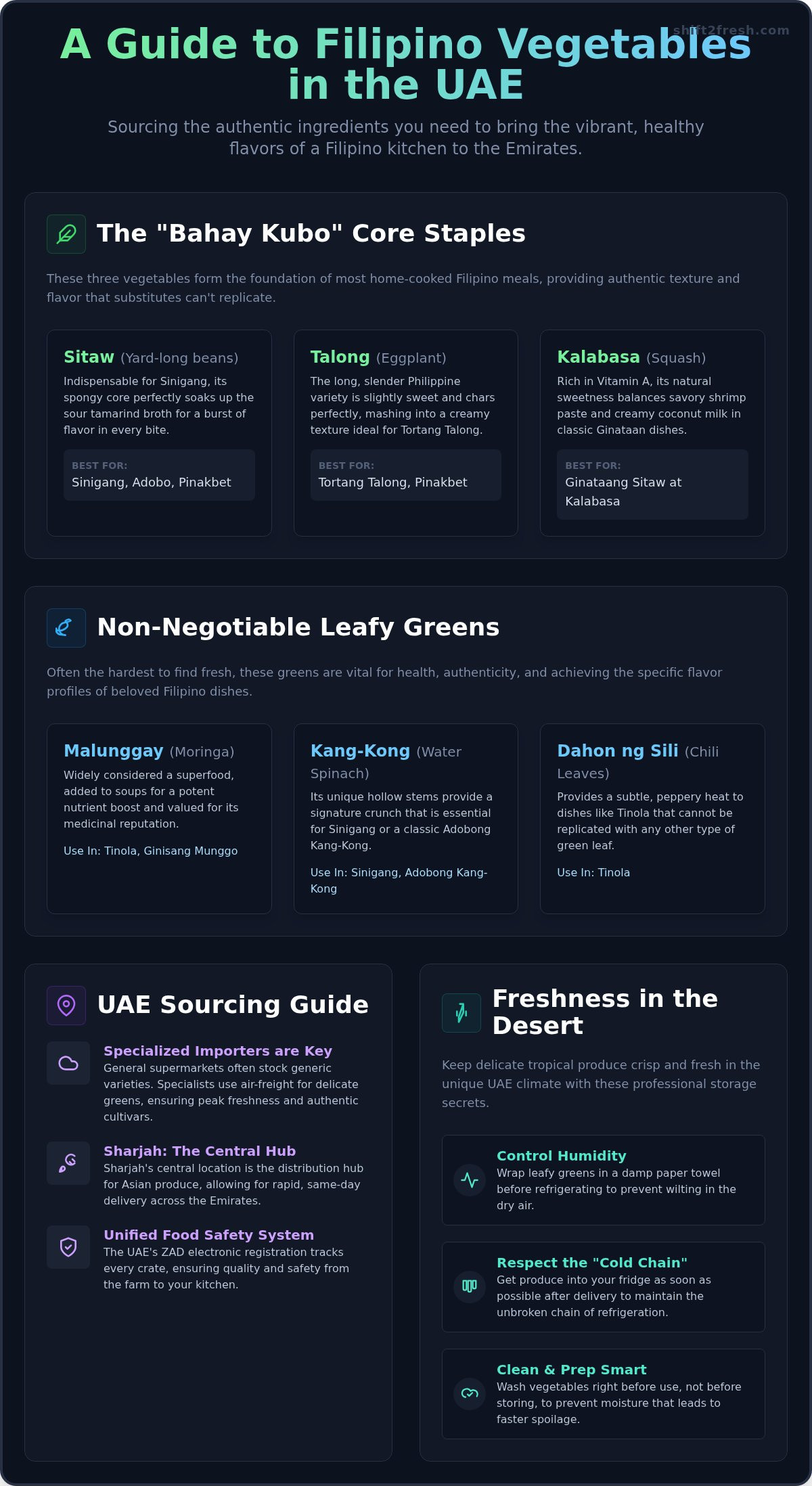
Three staples form the foundation of most home-cooked meals in the Emirates. First is Sitaw (Yard-long beans), which are indispensable for Sinigang. Unlike common green beans, Sitaw has a spongy core that soaks up the sour tamarind broth, providing a burst of flavor in every bite. Then there’s Talong (Eggplant). The Philippine variety is long, slender, and slightly sweet. It’s the only choice for a proper Tortang Talong because it chars perfectly and mashes into a creamy texture that thicker Mediterranean varieties can’t replicate. Finally, Kalabasa (Squash) remains a favorite. Rich in Vitamin A, this squash is the heart of Ginataang Sitaw at Kalabasa, where its natural sweetness balances the savory shrimp paste and creamy coconut milk.
Leafy Greens: From Malunggay to Kang-Kong
Leafy vegetables are often the hardest to find fresh in the desert, yet they’re non-negotiable for health and authenticity. Malunggay is widely considered a superfood within the community, often added to soups for a nutrient boost. It’s a staple that many OFWs search for specifically because of its medicinal reputation. Then there’s Kang-Kong, or water spinach. While it looks similar to some local UAE spinach varieties, its hollow stems provide a unique crunch that’s essential for Sinigang or Adobong Kang-Kong. Don’t overlook Dahon ng Sili (Chili leaves), either. They provide a subtle, peppery heat to Tinola that simply can’t be achieved with any other green. Finding these specific items often requires looking toward specialized importers who understand these requirements.
Sourcing these items through a dedicated Filipino vegetables guide UAE ensures you aren’t settling for substitutes. Since these vegetables are often imported through specialized hubs in Sharjah, they carry a freshness that makes your Nilaga or Pinakbet taste exactly like it did back home. Prioritizing these five must-haves will transform your weekly meal prep into a true celebration of Filipino culture.
UAE Sourcing Guide: How to Find Authentic Philippine Produce
Finding the right ingredients in the Emirates often feels like a treasure hunt. While major local supermarkets have expanded their international sections, they often stock generic varieties that lack the specific punch needed for Pinoy cooking. A reliable Filipino vegetables guide UAE cooks can trust highlights the difference between general retailers and specialized importers. These specialists understand that air-freight is essential for delicate leafy greens, while heartier roots might arrive via sea-freight. By focusing on direct imports, these providers bypass the long storage times that often sap the life out of supermarket produce.
Sharjah has solidified its position as the primary hub for Asian produce distribution in 2026. Its central location allows for efficient country-wide delivery, ensuring that a shipment arriving in the morning can reach a kitchen in Dubai or Abu Dhabi by the afternoon. This efficiency is bolstered by the UAE’s unified national food safety system, which uses the ZAD electronic registration to track every crate. For a deeper look at how these ingredients fit into a broader regional context, explore our Essential Asian Vegetables: A Complete Guide. The rise of e-commerce has made this logistics chain transparent, allowing families to order with confidence.
Seasonality and Import Cycles
Success in the kitchen depends on timing. Items like Gabi (Taro) and Kamote (Sweet Potato) have specific peak windows where they offer the best texture and sugar content. In the harsh UAE climate, sensitive greens can wilt quickly if not handled correctly during the “just arrived” phase. Savvy shoppers often track delivery schedules to grab produce the moment it leaves the Sharjah hub. If you want to skip the guesswork, using a mobile app for easy ordering lets you see exactly what’s in stock before you plan your weekend Sinigang. It’s the best way to ensure you’re getting peak-season quality.
Specialty Items: Calamansi and Ube
Some flavors simply can’t be substituted. Fresh Calamansi is the lifeblood of Filipino dipping sauces and marinades; its unique acidity is worlds apart from local lemons or limes. Similarly, finding fresh Ube (Purple Yam) is a game-changer for home bakers. While frozen substitutes exist, the earthy sweetness of a fresh tuber is unmatched. Don’t forget Gabi, either. It’s the secret to a thick, authentic Sinigang broth that coats the spoon. Sourcing these through a dedicated Filipino vegetables guide UAE ensures you’re getting the real variety, not a look-alike that won’t behave correctly in the pot.
Cooking and Preparation: Bringing Authentic Flavors to Life
Cooking in the UAE often means adapting to what’s available while maintaining traditional standards. A proper Filipino vegetables guide UAE cooks rely on isn’t just about where to buy; it’s about how to treat the ingredients once they’re on your counter. Start by cleaning Sitaw and Talong correctly. Snap Sitaw by hand into two-inch pieces rather than using a knife. This allows the ends to fray slightly, helping them absorb more sauce or broth. For Talong, soak sliced pieces in salted water immediately to prevent browning. This keeps the flesh pale and appetizing for frying or stewing, even if you’re prepping ahead of time.
Balancing the “asim” (sour) of tamarind with the “alat” (salty) of fish sauce or shrimp paste is the hallmark of a great Pinoy stew. In the UAE, where local water mineral content can vary, tasting as you go is critical to hitting that perfect flavor profile. To round out these flavors, you’ll need the right pantry staples. Check out our guide on Must-Have Filipino Ingredients for Authentic Dishes to ensure your spice rack is ready for 2026’s kitchen trends.
The Art of Ginataan and Sinigang
Mastering Ginataang Sitaw at Kalabasa requires high-quality coconut milk and patience. Add the Kalabasa first so it softens into the sauce, then add the Sitaw during the last few minutes to maintain its crunch. If you prefer a creamier sauce, mash a few pieces of the softened squash back into the coconut milk. For Sinigang, the secret to perfect texture is staggered cooking. Root vegetables like Gabi should be added early. As the Gabi breaks down, it acts as a natural thickener, giving the broth that iconic, slightly viscous mouthfeel that makes it so comforting. Don’t rush the process; let the starch from the Gabi transform the soup into something truly hearty.
Quick Sautéed Veggie Meals
For busy professionals in Dubai or Sharjah, quick meals like Ginisang Ampalaya (Bitter Melon) are essential. If you’re a beginner, rub the sliced Ampalaya with salt and let it sit for ten minutes before rinsing. This draws out the intense bitterness. Sauté it with eggs and tomatoes for a fast, healthy breakfast or side dish. Adobong Kang-Kong is another ten-minute staple that pairs perfectly with fried fish. Use high heat and a splash of soy sauce to keep the stems crisp and the leaves vibrant. Finally, don’t forget to toss Dahon ng Sili into your Tinola or soups right before serving. These leaves wilt instantly and provide a delicate peppery finish that ties the whole dish together. Using a Filipino vegetables guide UAE ensures you have these fresh leaves on hand whenever a soup craving hits.
Storage Secrets: Keeping Your Veggies Fresh in the UAE Climate
In the Emirates, the journey from the warehouse to your plate is a race against temperature spikes. Maintaining the “cold chain” is the most critical step in preserving the life of your imported produce. When you follow a Filipino vegetables guide UAE residents trust, you learn that every minute your produce sits in ambient heat, its crispness and nutritional value decline. Immediate refrigeration isn’t just a suggestion; it’s a requirement for delicate tropical items that aren’t acclimated to the 40°C+ summer heat. This is why specialized delivery services are often better than traditional shopping trips where bags sit in a hot car trunk.
The Humidity Factor
Managing moisture is a delicate balance in UAE refrigerators. For smaller items like Calamansi and Sili, wrap them in dry paper towels before placing them in a sealed container or reusable silicone bag. This absorbs excess condensation that often leads to premature rot. One golden rule for the desert: never wash your vegetables before storing them. The added moisture creates a breeding ground for mold in the humid environment of a fridge drawer. For root crops like Gabi and Kamote, use the lower crisper drawer. These heartier items prefer a slightly more stable, less breezy environment than leafy greens, helping them stay firm for weeks.
Combatting the Desert Heat
The biggest threat to your groceries is the transition from the delivery van to your kitchen. Carrying a bag of fresh Sitaw or Malunggay through a sun-drenched parking lot can cause thermal shock, leading to rapid wilting. Doorstep delivery from climate-controlled vans ensures your vegetables stay at a consistent temperature until they reach your door. When your order arrives from a Sharjah hub, move it directly into the kitchen. Avoid leaving bags on warm countertops or near sunny windows. Watch for signs of spoilage like slimy stems on Kang-Kong or soft spots on Talong, which indicate the produce has been exposed to heat for too long. To ensure your kitchen is always stocked with the freshest seasonal items, order your Filipino produce online for direct, temperature-controlled delivery.
If your Kang-Kong or Sitaw looks a bit limp after a few days, use the ice-water method to revive them. Submerge the stems in a bowl of ice-cold water for 15 to 20 minutes. This rehydrates the plant cells and restores that satisfying snap. For those who prefer to buy in bulk, many staples handle the freezer well. Blanch Sitaw, Kalabasa, or Gabi in boiling water for two minutes, then plunge them into an ice bath. Once dry, freeze them in airtight bags. They’ll stay perfect for your next Sinigang, even weeks later. Using these tips alongside a Filipino vegetables guide UAE ensures you get the most value from every dirham spent.
Shift 2 Fresh: Your Reliable Partner for Filipino Groceries
Shift 2 Fresh bridges the gap between the busy streets of the Emirates and the lush fields of the Philippines. Our mission is simple: we provide a reliable source for authentic Asian produce that mainstream supermarkets often overlook. This Filipino vegetables guide UAE families use has shown you how to choose, prep, and store your greens; now, we provide the platform to bring them directly to your kitchen. With over 45 years of food industry experience, we’ve perfected the logistics of importing specialized items like Ube and Calamansi. We ensure these delicate goods survive the journey from the Philippines with their flavor and texture intact.
Understanding how to navigate digital grocery options is essential for residents in 2026. For a broader look at the digital landscape and how to maximize your shopping efficiency, see our Online Supermarket Dubai: The Ultimate Guide. We operate primarily from our Sharjah hub, which allows us to maintain strict quality control over every crate before it’s dispatched for country-wide delivery. This centralized system ensures that whether you’re in Dubai, Abu Dhabi, or the Northern Emirates, your produce arrives fresh and ready for the pot.
Convenience and Delivery
Our mobile app is designed for the modern OFW who doesn’t have time to scour multiple markets for a single bag of Gabi. It tracks seasonal arrivals in real-time, so you’ll know the exact moment a fresh shipment of Lansones or Sitaw hits our warehouse. For families who prefer to stock up for the month, we offer free shipping on orders over AED 500. This threshold makes it easy to coordinate with friends or neighbors to ensure your pantry is always full. Doorstep delivery isn’t just about saving time; it’s about protecting your delicate leafy greens from the harsh desert heat by using our specialized, climate-controlled vans.
Beyond Vegetables: Pantry Staples
A great meal requires more than just fresh greens. To truly recreate the taste of home, you need to pair your Sitaw and Kalabasa with authentic pantry staples. Our app allows you to build a complete Filipino grocery list in one place. You can find savory Bagoong for your Pinakbet or rich Tablea for a comforting morning drink alongside your seasonal vegetables. By combining these specialized imports with your favorite condiments, you ensure every dish has that unmistakable “lutong bahay” quality. Don’t settle for generic substitutes when the real thing is just a few taps away. Order Your Fresh Filipino Vegetables Today and bring the authentic flavors of the Philippines back to your table.
Bringing the Heart of the Philippines to Your UAE Kitchen
Recreating the authentic flavors of home in the desert doesn’t have to be a struggle. By understanding seasonal cycles and mastering the “cold chain” storage techniques we’ve discussed, you can keep your Malunggay and Sitaw as fresh as the day they arrived from our Sharjah hub. This Filipino vegetables guide UAE residents trust helps you navigate the logistics of 2026’s food safety systems while ensuring your Sinigang always has that perfect, sour kick. It’s about more than just food; it’s about preserving the traditions that connect us to our roots.
With over 45 years of food industry experience, Shift 2 Fresh understands exactly what it takes to bring the best of the islands to your doorstep. You don’t have to settle for wilted substitutes when you can access fresh seasonal imports from the Philippines through our dedicated mobile app. Shop Fresh Filipino Vegetables on Shift 2 Fresh today and enjoy the convenience of temperature-controlled delivery across Sharjah and Dubai. Your favorite comfort foods are just one order away, so get ready to fill your kitchen with the vibrant aromas of home.
Frequently Asked Questions
Where can I buy fresh Malunggay leaves in Dubai or Sharjah?
You can buy fresh Malunggay leaves through the Shift 2 Fresh mobile app, which facilitates direct delivery from our primary hub in Sharjah to homes across Dubai. Since these leaves are highly perishable, sourcing them from a specialized importer ensures they haven’t spent days on a standard supermarket shelf. Our 45 years of experience helps us maintain the freshness of these delicate greens during the short journey to your kitchen.
What are the most common Filipino vegetables available in the UAE?
The most common items in any Filipino vegetables guide UAE residents use include Sitaw (yard-long beans), Talong (eggplant), Kalabasa (squash), and Ampalaya (bitter melon). You’ll also frequently find Gabi (taro) and Kang-Kong (water spinach) in stock. These staples are imported regularly to meet the high demand for authentic Pinoy stews like Sinigang and Pinakbet throughout the Emirates.
How often do shipments of fresh vegetables arrive from the Philippines?
Fresh produce shipments typically arrive from the Philippines every two weeks to ensure a consistent supply of seasonal items. For instance, regular shipments of pineapples and other tropical staples are scheduled to maintain stock levels across the UAE. You can track these “just arrived” shipments in real-time using our mobile app to grab the freshest items as soon as they hit the Sharjah warehouse.
Can I find fresh Ube (Purple Yam) in the UAE, or is it only frozen?
Yes, you can find fresh Ube in the UAE during its peak harvest season through specialized importers like Shift 2 Fresh. While many shops only carry frozen grated Ube, we focus on bringing in the whole tuber when it’s seasonally available. Fresh Ube provides a superior earthy flavor and texture for traditional desserts that frozen substitutes simply can’t match.
What is the best substitute for Kang-Kong if it is out of stock?
Local spinach or bok choy are the most common substitutes for Kang-Kong found in UAE markets. While they provide a similar leafy green element to your soups, they lack the iconic hollow, crunchy stems of water spinach. If you’re making Sinigang, adding extra Gabi can help compensate for the missing texture by naturally thickening the broth while you wait for the next shipment.
How do I ensure my imported vegetables stay fresh in the UAE summer?
To combat the intense UAE summer heat, you must move your vegetables into the refrigerator immediately after doorstep delivery. Avoid washing them until you’re ready to cook, as excess moisture leads to rapid rot in the fridge. If greens like Sitaw or Kang-Kong begin to wilt, a 20-minute soak in an ice-water bath can often restore their crispness and snap.
Are Filipino vegetables in the UAE organic or sustainably sourced?
All Filipino vegetables imported into the UAE must comply with the 2026 Agricultural Quarantine Law and be registered via the ZAD electronic system. These regulations ensure that the produce meets high safety and phytosanitary standards. While not all items are certified organic, the unified national food safety system guarantees that every vegetable is traceable and safe for your family to consume.
Does Shift 2 Fresh deliver to Abu Dhabi and the Northern Emirates?
Yes, Shift 2 Fresh provides country-wide delivery from our Sharjah distribution center to Abu Dhabi, Al Ain, and all Northern Emirates. We use climate-controlled vans to ensure your produce stays fresh during the transition across different emirates. You can even enjoy free shipping on larger family orders over AED 500, making it convenient to stock up on all your favorite seasonal imports.
0 comments