

The cook might start the meal, but in a Filipino household, it’s the diner who truly finishes it at the table. Whether you are dipping crispy fried meat or drizzling sauce over steamed rice, the magic happens in that small saucer of dipping sauce. It is a deeply personal ritual that relies on having the right must-have filipino condiments within reach. However, recreating these authentic flavors in the UAE can be a challenge. You have likely stood in a local supermarket aisle feeling frustrated because the calamansi isn’t fresh or the selection of fermented pastes feels limited.
We understand that finding the right balance of ingredients is the key to making your home-cooked meals taste like home. In this guide, you will discover the essential sauces every kitchen in Dubai and Sharjah needs to remain truly authentic. We will explore the essential pantry staples, from the sharp tang of traditional vinegar to the savory depth of shrimp paste. You will also learn how to source fresh specialty produce like siling labuyo chilis and guinamos paste through a convenient mobile app, ensuring your pantry is always ready for the next family gathering.
Key Takeaways
- Learn how the art of “sawsawan” allows you to customize every meal to your personal taste preferences directly at the dining table.
- Build a complete pantry with a checklist of must-have filipino condiments like Patis and Toyo that provide authentic depth to your home cooking.
- Discover why fresh ingredients like Calamansi and Siling Labuyo are irreplaceable for achieving the traditional Filipino salty-sour-spicy flavor profile.
- Master the exact proportions for three “perfect” dipping sauces, including the universal Toyomansi and sharp garlic-infused vinegar for fried dishes.
- Identify reliable ways to source fresh Filipino imports in Dubai and Sharjah by using specialized mobile apps for direct home delivery.
What is Sawsawan? Understanding the Heart of Filipino Flavor
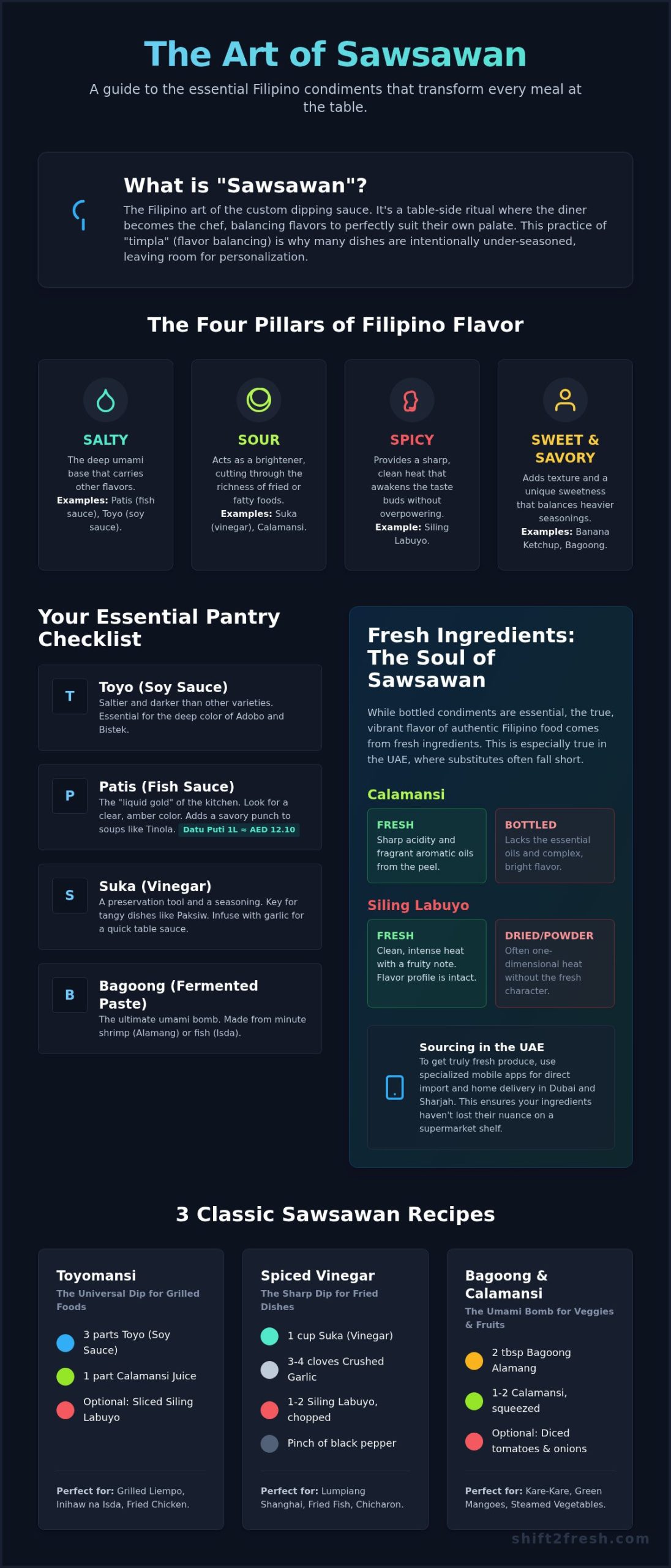
In a Filipino home, the kitchen doesn’t have the final say on how a dish tastes. That honor belongs to the diner. Sawsawan is the art of the custom dipping sauce; it’s a table-side creation that bridges the gap between the chef’s preparation and your personal palate. This cultural practice explains why many Filipino dishes, like grilled liempo or steamed fish, are often under-seasoned during the cooking process. It leaves room for “timpla,” the delicate act of balancing flavors to suit your specific mood. By using must-have filipino condiments, you can transform a simple protein into a complex masterpiece of salty, sour, and spicy notes.
The Four Pillars of the Filipino Table
To master the art of the dip, you need to understand the foundational elements found in common Filipino condiments. These ingredients work together to create a profile that is uniquely Southeast Asian yet distinctly Pinoy. Most traditional tables will feature at least one item from these categories:
- Salty: Patis (fish sauce) and Toyo (soy sauce) provide the deep umami base that carries the other flavors.
- Sour: Suka (vinegar) and Calamansi act as brighteners that cut through the richness of fried or fatty foods.
- Spicy: Siling Labuyo chilis provide a sharp, clean heat that wakes up the taste buds without overpowering the dish.
- Sweet and Savory: Banana Ketchup and Bagoong (fermented shrimp or fish paste) add texture and a unique sweetness that balances heavier seasonings.
Why Fresh Matters in the UAE
Living in the UAE presents unique challenges for maintaining an authentic pantry. While bottled citrus juices are available in many supermarkets, they often lack the aromatic oils and sharp acidity of fresh Philippine Calamansi. The intense heat in Dubai and Sharjah can also affect how fermented items like bagoong or guinamos are stored and used. If these items aren’t handled correctly during import, they lose their nuance and become one-dimensionally salty.
To get the best results, you need ingredients that haven’t been sitting on a shelf for months. Sourcing directly from Shift 2 Fresh ensures you get the fresh produce and authentic must-have filipino condiments needed to achieve that perfect “timpla.” Their direct import model means your siling labuyo and calamansi arrive with their flavor profile intact. This specificity is what separates a generic “Asian-style” meal from a truly authentic Filipino dining experience in the Emirates.
The Essential List of Must-Have Filipino Condiments
While regional variations exist across the thousands of islands in the Philippines, certain bottles remain non-negotiable for any home cook. These must-have filipino condiments form the backbone of your pantry, providing the intense umami and acidity that define the cuisine. Whether you’re in a villa in Dubai or an apartment in Sharjah, having these staples on hand ensures your cooking never tastes flat or uninspired.
Patis and Toyo: The Umami Duo
Filipino soy sauce, or Toyo, is distinct from its Japanese or Chinese counterparts. It is generally saltier and has a darker, more opaque color, which is essential for achieving the deep mahogany hue of a classic Adobo or Bistek Tagalog. On the other hand, Patis (fish sauce) is the liquid gold of the kitchen. You can distinguish high-quality Patis by its clear, amber color and its ability to add a savory punch to clear soups like Tinola or Bulalo without clouding the broth. In local markets, a 1L bottle of Datu Puti Patis typically retails for around AED 12.10, making it an affordable way to add depth to every meal.
Suka: The Secret to Filipino Preservation
Vinegar is more than just a seasoning; it is a vital preservation tool. In the Philippines, Sukang Maasim (cane vinegar) and Sukang Paombong (palm vinegar) were traditionally used to keep food from spoiling in the tropical heat. This practice gave birth to dishes like Paksiw, where fish or meat is simmered in vinegar and ginger to create a shelf-stable, tangy meal. For a quick table sauce, try infusing your vinegar with crushed garlic and bird’s eye chilis. You can easily stock up on these Filipino pantry items through a mobile app to keep your supplies fresh without the hassle of a supermarket trip.
Bagoong: The Boldest Flavor Profile
Bagoong is the ultimate umami bomb. You’ll generally find two types: Bagoong Alamang, made from minute shrimp, and Bagoong Isda, made from fermented fish. While Bagoong Alamang is the classic partner for Kare-Kare or crisp green mangoes, Bagoong Isda (or Guinamos) offers a deeper, more liquid consistency perfect for seasoning vegetable stews. If you’re worried about the strong aroma in a modern UAE apartment, sautéing the paste with plenty of garlic, onions, and a touch of sugar helps mellow the scent while intensifying the flavor. For those tracking their grocery budget, a 250g jar of regular Barrio Fiesta bagoong costs approximately AED 12.50 in the UAE.
Fresh Ingredients: The Soul of the Condiment Tray
The liquid condiments mentioned earlier provide the salt and acid, but the soul of a true sawsawan lies in the fresh aromatics added at the last second. In a Filipino kitchen, a condiment tray isn’t complete without the “big three” of aromatics: fresh garlic, red onions, and siling labuyo. These aren’t just garnishes. They’re functional ingredients that release their juices into the vinegar or soy sauce as you eat. While you can find standard green chilis in any UAE supermarket, the native siling labuyo is one of the must-have filipino condiments for those who crave that specific, sharp heat that doesn’t linger too long on the tongue.
Calamansi: The King of Sawsawan
Lemon and lime are common across the Middle East, but they are poor substitutes for the complex, floral acidity of calamansi. The flavor profile of a real Philippine calamansi is more concentrated, offering a cross between a tangerine and a lime. To get the best flavor, cut the top third of the fruit and squeeze gently into your saucer. If you press too hard, the bitter oils from the rind and pith will ruin the balance of your sauce. Sourcing fresh Seasonal Filipino Fruits in Dubai can be difficult since they require careful handling during import to stay fresh.
Specialty Pastes: Guinamos and Beyond
Regional authenticity often comes down to specialty pastes that many mainstream guides overlook. Guinamos, a Visayan fermented fish specialty, is a prime example. Unlike the smoother bagoong often found in Luzon, guinamos has a more rustic texture and a deeper, earthier funk. It is the secret ingredient for elevating simple steamed vegetables or “pinakbet” style dishes. These specific Filipino Pantry Items are essential if you want your kitchen to taste like a home in the Visayas. Because these items are specialty imports, they aren’t always available in large-scale hypermarkets, making direct sourcing through a specialist more reliable.
Beyond the sauce tray, your pantry should also hold staples like black glutinous rice and tablea (pure cacao tablets). While not condiments in the traditional sense, they act as the flavor base for iconic comfort foods. A rainy afternoon in Sharjah is the perfect time for a bowl of champorado made from authentic Filipino cacao. Having these aromatics and staples on hand means you can recreate the full spectrum of Filipino flavors without compromise.
How to Create the Perfect Sawsawan: 3 Classic Recipes
Having a pantry full of must-have filipino condiments is the first step, but the true magic happens when you start mixing them. In the Philippines, this isn’t just about following a recipe; it’s about the “timpla,” or the intuitive balancing of flavors. The goal is to create a sauce that complements the specific fat and salt content of your main dish. Whether you’re dining in Dubai or Sharjah, these three classic combinations will cover almost every meal you prepare at home.
Step-by-Step: The Ultimate Toyomansi
Toyomansi is the undisputed king of Filipino dipping sauces. It serves as the universal partner for grilled meats like Inihaw na Liempo or Chicken Inasal. To get the balance right, start with a ratio of three parts Toyo (soy sauce) to one part fresh Calamansi juice. This ensures the saltiness of the soy sauce is brightened by the citrus without becoming too sour. If you use a high-quality Filipino soy sauce, the result will be darker and richer than typical table varieties.
To add the necessary “kick,” don’t just drop a chili in the bowl. Use a fork to crush a single Siling Labuyo against the bottom of the saucer. This releases the seeds and oils directly into the liquid for a more integrated heat. For an added layer of texture, mix in finely diced red onions. The onions provide a necessary crunch and a sweet, sharp finish that cuts through the smoke of grilled proteins.
The Vinegar Dip for Crispy Pulutan
Crispy, fried dishes like Lechon Kawali or Chicharon require a dip that can cut through heavy fats. For this, a vinegar-based sauce is essential. Mix traditional cane vinegar with several cloves of crushed garlic, a teaspoon of whole peppercorns, and a small pinch of sugar. The ‘timpla’ for this dip is a balance of sharp acidity and pungent garlic. This combination acts as a palate cleanser, making each bite of fried food feel as light as the first. If you find the vinegar too aggressive, a splash of water or an extra pinch of sugar can help mellow the profile.
Kamatis at Bagoong: The Fresh Alternative
Not every sawsawan needs to be a liquid. When serving steamed vegetables like okra, eggplant, or ampalaya, a chunky mixture of chopped ripe tomatoes and Bagoong Alamang is the traditional choice. The natural juices from the tomatoes blend with the savory shrimp paste to create a side dish that is both refreshing and deeply savory. It is the perfect way to use your must-have filipino condiments to elevate a healthy, simple meal. You can easily find the freshest ingredients for these recipes when you order through our mobile app for direct delivery to your kitchen.
Sourcing Filipino Condiments and Fresh Produce in the UAE
Finding authentic ingredients in the UAE shouldn’t feel like a treasure hunt. While many local hypermarkets stock “Asian” aisles, these sections often feature generic versions of soy sauce or vinegar that lack the specific nuance of Pinoy brands. For those looking for the true must-have filipino condiments that define the taste of home, a dedicated specialist is essential. Shift 2 Fresh leverages 45 years of food industry experience to bring direct imports like Guinamos paste and fresh siling labuyo to the Emirates. By using a specialized mobile app, you can easily manage your Philippine supermarket list without leaving your home.
Online Grocery Delivery: The Modern Filipino Way
Ordering online is the most efficient way to stock a kitchen in Dubai or Sharjah. It saves you from the crowded weekend markets and the frustration of finding wilted produce. Freshness is the highest priority; seasonal fruits and vegetables are handled with extreme care during transit to ensure they survive the UAE climate. This service provides a level of gourmet food delivery in Dubai that standard grocery apps often fail to provide when it comes to specialty ethnic produce. Whether you’re in a high-rise in Dubai Marina or a villa in Sharjah, your essential aromatics arrive crisp and ready for the dipping saucer.
Building Your Starter Kit with Shift 2 Fresh
If you’re building your pantry from scratch, focus on the essentials that allow you to create the “Big Four” flavors. Your first cart should include high-quality Patis, cane vinegar, Filipino-style soy sauce, and a jar of savory bagoong. Always add fresh Calamansi and sili to your order to complete the set. You can track your delivery in real-time through the mobile app to ensure someone is home to receive the fresh items. For those planning a large family feast, keep in mind that orders over AED 500 currently qualify for free shipping across the UAE in 2026. This makes it easier than ever to maintain a fully stocked, authentic Filipino kitchen regardless of which Emirate you call home.
Maintaining a traditional kitchen requires more than just bottled sauces; it requires a commitment to the right aromatics and specialty pastes. With a reliable sourcing partner, you don’t have to settle for substitutes. You can have the sharp heat of real siling labuyo and the floral tang of fresh calamansi at your fingertips every single day.
Bring the Authentic Taste of Home to Your UAE Kitchen
Recreating the authentic Filipino dining experience in Dubai or Sharjah starts with understanding that the diner always completes the dish at the table. You’ve now learned how to balance the sharp acidity of traditional vinegar with the deep umami of fermented pastes. Remember that the true soul of these vibrant flavors depends entirely on the quality of your must-have filipino condiments and the absolute freshness of your citrus and chilis. Substituting these ingredients often leads to a flat profile that doesn’t quite hit the mark.
Shift 2 Fresh bridges the gap between the Philippines and your home in the Emirates. With 45 years of food industry experience, they ensure that specialty items like fresh Calamansi and Siling Labuyo are directly imported and delivered right to your door. Their easy-to-use mobile app simplifies your grocery routine, allowing you to focus on the joy of cooking rather than the stress of sourcing. Stock your pantry with authentic Filipino condiments and fresh produce at Shift 2 Fresh today! Your next perfect “timpla” is just an order away, and your family will surely taste the difference.
Frequently Asked Questions
What is the most popular condiment in the Philippines?
Banana ketchup is arguably the most popular stand-alone condiment, known for its sweet and savory profile. However, the combination of soy sauce and vinegar remains the most used pairing at the dining table. These are considered must-have filipino condiments because they form the base of almost every “sawsawan” or dipping sauce used in daily meals across the islands.
Can I substitute regular lime for Calamansi in dipping sauces?
Regular lime is a poor substitute because it lacks the floral aroma and concentrated acidity of the real thing. Calamansi has a unique flavor that sits between a tangerine and a lime. While lime provides sourness, it won’t give your dipping sauce the authentic “Pinoy” taste. It’s better to source fresh calamansi through a specialist importer to ensure your “timpla” remains accurate.
Is fish sauce (Patis) the same as soy sauce?
Fish sauce (Patis) and soy sauce (Toyo) are completely different ingredients with distinct flavor profiles. Patis is made from fermented fish and salt, offering a pungent, salty punch. Toyo is made from fermented soybeans and is usually darker and saltier than Japanese varieties. While both add saltiness, you cannot swap one for the other without fundamentally changing the dish’s flavor.
How long do fermented Filipino condiments like Bagoong last in the UAE heat?
Fermented condiments like Bagoong are naturally preserved and can last for several months if stored correctly. In the UAE heat, it is best to keep opened jars in the refrigerator to prevent the oils from turning rancid. Unopened jars should be kept in a cool, dark pantry. Always check that the product has at least 50% of its shelf life remaining when you buy it.
What is the difference between Toyomansi and regular soy sauce?
Toyomansi is a pre-mixed blend of soy sauce and calamansi juice, whereas regular soy sauce is just the fermented bean liquid. It provides a convenient, ready-made balance of salty and sour notes. While it’s a great time-saver, many purists prefer mixing their own must-have filipino condiments at the table to control the exact ratio of citrus to salt for their specific meal.
Where can I buy fresh Siling Labuyo in Dubai?
You can buy fresh Siling Labuyo through the Shift 2 Fresh mobile app for delivery across Dubai and Sharjah. Finding these native “bird’s eye” chilis in standard UAE supermarkets is difficult because they are specialty imports. Ordering through a dedicated app ensures you receive fresh, vibrant chilis that haven’t spent weeks in a warehouse, maintaining their signature sharp heat for your sauces.
Are Filipino condiments healthy?
Filipino condiments are generally high in sodium, so they should be used in moderation. However, fermented items like Bagoong and traditional vinegars contain probiotics and organic acids that can aid digestion. To keep your meals healthier, balance these strong seasonings with plenty of fresh vegetables and lean proteins. Focus on the flavor impact rather than the volume of sauce used.
What is the best vinegar for Filipino Adobo?
Cane vinegar, or Sukang Maasim, is the traditional choice for the best Filipino Adobo. It has a mild, clean acidity that doesn’t overpower the soy sauce and garlic. Palm vinegar is another excellent option if you prefer a sharper, more complex tang. Avoid using heavy balsamic or malt vinegars, as these will change the color and traditional taste of the dish.
0 comments