

Have you ever spent a hot afternoon scouring supermarkets in Dubai or Sharjah for a bundle of fresh sitaw, only to settle for wilted greens that look nothing like home? It’s frustrating when you want to recreate the authentic taste of your family’s Sinigang or Pinakbet, but the essential vegetables used in filipino cooking are either missing or past their prime. You know that the soul of these dishes lies in the crisp snap of a winged bean and the vibrant green of fresh malunggay, which are often hard to find in standard local aisles.
In this guide, you’ll master the botanical foundation of the “Bahay Kubo” kitchen and understand the impressive nutritional profiles of these tropical staples, such as the high calcium levels found in malunggay. We’ll show you how to identify specific varieties by their local names and provide expert tips for keeping them fresh in the intense UAE humidity. Finally, we’ll reveal how you can bypass the supermarket struggle entirely with a reliable way to get premium imports delivered directly to your kitchen so your pantry is always ready for the next feast.
Key Takeaways
- Identify the essential vegetables used in filipino cooking and learn how their specific textures, from the crunch of Sitaw to the silkiness of Talong, anchor traditional recipes.
- Explore the superfood status of indigenous greens, including the high Vitamin A, C, and K content in Pechay that supports your wellness goals.
- Apply professional preservation techniques like the “Cold Shock” method to revive wilted Kang Kong and combat the effects of the UAE’s dry indoor environments.
- Master the perforated bag storage secret to significantly extend the shelf life of delicate tropical produce in a standard Dubai refrigerator.
- Learn why direct-import sourcing via mobile app ordering provides fresher, home-quality ingredients than generic retail options in Sharjah and Dubai.
The ‘Bahay Kubo’ Heritage: Why Vegetables Define Filipino Cooking
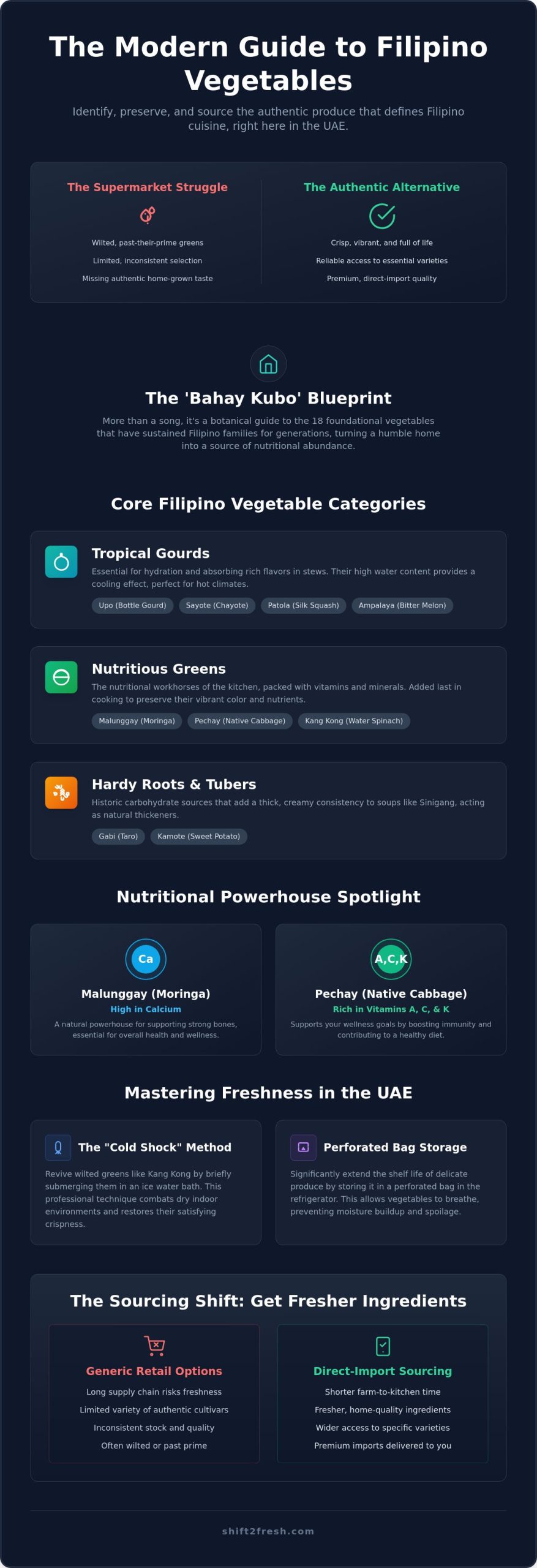
Filipino cuisine is a living tapestry woven from indigenous tropical plants and centuries of international trade. While Spanish and Chinese influences introduced new ingredients like tomatoes, onions, and pechay, the soul of the kitchen remains rooted in the land. The Bahay Kubo folk song isn’t just a simple nursery rhyme; it’s a botanical blueprint for a self-sustaining home garden. It lists eighteen specific vegetables used in filipino cooking that have sustained families for generations, turning the humble nipa hut into a source of nutritional abundance.
Iconic stews like Pinakbet and Dinengdeng rely on this diverse abundance. These dishes aren’t just meals; they’re a celebration of fresh fruits and vegetables grown in harmony. As we move through 2026, the Filipino culinary scene is witnessing a massive shift toward plant-forward diets. Chefs in both Manila and Dubai are rediscovering these traditional ingredients, elevating them from simple side dishes to the stars of the plate. This movement honors the past while embracing modern wellness trends that prioritize fiber-rich, whole-food ingredients.
The Cultural Significance of the Pinoy Kitchen
For the Filipino diaspora in the UAE, these vegetables serve as a vital cultural anchor. When you’re living in Dubai or Sharjah, thousands of miles from home, the scent of a sour Sinigang or a hearty Nilaga provides an immediate emotional connection to hometown flavors. Whether it’s a weekend boodle fight with friends or a quiet family dinner, the presence of authentic produce turns a standard meal into a community gathering. It’s about more than just nutrition; it’s about preserving a sense of identity through the familiar textures of home.
Identifying the Core Categories: Gourds, Greens, and Roots
To master the variety of produce, it helps to classify them into three functional groups based on how they’re used in the kitchen:
- Tropical Gourds: Vegetables like Upu (bottle gourd), Sayote (chayote), and Patola (silk squash) are essential for hydration. In the humid climates of the Philippines and the high temperatures of the UAE, these water-heavy plants provide a cooling effect and absorb the rich flavors of broths.
- Nutritious Greens: Malunggay (moringa), Pechay (native cabbage), and Kang Kong (water spinach) are the nutritional workhorses. They’re often added at the very last minute of cooking to preserve their vibrant color and high mineral content.
- Hardy Roots and Tubers: Roots like Gabi (taro) and Kamote (sweet potato) served as the primary carbohydrate source in rural history. Today, they add a thick, creamy consistency to soups like Sinigang, acting as a natural thickener.
Understanding these categories allows you to substitute ingredients more effectively when specific varieties are out of season, ensuring your cooking remains authentic even when you’re adapting to the local market conditions in the Emirates.
Essential Vegetables Used in Filipino Cooking: A Botanical Profile
Transitioning from the folklore of the Bahay Kubo, we look at the actual plants that fill the pot. The vegetables used in filipino cooking are defined by their structural variety and specific culinary roles. While you might find generic versions in a typical vegetables dubai market stall, the authentic cultivars offer a distinct crunch or silkiness. For instance, the snap of a long green Sitaw (string bean) is worlds apart from the dense, velvety texture of a native purple Talong (eggplant) when fried or grilled for Tortang Talong.
Scientific research into indigenous vegetables in the Philippines highlights how these plants have adapted to tropical climates, developing unique flavors that are difficult to replicate with Western substitutes. Mastering these Asian Vegetables requires knowing which part of the plant provides the most impact in a dish. Whether it’s the hollow stem of a leafy green or the starchy heart of a tuber, each component serves a purpose.
The Iconic Gourds: Ampalaya, Sayote, and Kalabasa
Ampalaya, or Bitter Melon, is perhaps the most famous of the vegetables used in filipino cooking due to its potent blood-sugar-regulating properties and its challenging, sharp flavor. To manage the bitterness in Ginisang Ampalaya, many cooks salt and squeeze the sliced fruit before sautéing. Sayote is the versatile, watery squash that defines a good Tinola, providing a neutral base that absorbs ginger and chicken juices. For a touch of sweetness, Kalabasa (Kabocha squash) is indispensable, melting into a creamy gold in Ginataang dishes.
Leafy Powerhouses: Malunggay, Pechay, and Kang Kong
Malunggay is often called the “miracle tree” because almost every Filipino backyard has one. Its tiny leaves are packed with minerals and are a staple in soups for nursing mothers. Pechay, a native bok choy, provides the necessary crunch in beef stews like Bulalo or Nilaga. Meanwhile, Kang Kong (water spinach) remains the crunchy star of Adobong Kang Kong and Sinigang, prized for its hollow stems that hold onto vinegar and soy sauce perfectly.
Hardy Roots and Aromatics: Gabi, Ube, and Tanglad
Gabi (taro) is the secret to the thick, savory broth in Sinigang na Baboy. As it simmers, it breaks down to create a starchy, comforting consistency that naturally thickens the soup. While many in the UAE know Ube primarily as a purple dessert flavor, it’s actually a nutritious root that can be boiled or roasted as a savory side. Finally, Tanglad (lemongrass) provides the citrusy, aromatic soul for Lechon and Inasal, cutting through the richness of the meat. If you’re struggling to find these specific varieties at your local corner shop, you can easily browse authentic imports through a mobile app to ensure your next meal tastes exactly like home.
The Nutritional Powerhouse: Why Asian Vegetables are Modern Superfoods
Wellness in 2026 has moved beyond synthetic supplements, placing a new spotlight on “functional foods” that offer health benefits far beyond basic nutrition. The vegetables used in filipino cooking are perfect examples of this shift. These aren’t just ingredients; they’re botanical powerhouses that have sustained the archipelago for centuries. For those living in the UAE, where the desert climate and indoor lifestyle can impact gut health, the high fiber content in tropical gourds like Upu and Sayote is particularly beneficial. These vegetables help maintain a healthy digestive tract while providing essential hydration.
The unique flavor profiles of Pinoy dishes also play a physiological role. The “sour” notes from tamarind in Sinigang and the “bitter” profile of Ampalaya are more than just culinary choices. They trigger the production of digestive enzymes and bile, helping your body process nutrients more efficiently. Leafy greens like Malunggay and Pechay provide a massive hit of Vitamins A, C, and K, which are vital for immune support and bone health in the busy urban environments of Dubai and Sharjah.
Traditional Healing and Medicinal Benefits
In Filipino culture, the kitchen has always been the first line of defense for health. Bitter Melon (Ampalaya) is widely recognized in traditional medicine for its ability to support insulin sensitivity, making it a staple for those managing blood sugar levels. Moringa, or Malunggay, remains the gold standard for lactation support among new mothers in the UAE’s Filipino community due to its dense concentration of iron and minerals. Even the aromatics play a part, as ginger and turmeric roots serve as natural anti-inflammatories in daily soups, helping to soothe the body after a long day of work.
Nutrient Density: Filipino Veg vs. Western Staples
When you compare these traditional ingredients to common Western staples, the nutritional gap is startling. For example, Malunggay contains approximately 2977 mg of calcium per 100g on a dry weight basis, which is significantly higher than what you’ll find in standard spinach. If you’re looking for better carbohydrate options, Taro (Gabi) offers a lower glycemic index and a high fiber content of about 11.5%, making it a much more stable energy source than the common white potato. Diversifying your Asian Vegetables intake isn’t just about flavor; it’s a strategic way to improve micronutrient absorption. Research shows that indigenous Philippine vegetables can provide a protein content ranging from 18.4% to 35.4% on a dry weight basis, proving that a plant-heavy Filipino diet is a robust foundation for modern health.
Mastering Filipino Vegetables in the UAE: Storage and Prep Tips
The transition from a humid tropical climate to the air-conditioned, dry environments of Sharjah and Dubai presents a unique challenge for preserving vegetables used in filipino cooking. Tropical produce is biologically designed for high moisture, and the rapid dehydration caused by UAE cooling systems can turn a vibrant bunch of greens into a wilted mess within hours. Understanding the specific needs of these plants is the difference between a crisp, authentic meal and a disappointing, soggy dish. If you find your Kang Kong has lost its snap after the commute from the store, use the “Cold Shock” method. Submerge the stems in a bowl of ice-cold water for 20 minutes; the cells will rapidly rehydrate, restoring the vegetable’s structural integrity.
Storage strategy is equally vital for delicate items like Pechay. The perforated bag secret is a game-changer for UAE residents. By placing your greens in a plastic bag with small holes, you allow just enough air circulation to prevent slime while maintaining the humidity necessary to keep the leaves turgid. For aromatics, the rules change. Aromatics like ginger and garlic should never be refrigerated to maintain their essential oils and prevent the flavor-dulling effects of cold storage. When it’s time to prep, handle Gabi (Taro) with care. The sap contains calcium oxalate crystals that can cause intense skin irritation. Always peel Gabi under running water or wear gloves, and ensure the root is cooked thoroughly to neutralize the compounds that cause that “itchy” sensation in the throat.
Combating Desert Heat: Preservation for Sharjah and Dubai Residents
Living in the Emirates means managing extreme temperature shifts. To ensure your produce lasts, place delicate tropical leaves in the middle shelves of your refrigerator, away from the freezing back wall. If you have a surplus of Malunggay, strip the leaves and freeze them in airtight containers; they’ll retain their nutrients for months, providing 2026 food security for your family. Given how quickly tropical produce can degrade in the heat, many busy professionals now prefer to use an online supermarket dubai to buy smaller quantities more frequently. This “just-in-time” approach ensures you are always cooking with the freshest possible ingredients.
Essential Filipino Cooking Techniques for Nutrient Retention
How you cook these vegetables determines how much of their “superfood” value actually reaches your plate. Use these methods to maximize quality:
- Blanching: For Pechay and Sitaw, a 30-second blanch followed by a cold water bath keeps the color vibrant and the texture crisp.
- The Gisa (Sauté): Start with your aromatics to build a flavor base, but add your gourds like Sayote last. This prevents them from turning into a flavorless mush.
- Sinigang Simmering: Sinigang is the ultimate nutritional delivery system. By boiling your vegetables in a sour broth, you preserve the water-soluble vitamins that would otherwise be lost in discarded cooking water.
To get these kitchen staples delivered at peak freshness, you can order authentic Filipino vegetables through our mobile app and skip the supermarket struggle entirely.
Sourcing Authentic Filipino Vegetables in the UAE with Shift 2 Fresh
Finding the exact vegetables used in filipino cooking shouldn’t feel like a treasure hunt through the backstreets of Deira or Sharjah. While generic retailers might stock basic bok choy, they often lack the “home-quality” Filipino Pantry Items and specific cultivars that define our cuisine. Shift 2 Fresh bridges this gap by leveraging a 45-year legacy in the food industry, specializing in direct imports that skip the middleman. This ensures that the produce you receive is fresher and more authentic than what you’d typically find at a generic philippine supermarket shelf, where items may have sat for days under suboptimal conditions.
The challenge for the Filipino diaspora in 2026 is no longer just finding the ingredients, but finding them at the peak of their nutritional value. Because Shift 2 Fresh controls the import process directly from the Philippines and South Asia, the time from farm to kitchen is significantly reduced. This quality assurance is vital for maintaining the “superfood” benefits of the greens and gourds we’ve discussed, ensuring your family gets the full mineral and vitamin content promised by these traditional staples.
The Shift 2 Fresh Advantage: Farm to Sharjah and Dubai
Maintaining the integrity of tropical produce in the desert requires a rigorous cold chain. Shift 2 Fresh manages this process from the moment Seasonal Filipino Fruits and vegetables leave the soil until they reach your doorstep. This is particularly helpful when dealing with heavy, bulky items like a whole Kalabasa or several kilograms of Gabi, which can be a struggle to transport in the UAE heat. By offering free shipping on orders over AED 500, the service makes it easy for families across the Emirates to stock up on their weekly essentials without the logistical headache.
Shopping Made Easy: Your Digital Filipino Market
In 2026, the Shift 2 Fresh mobile app serves as the ultimate tool for the modern Pinoy kitchen. It provides real-time stock updates, so you’ll never miss out on a fresh shipment of hard-to-get items like fresh Ube or specialty gourds. You can easily link your fresh vegetable haul with essential Filipino Pantry Items, such as bagoong or soy sauce, to ensure you have every ingredient for a complete, authentic meal. The app simplifies the process for busy professionals, allowing you to track the latest imports and manage your kitchen inventory with just a few taps on your phone.
Bring the Authentic Flavors of Home to Your UAE Kitchen
Mastering the diverse vegetables used in filipino cooking is about more than just following a recipe; it’s about honoring a cultural heritage that prioritizes wellness and community. From the starchy comfort of Gabi in your Sinigang to the mineral-rich leaves of Malunggay, these ingredients provide a nutritional foundation that’s hard to replace with generic substitutes. By applying the “Cold Shock” method and smart storage secrets, you can ensure your tropical greens survive the desert heat and maintain their peak flavor.
You don’t have to settle for wilted supermarket options or spend hours searching for specific gourds. With over 45 years of industry expertise and a commitment to direct imports from the Philippines, Shift 2 Fresh makes it easier than ever to access the produce you love. You can skip the commute and enjoy the convenience of mobile app ordering with free delivery on orders over AED 500.
Shop Fresh Filipino Vegetables on Shift 2 Fresh Today and start creating the vibrant, healthy meals your family deserves. It’s time to turn your kitchen into a true extension of the Filipino home.
Frequently Asked Questions
What are the most common vegetables used in Filipino cooking?
The most common vegetables used in filipino cooking include Sitaw (yard-long beans), Talong (eggplant), Ampalaya (bitter melon), Kalabasa (squash), and Pechay (native cabbage). These staples form the botanical base of iconic dishes like Pinakbet, Sinigang, and Dinengdeng. While some generic versions exist in local UAE markets, sourcing specific Philippine cultivars is necessary to achieve the authentic textures and flavors found in traditional home-cooked meals.
How do I remove the bitterness from Ampalaya (Bitter Melon)?
You can effectively reduce the bitterness of Ampalaya by slicing the fruit thinly and rubbing the pieces with a generous amount of salt. Let the salted slices sit for 10 to 15 minutes to draw out the bitter juices, then rinse them thoroughly under cold water and squeeze them dry before cooking. Another professional tip is to avoid over-stirring the Ampalaya once it’s in the pan, as excessive agitation can release more bitter compounds into the dish.
Where can I buy fresh Filipino vegetables in Dubai or Sharjah?
Authentic produce is best sourced through specialty importers like Shift 2 Fresh, who specialize in bringing items directly from the Philippines to the Emirates. While generic supermarkets in Dubai and Sharjah carry basic Asian greens, they often lack the variety and freshness of direct-import specialists. Using a dedicated mobile app allows you to track fresh arrivals and ensures you’re getting home-quality ingredients that haven’t spent long periods on retail shelves.
Is Malunggay (Moringa) available fresh in the UAE?
Yes, fresh Malunggay is available in the UAE through direct-import services that focus specifically on Philippine produce. Because these leaves are highly perishable, they aren’t usually found in standard local grocery stores. Shift 2 Fresh uses 45 years of food industry experience to maintain a strict cold chain, ensuring these “miracle leaves” arrive in Sharjah and Dubai with their nutritional potency and vibrant green color fully intact.
What is the difference between Pechay and Bok Choy?
Pechay Tagalog is a native variety of cabbage that differs from the standard Shanghai Bok Choy commonly found in UAE markets. Pechay features thinner, more fibrous white stems and larger, darker green leaves with a slightly peppery flavor profile. It’s specifically cultivated to withstand the long simmering times required for Filipino soups like Nilaga and Bulalo without losing its structural integrity or becoming mushy like other cabbage varieties.
How do I store tropical Filipino vegetables in the UAE heat?
Proper storage involves protecting vegetables used in filipino cooking from the dehydrating effects of indoor air conditioning. Place your greens in perforated plastic bags to maintain humidity while allowing the plants to breathe on the middle shelf of your refrigerator. For hardy roots like Gabi or aromatics like Tanglad, keep them away from the very back of the fridge where temperatures can drop too low and cause frost damage to tropical cells.
Which Filipino vegetables are considered superfoods?
Malunggay, Ampalaya, and Saluyot are recognized as the primary superfoods of the Filipino kitchen due to their dense nutrient profiles. Malunggay contains significantly higher calcium and iron levels than standard spinach, while Ampalaya is traditionally used to support insulin sensitivity. Saluyot, or jute leaves, provides exceptionally high levels of antioxidants and fiber, which are essential for maintaining gut health in the challenging desert climate of the Emirates.
Can I get Filipino vegetables delivered to my home in the UAE?
You can have fresh Filipino produce delivered directly to your doorstep anywhere in the UAE. By using the Shift 2 Fresh e-commerce app, you can browse the latest seasonal imports and schedule a delivery to your home in Dubai, Sharjah, or other emirates. The service provides a convenient solution for busy professionals and offers free shipping on orders over AED 500, making it easy to maintain an authentic and healthy Pinoy diet.
0 comments