

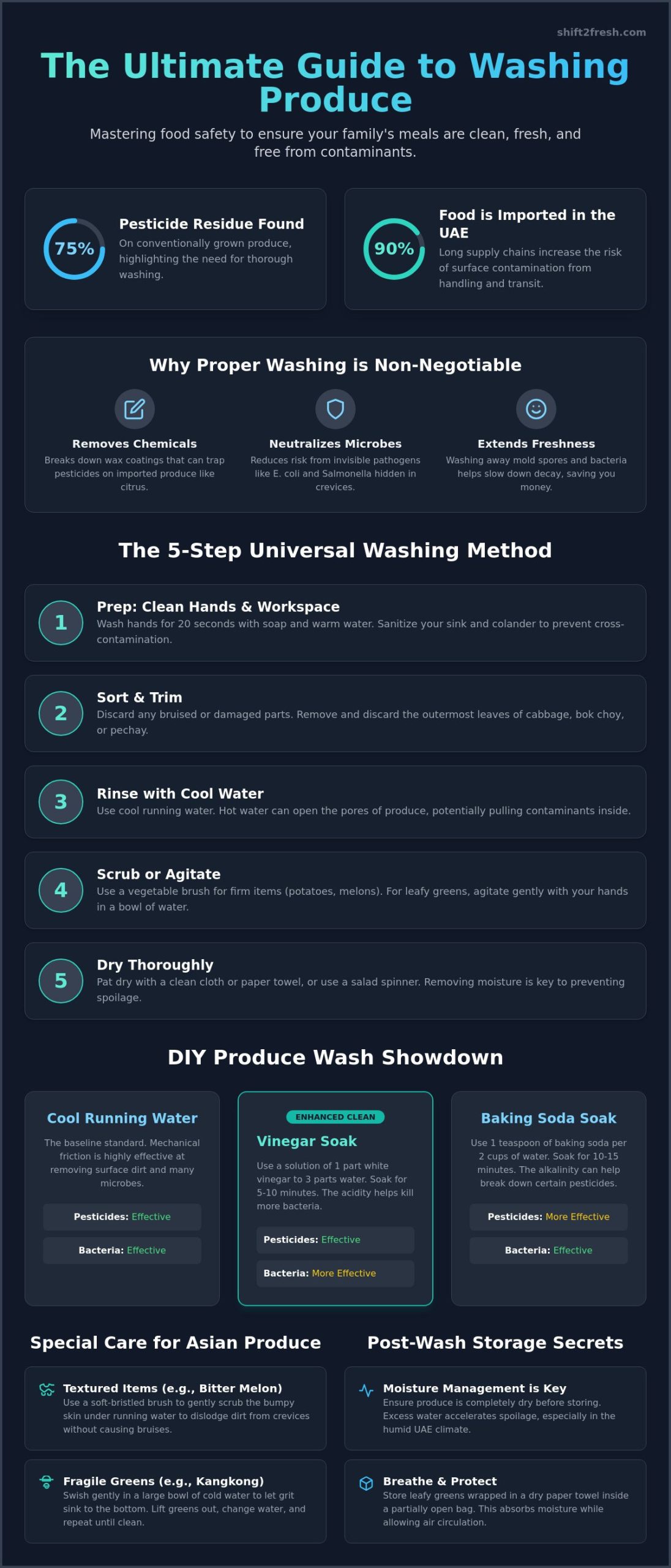
Did you know that 75% of conventionally grown produce contains pesticide residues according to 2026 data? For families in the UAE, where up to 90% of food is imported, the fear of hidden chemicals on specialty Asian vegetables is a very real concern. You want to provide healthy meals, but it’s easy to feel confused about whether a simple splash of water is enough or if you need expensive commercial cleaners. Learning how to wash vegetables properly shouldn’t feel like a chemistry experiment, and it certainly shouldn’t cause your groceries to spoil faster in the summer heat.
We understand that you value both safety and the authentic flavor of your favorite Filipino ingredients. This guide promises to give you total peace of mind by mastering the essential techniques to remove contaminants while preserving the quality of your greens. We’ll explore the latest UAE food safety regulations, compare the effectiveness of DIY solutions against plain running water, and provide a repeatable routine that keeps your produce fresh for longer. From leafy spinach to firm papayas, you’re about to become an expert in kitchen safety and food longevity.
Key Takeaways
- Understand the unique food safety journey of imported goods and why your favorite Asian vegetables need a dedicated cleaning approach.
- Master the 5-step universal method for how to wash vegetables properly to ensure every meal is free from hidden contaminants.
- Learn specific handling techniques for textured items like Bitter Melon and fragile greens like Kangkong to maintain their authentic texture.
- Compare the effectiveness of vinegar and baking soda solutions for removing pesticides and bacteria from your fresh ingredients.
- Discover expert storage secrets that use moisture management to keep your specialty produce crisp and fresh in the UAE climate.
Why Knowing How to Wash Vegetables Properly is Essential for Food Safety
Proper washing is more than just a quick rinse under a cold tap. It is the mechanical process of removing physical dirt, harmful bacteria, and lingering chemical residues from the surface of your food. Understanding these techniques is essential for food safety, especially when dealing with specialty items that have traveled across borders. When you learn how to wash vegetables properly, you aren’t just cleaning your dinner; you’re creating a vital barrier against foodborne illnesses in your home.
The journey of imported Asian vegetables is complex. These items often travel thousands of kilometers from farms in Southeast Asia to reach the UAE. Along this supply chain, produce passes through multiple hands, packing facilities, and shipping containers. Because the UAE relies on importing up to 90% of its food requirements, the chance of surface contamination from handling or environmental exposure is higher than with local goods. Taking the time to clean your fresh fruits and vegetables ensures that any contaminants picked up during this long transit are neutralized before they reach your plate.
Effective washing also plays a surprising role in your kitchen budget. By removing mold spores and bacteria that naturally sit on the skin of produce, you can actually slow down the rate of decay. This is particularly important in the humid UAE climate, where a single contaminated leaf can cause an entire bag of Pechay to wilt in a matter of days. A clean start is the best way to ensure your groceries stay crisp and flavorful for as long as possible.
The Pesticide and Chemical Residue Reality
Pesticide residue is the trace amounts of chemicals remaining on produce after harvest. According to 2026 analysis, 75% of non-organic produce samples contained these residues. For imported items like calamansi or citrus, farmers often use food-grade wax coatings to preserve moisture during the long flight. While these waxes are generally safe, they can trap pesticides underneath them. A thorough wash helps break down these barriers, ensuring your family isn’t ingesting unnecessary chemicals with their vitamins.
Microbial Safety: Beyond Just Dirt
Microbial risks are often invisible. Pathogens like E. coli, Salmonella, and Listeria can hide in the crevices of leafy greens or the textured skin of bitter melon. While soil-borne pathogens are a concern, the biggest risk often comes from cross-contamination in the kitchen. If you handle unwashed greens and then touch your cutting board or utensils, you can spread bacteria throughout your meal. Knowing how to wash vegetables properly protects vulnerable family members, such as children and the elderly, from preventable digestive issues and infections.
Maintaining a safe and healthy home environment is a core part of caring for loved ones; for those looking for examples of high-quality aged care and disability support, check out Elleson Care.
In professional hospitality settings, this same level of attention to food safety is maintained through rigorous onboarding and training, with platforms like Shiftify ensuring that staff follow every protocol to achieve operational excellence.
The 5-Step Universal Method for Washing Produce
While some sources suggest complex chemical soaks, the most reliable way to ensure safety is a systematic physical approach. The FDA provides 7 tips for cleaning fruits and vegetables that form the backbone of this routine. Learning how to wash vegetables properly starts before the water even touches the skin of your produce. It’s a process of elimination that moves from your hands to the sink, and finally to the vegetables themselves.
Temperature plays a vital role in this method. Using cool running water is generally safer than hot water because it keeps the produce’s “pores” closed. If the water is significantly warmer than the produce, it can create a vacuum effect that pulls surface bacteria and pesticides into the interior of the vegetable. This is why a consistent, cool stream is the gold standard for most items in your kitchen.
Step 1 & 2: Preparation and Sorting
Start by scrubbing your hands for at least 20 seconds with warm, soapy water. It’s a common mistake to handle fresh produce with hands that just touched the fridge handle, shopping bags, or kitchen counters. Next, sanitize your workspace. Your kitchen sink and colander should be spotless to prevent transferring bacteria from raw meat or previous meals. Cross-contamination in the sink is a leading cause of foodborne illness at home.
When you begin sorting your Asian Vegetables, look for bruising or wilting. Discard the outermost leaves of cabbage, bok choy, or pechay. These outer layers act as a shield during transport and are the most likely to carry heavy soil, insects, or pesticide residues. Removing them immediately reduces the contaminant load before you even start the main wash. If you notice any damaged areas, cut them away, as bacteria tend to thrive in bruised plant tissue.
Step 3, 4 & 5: The Wash and Dry
Use cool running water for the actual cleaning. For firm items like ube, sayote, or carrots, use mechanical action to get the best results. Rubbing the surface firmly with your hands or a dedicated, clean produce brush dislodges stubborn soil and the wax coatings often found on imported citrus. This friction is often more effective at removing residues than chemical sprays. For a wide selection of these staples, you can browse our mobile app to find the freshest arrivals for your kitchen.
Leafy greens and delicate herbs require a different touch. Instead of high-pressure running water, which can bruise the leaves, submerge them in a bowl of clean, cold water. Swish them gently to loosen any trapped grit. Let the greens sit for a minute so the dirt can settle at the bottom, then lift them out into a colander. Repeat this process until the water remains perfectly clear. Finally, dry the produce thoroughly. Excess moisture is the enemy of freshness, especially in the UAE heat. Use a salad spinner or pat the leaves dry with a clean cloth before cooking or storing. Mastering how to wash vegetables properly ends with ensuring they are dry enough to stay crisp.
Special Care for Asian and Filipino Produce: A Practical Guide
Generic advice often treats a head of lettuce the same as a piece of ginger, but home cooks know better. When you’re learning how to wash vegetables properly, you have to account for the unique architecture of Asian produce. The deep ridges of a bitter melon or the tight clusters of a bok choy heart can hide contaminants that a simple rinse won’t reach. Adapting your technique to the specific vegetable ensures your family stays safe without sacrificing the delicate textures of your favorite ingredients.
The goal is to be thorough without being destructive. While root vegetables can handle a bit of scrubbing, a heavy hand will turn your kangkong into a bruised mess before it ever hits the pan. By understanding the physical characteristics of each item, you can apply the right amount of pressure and water volume to get the best results every time.
Cleaning Textured and Ridged Vegetables
Bitter melon, or Ampalaya, presents a specific challenge due to its bumpy, uneven surface. These valleys are prime spots for soil and residues to settle. Instead of just rinsing, use a soft-bristled produce brush to gently sweep through the ridges under a stream of cool water. This mechanical action is far more effective than water alone. For imported eggplants and peppers, you might notice a slightly waxy film. This is often used to prevent moisture loss during transit. A firm rub with your fingers while rinsing usually removes this layer, revealing the vegetable’s natural shine.
Don’t forget your aromatics. Ginger and turmeric roots have “knuckles” and tight junctions where soil likes to hide. If you plan on using the skin for ginger tea or grating it directly into a dish, these areas need a deep clean. A small brush or even the edge of a spoon can help clear out those hard-to-reach crevices. Ensuring every bit of grit is removed is essential for maintaining the clean, spicy profile of these roots.
Preserving the Integrity of Fragile Greens
Leafy greens like Kangkong and Pechay are prone to bruising if handled too roughly. To clean them effectively, use the “swish and lift” method. Fill a large basin with cold water and submerge the greens entirely. Gently move them around to loosen sand and debris, then let them sit for two minutes. The heavy grit will sink to the bottom. Crucially, lift the greens out of the water instead of pouring the basin into a colander. This prevents the dirt at the bottom from redepositing on your clean leaves. Knowing how to wash vegetables properly means understanding that friction isn’t always the answer; sometimes, gravity does the work for you.
For smaller items like Calamansi, a quick five-minute soak in a bowl of cool water is often enough to loosen surface dust. However, timing is everything. While you should wash your vegetables before prep, you should be more selective with Seasonal Filipino Fruits. Items like mangoes or rambutan should only be washed immediately before consumption. Introducing moisture too early can lead to mold growth, especially in the humid UAE climate. By matching your washing method to the specific anatomy of the produce, you ensure maximum safety and peak flavor.
DIY Produce Washes: Vinegar vs. Baking Soda vs. Water
While previous sections focused on the physical action of rinsing, many home cooks look for extra reassurance through soaking solutions. You’ve likely seen expensive commercial produce washes in UAE supermarkets, but these are often unnecessary. Some commercial sprays can even leave behind their own chemical residues or unpleasant aftertastes. Before you reach for a bottle, remember the “No-Go” list: never use dish soap, detergent, or bleach on your food. Because produce is porous, these cleaning agents can be absorbed into the flesh of the vegetable, making them impossible to rinse away and potentially causing digestive distress.
Deciding how to wash vegetables properly often involves choosing between common household staples. Plain running water remains the gold standard for most items, but science shows that certain DIY additions can target specific concerns like pesticide breakdown or mold spores. The key is using the right concentration and timing to ensure you don’t ruin the flavor or texture of your ingredients.
Baking Soda: The Science of Alkaline Cleaning
Baking soda is a powerhouse for cleaning firm-skinned items like eggplants, sayote, or citrus. To create an effective soak, mix a ratio of 1 teaspoon of baking soda for every 2 cups of cold water. Research suggests that a soak of 12 to 15 minutes is the “sweet spot” for maximum effectiveness. This duration allows the alkaline solution to interact with the surface of the produce. Baking soda helps break down certain pesticides better than water alone, especially those that are acidic in nature. After the soak, always give the vegetables a final rinse under running water to remove any chalky residue.
Vinegar and Salt Washes: Pros and Cons
Vinegar is often praised for its natural disinfectant properties. A solution of 1 part vinegar to 3 parts water can help reduce surface bacteria and kill mold spores, which is helpful for berries or leafy greens that might be slightly past their prime. However, vinegar can be aggressive. If you leave delicate fruits in the solution for too long, the acid can break down the cell walls, leading to a mushy texture and a distinct vinegary tang. Use this method sparingly and for no more than two to five minutes.
For vegetables with tight clusters like broccoli or cauliflower, an old-school salt water soak is highly effective. Salt helps draw out small insects that might be hiding deep within the florets. Simply dissolve a tablespoon of salt in a large bowl of water and let the vegetables sit for 10 minutes. Once you’ve mastered these cleaning steps, you can confidently order your favorite Filipino pantry items and fresh produce knowing you have the tools to keep your kitchen safe.
Post-Wash Storage: Keeping Produce Fresh in the UAE Climate
Knowing how to wash vegetables properly is only half the battle; the other half is knowing when to do it. In the intense UAE heat, moisture is your biggest enemy. Even with the best intentions, washing your entire haul from the Asian market as soon as you get home can lead to faster spoilage. The Golden Rule of produce safety is simple: only wash your vegetables immediately before you plan to eat or cook them. This practice keeps the protective natural coatings intact and prevents premature rot.
The journey from the delivery truck to your kitchen counter is a critical window. Since the UAE relies on importing up to 90% of its food, the cold chain is strictly managed until it reaches your door. However, once that produce enters your home, the sudden temperature change can cause condensation to form inside the packaging. It’s a good habit to wipe down the exterior of bags before putting them in the crisper drawer. This prevents outside humidity from affecting the items inside and keeps your fridge environment stable.
The Danger of “Wash and Store”
High humidity levels in the Emirates can fluctuate wildly, especially during the summer. If you wash produce and put it straight into the fridge, the leftover water becomes a breeding ground for mold and bacteria. Most vegetables, particularly leafy greens like pechay or kangkong, will turn into a mushy mess within 24 hours if stored wet. If you’re someone who prefers to meal prep in advance, you must ensure every leaf is bone-dry before it touches a container. Use a salad spinner for speed, but always finish by patting the produce with a clean paper towel.
Storage vessel choice also matters. Perforated plastic bags are excellent for items like peppers or calamansi because they allow for airflow. For leafy greens, airtight glass or plastic containers lined with a dry paper towel work best. The towel acts as a sponge, soaking up any condensation that naturally forms as your refrigerator’s temperature cycles throughout the day.
Maximising Shelf Life for Imported Goods
Ethylene gas is a silent killer of freshness in the kitchen. Certain fruits release this gas as they ripen, which causes nearby vegetables to wilt or turn yellow much faster than they should. To protect your investment, keep your leafy greens far away from ethylene producers like apples or bananas. For Filipino Pantry Items like fresh ginger and garlic, avoid the fridge altogether. These aromatics prefer a cool, dry, and dark cupboard with plenty of airflow to prevent them from sprouting or becoming moldy. Ready to cook? Order your fresh Asian produce today and put these tips to the test!
Bring Freshness and Safety to Your Filipino Kitchen
Mastering food preparation starts with a clean slate. By applying the 5-step universal method and understanding the unique needs of textured produce like bitter melon, you’ve taken a major step toward protecting your family’s health. You now know that moisture management is the secret to surviving the UAE heat and that simple household staples can often outperform commercial sprays. Learning how to wash vegetables properly ensures that every bite of your favorite home-cooked meal remains as safe as it is delicious.
At Shift 2 Fresh, we bring over 45 years of food industry experience to your doorstep. We specialize in authentic imports of the highest quality Asian ingredients; we make sure you never have to compromise on taste or tradition. Whether you’re craving seasonal fruits or crisp vegetables, we handle every item with the care it deserves. Ready to stock up? Shop the freshest Filipino and Asian produce at Shift 2 Fresh and enjoy free delivery across the UAE on all orders over AED 500. It’s time to cook with confidence and enjoy the vibrant flavors of home.
Frequently Asked Questions
Is it better to wash vegetables with vinegar or baking soda?
Baking soda is generally more effective for pesticide removal, while vinegar is better for tackling bacteria. If you’re focusing on how to wash vegetables properly to remove chemical residues, a baking soda soak is the superior choice for firm-skinned produce. However, for mold-prone items like berries, a quick vinegar rinse helps extend shelf life. Always follow any DIY soak with a final rinse under cool running water to ensure no aftertaste remains.
Can I use dish soap to wash my vegetables if they look very dirty?
You should never use dish soap, detergent, or bleach to clean your produce. Fruits and vegetables are porous, meaning they can absorb the chemicals found in soaps, which aren’t designed for human consumption. Ingesting these residues can lead to nausea or stomach upset. If your vegetables are covered in heavy soil, use a dedicated produce brush and plain running water to scrub away the dirt safely without introducing toxins.
Do I need to wash “pre-washed” or “triple-washed” bagged salads?
You don’t need to wash produce that is labeled “ready-to-eat,” “washed,” or “triple-washed.” Food safety experts warn that re-washing these items at home actually increases the risk of cross-contamination from your sink or kitchen counters. These products are processed in highly sanitized environments. Simply open the bag and use the greens directly in your meal to maintain the highest level of microbial safety and convenience.
How do I remove the wax from imported fruits and vegetables?
Removing wax from imported items like calamansi or eggplants is best done through mechanical friction. Rub the produce firmly with your hands or a clean cloth under a stream of cool running water. For firmer vegetables, a soft-bristled brush can help break down the wax barrier effectively. This process dislodges the food-grade wax and any pesticides that might be trapped underneath it without the need for expensive commercial cleaners.
Should I wash vegetables before putting them in the refrigerator?
Generally, you should wait to wash your produce until you’re ready to use it. Introducing moisture before storage is a primary cause of mold and bacterial growth in the refrigerator. If you must wash items in advance for meal prep, ensure they’re completely dry before placing them in the crisper drawer. Using a salad spinner or paper towels helps manage the moisture levels that often lead to premature wilting and rot.
What is the best way to wash delicate Asian greens like kangkong?
The “swish and lift” method is the most effective way to clean delicate greens like kangkong or pechay. Submerge the leaves in a large basin of cold water and move them gently to loosen any trapped sand or grit. Instead of pouring the water out, lift the greens upward so the dirt stays at the bottom of the bowl. This prevents debris from redepositing on the clean leaves during the cleaning process.
Is it safe to use a vegetable brush on all types of produce?
No, vegetable brushes should only be used on firm-skinned produce. Items like ube, sayote, and carrots can handle the friction required to remove deep-seated soil. However, using a brush on delicate Asian greens or soft fruits will cause bruising and skin damage. For these items, your hands or a gentle stream of water are much safer tools to ensure you don’t compromise the texture or quality of your fresh ingredients.
How long should I soak vegetables in a DIY wash solution?
Timing depends on the solution you’re using. For a baking soda soak aimed at pesticide removal, 12 to 15 minutes is the recommended duration for the best results. If you’re using a vinegar solution to kill bacteria, limit the soak to 2 to 5 minutes to prevent the acid from softening the produce. Knowing how to wash vegetables properly involves balancing these times so you get the safety benefits without altering the natural flavor.
0 comments