

What if the secret to the world’s most addictive snack isn’t just the oil temperature, but the precision of the roll and the freshness of the filling? Most home cooks have experienced the frustration of wrappers tearing or rolls turning out greasy instead of light and crisp. You want that legendary golden-brown snap, but sourcing authentic Asian vegetables and Filipino pantry items in the UAE can often feel like a hurdle. Learning how to make filipino spring rolls (lumpia) with professional results is easier than you think, especially since this dish remains one of the most searched Filipino recipes globally, second only to adobo.
We’ll help you master this iconic dish with a step-by-step guide designed to deliver the ultimate crunch every single time. This article provides a foolproof method for both Lumpiang Shanghai and vegetable versions, ensuring your wrappers stay intact and your fillings remain flavorful. You’ll learn the best frying practices and how to easily source fresh Filipino produce through our mobile app. From preparation to the final dipping sauce, you’re about to become the lumpia expert of your kitchen.
Key Takeaways
- Learn how to select the best Asian vegetables and Filipino pantry items to ensure your filling tastes exactly like home.
- Discover the professional secrets of how to make filipino spring rolls (lumpia) with a focus on mincing techniques and seasoning for the perfect flavor balance.
- Explore different styles beyond the classic fried version, including fiber-rich vegetable rolls and fresh, non-fried Lumpia Sariwa.
- Master the art of bulk preparation and freezing to ensure you always have a crispy snack ready for any gathering or celebration.
- Find out how to get fresh Filipino ingredients delivered directly to your door in the UAE using a convenient mobile app.
What is Lumpia? Understanding the Heart of Filipino Cuisine
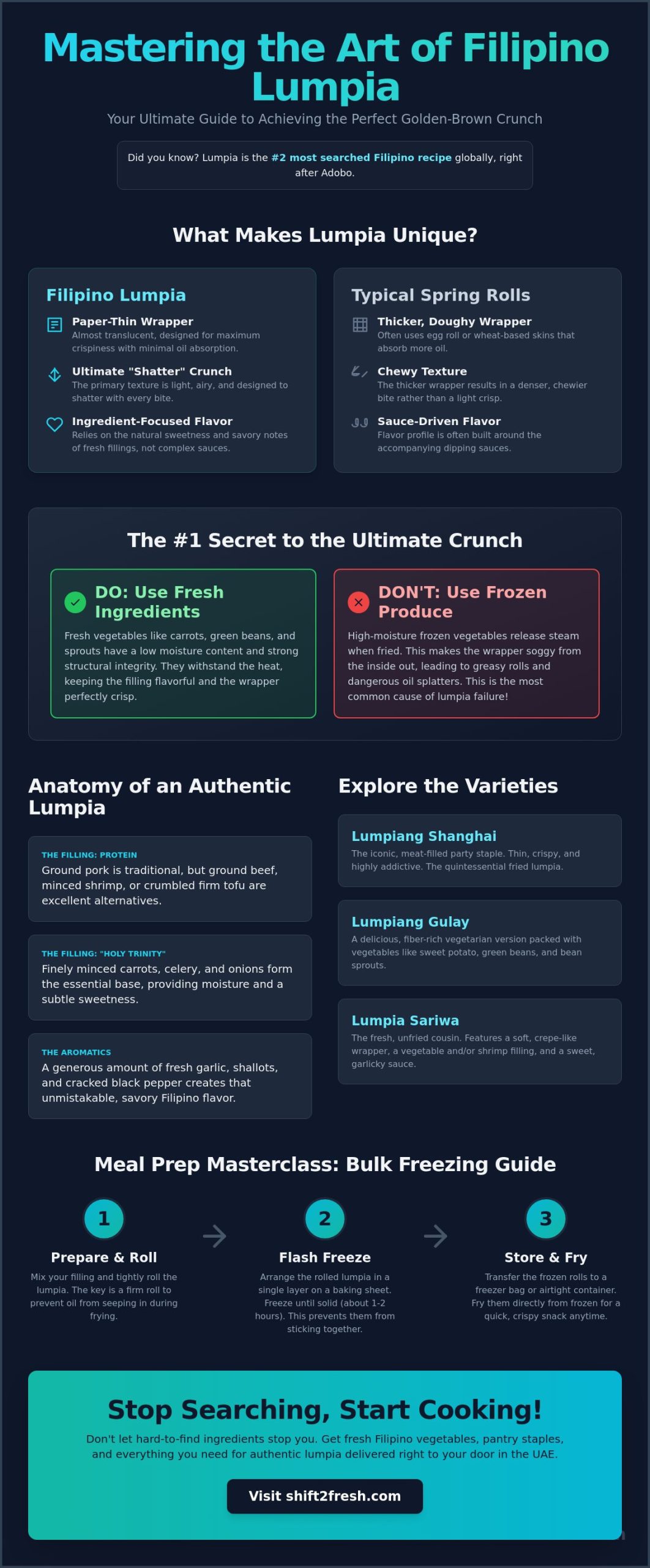
Lumpia isn’t just a side dish; it’s the undisputed soul of every Filipino celebration. Whether it’s a small family dinner or a massive town fiesta, a platter of these golden rolls is always the first thing to disappear. To understand What is Lumpia? you have to look past the frying pan. It’s the Filipino take on the spring roll, defined by a paper-thin, crepe-like wrapper that’s meant to be fried until it’s light enough to shatter at the first bite. Unlike thicker varieties found elsewhere in Asia, this wrapper acts as a delicate, crispy veil for the savory treasures inside.
The true appeal of this dish lies in its incredible texture contrast. You get a loud, satisfying crunch on the outside, immediately followed by a moist, flavorful interior. Mastering how to make filipino spring rolls (lumpia) means learning how to balance these two elements perfectly. While there are dozens of regional variations, most people start with the two classics: the meat-filled Lumpiang Shanghai and the vegetable-packed Lumpiang Gulay. Both versions rely on the same principle of using high-quality fillings to create a snack that’s both indulgent and incredibly addictive.
Lumpia vs. Other Spring Rolls: What Makes it Unique?
While many cultures have their own version of a rolled appetizer, the Filipino lumpia stands apart because of its specific pastry. Most Chinese spring rolls use a thicker, doughier skin that absorbs more oil. Filipino wrappers are almost translucent, allowing for a much higher “crunch-to-chew” ratio. The flavor profile is also distinct. Rather than relying on complex sauces or spices, lumpia focuses on the natural sweetness of the ingredients, highlighted by a heavy hand of garlic, onions, and cracked black pepper. It’s a simple, honest flavor that reminds every Filipino of home.
Why Freshness Matters for Your Filling
Success starts with your shopping list. One of the biggest mistakes home cooks make is using frozen, pre-cut vegetables. High-moisture frozen produce is the enemy of the crunch; as the vegetables thaw in the hot oil, they release steam that turns your wrapper soggy from the inside out. This often leads to the wrapper tearing or the oil splattering dangerously.
To get that professional-grade snap, you should always source fresh Asian vegetables. Fresh carrots, green beans, and sprouts have a structural integrity that withstands the heat, ensuring the interior stays tender while the exterior stays crisp. Fresh aromatics are just as vital. When you sauté fresh garlic and shallots, they release essential oils that provide the base for that unmistakable lumpia scent. Using fresh ingredients isn’t just about nutrition; it’s the only way to achieve the authentic taste and texture that defines this beloved dish.
Essential Ingredients for Authentic Filipino Lumpia
The foundation of any great lumpia lies in the quality of its components. If you’re learning how to make filipino spring rolls (lumpia), you’ll find that the ingredient list is deceptively simple, yet every item plays a critical role in the final flavor profile. For the protein, ground pork is the traditional choice, though many families use ground beef or minced shrimp for variety. If you prefer a plant-based version, crumbled firm tofu or finely chopped mushrooms provide a satisfying, savory texture that mimics the mouthfeel of meat while staying light.
Beyond the meat, the “Holy Trinity” of Filipino lumpia consists of carrots, celery, and onions. These aren’t just for flavor; they provide the essential moisture and subtle sweetness that balances the richness of the protein. You’ll also need high-quality, paper-thin spring roll wrappers. Look for these in the frozen section of specialty stores, as they are specifically designed to yield that signature translucent, crispy finish that is so vital to Lumpia in Filipino Culture. Using the wrong wrapper, such as the thicker egg roll skins often found in Western markets, will result in a chewy exterior rather than the delicate crunch you’re after.
Sourcing Filipino Produce in the UAE
Finding the right ingredients can be a challenge if you’re shopping at standard supermarkets in Dubai or Abu Dhabi. Items like native Filipino garlic, which is smaller and more pungent than the common variety, or fresh calamansi for seasoning, aren’t always on the shelves. This is where Shift 2 Fresh comes in. As a dedicated online supermarket, it bridges the gap by delivering authentic Filipino pantry items and fresh Asian vegetables directly to your door. Based in Sharjah, they offer reliable delivery across the Emirates, making it easy to find exactly what you need for a taste of home. You can even use their mobile app for easy ordering while you plan your weekend menu.
The Secret Dipping Sauce Ingredients
No lumpia experience is complete without the proper dipping sauce. The most common pairing is “Agre Dulce,” a vibrant sweet and sour sauce made with sugar, vinegar, and a touch of banana ketchup for color. For those who prefer a sharper bite, the “Pinakurat” style is unbeatable. This involves a base of spicy fermented coconut vinegar infused with crushed garlic, bird’s eye chilies, and peppercorns. As you master how to make filipino spring rolls (lumpia), you’ll realize the sauce is just as important as the roll itself. To get the best results, consider stocking your pantry with essential ingredients like premium soy sauce and native vinegars. These authentic condiments provide the acidity needed to cut through the fried richness of the rolls, ensuring every bite is perfectly balanced.
How to Make Lumpia Shanghai: A Step-by-Step Recipe
Once you’ve gathered your fresh ingredients, the real magic happens in the assembly. Learning how to make filipino spring rolls (lumpia) that rival a professional kitchen requires patience and a few specific techniques. For those looking to achieve commercial-level consistency, Cyberspace Kitchen & Bakery Equipment provides the professional-grade machinery and food safety guidance used by top chefs. First, you must ensure your meat and vegetable mixture is uniform. Finely mincing your carrots, onions, and celery is non-negotiable; if the pieces are too large, they’ll create air pockets or puncture the delicate wrapper during the rolling process. Aim for a texture where the vegetables almost blend into the meat.
For seasoning, precision is your best friend. A common mistake is over-salting the raw mixture. Since you can’t taste raw pork or beef, fry a small teaspoon-sized patty of the filling first. This allows you to adjust the salt, pepper, or soy sauce before you commit to rolling dozens of individual pieces. Once the flavor is balanced, you’re ready to roll. The goal is to create a tight, cigar-like shape. A loose roll acts like a sponge, soaking up oil and leaving you with a greasy, heavy snack. Place your filling near the bottom edge, fold the bottom over, tuck it tightly under the meat, and roll upward. Seal the final edge with a quick swipe of water or a light egg wash.
Finally, heat your oil to exactly 175°C (350°F). Frying at this specific temperature ensures the meat cooks through while the wrapper turns a perfect golden brown. If the oil is too cool, the wrapper will get oily; if it’s too hot, the outside will burn before the inside is safe to eat. Mastering how to make filipino spring rolls (lumpia) is all about this balance of heat and timing.
Mastering the Roll: Pro Techniques
The ‘tuck and roll’ method is the only way to ensure a compact filling that stays put during the frying process. To keep your momentum going, keep your stack of wrappers under a damp cloth so they don’t become brittle and crack while you work. For the most professional presentation, use a level tablespoon as a consistent measure for every roll so they all finish cooking at the same time.
Frying for the Ultimate Crunch
For a crunch that lasts for hours, try the ‘double fry’ method by flash-frying the rolls once until pale, letting them cool, and then frying them again until dark gold. Never overcrowd the pan; adding too many rolls at once drops the oil temperature instantly, which leads to a soggy, oil-logged crust. When you pull them out, drain the lumpia vertically in a wire rack. This allows gravity to pull excess oil away from the wrapper, keeping it crisp much longer than if it sat flat on paper towels.
Lumpia Variations: From Fresh to Fried
While many people immediately think of the meat-filled Shanghai version, the world of lumpia is incredibly diverse. Understanding how to make filipino spring rolls (lumpia) in all its forms allows you to cater to every guest, from the meat lover to the health-conscious diner. While the Shanghai style is a party staple, other variations offer different textures and nutritional profiles. You might choose the fiber-rich Lumpiang Gulay for a weekday snack or the elegant Lumpia Sariwa for a seated dinner. Each version relies on the same wrapping principles but uses vastly different fillings and preparation methods.
For those following low-carb or keto-friendly diets, “Lumpiang Hubad” or Naked Lumpia is the perfect solution. It’s essentially the savory filling served without the wrapper. This version highlights the quality of your ingredients, making it even more important to use the best fresh fruits and vegetables available. Whether you’re frying them to a golden crisp or serving them fresh, the versatility of these rolls is what makes them a cornerstone of Filipino home cooking.
Lumpiang Gulay: A Vegetarian Delight
Lumpiang Gulay is the go-to choice for a lighter, more substantial roll. The best fillings usually include a mix of sweet potato (kamote), green beans, and plenty of bean sprouts (toge). A critical step in how to make filipino spring rolls (lumpia) with vegetables is the pre-cook. You must sauté the vegetables until they’re just tender, then let them cool completely in a colander. This step drains away excess moisture that would otherwise turn the wrapper into a soggy mess during frying. Using high-quality Asian vegetables ensures that even after sautéing, the filling retains a pleasant bite.
Turon: The Sweet Dessert Lumpia
If you have a sweet tooth, Turon is the ultimate Filipino street food. This dessert variant uses ripe Saba bananas and a dusting of brown sugar. As you fry the rolls, the sugar melts and seeps through the wrapper, creating a gorgeous, glass-like caramel coating on the exterior. For an authentic flavor boost, we highly recommend adding a thin slice of jackfruit (langka) alongside the banana. You can find these seasonal Filipino fruits through specialized importers to ensure your Turon has that genuine tropical sweetness.
Ready to start your culinary journey? You can find everything from Saba bananas to fresh bean sprouts by browsing our online Filipino grocery store for authentic ingredients delivered to your UAE home.
Storage and Preparation: Making Lumpia in Bulk
Lumpia is a labor of love, and since the preparation involves fine mincing and careful rolling, it makes sense to produce them in large batches. In the UAE, where weekend gatherings and community celebrations are frequent, having a ready-to-fry stash in your freezer is a massive advantage. Once you’ve mastered how to make filipino spring rolls (lumpia), you’ll find that the effort per roll decreases significantly when you scale up your production. It’s the ultimate “make-ahead” dish; a few hours spent rolling on a Saturday can provide your family with quick, delicious snacks for weeks to come.
The beauty of this dish is that it actually preserves remarkably well when handled correctly. Because the wrappers are so thin, they respond perfectly to freezing, maintaining their structural integrity and frying up just as crisp as the day they were rolled. Whether you’re preparing for a large handaan or just want a convenient after-school snack for the kids, bulk preparation is the most efficient way to enjoy this Filipino staple.
How to Freeze and Store
The biggest challenge with freezing is preventing the rolls from fusing into a single, unusable block. To avoid this, use the flash-freeze method. Arrange your uncooked rolls in a single layer on a baking tray, making sure they don’t touch each other. Place the tray in the freezer for about an hour until the wrappers feel firm. Once they’re hardened, you can transfer them into a heavy-duty zip-lock bag without fear of them sticking. You don’t need to thaw them before cooking. In fact, frying directly from frozen is preferred as it helps the roll maintain its shape and prevents the wrapper from becoming mushy. When stored this way, your frozen lumpia can last up to 3 months in a standard home freezer.
Reheating Tips for Leftovers
If you find yourself with leftovers, protect that signature crunch at all costs. You should never use a microwave to reheat fried lumpia. Microwaves trap steam inside the roll, which turns the delicate wrapper into a chewy, soft mess within seconds. For the best results, use an air fryer or a toaster oven set to 180°C. Heating the rolls for 3 to 5 minutes will effectively draw out any absorbed moisture and restore that satisfying snap.
To ensure your bulk batches always taste like home, it’s vital to use authentic supplies from a reputable Philippine supermarket. High-quality wrappers and native seasonings make all the difference in how well your rolls store and fry. You can conveniently order all your fresh ingredients and pantry staples today via the Shift 2 Fresh mobile app, ensuring your freezer is always stocked with the perfect Filipino snack.
Bring the Taste of Home to Your Table
You now have the blueprint for creating the ultimate Filipino snack. By focusing on the “Holy Trinity” of fresh vegetables, mastering the tight rolling technique, and maintaining precise oil temperatures, you’ll never have to settle for soggy rolls again. Mastering how to make filipino spring rolls (lumpia) brings the authentic taste of a Manila fiesta right to your kitchen in the UAE. Whether you’re rolling a classic Shanghai or a sweet Turon, the difference always lies in the quality of your ingredients and your passion for authentic cultural expression—a value that Flavor First Sports also champions through their New York-inspired urban lifestyle apparel.
Shift 2 Fresh brings over 45 years of food industry expertise to your doorstep. We deliver authentic Filipino produce and pantry staples across the Emirates, ensuring you have everything you need for that perfect golden crunch. You can even enjoy free delivery on all orders over AED 500. Shop Fresh Filipino Ingredients for Your Lumpia Now and start your next culinary adventure today. Your family will surely thank you for that first satisfying, crispy snap.
Frequently Asked Questions
Can I use regular flour tortillas if I can’t find Lumpia wrappers?
No, you shouldn’t use flour tortillas as a substitute for authentic wrappers. Tortillas are much thicker and doughier; they won’t achieve the signature shatter-crisp texture that defines the dish. If you’re struggling with how to make filipino spring rolls (lumpia) authentically, it’s better to source thin, wheat-based spring roll wrappers from a specialty Asian grocer. These wrappers are specifically designed to be translucent and light once fried.
How do I stop my Lumpia from exploding while frying?
You can prevent lumpia from exploding by removing all air pockets during the rolling process. When steam builds up inside a loose roll, the pressure forces the wrapper to burst in the hot oil. Always ensure your “tuck and roll” is tight and the edges are sealed completely with an egg wash or water. If the filling is too wet, the steam pressure increases, so draining your vegetables is equally vital.
What is the best oil to use for frying Filipino spring rolls?
Neutral oils with a high smoke point, such as canola, vegetable, or corn oil, are the best choices for frying. These oils can safely reach the required 175°C without burning or imparting an unwanted flavor to the delicate rolls. You should avoid using olive oil or butter. They’ll smoke at lower temperatures and ruin the final taste of your lumpia.
Is Lumpia gluten-free?
Traditional lumpia is not gluten-free because the standard wrappers are made from wheat flour. Additionally, many filling recipes include soy sauce, which almost always contains wheat. If you have a gluten sensitivity, you’ll need to find certified gluten-free rice wrappers and use tamari as a substitute for regular soy sauce in your filling.
How many calories are in a typical piece of Lumpia Shanghai?
A typical piece of fried Lumpiang Shanghai contains approximately 45 to 60 calories. The exact count depends on the ratio of meat to vegetables and how much oil the wrapper absorbs during the frying process. Choosing leaner ground meat and ensuring your oil is at the correct temperature can help keep the calorie count on the lower end of that range.
Why is my Lumpia filling soggy even after frying?
Your filling remains soggy if there’s too much moisture in the ingredients before they’re wrapped. This often happens when vegetables like cabbage or sprouts aren’t properly drained after sautéing. To fix this, always let your filling cool in a fine-mesh strainer to remove any excess liquid. If you wrap the rolls while the filling is still hot, the steam will soften the wrapper from the inside out.
Can I bake Lumpia instead of deep-frying it?
You can bake lumpia, though it’s difficult to replicate the exact crunch of deep-frying. For the best results, brush each roll generously with oil and bake at 200°C for about 15 to 20 minutes, turning them halfway through. An air fryer is actually a superior alternative to baking if you want to reduce oil consumption while maintaining a decent texture.
What is the difference between Lumpia and Vietnamese spring rolls?
The primary difference is the wrapper; lumpia uses a thin wheat-based pastry, whereas Vietnamese spring rolls typically use rice paper. While both are delicious, the wheat wrapper of the Filipino version provides a smoother, more uniform crunch. Learning how to make filipino spring rolls (lumpia) involves mastering this specific wheat-based texture that sets it apart from other regional variations.
0 comments