

What if the secret to restaurant-quality Ginataang Bilo-Bilo in the UAE isn’t the recipe at all, but rather the freshness of your imported Filipino tubers and fruits? Most home cooks in Dubai and Sharjah know the frustration of hunting for authentic ingredients for ginataang bilo-bilo, like Saba bananas, only to find them bruised or overripe. It’s difficult to get that perfect, chewy consistency for your rice balls when you’re working with sub-par pantry staples. Recreating this beloved comfort food requires more than just a list; it requires the same quality you’d find at a market in Manila.
This guide will help you master your shopping list by showing you exactly what to look for and where to find the best produce. You’ll discover professional selection tips for langka and taro, along with a reliable way to get these seasonal Filipino favorites delivered right to your door via a mobile app. Whether you’re a seasoned cook or a beginner, getting the right components is the first step toward a bowl of pure nostalgia.
Key Takeaways
- Learn how to layer coconut milk and cream to create a rich, authentic base for this classic Filipino dessert.
- Discover expert selection tips for essential ingredients for ginataang bilo-bilo, including how to spot the best Saba bananas and sweet potatoes.
- Master the technique for perfect bilo-bilo dough consistency and clear sago pearls to ensure a professional texture every time.
- Identify reliable ways to source fresh, imported Filipino produce and pantry staples in Sharjah or Dubai using convenient mobile app ordering.
Understanding Ginataang Bilo-Bilo: The Heart of Filipino Comfort
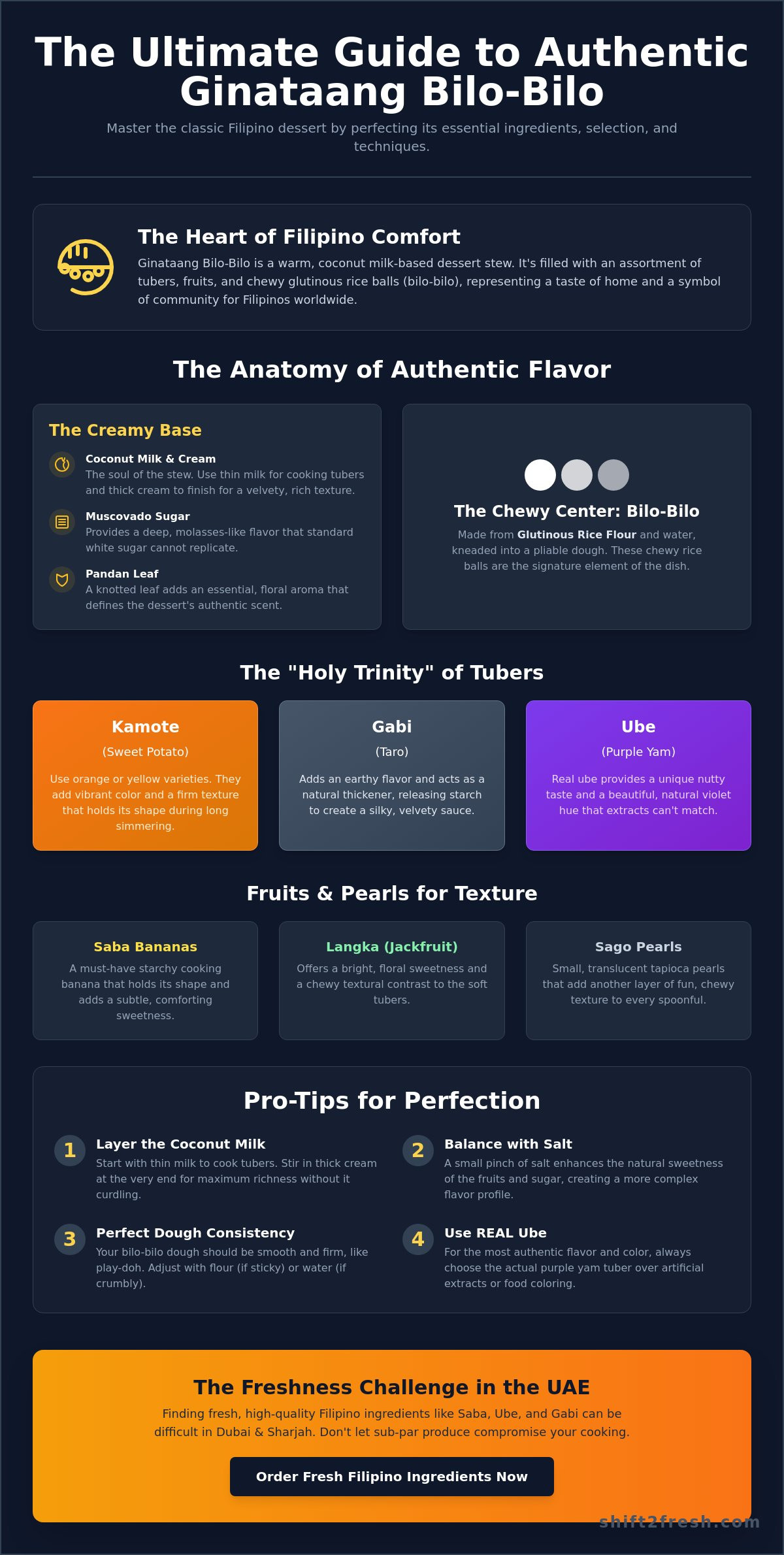
Ginataang Bilo-Bilo is more than just a sweet treat; it’s a warm, bowl-shaped hug that defines Filipino home cooking. At its core, this dish is a coconut milk-based dessert stew filled with an assortment of tubers, fruits, and chewy rice balls. The name itself reveals the method and the star of the show. “Ginata” is derived from the word ginataan, which refers to food cooked in coconut milk. Meanwhile, “Bilo-Bilo” describes the small, round shapes of the sticky rice balls, mimicking the sound and motion of the balls being formed in one’s palms.
Finding the right ingredients for ginataang bilo-bilo is the first step to achieving that perfect balance of creamy, chewy, and naturally sweet. While many people enjoy it as a mid-afternoon snack, or meryenda, it’s equally popular as a heavy breakfast staple. In the UAE, where the Filipino community has grown to over 780,000 residents as of 2025, this dish has become a symbol of cultural identity and a way to bridge the gap between Dubai and the Philippines. You can find Ginataang Bilo-Bilo served at family gatherings or sold in specialty shops, but nothing beats the version made in your own kitchen with fresh produce.
The Cultural Significance of Bilo-Bilo
For Filipinos living abroad, this dessert is a powerful reminder of hospitality and community. It’s often prepared in large pots to be shared with neighbors and friends during weekend get-togethers in Sharjah or Dubai. While the name Ginataang Bilo-Bilo is standard in many regions, you might know it as Binignit if you’re from the Visayas or Palaris in other provinces. Each version uses slightly different tubers or fruits, but the sentiment remains the same. It’s the ultimate comfort food for the diaspora, representing a shared history and a taste of home that persists even thousands of miles away.
Texture and Flavor Profile
The magic of this dish lies in its complex texture. You want a chew factor that’s firm yet yielding, a result of perfectly kneaded glutinous rice flour. This chewiness contrasts beautifully with the soft, starchy texture of sweet potatoes and taro. The flavor profile isn’t just one-dimensional sweetness. A pinch of salt added to the coconut milk enhances the natural sugars of the jackfruit and saba bananas. As the dish simmers, the starch from the tubers naturally thickens the sauce. This creates a rich, velvety consistency that coats every spoonful without the need for artificial thickeners.
Essential Ingredients for Authentic Ginataang Bilo-Bilo
Creating a masterpiece starts with a rich, layered base. You’ll need both thin coconut milk to cook the tubers and thick coconut cream to finish the dish with a velvety sheen. While some focus only on the fat content, experts looking at the nutritional profile of coconut milk note its importance as a plant-based staple in many tropical diets. This creamy liquid carries the flavors of the other ingredients for ginataang bilo-bilo, acting as the soul of the stew.
For the bilo-bilo itself, you only need two things: glutinous rice flour and water. The goal is a dough that’s pliable but doesn’t stick to your hands. Sweetening the pot requires more than just sugar; using muscovado or dark brown sugar provides a molasses-like depth that white sugar simply can’t match. Finally, don’t skip the aromatics. A single knotted pandan leaf steeped in the simmering milk releases a floral scent that instantly transports you back to a Filipino kitchen. If you’re struggling to find these specific staples, you can order Filipino pantry items through specialized mobile apps to get everything delivered fresh.
The “Holy Trinity” of Filipino Tubers
- Kamote (Sweet Potato): Opt for yellow or orange varieties. These stay firm during the long simmering process and provide a vibrant contrast to the white coconut milk.
- Gabi (Taro): This tuber adds a velvety texture and a subtle, earthy undertone. It acts as a natural thickener as it releases its starch into the liquid.
- Ube (Purple Yam): While some recipes suggest using purple extracts or food coloring, authentic bilo-bilo relies on real ube. It provides a unique nutty flavor and a beautiful, natural violet hue that extracts can’t replicate.
Fruit Additions for Texture and Sweetness
The fruit components are what make this dish truly special. You must use Saba bananas, which are starchy cooking bananas that hold their shape and don’t turn into mush. Sliced langka, or jackfruit, is another non-negotiable addition. It provides a bright, floral sweetness and a chewy contrast to the soft tubers. For the finishing touch, select small to medium-sized sago (tapioca pearls). These translucent jewels provide a delightful “pop” in every spoonful, rounding out the complex mouthfeel of this traditional dessert.
Selecting Quality Produce: Tips for the Perfect Batch
Picking the right ingredients for ginataang bilo-bilo is a sensory experience that requires a keen eye. Because these items often travel long distances to reach the UAE, quality can vary significantly between shipments. You aren’t just looking for items on a list; you’re looking for produce that can withstand a slow simmer without losing its identity. The goal is to find a balance where every element, from the fruit to the tubers, contributes a distinct texture to the final bowl. High-quality fruits and vegetables are the foundation of this dish, so don’t settle for anything less than fresh.
The Saba Banana Selection Guide
Many beginners make the mistake of using standard Cavendish bananas, but these will quickly turn into an unappealing mush. Saba bananas are starchy and dense, making them the only choice for a proper ginataan. When shopping, look for fruit with an angular, almost boxy shape rather than a smooth curve. The skin should be yellow with a few black spots, which signals that the starches have begun to turn into sugar. The ideal Saba banana for cooking should feel firm and heavy for its size, ensuring it maintains its structural integrity during the boiling process.
If you find Saba that’s completely green, let it ripen on your counter for a few days before starting your recipe. Avoid any that feel soft or have large, deep bruises, as these will introduce a fermented taste to your dessert. The banana’s role is to provide a tart-sweet contrast to the creamy coconut milk, so its texture is just as important as its flavor. Using bruised fruit will ruin the visual appeal of your stew and make the consistency unpleasantly grainy.
Handling Fresh Jackfruit (Langka)
While canned jackfruit is convenient, fresh imports offer a floral sweetness and a chewy bite that syrup-soaked versions can’t match. Fresh langka has a bright yellow color and a scent that fills the room. To extract the bulbs, lightly oil your hands and knife to manage the sticky latex sap. Once you’ve separated the yellow bulbs from the fibrous “rags,” remove the seeds and slice the fruit into strips. You can store any extra bulbs in an airtight container in the freezer, allowing you to have authentic ingredients for ginataang bilo-bilo ready for your next batch.
Tubers and Coconut Milk
For your Kamote and Gabi, look for smooth, taut skin. Any shriveling indicates the tuber is old and will likely be woody inside. These starchy components work in tandem with the glutinous rice balls to create a thick, satisfying sauce. Finally, check your coconut milk. High-quality coconut milk should be opaque and snowy white with a high fat content. Avoid any packages that have a sour or metallic scent, as this indicates the gata is no longer fresh and will spoil the entire pot.
Where to Find Specific Filipino Ingredients in the UAE
Finding authentic ingredients for ginataang bilo-bilo in the UAE can feel like a treasure hunt. While major hypermarkets carry a wide variety of goods, they often fall short when it comes to the specific starch content and flavor profiles required for Filipino desserts. Residents in Sharjah and Dubai frequently find that local sweet potato varieties are too watery or that generic cooking bananas lack the necessary density. This is why many home cooks rely on a specialized Philippine supermarket guide to navigate the local landscape and find the exact staples they need.
Quality matters when you’re recreating a taste of home. Sourcing your produce from importers with over 45 years of experience ensures that the supply chain from Manila to the Middle East remains intact. This heritage in logistics means the fruits and tubers you receive haven’t been sitting in a warehouse for weeks. It’s the difference between a dessert that tastes like a memory and one that feels like a compromise. If you’re tired of bruised produce, it’s time to look toward specialized channels that understand the delicate nature of Seasonal Filipino Fruits.
The Advantage of Direct Imports
Air-flown produce is the gold standard for anyone serious about their Ginataang Bilo-Bilo. By bypassing long sea voyages, items like fresh Ube and Langka maintain their nutrient profiles and vibrant colors. In the UAE, the availability of these items is often seasonal, meaning you need a provider that can track the harvest cycles in the Philippines. Specialized Asian grocery services maintain strict quality control, ensuring that the ingredients for ginataang bilo-bilo you order are ready for the pot the moment they arrive at your kitchen.
Ordering via Mobile App in Dubai and Sharjah
The days of lugging heavy sacks of taro and bulky coconuts through a crowded mall are over. Modern mobile app ordering has transformed how the Filipino diaspora shops in the UAE. You can now build a complete “Ginataang Kit” through an Online Supermarket, selecting everything from glutinous rice flour to fresh coconut cream in just a few taps. This convenience is a lifesaver for busy families preparing for weekend gatherings. Many services even offer free shipping on larger orders, making it easier to stock up on all your pantry essentials at once.
Ready to start cooking? You can order authentic Filipino ingredients today and have them delivered directly to your doorstep.
Preparing Your Ingredients: Pro Tips for Success
Once you have gathered your ingredients for ginataang bilo-bilo, the real magic happens in the preparation. This stage is where many home cooks struggle, especially when trying to balance the different cooking times of imported Filipino tubers versus local substitutes. To ensure every bite is perfect, start by cutting your sweet potatoes, taro, and purple yam into uniform cubes. Aim for half-inch pieces so they cook evenly. If your taro pieces are too large, they’ll remain hard while the saba bananas turn to mush. Consistency in size is the secret to a professional looking dessert stew.
The order of operations is equally vital for success. You should always start by simmering the harder tubers like gabi and kamote in thin coconut milk. Save the delicate saba bananas, jackfruit, and rice balls for the later stages. For the sago pearls, avoid the common mistake of tossing them directly into the pot. Pre-cook your pearls in a separate pot of boiling water until they are almost translucent, then rinse them under cold water. This rinsing trick removes the excess surface starch that often makes the coconut sauce look cloudy and unappealing.
Dough Consistency Masterclass
Achieving the right texture for your bilo-bilo requires a delicate touch. A reliable starting point is a 2:1 ratio of glutinous rice flour to water. You are looking for a “play-dough” feel; it should be soft and pliable but not sticky enough to cling to your fingers. If the dough is too dry, the balls will crack during the boiling process and lose their shape. For those wanting a vibrant bowl, you can knead a small amount of mashed ube or pandan juice into portions of the dough. This adds natural color and a subtle flavor boost that artificial extracts simply cannot match.
Layering the Coconut Milk
Authentic ginataan relies on two types of coconut liquid. Use the thinner, secondary extraction of coconut milk to simmer your tubers until they are tender. Only add the “Kakang Gata,” or thick coconut cream, during the final five minutes of cooking. This prevents the milk from curdling or separating over high heat, which can happen if the cream is boiled for too long. A tiny pinch of salt added to the simmering liquid is essential, as it acts as a flavor bridge that enhances the natural sweetness of the jackfruit and coconut. By following these steps, you’ll ensure your ingredients for ginataang bilo-bilo transform into a rich, velvety masterpiece every time.
Bring the Authentic Taste of Home to Your UAE Kitchen
Recreating a masterpiece like Ginataang Bilo-Bilo in the Middle East is entirely possible when you focus on the quality of your produce. You now have the professional tips needed to select the best tubers and handle fresh jackfruit like a seasoned cook. By mastering the dough consistency and the order of operations, you ensure that every bowl is a perfect balance of creamy and chewy textures. The most important step is starting with the right ingredients for ginataang bilo-bilo that haven’t lost their flavor during long transit times.
Don’t settle for bruised or generic substitutes when you can access the real thing. Shift 2 Fresh brings over 45 years of food industry experience to your doorstep, offering authentic seasonal imports directly from the Philippines. Whether you’re in Dubai or Sharjah, you can enjoy the convenience of mobile ordering and even get free delivery on orders over AED 500. Order your fresh Ginataang Bilo-Bilo ingredients from Shift 2 Fresh today! It’s time to light up the stove and share a warm, nostalgic bowl of comfort with your friends and family.
Frequently Asked Questions
What is the best substitute for Saba bananas in the UAE?
Plantains are the most effective substitute for Saba bananas if you can’t find them in local markets. They share the same starchy density that allows them to withstand long simmering times without turning into a puree. While the flavor is slightly different, they provide the necessary structural bite that defines a proper ginataan. Avoid using standard dessert bananas, as they’re too soft and will dissolve quickly.
Can I use regular rice flour instead of glutinous rice flour?
You cannot use regular rice flour as it lacks the amylopectin required for that signature sticky texture. Glutinous rice flour is one of the non-negotiable ingredients for ginataang bilo-bilo because it creates the elastic, chewy balls that give the dish its name. Regular rice flour would result in balls that are brittle and gritty, completely changing the mouthfeel of the dessert.
How do I stop my Bilo-Bilo balls from melting in the sauce?
To prevent your rice balls from melting, ensure the coconut milk is at a gentle simmer before dropping them in. If the liquid isn’t hot enough, the starch will dissolve into the sauce rather than setting. Also, check that your dough isn’t too wet; it should feel like firm modeling clay before you roll it. This ensures the balls hold their shape while they cook through.
Is it better to use fresh coconut milk or canned coconut cream?
Freshly squeezed coconut milk is the gold standard for taste, but high-quality canned versions are often more practical for UAE residents. If you use canned products, look for those with a high fat percentage and minimal stabilizers. Use the thinner milk for the initial boil to cook the tubers and save the rich cream for the final thickening stage to achieve a velvety finish.
How long can I store leftover Ginataang Bilo-Bilo in the fridge?
Leftovers will stay fresh in your refrigerator for about two to three days when kept in an airtight container. Keep in mind that the starch in the rice balls will naturally tighten and harden when chilled. When you’re ready to eat, reheat the stew slowly on the stovetop with a small splash of water or coconut milk to loosen the sauce and soften the balls.
What are the most essential Filipino pantry items for this dish?
Essential ingredients for ginataang bilo-bilo to keep in your pantry include glutinous rice flour, sago pearls, and muscovado sugar. Keeping these staples on hand allows you to whip up this comfort food as soon as you source fresh tubers like kamote and taro. Having a stocked pantry means you only need to worry about the seasonal produce to complete your recipe.
Can I make Ginataang Bilo-Bilo vegan-friendly?
This dessert is naturally vegan-friendly as it relies entirely on plant-based components like coconut milk, fruits, and tubers. Unlike many other creamy desserts, it doesn’t require dairy or eggs to achieve its rich consistency. It’s an excellent option for those looking for a traditional, allergen-friendly Filipino treat that everyone can enjoy regardless of their dietary preferences.
Where can I get fresh Langka delivered in Dubai today?
You can source fresh, air-flown langka through specialized mobile apps that deliver directly to homes in Dubai and Sharjah. These platforms specialize in seasonal Filipino imports, ensuring you get fruit that is ripe and fragrant rather than the syrup-soaked varieties found in cans. Ordering through an app is the fastest way to get these bulky and heavy items delivered right to your kitchen.
0 comments