

Have you ever spent hours over a hot stove only to find your finished dessert is either a mushy puddle or unpleasantly dry? If your latest kakanin lacked that signature bite, the culprit isn’t your cooking skills, it’s likely the sweet rice for biko you grabbed from the grocery store. It’s a common struggle for Filipinos in Dubai and Sharjah who often find that generic sticky rice doesn’t behave like the authentic Malagkit from back home. Confusion between jasmine rice and true glutinous rice is the most frequent reason for a dessert that just doesn’t hit the mark.
We know how much you want to recreate that perfect, chewy texture that stays soft for days. In this guide, you’ll discover exactly which varieties of glutinous rice produce the best results and where to find fresh Filipino pantry staples in the UAE without the guesswork. We’ll break down the differences between grain types and show you how to use mobile app ordering to get the right ingredients delivered straight to your door. From choosing the best grains to mastering the prep, you’re about to become the biko expert of your community.
Key Takeaways
- Learn why choosing the right sweet rice for biko is the secret to achieving a chewy texture that won’t turn mushy or dry.
- Discover the differences between white and black glutinous rice varieties to customize the flavor and appearance of your traditional desserts.
- Master the essential washing and par-cooking methods that ensure your biko stays soft and delicious for several days.
- Find out how to source authentic Filipino pantry items in Dubai and Sharjah through reliable mobile app ordering services.
- Identify the three pillar ingredients needed to create a rich, professional-quality latik topping every time.
What is Sweet Rice for Biko? Understanding Malagkit
Glutinous rice, famously known as Malagkit in the Philippines, is a specialized type of short-grain rice that becomes glue-like and sticky when cooked. Despite the name, it’s completely gluten-free; the term “glutinous” refers solely to its sticky consistency. This isn’t your standard jasmine or basmati rice. It’s the specific sweet rice for biko required to achieve that dense, chewy result that defines authentic kakanin. Without this specific grain, your dessert simply won’t have the structural integrity to hold its shape.
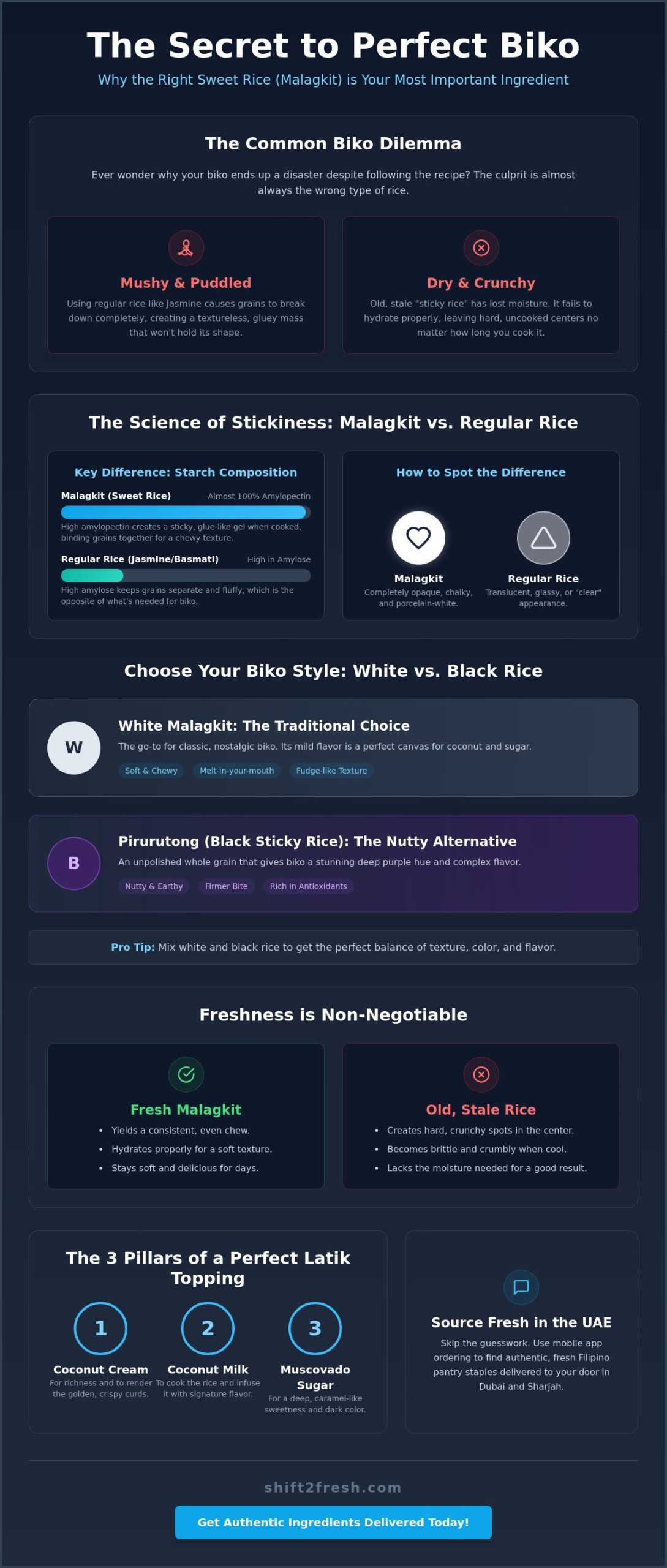
The secret to this texture lies in the starch composition. Most rice varieties contain two types of starch: amylose and amylopectin. While regular long-grain rice has higher amylose, which keeps grains fluffy and separate, Malagkit is almost entirely made of amylopectin. When you heat these grains with liquid, the amylopectin molecules break down into a thick, cohesive gel. This high amylopectin content is exactly why Malagkit is the gold standard for traditional Filipino desserts. It provides a unique bite that’s both tender and resilient, allowing the rice to be sliced into clean blocks without falling apart.
Glutinous Rice vs. Regular White Rice
You’ll notice the difference the moment you open the bag. Malagkit grains are completely opaque and chalky white, looking almost like small bits of porcelain. In contrast, regular white rice grains appear translucent or “clear.” Their cooking behaviors are even more distinct. While regular rice is designed to be light and separate, sweet rice for biko is meant to bind together. It absorbs coconut milk and sugar far more efficiently than water, pulling the rich flavors of the gata into the heart of every grain rather than letting the liquid pool at the bottom of the pan.
Why Freshness Matters for Your Biko
In the UAE, many shoppers mistakenly grab any bag labeled “sticky rice” from the international aisle, but age and origin play a massive role in your results. Older grains lose their internal moisture over time, becoming brittle. If you use stale rice, you’ll likely encounter “crunchy” spots in the center of your biko even after an hour of simmering. Sourcing recently imported Filipino pantry items ensures the rice is supple enough to hydrate properly. Fresh Malagkit yields a consistent chew and stays soft for several days, whereas older grains often turn hard and crumbly once they cool down. Malagkit is the essential foundation for any successful biko recipe.
Choosing the Right Variety: White vs. Black Glutinous Rice
Picking the right grain depends on the specific mood of your gathering. While most people imagine a golden-brown square topped with latik, Filipino tradition actually offers two distinct paths for your dessert. The most common choice is the polished white variety, but for those seeking a more rustic or striking presentation, black glutinous rice provides a completely different experience. Understanding the science behind sticky rice helps you realize that while both are high in amylopectin, their physical structures lead to very different results on the plate.
White Malagkit is the standard for a reason. It’s mild and acts like a blank canvas for the rich coconut milk and dark muscovado sugar. On the other hand, Pirurutong (black rice) is an unpolished whole grain. It retains its bran layer, which means it offers a nutty flavor and a significant boost in antioxidants like anthocyanins. Because it’s a whole grain, it doesn’t break down as easily, giving your biko a much firmer “bite” compared to the purely soft texture of white rice. Many families choose to mix the two to get the best of both worlds: the health benefits and color of the black rice with the superior binding power of the white variety.
White Malagkit: The Traditional Choice
This is the go-to sweet rice for biko if you want that nostalgic, melt-in-your-mouth feel. Because the grains are polished, they release their starch more readily, creating a cohesive, almost fudge-like consistency. It’s best suited for the classic recipe where the focus is on the aroma of the coconut and the caramelization of the sugar. If you’re planning a traditional celebration, this variety ensures your kakanin is soft enough for everyone to enjoy while still being chewy enough to satisfy. It carries the scent of fresh coconut gata better than any other variety.
Pirurutong (Black Sticky Rice): The Nutty Alternative
If you want to impress guests with a deep purple hue and a complex, earthy flavor, Pirurutong is the way to go. However, using 100% black rice can sometimes result in a dish that’s too tough or grainy for some palates. Most seasoned cooks recommend a blending strategy. A ratio of three parts white rice to one part black rice is usually the sweet spot. This combination gives you the beautiful color and nutty undertones of the black grain while maintaining the superior stickiness of the white grain. You can order Filipino pantry items through a mobile app to ensure you’re getting authentic Pirurutong rather than generic dyed rice. This blend ensures your biko is visually stunning without sacrificing that essential “malagkit” texture.
Preparing Your Sweet Rice: Tips for the Perfect Biko Texture
Achieving the legendary chewy consistency of authentic kakanin starts long before you turn on the stove. The first non-negotiable step is washing your rice. You should rinse the grains at least three to four times until the water runs mostly clear. This process removes excess surface starch that can cause your biko to become unpleasantly gummy or slimy. By cleaning the grains thoroughly, you ensure the final dish has a clean, distinct bite where each grain is coated in coconut oil rather than stuck in a thick, flavorless paste.
The ultimate goal is a “firm but sticky” consistency. This means the rice should hold together in a solid block when sliced, but individual grains should still feel tender and distinct on the tongue. To master this, you must control your liquid ratios carefully. Using too much coconut milk during the initial stage creates a “soggy bottom” where the rice sits in a pool of oil and sugar, losing its structural integrity. Understanding What is Glutinous Rice and its unique absorption properties is the first step toward avoiding these common kitchen pitfalls.
The Secret is in the Soak
Many home cooks skip the soaking phase, but this is a mistake if you want professional results. Letting your sweet rice for biko sit in room temperature water for 30 to 60 minutes allows the moisture to penetrate the very center of each grain. You’ll know it’s ready when the grains lose their brittle feel and turn a bright, solid white. Proper soaking prevents the common issue of undercooked, hard centers in the rice grains. This step is especially important in the UAE, where imported rice may have lower internal moisture due to shipping times.
Par-cooking with Coconut Milk
The most reliable method for biko is par-cooking the rice before combining it with the heavy sugar syrup. Use a ratio of approximately 1.5 cups of thin coconut milk (or water) for every 1 cup of rice. Simmer the mixture on low heat until the liquid is fully absorbed but the rice is only about 80% cooked. Only after this stage should you add your dark sugar and thick coconut cream. Adding sugar too early can actually prevent the rice from softening properly because the sugar molecules compete with the starch for water. Constant stirring is essential during the final thickening phase to prevent the bottom from scorching and to ensure the caramel is evenly distributed throughout the tray.
Where to Buy Authentic Sweet Rice for Biko in the UAE
Finding the right sweet rice for biko in the UAE can feel like a chore. You walk through the aisles of massive hypermarkets only to find generic “glutinous rice” that lacks the specific aroma and texture of Philippine Malagkit. Using the wrong grain means your biko might turn out too hard or lose its shape entirely. Generic brands often mix different harvests, leading to uneven cooking where some grains are mushy and others are still crunchy. This is why many home cooks in Dubai and Sharjah are moving away from generic options and looking for specialized Filipino Pantry Items that are sourced directly from the islands.
Authentic Filipino desserts rely on a specific level of stickiness that generic “sticky rice” from other regions often fails to replicate. While Thai glutinous rice is excellent for certain dishes, it behaves differently when simmered in heavy coconut milk and sugar for an hour. The Philippine variety is specifically bred to maintain its integrity under heat. For those living in the Middle East, the challenge is finding a supplier that maintains a high turnover of stock. Old rice becomes brittle and loses its sweet scent, which is why sourcing from a specialist is the only way to guarantee that “tastes like home” quality.
Sourcing from a Specialized Philippine Supermarket
Not all rice is created equal. A dedicated Philippine supermarket understands that kakanin requires a specific moisture content and grain age. Shift 2 Fresh bridges this gap by ensuring their stock is fresh and authentic. When you use an online supermarket Dubai residents trust, you avoid the gamble of buying stale grains that have been sitting in a warehouse for months. Freshly imported Malagkit hydrates better, giving you that perfect “chew” every single time. It’s the difference between a dessert that guests politely nibble on and one that disappears in minutes.
Delivery Services for Your Baking Needs
Lugging 5kg or 10kg sacks of rice through a crowded mall isn’t anyone’s idea of a good time. Mobile app ordering has changed the game for busy families. You can now browse for the best sweet rice for biko and have it delivered directly to your kitchen. By using a specialized Asian Supermarket Near Me, you also gain access to bulk buy options and free shipping for larger pantry restocks. You can track your specialty rice order in real-time through the Shift 2 Fresh app, ensuring you’re ready to start cooking as soon as the delivery arrives. Ready to stock up? You can order your authentic Malagkit today and start your next baking project with confidence.
Essential Pantry Pairings for Your Biko
Biko is a symphony of three main ingredients: high-quality grains, rich coconut fats, and deep, unrefined sugars. While we’ve established that the right sweet rice for biko provides the essential chew, the other two pillars determine the depth of flavor and that iconic mahogany color. You can’t achieve a professional-grade kakanin with thin, watery milk or standard white sugar. To make a dessert that stands out in a potluck, you need a pantry stocked with authentic ingredients that mimic the flavor profiles found in the Philippine provinces. Using premium pairings ensures every bite is as rich as the versions sold in local markets back home.
Choosing the right sugar is the difference between a pale, overly sweet rice cake and a rich, caramel-scented masterpiece. Muscovado sugar is the gold standard because it contains natural molasses, providing both moisture and a complex, smoky sweetness. If you only have access to cane sugar, you’ll find the result is often one-dimensional and lacks the traditional dark hue. Adding aromatics like fresh pandan leaves during the rice-steaming phase infuses the grains with a subtle, grassy fragrance that cuts through the heavy sweetness of the coconut. These small details transform a simple snack into a true delicacy.
The Coconut Milk and Latik Duo
The quality of your coconut milk directly impacts the success of your latik, those crispy golden curds that top the dish. You need high-fat coconut cream (kakang gata) to ensure you have enough solids to form curds as the oil renders. If the fat content is too low, you’ll end up with a greasy film rather than crunchy bites. When rendering the oil at home, the aroma should fill your kitchen with a nutty, toasted scent. Sourcing fresh-tasting coconut products through specialized delivery ensures you aren’t using cans that have developed a metallic aftertaste from long shelf lives. High-fat content is non-negotiable for that perfect topping texture.
Sugar and Aromatics
For those who want to experiment, adding Filipino tablea creates a “Champorado-style” biko that’s a hit with kids and chocolate lovers. The bitterness of the cacao balances the sugar perfectly, creating a sophisticated twist on the classic. Keeping a well-curated stock of Filipino Pantry Items ensures you’re always ready for a dessert emergency or a sudden craving for home. By bundling these essentials together in your next mobile app order, you ensure that your sweet rice for biko is supported by the best possible ingredients.
- Dark Muscovado Sugar: Provides the authentic deep brown color and molasses kick.
- High-Fat Coconut Cream: Essential for both the creamy rice base and the crispy latik topping.
- Fresh Pandan Leaves: Adds that unmistakable “home-cooked” aroma during the initial rice simmer.
- Pure Tablea: Perfect for creating chocolate variations or a richer, more complex flavor profile.
- Banana Leaves: Used for lining your tray to add a subtle earthy scent and prevent sticking.
Bring the Taste of Home to Your UAE Kitchen
Master the art of kakanin by starting with the right foundation. You’ve learned that achieving the perfect texture isn’t just about the recipe; it’s about selecting the highest quality sweet rice for biko and mastering the soaking process. Whether you prefer the classic softness of white Malagkit or the nutty bite of Pirurutong, using fresh, directly imported grains ensures your dessert stays tender and delicious for days. Don’t settle for generic supermarket alternatives that leave your kakanin dry or unevenly cooked.
With over 45 years of food industry experience, Shift 2 Fresh specializes in bringing you direct imports from the Philippines and South Asia. You can easily order authentic Malagkit and Filipino pantry staples from Shift 2 Fresh through our mobile app. Enjoy the convenience of having your heavy rice sacks delivered right to your door, with free delivery in the UAE on orders over AED 500. It’s time to fire up the stove and create a biko that your family will talk about for weeks. Happy cooking!
Frequently Asked Questions
Can I use Jasmine rice instead of sweet rice for Biko?
No, you cannot substitute Jasmine rice for sweet rice if you want authentic results. Jasmine rice is a long-grain variety that remains separate and fluffy when cooked. Biko requires the high starch content of glutinous rice to create its signature sticky, cohesive texture. If you use Jasmine, your dessert will fall apart and won’t have the chewy mouthfeel that makes kakanin special. Stick to the Malagkit variety for the best results.
How long should I soak the sweet rice before cooking?
You should soak your grains for 30 to 60 minutes before you start cooking. This step is vital for ensuring the heat reaches the center of each grain evenly. Since many grains in the UAE are imported, they can be quite dry. Giving them a full hour in room temperature water prevents the frustrating issue of having a dessert that’s soft on the outside but unpleasantly crunchy in the middle.
What is the difference between Malagkit and Pirurutong?
Malagkit is the general Filipino term for glutinous rice, while Pirurutong is a specific black or deep purple heirloom variety. White Malagkit is polished and yields a very soft, sticky consistency. Pirurutong is a whole grain that retains its bran, offering a nuttier flavor and a firmer bite. Most cooks mix them to balance the striking color of the black rice with the superior binding power of the white grain.
Where can I buy authentic Filipino sweet rice in Dubai?
You can find authentic sweet rice for biko through specialized online platforms like Shift 2 Fresh. While some local hypermarkets carry generic sticky rice, Shift 2 Fresh focuses on direct imports from the Philippines. This ensures the grains are fresh and have the correct starch profile for traditional desserts. Their mobile app makes it easy to get specialty pantry items delivered across Dubai and Sharjah with just a few clicks.
Why does my Biko turn out hard or undercooked?
Your biko likely turned out hard because the rice didn’t hydrate fully before the sugar was added. Sugar acts as a barrier that stops the rice grains from absorbing more liquid. To fix this, always par-cook your rice in water or thin coconut milk until it is almost tender. Only then should you stir in your sugar and thick coconut cream to finish the thickening process and ensure a soft bite.
Can I make Biko in a rice cooker?
Yes, using a rice cooker is an excellent way to handle the initial par-cooking stage. Simply add your rice and thin coconut milk using a 1:1.5 ratio and start a standard cycle. Once the rice is tender but still has a slight bite, transfer it to a large pan. This is where you’ll combine it with your prepared latik syrup to finish the dish properly and achieve that thick, glossy consistency.
How do I store leftover Biko to keep it from getting dry?
To keep your biko from drying out, store it in an airtight container at room temperature for up to 24 hours. If you need to keep it longer, place it in the refrigerator but wrap the individual pieces tightly in cling film or banana leaves. When you’re ready to eat, a quick 20-second zap in the microwave will help soften the coconut fats and restore that original, delicious chewy texture you love.
Is sweet rice gluten-free?
Yes, sweet rice for biko is 100% gluten-free. Many people are confused by the term “glutinous,” but it actually refers to the rice’s glue-like, sticky quality when cooked. It doesn’t contain the gluten proteins found in wheat, barley, or rye. This makes it a safe and delicious dessert option for anyone following a gluten-free diet or managing celiac disease. You can enjoy your favorite Filipino treats without any worry about gluten content.
0 comments