

Most home cooks in the UAE think the secret to a perfect dessert lies in the steaming technique, but the truth is that your recipe will only ever be as good as the fruit you slice on top. It is incredibly frustrating to spend an hour over a hot stove only to find your rice is too mushy or your supermarket mangoes are tart and fibrous rather than melt-in-your-mouth sweet. You shouldn’t have to settle for a mediocre snack when you are craving that authentic Southeast Asian flavor.
You are about to learn exactly how to make mango sticky rice that rivals any restaurant by using authentic Filipino pantry staples and the legendary sweetness of seasonal fruits delivered straight to your door. We will solve the common confusion between glutinous and jasmine rice while ensuring your coconut sauce is perfectly creamy every time. This guide covers everything from mastering the rice texture to sourcing the best Philippine mangoes in Dubai and Sharjah so you can recreate this iconic treat in your own kitchen with total confidence.
Key Takeaways
- Understand why the sugar-to-acid balance of Philippine Carabao mangoes is the essential secret to achieving a restaurant-quality flavor.
- Learn the importance of a four-hour soak and thorough rinsing to ensure your rice texture is perfectly chewy rather than mushy.
- Follow a foolproof guide on how to make mango sticky rice using either a traditional steamer or a simplified rice cooker method.
- Master the timing of your coconut syrup infusion to ensure the warm rice grains absorb maximum flavor without becoming soggy.
- Discover how to source authentic Filipino pantry items and seasonal fruits through convenient mobile app ordering for your weekend cooking projects.
What is Mango Sticky Rice and Why is it So Popular?
Mango sticky rice is more than just a dessert; it’s a sensory experience that defines Southeast Asian hospitality. At its core, this dish consists of glutinous rice cooked with coconut milk and sugar, served alongside slices of perfectly ripe mango. While many people first discover it as a street food staple in Thailand, the history of mango sticky rice stretches across borders, connecting the culinary traditions of Thailand, Laos, and the Philippines. Learning how to make mango sticky rice at home allows you to control the balance of these simple, high-quality ingredients.
The magic lies in the contrast. You get the warmth of the sticky rice against the cool, refreshing fruit. The rice is usually seasoned with a hint of salt to cut through the richness of the coconut cream, while the mango provides a bright, acidic punch. This salty-sweet profile is why the dish is so addictive. In the Philippines and Thailand, mango season is a celebrated time of year. It’s a period when the air is thick with the scent of ripening fruit, and families gather to enjoy the harvest’s peak sweetness.
Thai vs. Filipino Mango Sticky Rice
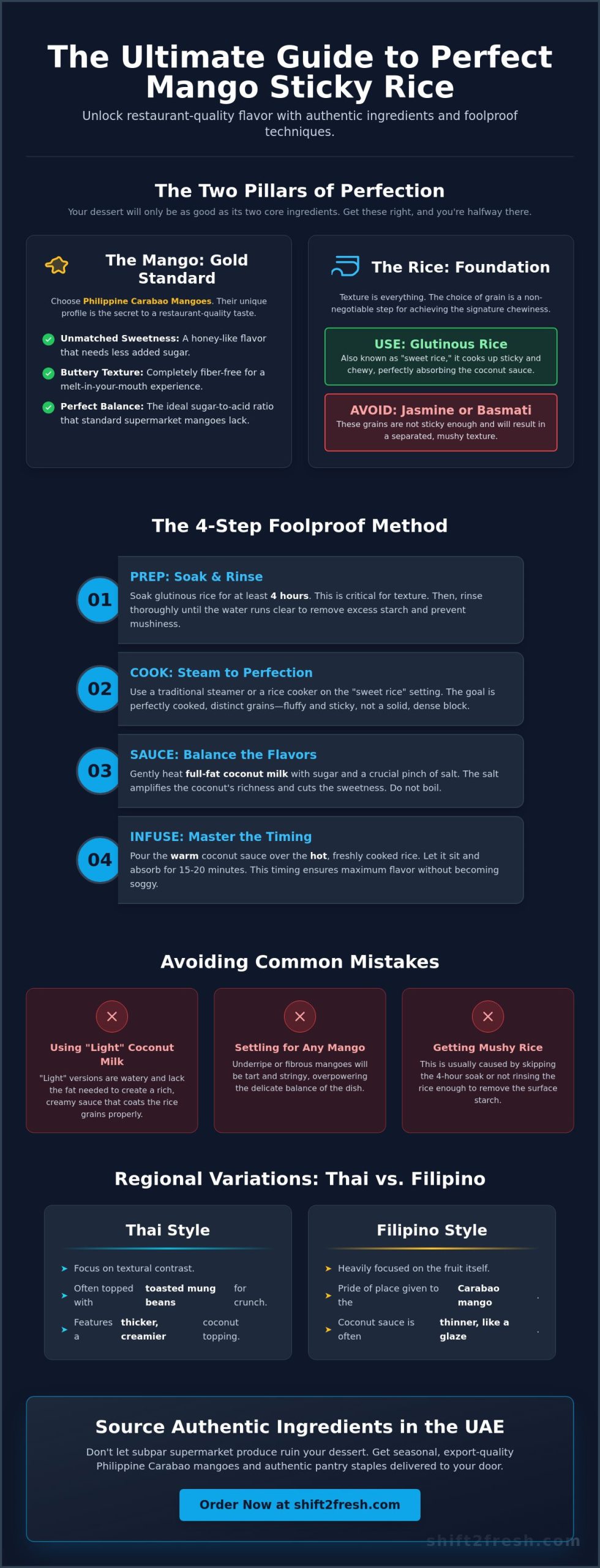
While the foundation is similar, regional preferences create distinct experiences. Thai versions are famous for “Khao New Mamuang,” often topped with toasted mung beans to add a crunchy texture that contrasts with the soft rice. In the Philippines, the focus shifts heavily toward the fruit. Filipinos take immense pride in the Carabao mango, which is globally recognized for its lack of fibers and intense, honey-like sweetness. The coconut sauce in Filipino variations might be slightly thinner, acting more like a glaze, whereas Thai versions often feature a thicker, creamier coconut topping.
When is the Best Time to Make It?
Timing is everything. If you try to make this dessert with an underripe or off-season mango, the acidity will overpower the rice. Peak mango seasons usually run from March to June in Southeast Asia. This is when the fruit is most fragrant and yielding to the touch. You can tell a mango is ready when it gives slightly under gentle pressure and emits a floral aroma near the stem. Supermarket mangoes that have been refrigerated for too long often lose their soul, becoming bland or mealy. For the best results, wait for the seasonal arrivals of authentic Philippine mangoes to ensure your home-cooked version hits those restaurant-quality notes.
The Essential Ingredients: Choosing the Best Mangoes and Rice
Mastering how to make mango sticky rice starts long before you turn on the stove. The quality of your raw materials determines whether your dessert is a soggy disappointment or a culinary masterpiece. Understanding the juicy history of Mango Sticky Rice reveals that this dish relies on a delicate balance of fat, salt, and sugar. You cannot simply grab any fruit from a generic supermarket bin and expect professional results. The soul of the dish lies in two specific components: the right mango and the correct grain.
The “Golden Rule” for this recipe is to prioritize Philippine Carabao mangoes. These are globally recognized as the industry standard due to their incredible sugar-to-acid ratio and buttery, fiber-free texture. While other varieties might be sweet, they often have a stringy consistency that disrupts the softness of the rice. To balance this intense sweetness, you need full-fat coconut milk. Avoid “light” versions, as they are mostly water and lack the viscosity required to coat the rice grains. A generous pinch of salt is also non-negotiable. It doesn’t make the dish salty; instead, it amplifies the coconut’s richness and cuts through the heavy sugar profile.
Sourcing Authentic Philippine Mangoes in the UAE
Finding export-quality fruits in standard Dubai or Sharjah markets can be a challenge. Many local shops stock mangoes that are picked too early, leaving them tart or mealy by the time they reach your kitchen. This is why sourcing seasonal Filipino fruits is so important for home cooks. Shift 2 Fresh focuses on maintaining flavor integrity by importing varieties specifically chosen for their ripeness. If you want to ensure your dessert has that authentic honey-like flavor, you can find the right produce on Shift 2 Fresh to have it delivered directly to your home.
The Right Rice for the Right Texture
Texture is the most common area where home cooks fail. Jasmine or Basmati rice will never work for this recipe because they lack the necessary amylopectin starch. You must use glutinous rice, often labeled as “sweet rice” or “sticky rice.” In the Philippines, this is known as “Malagkit.” Stocking your kitchen with authentic Filipino pantry items like high-quality Malagkit ensures that your rice remains chewy and distinct rather than turning into a mushy paste. Once you have your rice, keep it in an airtight container in a cool place. The UAE climate can cause grains to dry out or attract pests if left in original paper packaging.
How to Make Mango Sticky Rice: A Foolproof Step-by-Step Guide
Achieving the perfect texture is the most critical part of learning how to make mango sticky rice. It starts with a long soak. Don’t skip this step. You need to submerge your glutinous rice in water for at least four hours, though overnight is better. This ensures the heat penetrates the grain evenly. If you try to cook dry glutinous rice immediately, the core will stay hard while the outside turns to mush. Once soaked, rinse the grains several times until the water runs completely clear to remove excess surface starch.
The Steaming Method (Traditional)
Traditional steaming produces the most distinct, chewy grains. You don’t need a bamboo basket; a metal sieve lined with cheesecloth placed over a pot of boiling water works perfectly. Spread the rice evenly and cover it with a lid. Steam for about 20 to 25 minutes. Halfway through, use a spatula to gently flip the rice. You’ll know it’s done when the grains look translucent and feel tender throughout.
The Rice Cooker Method (Convenient)
If you’re short on time, your standard rice cooker can handle the job. Use a 1:1 ratio of rice to water, or even slightly less water if you prefer a firmer bite. Use the “sweet rice” setting if your machine has one, or the standard white rice cycle. The most important part is the resting phase. When the timer goes off, don’t open the lid immediately. Let the rice sit for 15 minutes to allow the residual steam to finish the job.
While the rice is still piping hot, transfer it to a bowl and fold in your coconut syrup. This syrup is a simple mixture of coconut milk, sugar, and a pinch of salt heated until dissolved. Cover the bowl and let the rice macerate for 20 minutes. This is when the grains absorb the liquid, becoming glossy and rich. For the final touch, simmer a little extra coconut milk with salt to create a thick, savory topping. When you plate the dish, slice your mango into long, elegant spears. The philippine mango industry treats these fruits as a priority product for a reason. Their superior sweetness is the only thing that can stand up to the rich, salted coconut rice you’ve just mastered.
Pro-Tips for Texture and Flavor: Avoiding Common Mistakes
Even with the best ingredients in your kitchen, technical precision is what separates a home-cooked experiment from a professional-grade dessert. Most people learning how to make mango sticky rice focus on the cooking time, but the real secret lies in the preparation before the heat is even applied. If you don’t rinse your rice properly, the excess surface starch will create a gummy, glue-like block rather than distinct, chewy grains. You should rinse the rice at least five or six times, or until the water in the bowl is as clear as tap water. This step is non-negotiable for achieving that signature restaurant texture.
Temperature control is your next hurdle. A common mistake is letting the rice cool down before adding the coconut syrup. You must fold the syrup into the rice while the grains are still piping hot from the steamer. Hot rice grains are expanded and porous, acting like tiny sponges that soak up the rich coconut fats and sugar. If the rice cools, the grains contract and the syrup will simply slide off, leaving you with a puddle of liquid at the bottom of the bowl. Don’t forget the salt; it’s the bridge that connects the fatty coconut milk to the sweet mango. A well-balanced dish should have a subtle salty undertone that makes the fruit’s sweetness pop.
Troubleshooting Mushy or Hard Rice
If your rice comes out too hard, don’t panic. Sprinkle a tablespoon of warm water over the grains, cover them tightly, and steam for an additional five to ten minutes. If the rice is too wet or mushy, it usually means you used too much water or didn’t drain the grains well after soaking. You can sometimes save wet rice by spreading it out on a flat tray and letting it rest uncovered for fifteen minutes. This allows excess moisture to evaporate, though the texture won’t be as perfect as a fresh batch. In the humid climate of the UAE, keep your rice covered during the resting phase to prevent it from absorbing too much environmental moisture.
Perfecting the Coconut Sauce
The topping sauce should be thick enough to coat a spoon but thin enough to pour. To achieve this without lumps, whisk your coconut milk over low heat and never let it reach a rolling boil, which can cause the fat to separate. For a deeper, more complex flavor, try using crushed palm sugar instead of white sugar. If you can find fresh pandan leaves, tie one in a knot and simmer it with your sauce. The floral, vanilla-like aroma is the hallmark of an authentic Southeast Asian kitchen. To get started with the right base ingredients, you can order authentic Filipino pantry items through the Shift 2 Fresh app to ensure your flavors are spot on.
Regarding advance prep, mango sticky rice is best enjoyed within two to four hours of cooking. Avoid putting the finished rice in the refrigerator; the cold temperature causes the starch to crystallize, turning your soft, chewy rice into a hard, unappetizing lump. If you must make it ahead, keep the rice at room temperature and slice the mango only when you are ready to serve.
Bringing the Taste of the Philippines to the UAE with Shift 2 Fresh
You’ve mastered the technique and learned the secrets of the “long soak,” but the final result depends entirely on the quality of your produce. Shift 2 Fresh bridges the gap between the Philippine orchards and your kitchen in the UAE. With over 45 years of expertise in the food industry, we understand that a Carabao mango isn’t just fruit; it’s the centerpiece of your dessert. We work directly with authentic farmers to ensure that every mango arriving at your door has the ripeness and honey-like sweetness required for a perfect recipe. This heritage of food knowledge means we don’t just deliver groceries; we deliver the authentic taste of the Philippines.
Sourcing these specific ingredients can be a chore if you’re navigating crowded local markets or settling for generic supermarket varieties. As a leading online supermarket Dubai residents trust, we’ve streamlined the entire process through our mobile app. Whether you are in Sharjah or the heart of Dubai, our specialized delivery network is designed to handle fragile fresh fruits with extreme care. This ensures your mangoes arrive unbruised, fragrant, and ready for professional slicing. This level of reliability is essential when you’re learning how to make mango sticky rice at home, as even a slightly bruised fruit can affect the visual appeal and flavor of your dish.
Order Your Recipe Essentials Today
You can easily build your own “Mango Sticky Rice Bundle” by browsing our curated selection of Filipino pantry items. From high-quality malagkit rice to the rich, full-fat coconut milk discussed in our troubleshooting guide, everything you need is available in one place. The mobile app allows you to check for the latest seasonal mango arrivals in real-time, so you never miss out on the peak harvest. You can also reach free shipping thresholds by adding your weekly Asian vegetables and other household staples to your order. This makes your weekend cooking projects both convenient and highly cost-effective for your family.
Join the Shift 2 Fresh Community
We believe that cooking is a journey that is better when shared with a community of enthusiasts. Once you’ve used our guide on how to make mango sticky rice, we would love to see your glossy rice and golden mango creations. Follow our social channels for more authentic Asian recipes, produce updates, and helpful kitchen tips from fellow home cooks across the Emirates. Our mobile app makes it simpler than ever to restock your kitchen with the flavors of home with just a few taps on your phone. Stop searching for the right ingredients and start cooking with the best. Download the Shift 2 Fresh app and order your mangoes now!
Start Your Southeast Asian Culinary Adventure Today
Mastering the art of this iconic dessert transforms your home kitchen into a professional-grade space. You now know that the secret to how to make mango sticky rice isn’t just about the heat; it’s about the patient four-hour soak of the malagkit rice and the uncompromising sweetness of a perfectly ripe Philippine mango. By balancing the rich coconut cream with a hint of salt and ensuring your grains are rinsed until clear, you’ve unlocked a flavor profile that many restaurants struggle to replicate.
You don’t have to search through generic supermarket aisles to find these specific ingredients. With over 45 years of food industry experience, Shift 2 Fresh provides direct imports from the Philippines to ensure your fruit is always at peak ripeness and flavor. You can even enjoy free delivery on orders over AED 500 when you stock up on your weekly kitchen essentials. Your next weekend cooking project is just a few taps away on our mobile app.
Order Fresh Philippine Mangoes & Glutinous Rice for Delivery today and bring that authentic taste of home to your dining table. You have the tools, the technique, and the source. It’s time to start cooking with total confidence.
Frequently Asked Questions
What kind of rice is best for mango sticky rice?
Glutinous rice, also known as “sweet rice” or “malagkit,” is the only variety that works for this dish. You should avoid using Jasmine or Basmati rice because they lack the high amylopectin starch content needed to create the signature chewy, sticky texture. For the most authentic result, look for long-grain glutinous rice in the Asian pantry section of your local grocery store or app.
Can I use frozen mangoes for this recipe?
You can use frozen mangoes in a pinch, but the texture and flavor won’t be as vibrant as fresh fruit. Frozen mangoes often become mushy once they thaw and lack the intense, honey-like sweetness found in fresh Philippine Carabao mangoes. If you must use frozen slices, keep them slightly chilled to maintain some structure when served against the warm, coconut-infused rice.
How long does mango sticky rice stay fresh?
Mango sticky rice is best enjoyed within two to four hours of preparation while the rice is still soft. The rice begins to harden as it cools, and the starch will crystallize and become unpleasantly firm if placed in the refrigerator. If you have leftovers, store them in an airtight container at room temperature for up to 24 hours, though the texture will decline.
Do I really need to soak the rice overnight?
You don’t necessarily need to soak the rice overnight, but a minimum of four hours is essential for even cooking. This long soak allows moisture to reach the center of the grain. If you skip this step when learning how to make mango sticky rice, the outside of the grain will cook quickly while the inside remains chalky and hard.
Is mango sticky rice gluten-free and vegan?
Yes, this traditional dessert is naturally gluten-free and vegan. Despite the confusing name, “glutinous” rice refers to the glue-like consistency of the grain and contains no actual gluten. Since the recipe relies on coconut milk rather than dairy and uses no animal products, it is an excellent choice for those with specific dietary restrictions or plant-based lifestyles.
Why is my sticky rice still hard after cooking?
Hard rice usually occurs because the grains weren’t soaked long enough or the steam escaped during the cooking process. If your rice is still tough after the recommended time, sprinkle a tablespoon of warm water over it and steam for another ten minutes. Ensure your steamer lid fits tightly to trap the heat and moisture required to fully tenderize the grains.
Where can I buy authentic Philippine mangoes in Dubai?
You can buy authentic, export-quality Philippine mangoes through the Shift 2 Fresh mobile app for reliable delivery across Dubai and Sharjah. We specialize in sourcing seasonal Filipino fruits directly from farmers to ensure you get the best sugar-to-acid balance. Ordering through a specialized app is the most consistent way to find these premium varieties without searching through local supermarket bins.
Can I make this recipe without a steamer?
You can make this recipe using a standard rice cooker or a metal sieve placed over a pot of boiling water. If you use a rice cooker, stick to a 1:1 rice-to-water ratio and let the rice rest for 15 minutes after the cycle finishes. Understanding how to make mango sticky rice with common kitchen tools makes it easy for any UAE home cook to enjoy this treat.
0 comments