

What if you could enjoy the savory, tangy goodness of a classic Adobo or Sinigang without the inevitable “rice coma” that follows? For many of us, Filipino food is synonymous with heavy portions of jasmine rice and pancit; this makes it feel almost impossible to stay on track with a healthy lifestyle. You might even worry that stripping away the grains means losing the soul of the dish, or struggle to find fresh ampalaya and sitaw in your local UAE supermarket. It’s a common frustration for anyone trying to balance cultural traditions with modern wellness goals in 2026.
The good news is that authentic flavor doesn’t live in the rice; it lives in the spices, the vinegars, and the fresh produce. We’ll show you how to master low carb filipino recipes that satisfy your cravings while keeping your body fueled. You’ll discover seven family-friendly recipes, clever substitutions for your favorite starches, and a reliable way to get seasonal Filipino fruits and Asian vegetables delivered straight to your home via mobile app ordering. It’s time to rediscover your favorite comfort foods in a way that truly supports your health.
Key Takeaways
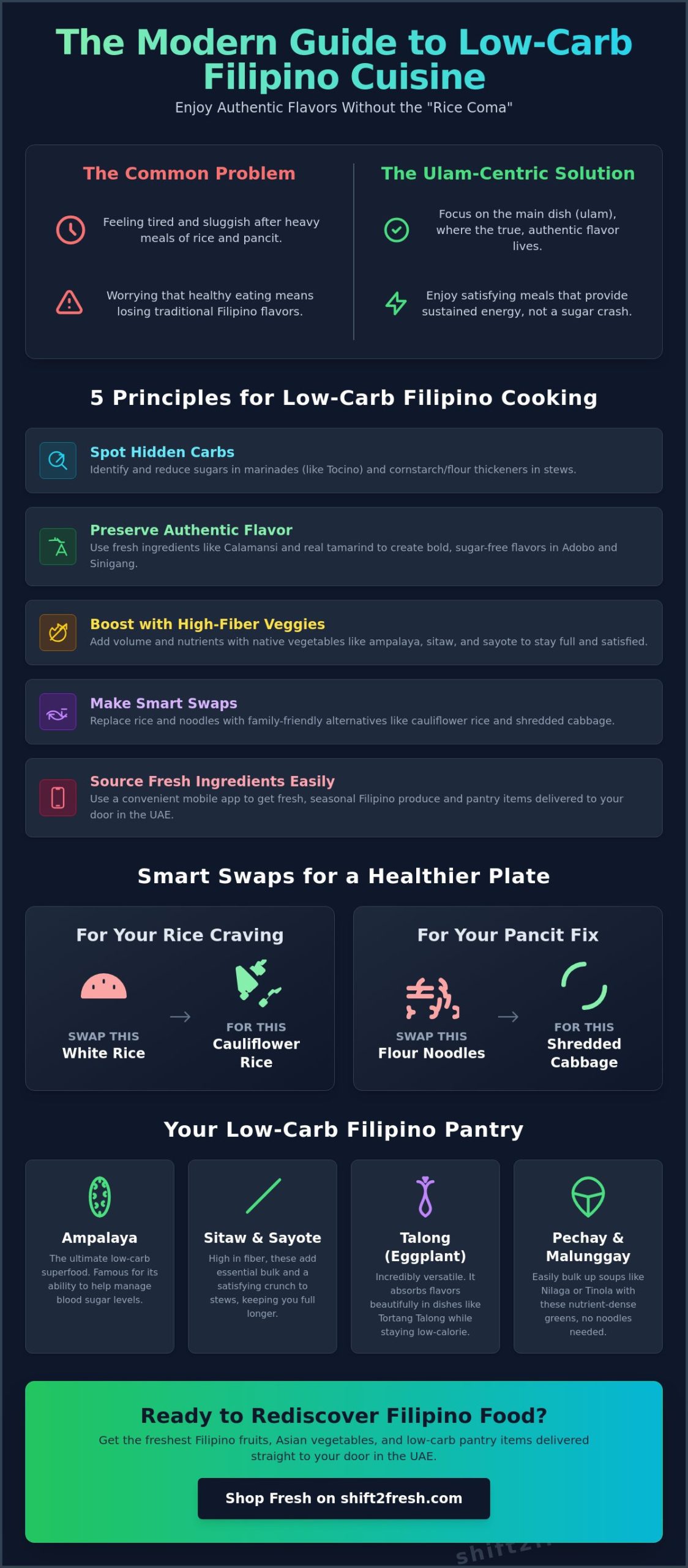
- Learn how to identify hidden sugars and thickeners in traditional marinades to make your ulam truly keto-friendly.
- Discover seven authentic low carb filipino recipes, including sugar-free Adobo and fresh tamarind Sinigang, that preserve the bold flavors you love.
- Master the use of high-fiber Asian vegetables like ampalaya and sayote to add volume and nutrients without the carb count.
- Find practical ways to replace rice and noodles with cauliflower rice or shredded cabbage to keep your meals family-friendly.
- Explore how to get fresh, seasonal Filipino produce and pantry items delivered directly to your doorstep in the UAE using a convenient mobile app.
Rethinking Filipino Cuisine: Can You Really Eat Low Carb?
Many Filipinos believe that going keto or low-carb means giving up their heritage. It’s a common fear. After all, how can you have Sinigang or Adobo without a mountain of white rice? In reality, mastering low carb filipino recipes is entirely possible once you look past the grains. The true essence of our food lies in the balance of salty, sour, and sweet flavors found in the main dishes rather than the starch on the side.
Traditional cooking often hides carbohydrates in plain sight. Sweet marinades for BBQ or Tocino usually rely on heavy amounts of refined sugar to achieve that signature glaze. Many stews also use cornstarch or flour as thickeners. By identifying these “hidden” carbs, you can make simple adjustments that dramatically lower the glycemic load of your meal. For the UAE expat community, where health consciousness is rising in 2026, this shift is vital. Recent data shows that 67% of Filipino consumers now prioritize nutritional value when choosing their food, reflecting a broader regional trend toward wellness.
A successful low-carb Pinoy diet isn’t about restriction. It’s about a balance of high-quality proteins, healthy fats, and fiber-rich native vegetables. Enjoying low carb filipino recipes means embracing an “ulam-centric” mindset where the meat and vegetables take center stage. This approach allows you to stay full and satisfied without the energy crash that follows a heavy rice meal.
Breaking the Rice Habit
The emotional connection to rice is deep. It’s the comfort of home. However, the “saucy” nature of our dishes makes them perfect for low-carb bases. When you have a rich, flavorful sauce, you don’t need rice to enjoy it; you simply need a vehicle for that flavor. Setting realistic goals in 2026 means finding substitutes that mimic that texture without the sugar spike. It’s about retraining your palate to appreciate the complexity of the protein and the natural crunch of the vegetables.
The Health Impact of Fresh Produce
The rich history of Filipino cuisine shows that our ancestors relied heavily on what the land provided. Transitioning to fresh Asian vegetables like ampalaya or sitaw reduces your reliance on processed fillers and starches. These ingredients are packed with micronutrients that support long-term health. For instance, the acidity from Calamansi and various vinegars isn’t just for taste; these ingredients can actually support metabolic health. Shift 2 Fresh bridges the gap between your health goals and authentic taste by delivering fresh Filipino fruits, Asian vegetables, and pantry items directly to your door through their mobile app.
The Low-Carb Filipino Pantry: Essential Fresh Vegetables and Ingredients
While many global diets rely on expensive, processed substitutes, the foundation of authentic low carb filipino recipes is already growing in the islands. Our native produce is naturally packed with fiber and micronutrients that fit perfectly within a healthy low-carb diet. Instead of looking for western alternatives, we can look to the traditional “Bahay Kubo” vegetables that have nourished our families for generations.
- Ampalaya (Bitter Melon): This is the ultimate low-carb superfood. It’s famous for its ability to help manage blood sugar levels; it adds a sophisticated bitterness to stir-fries and eggs without adding significant carbs.
- Sitaw (Yard-long Beans) and Sayote: These are essential for adding bulk and crunch to stews. They provide high fiber content, which keeps you full longer and supports digestive health.
- Eggplant (Talong): This is perhaps the most versatile vegetable in our pantry. Whether you’re making a smoky Torta or grilling it as a side, eggplant absorbs flavors beautifully while remaining low in calories.
- Leafy Greens (Pechay and Malunggay): Never underestimate the power of greens. Adding Pechay to your Nilaga or Malunggay to your Tinola allows you to “bulk up” your soup, giving you a satisfying meal without the need for noodles.
Must-Have Fresh Produce from the Philippines
Freshness is the secret to making low carb filipino recipes taste like home. Using fresh Calamansi, for example, provides a bright, complex acidity that bottled lemon juice simply cannot match. This is crucial for keto-friendly marinades where you want maximum flavor without adding sugar. Sourcing Essential Asian Vegetables ensures your Nilaga or Pinakbet maintains that distinct, earthy profile. Don’t forget fresh ginger and turmeric; these roots provide powerful anti-inflammatory benefits and a deep aroma that defines our cooking.
Keto-Friendly Pantry Staples
Your pantry should be an ally, not a source of hidden sugars. Coconut milk (Gata) is a hero in this lifestyle. It’s high in healthy fats and low in carbs, making it perfect for creamy Ginataan dishes. Vinegars and Fish Sauce (Patis) are also vital; they provide intense flavor with almost zero calories. However, you must watch out for the “Sugar Trap.” Many commercial soy sauces use wheat and sugar, and traditional banana ketchup is essentially liquid sugar. Stick to high-quality pantry items that prioritize traditional fermentation. You can find these authentic Filipino pantry items and fresh vegetables through the Shift 2 Fresh mobile app, making it easier to stay on track while living in the UAE.
7 Authentic Low Carb Filipino Recipes You Can Make Tonight
Cooking at home is the most effective way to ensure your meals align with your health goals. While restaurant versions often rely on sugar-laden sauces, creating low carb filipino recipes in your own kitchen allows you to swap out hidden starches for nutrient-dense alternatives. These seven dishes prove that you can maintain the bold, savory, and sour profiles of the Philippines while staying firmly within your carb limits.
- Chicken or Pork Adobo (Sugar-Free): This is the soul of Pinoy cooking. To keep it low-carb, skip the sugar often used for caramelization. Use a high-quality vinegar, garlic, and peppercorns. The fat from the pork or chicken skin provides all the richness you need.
- Sinigang na Hipon (Shrimp Sour Soup): Avoid the commercial powdered mixes that often contain cornstarch or sugar. Instead, use fresh tamarind or kamias to achieve that signature sourness. It’s a clean, light, and incredibly satisfying meal.
- Pinakbet (Keto Version): To keep it keto-friendly, reduce the amount of kalabasa (squash) and increase the portions of bitter melon and eggplant. These vegetables provide the texture and flavor without the high glycemic load.
- Nilagang Baka (Beef Soup): This is a naturally low-carb, high-protein comfort meal. Simply omit the potatoes and saba bananas. Replace them with extra cabbage and green beans for a filling, warm bowl of soup.
- Tinolang Manok: This dish highlights the power of Malunggay and ginger. It’s an immune-boosting soup that requires no modifications to be healthy. The ginger provides a warm spice that aids digestion.
For more inspiration on wellness-focused cooking, the NHLBI offers a guide on Heart Healthy Filipino Recipes that can be easily adapted to a low-carb framework. By focusing on whole foods, you can enjoy these classics every day.
Seafood and Meat Favorites
Inihaw na Liempo, or grilled pork belly, is the ultimate keto-friendly pulutan. The high fat content makes it perfect for those on a ketogenic diet. Kinilaw is another excellent choice; this Filipino ceviche uses vinegar and citrus to “cook” fresh fish, offering a high-protein, zero-carb appetizer. For breakfast, try Beef Tapa without the usual sugar in the marinade. It’s a savory way to start your morning without a sugar crash.
Vegetable-Forward Mains
Ginisang Ampalaya with Egg is a quick, savory option for lunch. The bitterness of the melon is perfectly balanced by the richness of the eggs. You can also try Adobong Sitaw by using authentic Filipino Pantry Items like fermented fish sauce to create a savory side dish. Finally, Tortang Talong remains a favorite. This eggplant omelet is a low-carb staple that satisfies your craving for comfort food every time.
Smart Swaps: Replacing Rice and Noodles in Filipino Dishes
The biggest challenge when adapting low carb filipino recipes is finding a substitute for white rice that can stand up to our intense sawsawan (dipping sauces). In our culture, rice isn’t just a side; it’s a sponge for the vinegars, soy sauces, and fish sauces that define the meal. Without that starch, many feel the flavors are too concentrated. However, clever substitutions allow you to enjoy every drop of sauce without the heavy carbohydrate load.
Cauliflower rice remains the gold standard for all-around substitution. It mimics the grain texture of jasmine rice and absorbs flavors beautifully. For those craving noodles, options like shredded cabbage, zucchini noodles, or kelp noodles provide the necessary “slurp” factor for pancit dishes. These swaps don’t just reduce carbs; they significantly increase your daily intake of fiber and essential vitamins.
How to Make Keto Garlic “Rice”
To recreate the magic of Sinangag, the secret is in the moisture control. Sauté your cauliflower rice over high heat in a dry pan first to cook off excess water before adding any oil. Once it’s slightly browned, add plenty of coconut oil or butter and a generous amount of toasted garlic bits. The aroma is identical to the traditional version. For a truly authentic breakfast, pair your garlic “rice” with fried dried fish like danggit or tuyo. The salty crunch of the fish against the garlicky cauliflower creates a satisfying, high-protein start to your day.
Noodle Alternatives for Pancit
When it comes to Pancit Bihon or Sotanghon, texture is everything. Kelp noodles are often superior to Shirataki noodles because they lack the rubbery feel and fishy scent. To prep them, soak kelp noodles in a mixture of lemon juice and a pinch of baking soda to remove the crunch; this results in a softer, bihon-like texture that absorbs your pancit seasoning perfectly. If you prefer a more vegetable-forward approach, thinly sliced green beans (French cut) work surprisingly well in stir-fries. They provide a sturdy “noodle” that holds up to high heat without turning into mush.
For those who love Lumpiang Hubad, skip the wrapper entirely and use large, crisp lettuce leaves. The cold, fresh crunch of the lettuce contrasts beautifully with the warm, savory vegetable filling. It’s a light way to enjoy a classic favorite while keeping your meal keto-friendly. Start your healthy journey by ordering fresh Asian vegetables and pantry staples through Shift 2 Fresh today.
Sourcing Fresh Filipino Produce in the UAE with Shift 2 Fresh
Finding the right ingredients for low carb filipino recipes in Sharjah or Dubai shouldn’t feel like a treasure hunt. While many local supermarkets carry Asian style vegetables, they often lack the specific varieties required for a truly authentic taste. A generic eggplant doesn’t have the same creaminess as a native Filipino Talong; this difference matters when you’re relying on vegetables to carry the flavor of your meal. Shift 2 Fresh addresses this gap by importing seasonal produce directly from the Philippines, ensuring your kitchen is always stocked with the real deal.
The journey from a farm in the Philippines to your doorstep in the UAE is streamlined to maintain peak quality. For busy expats, the convenience of mobile app ordering means you don’t have to spend your weekends scouring multiple markets. You can browse seasonal Filipino fruits and Asian vegetables from your phone, knowing what arrives will be fresh and nutrient-dense. This direct supply chain is essential for anyone serious about a healthy lifestyle in 2026.
Why Freshness Matters for Low-Carb Cooking
When you remove rice and noodles, the quality of your produce becomes the star of the show. Seasonal fruits like Lansones or specialty vegetables are packed with vitamins that help maintain energy levels on a low-carb diet. Authentic Filipino Talong, for instance, has a thinner skin and sweeter flesh than the larger, tougher varieties often found in generic produce aisles. By supporting a “Shift” to fresh, whole foods, you’re investing in long-term health without sacrificing the cultural flavors you grew up with. Every bit of crunch in your sitaw or bitterness in your ampalaya contributes to a more satisfying, nutrient-dense meal.
Easy Delivery Across the UAE
Managing your pantry is simple with the right tools. You can use the Shift 2 Fresh app to find your Philippine Supermarket essentials, from vinegars to bagoong. Whether you’re in Dubai, Sharjah, or beyond, the delivery timelines are designed to fit into a busy professional schedule. Staying consistent with low carb filipino recipes is much easier when the ingredients come to you. You no longer have to settle for wilted greens or substitute-heavy meals that don’t hit the mark.
Download the Shift 2 Fresh app and start your low-carb journey today!
Start Your Healthy Filipino Cooking Journey Today
Embracing a healthier lifestyle doesn’t mean leaving your favorite comfort foods behind. By shifting your focus from heavy rice portions to nutrient-dense proteins and native Asian vegetables, you can master low carb filipino recipes that taste just like home. We’ve explored how simple swaps like cauliflower rice and fresh ingredients like ampalaya can transform your meals without sacrificing that bold, authentic flavor you love. It’s all about celebrating the ulam and the fresh produce that makes our cuisine unique.
With over 45 years of industry experience, Shift 2 Fresh is here to support your wellness goals in the UAE. They specialize in direct imports from the Philippines, ensuring you always have access to high-quality seasonal fruits and vegetables. You can also enjoy free delivery on orders over AED 500 when you stock up on your kitchen essentials through their mobile app. It’s never been easier to eat well while staying connected to your roots.
Order Fresh Filipino Produce for Your Low-Carb Recipes Now and take the first step toward a vibrant, healthier you. You have the tools and the ingredients; now it’s time to get cooking!
Frequently Asked Questions
Is Filipino food generally high in carbs?
Traditional Filipino meals are often high in carbohydrates because they are typically served with large portions of white rice. However, the main dishes, known as ulam, are primarily based on proteins and vegetables. By identifying hidden sugars in marinades and skipping the rice, the core of the cuisine is actually very compatible with a healthy, low-carb lifestyle.
What are the best keto-friendly Filipino vegetables?
The best keto-friendly options include ampalaya (bitter melon), talong (eggplant), sitaw (yard-long beans), and leafy greens like pechay or malunggay. These are low in net carbs and high in fiber, which helps with satiety. When preparing low carb filipino recipes, it’s best to limit starchy additions like kalabasa (squash), potatoes, and saba bananas to keep your carb count low.
Can I eat Sinigang on a keto diet?
Yes, Sinigang is an excellent keto choice as long as you use fresh souring agents like tamarind or kamias instead of instant mixes. Many commercial packets contain sugar or cornstarch as fillers. By focusing on the broth, protein, and low-carb vegetables like kangkong and radish, you can enjoy this classic soup as a complete, standalone meal without any rice.
How do I replace white rice in Filipino meals?
Cauliflower rice is the most effective substitute because it mimics the texture of jasmine rice and absorbs savory sauces perfectly. You can also use shredded cabbage or lettuce wraps for dishes like Lumpiang Hubad. These alternatives provide a satisfying base for your ulam while significantly reducing the glycemic load of your meal and preventing the typical post-meal energy crash.
Where can I buy authentic Filipino vegetables in Dubai?
You can buy authentic Filipino vegetables through the Shift 2 Fresh mobile app, which delivers across Dubai, Sharjah, and other parts of the UAE. They specialize in importing seasonal produce directly from the Philippines. This ensures you get the specific varieties of talong or sitaw needed for genuine flavor, which are often unavailable in local supermarkets.
Are there low-carb versions of Filipino desserts?
Yes, you can create low-carb versions of favorites like Avocado Shakes or Leche Flan by using keto-approved sweeteners such as erythritol. For a simple treat, blend fresh Filipino avocado with thick coconut milk and a sugar substitute. These modifications allow you to enjoy the creamy, tropical flavors of the Philippines without the high sugar content found in traditional recipes.
Is soy sauce allowed on a low-carb Filipino diet?
Standard soy sauce contains small amounts of wheat and sugar, so it’s best used in moderation. For those following a strict protocol, liquid aminos or coconut aminos are excellent alternatives for your low carb filipino recipes. These substitutes provide the same salty, umami depth required for Adobo or dipping sauces without the hidden carbohydrates found in many commercial soy sauce brands.
How does Shift 2 Fresh ensure the produce is fresh?
Shift 2 Fresh ensures quality by importing seasonal Filipino fruits and Asian vegetables directly from the Philippines to the UAE. Their streamlined supply chain minimizes the time produce spends in storage or transit. By using their mobile app ordering system, you receive fresh pantry items and vegetables delivered straight to your doorstep, maintaining the nutrient density and authentic taste of the islands.
0 comments