

What if you could replicate the slow-simmered magic of your grandmother’s kitchen in the time it takes to scroll through your social media feed? After a long shift in Dubai or Abu Dhabi, the last thing you want is to spend two hours hovering over a stove, yet the craving for home remains. You don’t have to settle for bland takeout or wait for the weekend to enjoy your favorite comfort foods. By mastering a few 30-minute filipino recipes, you can bring the heart of Manila to your UAE dining table without the exhausting prep work or the long wait.
We understand that finding fresh sitaw or that perfect citrusy hit of calamansi in a local supermarket can feel like a chore. With food prices in the UAE rising by 1.5 percent as of April 2026, cooking efficiently at home is more important than ever. This guide promises to help you reclaim your evenings by using smart pantry shortcuts and mobile app ordering to source authentic Asian vegetables and seasonal fruits. We will preview the essential ingredient hacks and quick techniques that keep those bold, savory profiles intact. Get ready to transform your weeknight routine with a repertoire of fast meals that prove authentic taste doesn’t require hours of simmering.
Key Takeaways
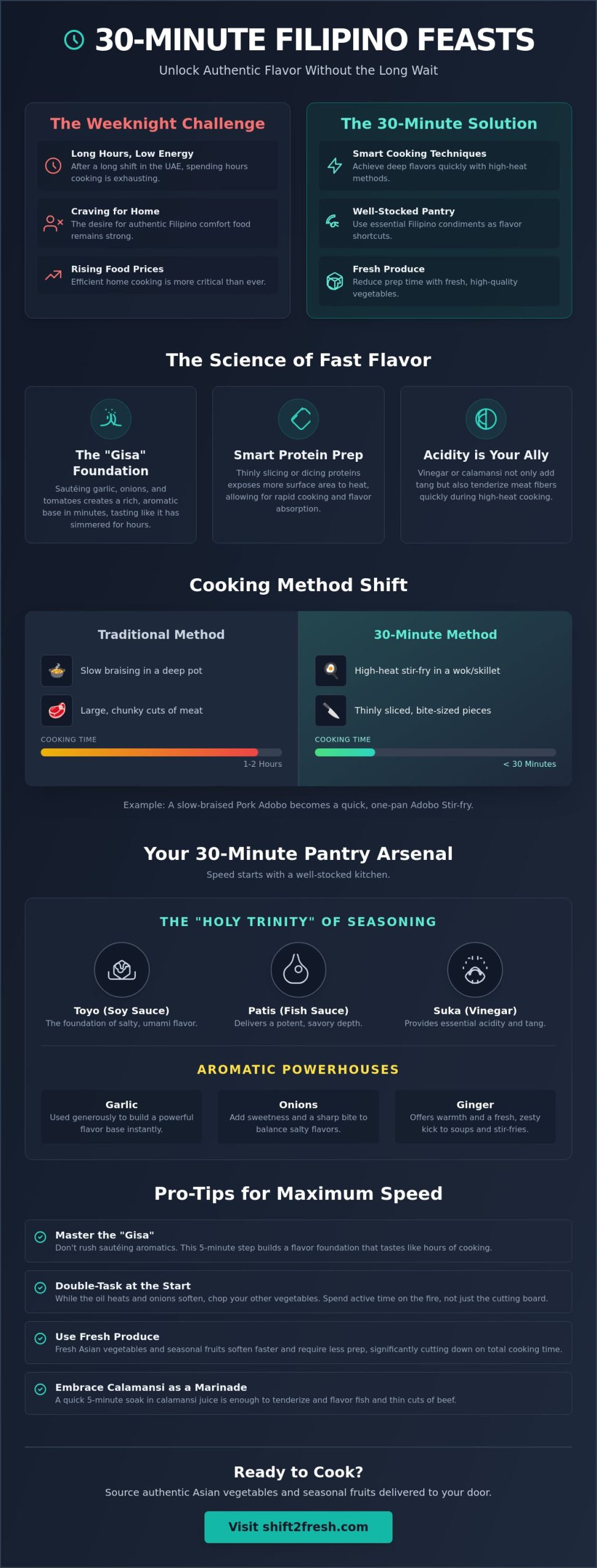
- Learn how the traditional “gisa” foundation and smaller protein cuts allow you to achieve deep flavors without the hours of simmering.
- Discover why stocking your kitchen with the “Holy Trinity” of pantry items is the first step to successful 30-minute filipino recipes.
- Master efficient kitchen habits like the “double-tasking” rule to ensure your active cooking time is spent on the fire rather than just at the cutting board.
- Find out how using fresh Asian vegetables and seasonal fruits can significantly reduce vegetable softening and prep time.
- Explore five specific recipes, including a one-pan Adobo stir-fry and quick Shrimp Sinigang, designed for the fast-paced lifestyle of UAE residents.
The 30-Minute Filipino Kitchen: Why Speed Doesn’t Mean Sacrificing Flavor
For many Filipinos living in Dubai or Sharjah, the idea of a quick meal often feels like a compromise. You might think authentic Filipino cuisine requires hours of slow braising and constant monitoring. That’s a myth. In a fast-paced city, 30-minute filipino recipes aren’t just a convenience; they’re a necessity. Speed doesn’t mean losing flavor; it means changing your technique to suit a modern lifestyle.
A 30-minute Filipino meal relies on two core principles: high-heat sautéing, known as gisa, and using smaller protein cuts. By dicing chicken or slicing beef thinly, you expose more surface area to the heat. This allows for faster cooking and quicker flavor absorption. You get the same savory, sour, or salty profile in a fraction of the time. The secret to instant depth is the “Gisa” foundation. Sautéing garlic, onion, and tomato until they soften and release their oils creates a rich base that tastes like it’s been simmering all day.
The Science of Fast Flavor Extraction
Acidity is your best friend for speed. Using vinegar or calamansi doesn’t just add tang; it helps tenderize meat fibers during high-heat cooking. This is why “Sabaw” (soup or sauce) culture is so effective for quick meals. A thin, flavorful broth carries seasoning to the meat instantly. If you are using acidic elements from Seasonal Filipino Fruits, you can break down proteins even faster. Gisa is the aromatic heart of Filipino speed-cooking, where garlic, onions, and often tomatoes are sautéed to release their essential oils and build a flavor foundation.
Traditional vs. 30-Minute Methods
The difference between traditional methods and 30-minute filipino recipes often comes down to the cut of the meat and the vessel used. Consider these shifts:
- Stir-fry Adobo vs. Braised Adobo: While a traditional braise relies on time to soften large chunks of pork, a stir-fry Adobo uses bite-sized thighs that cook in minutes while retaining moisture.
- Thin-sliced Proteins: Using “bistek-style” slices for beef dishes ensures the meat is tender without a long boil.
- Wok over Pot: For these fast recipes, a standard wok or wide skillet is often better than a deep pot because it allows for faster evaporation and browning.
Life in the UAE moves fast. Between long commutes and demanding work shifts, your kitchen needs to be efficient. You shouldn’t have to wait until the weekend for a taste of home. By shifting your focus to these rapid techniques, you can enjoy a fresh, authentic meal every single night without the two-hour wait.
Essential Ingredients for Quick Filipino Weeknight Dinners
Speed in the kitchen starts long before you turn on the burner. It begins with a well-stocked pantry. To master 30-minute filipino recipes, you need the “Holy Trinity” of seasonings: Patis (fish sauce), Toyo (soy sauce), and Suka (vinegar). These three liquids provide the salt, umami, and acid required for almost every classic dish. When you have these Filipino Pantry Items ready, you don’t waste time measuring complex spice blends. You can quickly whip up a base for an authentic chicken adobo recipe or a savory dipping sauce in seconds.
Aromatic powerhouses like garlic, ginger, and red onions are your non-negotiable foundations. While some cuisines use these sparingly, Filipino cooking treats them as a bulk ingredient. Crushing a handful of garlic cloves takes seconds but provides a depth of flavor that usually takes hours of slow cooking to achieve. Red onions, specifically, offer a sweetness and sharp bite that balances the heavy salt of soy sauce perfectly.
The Power of Calamansi and Vinegar
Calamansi is the secret weapon for anyone short on time. This tiny citrus fruit acts as a five-minute marinade for beef and fish, breaking down tough fibers while injecting a bright, floral acidity. If you’re out of fresh fruit, choosing the right vinegar is vital. Cane vinegar is light and clean, making it perfect for quick dipping sauces. Coconut vinegar is cloudier and more complex, ideal for stews that need to taste “aged” in under half an hour. To keep your kitchen efficient, store your calamansi in the crisper drawer to maintain its juice content for those busy weeknights.
Vegetables That Cook in Minutes
Not all greens are created equal when you’re on a 30-minute clock. Certain Asian Vegetables like Pechay (bok choy) and Kang-kong (water spinach) are superior because they wilt and soften in less than three minutes. Compare this to Sitaw (long beans) or Talong (eggplant), which require uniform “bite-size” cutting to ensure they cook through at the same rate as your proteins. While frozen vegetables are convenient, fresh Filipino produce in the UAE market typically offers a better crunch and faster cooking time because the cell walls haven’t been broken down by ice crystals.
Having these essentials delivered directly to your door makes the process even smoother. You can easily find everything you need through mobile app ordering, ensuring your kitchen is always prepared for a fast, delicious meal.
5 Authentic Filipino Recipes You Can Make in 30 Minutes or Less
Many home cooks believe that deep, traditional flavors require hours of labor. That’s simply not true. You can enjoy a diverse range of 30-minute filipino recipes that cover everything from breakfast favorites to savory dinners. These five dishes prioritize speed without losing the soul of the dish. By choosing the right proteins and using the techniques we discussed earlier, like the gisa foundation, you can have dinner on the table before your favorite show ends. Sourcing your Asian Vegetables and Filipino Pantry Items through mobile app ordering makes these recipes even more accessible for a busy weeknight.
- One-Pan Chicken Adobo Stir-Fry: Swap large bone-in pieces for bite-sized thighs. They cook in less than eight minutes and absorb the soy-vinegar glaze almost instantly.
- Quick Shrimp Sinigang: Use calamansi and fresh tamarind extract for a bright, sour broth that doesn’t need to sit on the stove.
- Beef Bistek Tagalog: Thin-sliced ribeye is the key here. A 10-minute sear with plenty of onions provides that classic salty-sour balance.
- Ginisang Ampalaya with Egg: This is the ultimate 15-minute healthy side. Slicing the bitter melon thinly ensures it softens quickly in the pan.
- Garlicky Tuyo Pasta: For the busiest nights, flaked dried fish (tuyo) tossed with olive oil and garlic creates a gourmet-style meal in the time it takes to boil pasta.
The 15-Minute Seafood Advantage
Shrimp is the ultimate protein for speed. In Sinigang na Hipon, the shrimp cooks in under five minutes, allowing the broth to stay light and fresh. To balance the sourness quickly, use a combination of fresh tamarind extract and a squeeze of calamansi. This provides a layered acidity that mimics hours of simmering. Don’t overcook the shrimp; once they turn pink and form a “C” shape, they’re done. Keeping the shells on adds a deeper seafood flavor to the broth in a very short window. This method works best with fresh Asian seafood, which retains its sweetness better than frozen alternatives.
Beef and Pork Shortcuts
Tenderness in beef often depends on how you cut it. For Bistek, always slice the meat against the grain. This shortens the muscle fibers, making even a quick-seared ribeye melt-in-your-mouth tender. For Adobo, try the “fry-first” method. Searing the chicken in a hot pan for five minutes creates a Maillard reaction, providing the browned, savory crust that usually takes much longer to develop in a braise. If you’re really pressed for time, ground meat (Giniling) is a fantastic 20-minute alternative to chunky stews. It provides the same comforting texture without the need for a long tenderizing boil. These 30-minute filipino recipes prove that you don’t need a slow cooker to achieve authentic results.
Pro-Tips for Speeding Up Traditional Filipino Cooking Techniques
Authentic flavor usually suggests a slow process, but your kitchen routine doesn’t have to suffer. The real secret to consistent 30-minute filipino recipes lies in the preparation phase. In professional kitchens, this is called mise en place. For Filipino dishes, cooking is often 70% prep and only 30% fire. If your garlic is peeled, your onions are sliced, and your proteins are ready before the stove is even on, you’ve already won half the battle.
Efficiency also comes from the “Double-Tasking” rule. Instead of finishing all your chopping first, start your aromatics. You can sauté your garlic and onions while you finish slicing the next ingredient, like your eggplant or long beans. This overlapping workflow can shave ten minutes off your total time. Using a wok for almost everything is another pro move. Its high surface area allows for faster evaporation and better heat distribution, which is essential for getting that savory sear in a short window. For a modern 2026 hack, try batch-prepping your garlic and onions on the weekend. Mincing a week’s worth of garlic and storing it in oil saves you those precious minutes of peeling and chopping every single evening.
Mastering the High-Heat Sauté
When you’re aiming for speed, timing your vegetables is critical. Add your tomatoes immediately after the onions have softened; the salt from the onions helps the tomatoes break down into a thick sauce faster. If the pan starts to look dry, use the “deglazing” trick. A splash of vinegar captures all the caramelized bits of flavor from the bottom of the pan and incorporates them back into the sauce instantly. Over-crowding the pan is the #1 enemy of speed because it drops the temperature and causes meat to steam rather than sear.
Smart Substitutions for Speed
In a 30-minute window, convenience often trumps tradition without hurting the final taste. Using bouillon cubes instead of scratch-made stocks provides an instant umami punch that would otherwise take hours to develop. Similarly, canned coconut milk is a lifesaver for quick Ginataan dishes compared to the labor-intensive process of milking fresh coconuts. While fresh calamansi is always preferred for its bright aroma, keeping a high-quality sinigang powder in your cabinet ensures you can have a sour broth ready in seconds. Finding these essentials is easy when you follow a philippine supermarket guide to stock your kitchen correctly.
Ready to start cooking? You can get all these essentials delivered to your door today when you order through our mobile app.
Sourcing Fresh Filipino Produce in the UAE for Your 30-Minute Meals
Finding the right ingredients is often the biggest hurdle for 30-minute filipino recipes in the UAE. While local hypermarkets carry generic greens, they frequently lack the specific Seasonal Filipino Fruits and vegetables that define our kitchen. You might find a long bean, but it isn’t always the tender sitaw you remember. Freshness isn’t just about taste; it’s a critical factor in your cooking timeline. Younger, fresher vegetables contain more moisture and have thinner cell walls, meaning they soften and cook in half the time compared to produce that has sat on a shelf for days.
Shift 2 Fresh acts as your direct bridge from Philippine farms to your doorstep in Dubai or Sharjah. By cutting out the middlemen that slow down the supply chain, we ensure your ampalaya, talong, and calamansi arrive ready for the pan. Our mobile app ordering system allows you to plan your weekly 30-minute meal rotation with precision, ensuring you have exactly what you need without the stress of a last-minute grocery run. When your ingredients are high-quality, you don’t need complex seasoning or long simmering times to make them shine.
From Farm to UAE: The Shift 2 Fresh Difference
Our 45-year legacy in the industry allows us to source the “real deal” produce that standard local shops often miss. Our Online Supermarket model is built on the principle that quality shouldn’t be sacrificed for convenience. By shipping directly, we maintain a higher nutrient density in every leafy green and fruit we deliver. Our logistics network is optimized to get ingredients to your kitchen while they are still “snap-fresh,” which is the secret weapon for any chef mastering 30-minute filipino recipes.
Shopping List for the 30-Minute Filipino Chef
Success in a fast-paced kitchen requires a consistent inventory. Every Sunday, consider adding these “Essential 10” items to your cart: garlic, red onions, calamansi, sitaw, talong, ginger, toyo, suka, patis, and a versatile protein like chicken thighs. Stocking up on these long-life Filipino Pantry Items also helps you reach the free delivery threshold, making your home cooking even more cost-effective. By keeping these staples on hand, you eliminate the “what’s for dinner” fatigue that leads to unhealthy takeout choices. Start your 30-minute meal journey with fresh Filipino produce today and see how much time you can save when you have the right ingredients at your fingertips.
Bring the Taste of Home to Your Kitchen Today
You don’t have to wait for the weekend to enjoy the flavors you grew up with. By focusing on high-heat techniques and smart ingredient preparation, you can turn your weeknight dinners into a celebration of heritage. These 30-minute filipino recipes prove that authentic taste is about the quality of your ingredients and the efficiency of your method; it’s not just about the time spent at the stove. You now have the tools to leverage the gisa base and thin-cut proteins to slash cooking times while keeping those bold, savory profiles intact.
Ready to stock your kitchen with the real deal? Shift 2 Fresh brings over 45 years of food industry experience directly to your table. We provide direct imports from the Philippines that local shops often miss, ensuring your vegetables and pantry items are as authentic as possible. Our mobile app makes ordering effortless, and you can even enjoy free delivery on orders over AED 500. Order Your Fresh Filipino Ingredients Now at Shift 2 Fresh and start cooking meals that nourish both your family and your soul. Your next authentic feast is just 30 minutes away.
Frequently Asked Questions
Can I really make Chicken Adobo in just 30 minutes?
Yes, you can achieve authentic flavor in half an hour by swapping large bone-in pieces for bite-sized chicken thighs. These smaller cuts cook through in less than ten minutes and absorb the soy-vinegar glaze much faster than traditional portions. Using the “fry-first” method to sear the meat before adding liquids ensures a savory, browned crust that mimics the depth of a slow-braised dish.
What are the best Filipino vegetables for quick stir-fry recipes?
Pechay and Kang-kong are the superior choices for 30-minute filipino recipes because they wilt and soften in under three minutes. If you want more heartiness, thinly sliced Sitaw or Talong also work well as long as they are cut into uniform, bite-sized pieces. These Asian vegetables retain their crunch and vibrant color when cooked quickly over high heat, providing instant texture to your meal.
Where can I buy fresh calamansi in Dubai or Sharjah?
You can buy fresh calamansi and other authentic produce through the Shift 2 Fresh online platform for delivery across Dubai and Sharjah. We specialize in importing these essential citrus fruits directly from the Philippines to ensure they have the juice content and floral aroma required for traditional dipping sauces. This saves you the time and frustration of searching through local hypermarkets that may not stock them regularly.
Is it better to use fresh or powdered tamarind for quick Sinigang?
Fresh tamarind extract or calamansi juice provides a brighter, more complex acidity that elevates the dish. However, for those nights when you are strictly limited to a 30-minute window, high-quality sinigang powder is a reliable pantry shortcut. It dissolves instantly to create a sour broth base, allowing you to focus your time on prepping fresh shrimp or Asian vegetables instead of boiling raw tamarind pods.
How do I make Filipino beef steak tender without hours of simmering?
The secret to tender Bistek Tagalog in minutes is slicing your beef thinly against the grain. This technique shortens the muscle fibers, making the meat easy to chew even with a very short cooking time. Using a high-quality cut like ribeye and marinating it in calamansi and soy sauce for just five minutes before a quick high-heat sear will give you a melt-in-your-mouth result every time.
What Filipino pantry staples should I always have for emergency quick dinners?
Your kitchen should always be stocked with the “Holy Trinity” of Filipino Pantry Items: Patis, Toyo, and Suka. These three liquids are the foundation for almost every savory sauce and marinade in our cuisine. Having these on hand, along with a bulk supply of garlic and red onions, means you can start cooking 30-minute filipino recipes at a moment’s notice without needing a specialized grocery run.
Does Shift 2 Fresh deliver to all areas in the UAE?
We provide delivery services to major residential and commercial areas across the UAE, including Dubai, Sharjah, and Abu Dhabi. Our logistics network is optimized to ensure that your Asian vegetables and seasonal fruits arrive in “snap-fresh” condition. You can check the specific delivery windows and availability for your exact neighborhood directly through our mobile app before you place your order.
Can I use the Shift 2 Fresh mobile app to track my grocery delivery?
Yes, our mobile app ordering system includes features to help you manage your account and monitor your delivery status. This transparency is essential for busy professionals who need to coordinate their cooking prep with the arrival of fresh ingredients. By using the app, you can ensure your pantry is always stocked for your next quick, authentic meal without any guesswork.
0 comments