

Did you know that over one million Filipinos currently live in the UAE, making their heritage one of the most influential forces in the country’s modern culinary scene? This massive community has turned filipino food culture in the uae into a thriving home-based movement that goes far beyond the occasional restaurant visit. You probably miss the loud, joyful chaos of a weekend Salo-Salo or the struggle of finding a perfectly ripe mango that actually tastes like home. It’s frustrating when you want to host a Boodle Fight for friends but can’t find the authentic calamansi or ube required to make the flavors sing.
We understand that recreating these cherished traditions in a desert climate can feel like a challenge. This guide will show you how to master the rich rituals of Pinoy dining and adapt your favorite recipes using the best resources available in the Emirates. You’ll learn the cultural significance of iconic dishes and discover how to easily source fresh, seasonal Philippine produce through our mobile app to bring the true taste of the islands straight to your kitchen.
Key Takeaways
- Understand how Spanish, Chinese, and Malay influences merged to create the unique melting pot of filipino food culture in the uae.
- Master the four essential flavor profiles and the “Holy Trinity” of aromatics to ensure your home-cooked meals taste exactly like they do in the Philippines.
- Learn the art of the Boodle Fight and Salo-Salo to recreate communal dining rituals that strengthen community bonds in your local neighborhood.
- Discover why air-flown seasonal fruits and Asian vegetables are necessary for maintaining authentic textures and flavors in a desert kitchen.
- Simplify your cultural preservation by using a mobile app to find authentic pantry items and fresh produce delivered straight to your home.
The Evolution of Filipino Food Culture in the UAE
The Filipino diaspora in the United Arab Emirates has grown remarkably, with over one million Filipinos now calling the country home. This massive population shift has transformed filipino food culture in the uae from a niche interest into a mainstream culinary powerhouse. For many Overseas Filipino Workers (OFWs), food isn’t just sustenance; it’s a vital cultural bridge that connects them to their roots while living thousands of miles away. While early Filipino eateries were often small, hidden gems in neighborhoods like Satwa or Karama, the landscape in 2026 has shifted significantly. Today, you’ll find high-end concepts and fusion experiments gaining traction in major malls and food festivals across Dubai and Abu Dhabi.
This growth is fueled by more than just population numbers. The signing of the Comprehensive Economic Partnership Agreement (CEPA) in January 2026 has simplified customs procedures, making it easier than ever to bring authentic flavors to the desert. As a result, the community’s culinary footprint has expanded, allowing the vibrant traditions of the Philippines to be shared with a global audience of expats and locals alike.
A Tapestry of Global Influences
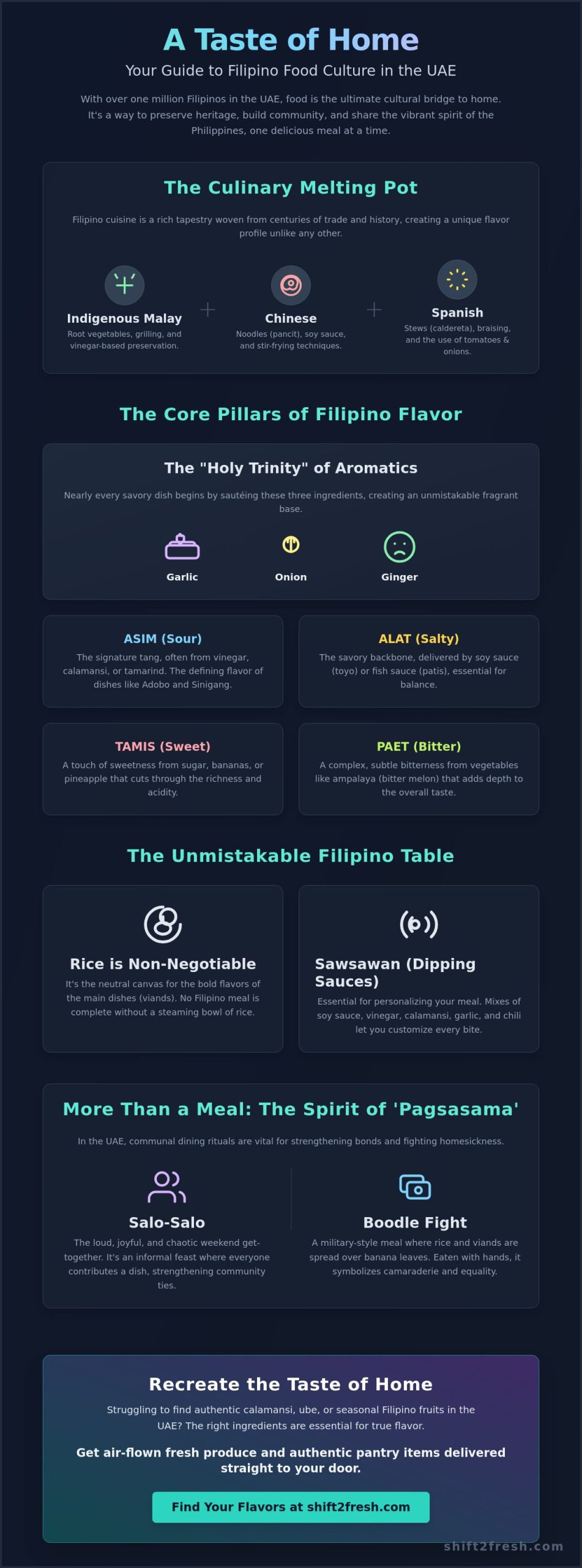
The foundation of Filipino cuisine is a complex, centuries-old melting pot. It blends indigenous Malay traditions with significant Chinese and Spanish influences. You can see this in the heavy use of soy sauce and stir-frying techniques brought by Chinese traders, contrasted with the vinegars and slow-braising methods introduced during the Spanish colonial era. Central to this is the concept of “Lasa,” or the soul of the taste. In the UAE, this evolution continues as local chefs experiment with regional ingredients. It’s becoming common to see traditional flavors reinvented with a Middle Eastern twist, such as the Ube Baklava Sundae, which marries the iconic purple yam with local pastry traditions.
The Role of Food in Community Building
Food serves as the ultimate tool for “Pagsasama,” or togetherness. In worker accommodations and shared villas across the Emirates, the kitchen is the heart of the home. Weekend feasts after church or community gatherings aren’t just about eating; they’re rituals that actively reduce homesickness. Whether it’s a simple bowl of Sinigang or a festive spread, sharing a meal helps maintain the communal spirit that defines the culture.
- Weekend Rituals: Large gatherings often feature shared pantry staples that remind expats of home, creating a sense of belonging in a foreign land.
- Cultural Preservation: Cooking traditional meals is how the younger generation of UAE-born Filipinos stays connected to their heritage.
- Ease of Access: With the rise of mobile app ordering for Filipino pantry items and Asian vegetables, maintaining these traditions has never been more convenient for the community.
By bringing these flavors into their homes, Filipinos in the UAE don’t just feed their families; they preserve a legacy. The availability of seasonal Filipino fruits and specific Asian vegetables ensures that the “Lasa” remains authentic, even when cooked in a kitchen in downtown Dubai.
Core Pillars of the Filipino Culinary Experience
To truly understand filipino food culture in the uae, you have to look beyond the names of the dishes. The cuisine is built on a sophisticated balance of four major flavor profiles: Sour (Asim), Salty (Alat), Sweet (Tamis), and Bitter (Paet). Unlike many other Asian cuisines that rely on heavy spice heat, Filipino cooking focuses on the harmony between these contrasting notes. For many, these specific flavor profiles provide a taste of home for Filipino expats who want to preserve their heritage while living in the Emirates. This sensory experience begins with the “Holy Trinity” of aromatics: garlic, onion, and ginger. These three ingredients are sautéed in almost every savory recipe, creating a fragrant base that is instantly recognizable.
Rice is the non-negotiable foundation of every meal. It’s the neutral anchor that balances the bold, often vinegar-heavy flavors of the viands. You won’t find a traditional table without it. To complete the experience, “Sawsawan” or dipping sauces are always present. Whether it’s a mix of soy sauce and calamansi or spicy vinegar with garlic, these sauces allow you to personalize the meal to your exact preference. If you’re looking to start your own kitchen traditions, you can find everything you need through our mobile app.
The Power of “Asim” (Sourness)
While Adobo is famous, Sinigang is the true national dish for many Filipinos. Its signature “Asim” or sourness is incredibly refreshing in the hot UAE climate. This tart profile is traditionally achieved using Seasonal Filipino Fruits like tamarind, calamansi, or even green mango. These sour broths aren’t just delicious; they’re also believed to stimulate the appetite and provide a cooling effect during the long summer months.
Ube and Beyond: The Sweet Side of Culture
The global craze for Ube has roots deep in Filipino tradition. This vibrant purple yam is the star of many desserts, from creamy Halaya to festive cakes. Recreating these sweets at home requires specific Filipino Pantry Items like glutinous rice flour and coconut milk. Traditional snacks like Bibingka and Puto remain symbols of celebration, often served during community gatherings to mark special occasions and bring a bit of island sweetness to the desert.
The “Salo-Salo” Spirit: Why Communal Dining Matters
At the core of filipino food culture in the uae is the concept of “Salo-Salo.” While it translates simply to eating together, the meaning goes much deeper. It’s a ritual that turns a simple meal into a community event. Whether you’re in a spacious villa in Jumeirah or a cozy studio in Al Nahda, the act of sharing a common table is what makes a house feel like a home. One of the most recognizable versions of this is the Boodle Fight. Originally a military tradition where soldiers ate together regardless of rank to show solidarity, it’s now the ultimate social trend for weekend get-togethers in the Emirates.
Many Filipinos still prefer “Kamayan,” the traditional way of eating with your hands. It isn’t just about preserving old ways; it’s a sensory experience that connects you directly to the textures and temperatures of the dish. It symbolizes equality. When everyone’s hands are in the same mountain of rice, there’s no hierarchy. Don’t let a small Dubai apartment stop you from hosting. You don’t need a massive dining table. Many expats simply lay out a clean plastic sheet on the floor or a kitchen counter, cover it with banana leaves, and gather around. It’s the presence of friends and the quality of the food that define the experience.
Anatomy of a Boodle Fight
A successful Boodle Fight is a work of art. It starts with layering clean banana leaves as the natural “plate” across the length of the table. A long mound of garlic rice acts as the center, flanked by grilled proteins like liempo or bangus. To balance the heavy meats, you must include a variety of Asian Vegetables such as steamed okra, grilled eggplant, and blanched sitaw. These greens provide the necessary crunch and nutrition to round out the feast. Because there are no individual plates, everyone eats from the same spread, reinforcing the bond between guests.
Hospitality Beyond the Plate
Hospitality is a pillar of Filipino kindness that thrives in the UAE’s expat community. The standard greeting isn’t “How are you?” but “Kain na?” (Let’s eat). Filipinos almost always cook extra portions because of the deep-rooted habit of being ready for unexpected guests. This generosity extends to the end of the night with the tradition of “Pabaon.” In the UAE, it’s common for hosts to pack leftovers for their friends to take home, ensuring that the spirit of the “Salo-Salo” lasts well into the next day’s lunch break at the office.
- The “Kain Na” Culture: A universal invitation to join the meal, regardless of how much food is on the table.
- No Guest Left Hungry: The cultural practice of over-preparing food to ensure abundance.
- Pabaon Ritual: Sharing the bounty by sending guests home with containers of the night’s best dishes.
Sourcing Authenticity: From Manila Markets to UAE Doorsteps
Recreating the “Salo-Salo” spirit or the perfect “Asim” profile requires more than just skill; it requires the right raw materials. The “Desert Kitchen” presents a unique obstacle for filipino food culture in the uae. While the UAE has made massive strides in local agriculture, the flavor of a mango grown in sandy soil doesn’t match the profile of one from Guimaras. This is why air-flown produce is essential. It preserves the authentic texture and high vitamin content that often gets lost in long-haul sea freight. When you browse a philippine supermarket, you’re looking for that specific tropical fragrance that signals home.
To get the most out of your cooking, you need to time your purchases with the seasons. Keep an eye out for specific windows when Lansones, Santol, and even Durian become available in the Emirates. Identifying high-quality fresh fruits and vegetables means checking for firmness and the absence of bruising. A reliable supply chain is your best friend when you want to maintain the integrity of your heritage recipes.
Essential Fresh Produce for the UAE Kitchen
Substitution is the enemy of authenticity. Many people try to use local limes instead of Calamansi, but they lack the floral, sharp acidity that defines Filipino dipping sauces. Similarly, while ube powder is convenient, nothing beats the earthy richness of real Ube tubers for making authentic Halaya. Your kitchen also needs a steady supply of fresh greens like Kang-kong and Talbos ng Kamote. These aren’t just garnishes; they’re the nutritional backbone of traditional stews. If you’re struggling to find these items in your neighborhood, you can order authentic Asian vegetables via our mobile app today.
The Logistics of Freshness
The journey from a farm in Luzon to your doorstep in Sharjah or Dubai is a feat of modern logistics. A dedicated cold chain ensures that produce is picked, packed, and delivered within 48 hours. When choosing an online supermarket dubai, look for services that prioritize this speed and specialized handling. Once your items arrive, storage is key. The high humidity in the UAE can cause tropical fruits to spoil quickly. We recommend wrapping leafy greens in paper towels before placing them in the crisper drawer to extend their life.
- Check the Stem: For fruits like mangoes or santol, a fresh, green stem indicates it was recently harvested.
- Leaf Integrity: Kang-kong should have firm, upright leaves without yellowing edges.
- Root Firmness: When buying ginger or ube, the skin should be taut and the root should feel heavy for its size.
Maintaining the standards of filipino food culture in the uae means refusing to settle for “close enough.” By sourcing directly from the source, you ensure that every bite of Sinigang or slice of mango tastes exactly like the Philippines. For those interested in the broader tropical environment, Verdant Tree Farm offers insights into the palm trees that are as central to Philippine landscapes as the fruits are to its tables.
Recreating the Taste of Home with Shift 2 Fresh
Keeping traditions alive in the fast-paced cities of the Emirates requires more than just nostalgia; it requires a reliable partner. Shift 2 Fresh acts as the essential bridge between the fertile farms of the Philippines and your dinner table. By leveraging over 45 years of food industry expertise, we’ve mastered the art of selecting produce that meets the strict standards of filipino food culture in the uae. We understand that a dish is only as good as its ingredients. This deep industry knowledge ensures that every item in our inventory is chosen with an eye for authenticity and peak freshness, ensuring your home-cooked meals never lose their soul.
While standard UAE grocery chains might offer generic Asian vegetables, they often lack the specialty items that define a true Pinoy kitchen. We focus on providing those hard-to-find staples that make your recipes taste exactly like they did back home. Whether it’s a specific variety of seasonal fruit or authentic pantry items, our goal is to ensure you don’t have to compromise on your heritage. This isn’t just about stocking shelves. It’s about preserving a way of life.
Your Digital Filipino Market
The Shift 2 Fresh mobile app is a powerful tool for cultural preservation. It transforms the often-difficult task of sourcing authentic ingredients into a seamless digital experience. You can browse seasonal fruits, Asian vegetables, and essential pantry staples from the comfort of your home. This is particularly helpful when planning large community gatherings. We offer free shipping on orders over AED 500, making it the perfect solution for organizing a massive Salo-Salo without the stress of transporting heavy bags of bulk rice or crates of ube tubers yourself. Our home delivery service ensures your kitchen stays stocked with the freshest ingredients, even during the busiest work weeks.
Commitment to Quality and Community
Our mission goes beyond simple commerce. We’re dedicated to supporting the local community by providing a reliable Online Supermarket experience tailored to the needs of the diaspora. Every calamansi and mango undergoes a rigorous quality check to ensure it meets our standards before it reaches your door. By choosing a partner that understands your culinary roots, you’re not just buying groceries; you’re investing in the continuation of your family’s traditions in a new land. Experience the freshest Filipino produce today at Shift 2 Fresh and bring the authentic flavors of the islands to your UAE home.
Bring the Spirit of the Islands to Your Table
Mastering the balance of “Asim” and hosting a memorable Boodle Fight are more than just cooking skills; they’re ways to keep your heritage alive while living abroad. You’ve seen how the right aromatics and seasonal fruits can transform a simple meal into a powerful connection to home. As filipino food culture in the uae continues to flourish, having a reliable partner to source those essential flavors makes all the difference in your kitchen.
Shift 2 Fresh supports your culinary journey with over 45 years of food industry expertise. We deliver directly imported seasonal fruits, Asian vegetables, and pantry staples across the UAE from our base in Sharjah. Whether you’re planning a massive weekend Salo-Salo or a quiet family dinner, we ensure the true taste of the Philippines is always within reach. Shop Authentic Filipino Fresh Produce & Pantry Staples at Shift 2 Fresh today. It’s time to create new memories around the flavors you love most.
Frequently Asked Questions
What are the most popular Filipino dishes in the UAE?
Adobo and Sinigang are the most recognizable staples across the Emirates. In many Dubai eateries, a serving of Sinigang Na Bangus costs about 39 AED, reflecting its status as a high-demand comfort meal. Other favorites include Pancit Canton and Beef Tapa, which rely heavily on authentic pantry items like soy sauce and calamansi to achieve their signature taste.
Where can I buy fresh Filipino fruits like Lansones and Durian in Dubai?
You can find these seasonal delicacies through specialized online platforms like Shift 2 Fresh. Because these fruits are highly perishable, we air-fly them directly from Philippine farms to ensure they arrive in Dubai with their original sweetness and texture. Finding them in standard local supermarkets is rare, making specialized mobile app ordering the most reliable method for expats.
What is a Boodle Fight and how do I host one in the UAE?
A Boodle Fight is a communal dining ritual where food is served on banana leaves and eaten with your hands. To host one, cover a long table with leaves and place a mound of garlic rice in the center. Surround the rice with grilled meats and Asian vegetables like okra and eggplant. It’s a popular way to celebrate milestones within the Filipino community in the UAE.
Why is Filipino food culture so prominent in the UAE?
With over one million Filipinos residing in the country, filipino food culture in the uae has moved from small neighborhoods into the mainstream. Food acts as a vital cultural bridge for the diaspora, helping people stay connected to their roots. Major events like the annual Kalayaan celebrations in Dubai further showcase these traditions to a wider international audience.
Can I find authentic Filipino pantry items online in Sharjah?
Yes, you can order a wide range of authentic pantry staples through the Shift 2 Fresh mobile app for delivery in Sharjah. We stock everything from specialized vinegars to glutinous rice flour. Our delivery network covers the entire UAE, ensuring that even those living outside the main hubs of Dubai can access the ingredients they need for home cooking.
What is the best substitute for Calamansi in UAE cooking?
While some cooks try to mix lemon and lime, there’s no true substitute for the unique floral acidity of Calamansi. It’s the backbone of filipino food culture in the uae, especially for dipping sauces. Instead of settling for a different flavor profile, you can source fresh, air-flown Calamansi directly through our app to keep your recipes authentic.
How does Shift 2 Fresh ensure the quality of imported Philippine produce?
We leverage 45 years of food industry expertise and a sophisticated cold chain to maintain quality. Produce is moved from farms in the Philippines to UAE doorsteps within 48 hours. This rapid transit ensures that seasonal fruits and vegetables don’t lose their nutritional value or flavor during the journey, meeting the high standards of our community.
Is Filipino food spicy or sour?
Filipino cuisine is famously sour rather than spicy. While some regional dishes use chili, the primary flavor profile is “Asim” or sourness, usually derived from tamarind, vinegar, or calamansi. This tartness is balanced with salty and sweet notes, creating a complex taste that is refreshing and perfectly suited for the warm UAE climate.
0 comments