

Can you really call it Lumpiang Sariwa if the “sariwa” (freshness) is missing that signature Filipino crunch? Most home cooks in Dubai or Abu Dhabi struggle when they try to recreate this classic dish because local vegetable substitutes often turn out soggy or bland. To get that restaurant-quality result, you need the right ingredients for fresh lumpia that actually come from the right soil. Whether it’s the crisp bite of authentic jicama or the subtle sweetness of seasonal carrots, the quality of your produce determines if your wrap stays firm or falls apart.
You shouldn’t have to settle for “close enough” when you’re craving a taste of home. It’s frustrating to spend hours in the kitchen only to realize your vegetables don’t have the texture you remember. This guide provides the complete checklist of authentic ingredients you need to master Lumpiang Sariwa in your own UAE kitchen. We’ll break down the non-negotiables for your shopping list, from the perfect wrapper to seasonal Asian vegetables, and show you how to get Filipino pantry items delivered straight to your door using a simple mobile app.
Key Takeaways
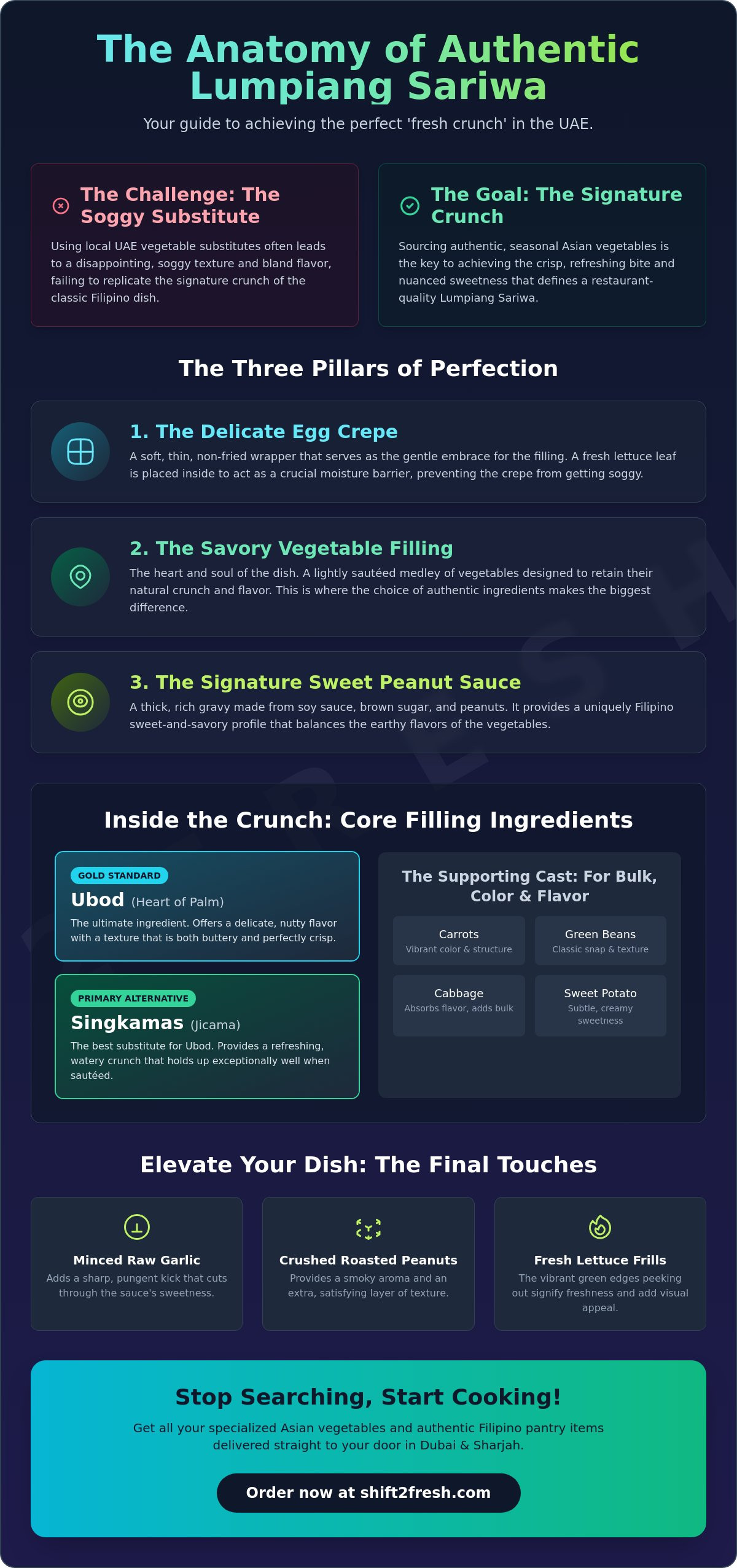
- Learn the three essential pillars of Lumpiang Sariwa: the delicate egg crepe, the savory vegetable filling, and the signature sweet peanut sauce.
- Identify the specific ingredients for fresh lumpia that provide the authentic crunch, such as fresh heart of palm (ubod) and jicama (singkamas).
- Discover how to prepare the perfect non-fried wrapper and thick savory sauce using basic Filipino pantry staples.
- Understand why seasonal imports are the key to maintaining authentic flavor and texture compared to local substitutes found in the UAE.
- Find out how to source all your specialized Asian vegetables and ingredients through a convenient mobile app for home delivery in Sharjah and Dubai.
What is Lumpiang Sariwa? Understanding the Fresh Lumpia Components
Lumpiang Sariwa stands apart in the world of spring rolls. Unlike its famous cousin, the deep-fried Lumpia Shanghai, this dish is defined by its lightness and reliance on raw or lightly sautéed produce. It’s essentially a hearty vegetable medley tucked into a soft, crepe-like wrapper and smothered in a thick, sweet peanut gravy. For many health-conscious families, it’s a go-to meal because it offers a massive serving of vegetables without the heavy oils of frying. It’s a complete meal in a single roll, providing fiber, protein, and essential vitamins in every bite.
The history of this dish is deeply rooted in the cultural exchange between the Philippines and China. It draws direct inspiration from the Fujianese “popiah,” brought over by early Chinese immigrants. Over centuries, it has evolved into a distinct part of Filipino cuisine, adapted to include local favorites like heart of palm or jicama. To make it correctly, you must balance three distinct pillars: the delicate egg crepe, the savory filling, and the rich sauce. Selecting the right ingredients for fresh lumpia is the only way to achieve this harmony.
Fresh vs. Fried: Why ‘Sariwa’ Matters
In Tagalog, “sariwa” literally translates to “fresh.” This isn’t just a name; it’s a cooking philosophy. While fried lumpia varieties rely on the crunch of the pastry, Lumpiang Sariwa focuses on the nutritional integrity of the filling. The vegetables are typically sautéed just enough to remove the raw edge while retaining their natural juices. One clever technique used in this dish is the placement of a fresh green lettuce leaf inside the wrapper. This isn’t just for color. It acts as a moisture barrier, preventing the sautéed vegetables from making the soft crepe soggy before it reaches the table.
The Essential Texture Profile
Success in this recipe depends entirely on the “crunch.” If the vegetables are overcooked or soft, the dish loses its character. The earthy, mild flavors of the sautéed cabbage and beans need that crisp snap to feel authentic. This earthiness is then balanced by a signature sauce made with brown sugar and soy sauce, creating a sweet-and-savory profile that is uniquely Filipino. Final touches matter too. You can elevate the visual appeal and flavor by garnishing the roll with these components:
- Minced Raw Garlic: Adds a sharp, pungent kick that cuts through the sweetness of the sauce.
- Crushed Roasted Peanuts: Provides a smoky aroma and an extra layer of texture.
- Fresh Lettuce Frills: The vibrant green edges peeking out of the wrapper signify freshness.
Finding the specific ingredients for fresh lumpia that maintain this texture can be a challenge in the UAE, but it’s essential for a restaurant-quality result. Without the right Asian vegetables, the flavor profile shifts, often losing the subtle sweetness that defines the authentic version.
The Vegetable Filling: Core Ingredients for Fresh Lumpia
The soul of Lumpiang Sariwa lies in its meticulously prepared center. While many recipes focus on the wrapper, the specific ingredients for fresh lumpia filling determine whether your dish tastes like an authentic Filipino feast or a generic stir-fry roll. Ubod, or heart of palm, is the undisputed gold standard for this dish. This tender, white pith from coconut trees offers a delicate, nutty flavor and a buttery yet crisp texture that’s hard to replicate. However, because fresh Ubod is a seasonal specialty, many cooks rely on Singkamas (Jicama) as the primary alternative. This root vegetable provides a watery, refreshing crunch that holds up beautifully against the heat of the pan.
Beyond the primary crunch, you need a mix of vegetables to build bulk and color. A traditional filling includes:
- Green Beans and Carrots: These provide structural integrity and vibrant pops of orange and green.
- Cabbage: This is the workhorse of the recipe, acting as a bulk-builder that absorbs all the savory stir-fry flavors.
- Sweet Potato (Kamote): A few strips of kamote add a subtle, creamy sweetness that balances the saltier elements.
Authentic Filipino Produce vs. Substitutes
Using the right Asian Vegetables is crucial for achieving the correct mouthfeel. For instance, authentic Filipino carrots often have a different sweetness level and density than local UAE varieties. To ensure every bite is consistent, you must julienne your vegetables into uniform, thin matchsticks. If you’re lucky enough to find fresh Ubod, soak it in water with a bit of salt first to prevent it from turning brown or developing a bitter edge. This attention to detail honors the cultural significance of lumpia as a dish that rewards patience and high-quality produce.
Proteins and Aromatics
The “gisa” or sautéing process starts with a fragrant base of garlic and onions. Traditionally, small strips of pork and tiny, shelled shrimp are added for a savory depth. If you’re looking for a lighter version, firm tofu (tokwa) is an excellent protein-rich filler that absorbs the sautéed juices perfectly. For those who want to skip the crowded markets, you can find your complete list of ingredients for fresh lumpia and other Filipino pantry items through mobile app ordering. This ensures your vegetables are fresh and your pantry is stocked with the right soy sauce and oils needed for that authentic “gisa” aroma.
The Wrapper and Sauce: Essential Pantry Ingredients
While the filling provides the substance, the wrapper and sauce provide the soul of the dish. A common mistake is treating these as afterthoughts, yet they are the first things your palate experiences. The ingredients for fresh lumpia wrappers are simple: all-purpose flour, cornstarch, eggs, water, and a pinch of salt. This mixture creates a thin, elastic crepe that holds the heavy vegetable filling without breaking. Then comes the sauce, a savory-sweet glaze made from soy sauce, brown sugar, and a cornstarch slurry for thickening. To truly elevate the flavor, many traditional cooks add a dash of fish sauce (patis). This “secret” addition provides an umami depth that salt alone cannot achieve.
Garnishing is where you add the final layers of flavor. Freshly minced raw garlic and toasted crushed peanuts are non-negotiable. The garlic offers a sharp contrast to the sweet sauce, while the peanuts echo the nutty notes of the filling. Without these, the dish feels incomplete and lacks the complex sensory experience of an authentic Lumpiang Sariwa. It’s the combination of these small pantry details that separates a home-cooked experiment from a professional-grade Filipino classic.
Mastering the Fresh Lumpia Wrapper
Creating a paper-thin crepe that doesn’t tear requires precision. You’ll need specific Filipino Pantry Items like high-quality cornstarch, which provides the necessary elasticity. The trick is to strain your batter through a fine-mesh sieve to remove any lumps before cooking. Use a non-stick pan on low heat and pour just enough batter to coat the surface. Once the edges start to lift, it’s ready. If you’re making these in advance, stack them with wax paper in between and cover them with a damp cloth to prevent them from drying out and becoming brittle.
Crafting the Signature Sweet Peanut Sauce
The iconic mahogany color of the sauce comes from the right balance of soy sauce and brown sugar. Using a light, generic soy sauce often results in a pale, unappealing glaze. This is why sourcing from a Philippine supermarket grade selection is vital. These brands are formulated with the specific saltiness and color profile required for Filipino recipes. To get that perfect glossy consistency, whisk your cornstarch into cold water before adding it to the boiling sugar mixture. This prevents unappetizing clumps and ensures a smooth, professional-looking sauce that clings to the roll perfectly. Don’t forget to taste as you go; the sauce should be sweet but have a clear savory backbone.
Sourcing Authentic Ingredients in the UAE
Sourcing the right ingredients for fresh lumpia in the UAE presents a unique challenge. While you can find generic cabbage or carrots in almost any neighborhood grocery, authentic components like fresh Ubod (heart of palm) or Singkamas (jicama) are rarely found in local Sharjah or Dubai markets. Many home cooks try to substitute with local UAE varieties, but these often lack the specific water content and snap that Filipino-grown vegetables provide. For a dish that relies so heavily on texture, the origin of your produce is the difference between a soggy roll and a restaurant-quality meal. Authentic Filipino soil produces vegetables with a distinct sweetness that local desert-grown varieties simply can’t match.
Quality control is paramount when dealing with imported Asian vegetables. High-quality jicama should have a smooth, tan skin and feel dense when held. If it feels light or spongy, it’s likely old and dry inside. For the lettuce and sprouts, color and firmness are your best indicators of freshness. Because these greens are highly sensitive to heat, they must be handled through a dedicated cold-chain delivery system. This ensures that by the time they reach your kitchen, they still have the structural integrity to hold a heavy filling. In the UAE heat, even thirty minutes in a non-refrigerated van can ruin the crispness of your sprouts.
Finding a Reliable Asian Supermarket Near You
Navigating the various Asian Supermarket Near Me options can be overwhelming if you’re looking for specific Filipino imports. Online specialty stores offer a massive advantage by providing access to hard-to-find seasonal items without the need for a long commute. Shift 2 Fresh has established itself as a reliable source for these authentic imports, focusing on the specific needs of the Filipino community in the UAE. They bridge the gap between the Philippine farms and your dinner table, ensuring you don’t have to compromise on authenticity for convenience.
Seasonal Sourcing for Maximum Flavor
Just as you would track the arrival of Seasonal Filipino Fruits, you should plan your savory cooking around vegetable harvest cycles. Fresh shipments of Ubod or specialized Asian carrots often arrive in waves. Choosing air-flown produce over sea-freighted alternatives ensures a superior taste profile, as the shorter transit time preserves the natural sugars and crispness of the vegetables. While sea freight is common for hardier items, the delicate nature of lumpia fillings rewards the freshness of air-flown stock. Planning your meals around these arrivals ensures your Lumpiang Sariwa tastes exactly like the ones from your favorite Manila restaurant.
Don’t settle for bland substitutes when you can have the real thing. Download the Shift 2 Fresh app to browse our latest arrivals of authentic Asian vegetables and pantry staples delivered straight to your door.
Get Your Fresh Lumpia Ingredients Delivered via Shift 2 Fresh
Bringing the taste of home to Sharjah and Dubai shouldn’t be a struggle. Shift 2 Fresh simplifies the process of gathering all the ingredients for fresh lumpia by offering a curated selection of authentic imports. Instead of visiting multiple shops to find the right texture of jicama or the specific sweetness of Filipino carrots, you can find everything you need in one digital storefront. Our mobile app ordering system is designed for busy households who want quality without the hassle of navigating traffic or crowded market stalls. We bridge the gap between the farm and your kitchen, making traditional cooking accessible to everyone in the UAE.
We understand that the success of Lumpiang Sariwa depends entirely on the crispness of the vegetables. That’s why every order is hand-picked with care. Our team selects only the firmest jicama and the most vibrant greens, ensuring they meet the high standards of a traditional Filipino kitchen. Our delivery logistics are built around a specialized cold-chain system. This means your Asian vegetables arrive at your doorstep in Sharjah or Dubai as fresh as if they were just harvested. This commitment to quality ensures that when you start your “gisa” process, your vegetables retain their structural integrity and flavor.
Shop the Fresh Lumpia Checklist Now
You can easily tick off your entire shopping list through our mobile app. We stock fresh jicama, carrots, and cabbage, which are the core ingredients for fresh lumpia. To make your preparation even easier, you can bundle these fresh vegetables with essential Filipino pantry items like premium soy sauce, brown sugar, and toasted peanuts. This one-stop-shop approach saves you time and ensures all your flavors are compatible. For those planning a weekend gathering or a large family feast, we offer free delivery in the UAE for larger family-sized orders, making it more cost-effective to stock up on all your kitchen essentials at once.
The Shift 2 Fresh Advantage
With 45 years of food industry expertise, we have perfected the art of importing delicate produce from overseas. Our strength lies in our direct relationships with Filipino farmers, which allows us to source authentic Asian vegetables that carry the true flavor of the islands. We don’t just sell food; we provide the components for your family traditions and cultural celebrations. Experience the difference that direct sourcing and professional handling make in your everyday cooking. Order your fresh lumpia ingredients today on Shift 2 Fresh and start creating restaurant-quality Lumpiang Sariwa in your own kitchen.
Master the Art of Filipino Fresh Lumpia Today
Recreating the nostalgic flavors of a Manila fiesta starts with the right produce. You now know that the secret to a perfect Lumpiang Sariwa isn’t just the technique, but the crispness of the vegetables and the umami depth of the sauce. By choosing authentic jicama and specialized Asian vegetables over local substitutes, you ensure every bite has that signature “sariwa” crunch. Gathering the specific ingredients for fresh lumpia is the most important step in moving from a basic home recipe to a restaurant-quality masterpiece.
Don’t let the search for authentic items hold you back. With over 45 years of food industry experience, Shift 2 Fresh provides directly imported seasonal Filipino produce and pantry staples that are otherwise hard to find in the UAE. You can rely on our dedicated delivery system to bring the best of the islands straight to your kitchen in Sharjah or Dubai. It’s time to stop compromising on flavor and start cooking with the real thing.
Shop Fresh Filipino Ingredients for Your Lumpia Now
Your family deserves a taste of home that feels truly authentic. Happy cooking!
Frequently Asked Questions
Can I use store-bought egg roll wrappers for fresh lumpia?
You shouldn’t use standard store-bought egg roll wrappers because they are designed to be deep-fried and have a very different texture. Authentic fresh lumpia requires a soft, crepe-like wrapper made from flour, eggs, and cornstarch. If you use a fried-style wrapper without cooking it, it will be tough and chewy rather than delicate. Stick to making your own crepes to ensure your ingredients for fresh lumpia are properly showcased in a tender, edible wrap.
What is the best substitute for Ubod (Heart of Palm) in the UAE?
Jicama, known as Singkamas, is the most reliable substitute for heart of palm in the UAE. It provides a similar watery crunch and mild sweetness that mimics Ubod perfectly when sautéed correctly. While Ubod is a seasonal specialty that can be hard to find, jicama is more frequently available through specialty Asian vegetable importers. Just ensure you peel it thoroughly and julienne it into thin, uniform strips to maintain the proper texture of the filling.
How do I keep my fresh lumpia from getting soggy?
Preventing sogginess starts with properly draining your sautéed vegetable filling before assembly. After cooking your ingredients for fresh lumpia, place the mixture in a colander for at least 15 minutes to remove all excess liquid. Additionally, always place a fresh, dry lettuce leaf on the wrapper before adding the vegetables. This leaf acts as a moisture barrier that keeps the crepe firm and prevents the sauce or vegetable juices from soaking through the delicate wrapper.
Is fresh lumpia gluten-free?
Traditional fresh lumpia is not gluten-free because the wrapper typically uses all-purpose flour and the sauce contains soy sauce. However, you can adapt the recipe by using a gluten-free flour blend for the crepe and substituting tamari for standard soy sauce. Always check the labels on your Filipino pantry items to ensure they meet your specific dietary requirements, as some thickening agents in pre-made sauces may also contain gluten or wheat byproducts.
How long does fresh lumpia last in the fridge?
Fresh lumpia is best enjoyed immediately, but it can stay in the fridge for one to two days if you store the components separately. Keep the sauce and the rolls in airtight containers to prevent the wrapper from absorbing too much moisture or drying out. If you store them already assembled, the wrapper will likely become soggy and lose its delicate texture within a few hours. For the best experience, assemble the rolls just before serving.
Where can I buy authentic Filipino peanuts in Dubai?
You can find authentic Filipino peanuts and other specialty pantry staples through the Shift 2 Fresh mobile app. While local supermarkets carry generic nut varieties, Filipino brands offer the specific roast and crunch needed for the traditional garnish. Ordering through a dedicated app ensures you get the right products delivered directly to your home in Dubai or Sharjah without having to search through multiple physical stores for the correct brand.
Can I make the peanut sauce ahead of time?
Yes, you can prepare the signature peanut sauce up to three days in advance. Store it in a glass jar in the refrigerator and reheat it slowly on the stovetop when you’re ready to serve. If the sauce becomes too thick after cooling, simply whisk in a tablespoon of warm water at a time until it reaches its original glossy consistency. Avoid overheating the sauce, as this can cause the cornstarch to break down and become watery.
What is the difference between Lumpiang Sariwa and Lumpiang Ubod?
Lumpiang Sariwa is the general term for “fresh spring rolls,” while Lumpiang Ubod refers specifically to rolls filled with heart of palm. While both versions use the same soft wrapper and sweet sauce, Lumpiang Sariwa often contains a broader mix of vegetables like cabbage, carrots, and green beans. Lumpiang Ubod is often considered a more premium or festive version because heart of palm is a more specialized and seasonal ingredient compared to standard vegetables.
0 comments