

What if the secret to the perfect adobo isn’t actually the ratio of vinegar to soy sauce, but the specific origin of your garlic? Many home cooks across the UAE struggle with a filipino adobo recipe that ends up tasting one-note or, even worse, leaves the meat tough and the sauce watery. You’ve likely spent your weekend searching through aisles in Dubai or Abu Dhabi only to find aromatics that lack that punchy, authentic Filipino kick.
It’s a common frustration for anyone trying to recreate the Philippines’ national dish far from home. We promise to help you master the science of reduction and aromatics, turning your kitchen into a genuine Filipino carinderia. You’ll learn how to achieve tender meat with a thick, savoury glaze that works every time, regardless of your cooking experience.
In this guide, we’ll walk you through a foolproof method for balancing tang and salt. We also share tips on sourcing the freshest Asian vegetables and essential Filipino pantry items via our mobile app, ensuring you never have to settle for bland ingredients again.
Key Takeaways
- Learn why the traditional reduction process is the secret to a balanced, savoury glaze rather than just a simple mixture of vinegar and soy sauce.
- Discover why specific pantry staples like Cane Vinegar are non-negotiable for an authentic filipino adobo recipe and how they provide the correct acidity level.
- Master the “Fry-Back” technique to give your meat crispy, caramelized edges while keeping the inside tender and juicy.
- Avoid common pitfalls like over-watering your pot, which leads to a washed-out flavour instead of a rich, thick reduction.
- Find out how to source high-quality Asian vegetables and seasonal aromatics directly from Filipino farms using mobile app ordering in the UAE.
What is Filipino Adobo? The Soul of Philippine Cuisine
Adobo is more than just a meal; it’s a fundamental part of the Filipino identity. Whether you’re in a bustling kitchen in Manila or preparing a meal in a high-rise apartment in Dubai, the scent of garlic and vinegar simmering together is unmistakable. At its core, What is Filipino Adobo? It is a method of braising meat, seafood, or vegetables in a liquid composed of vinegar, soy sauce, garlic, peppercorns, and bay leaves. This process creates a complex profile where the sharp acidity of the vinegar is mellowed by the deep, salty notes of the soy sauce, resulting in a rich umami finish.
Long before the advent of modern refrigeration, Filipinos discovered that vinegar and salt were powerful tools for preservation. In the humid, tropical heat of the islands, these ingredients inhibited the growth of bacteria, allowing cooked meat to remain safe to eat for days without spoiling. This historical necessity evolved into the beloved filipino adobo recipe we know today. It’s now considered the unofficial national dish, appearing at every major gathering, from birthday parties to quiet Sunday lunches. It is the ultimate comfort food that connects the diaspora back to their roots.
The Different Styles of Adobo
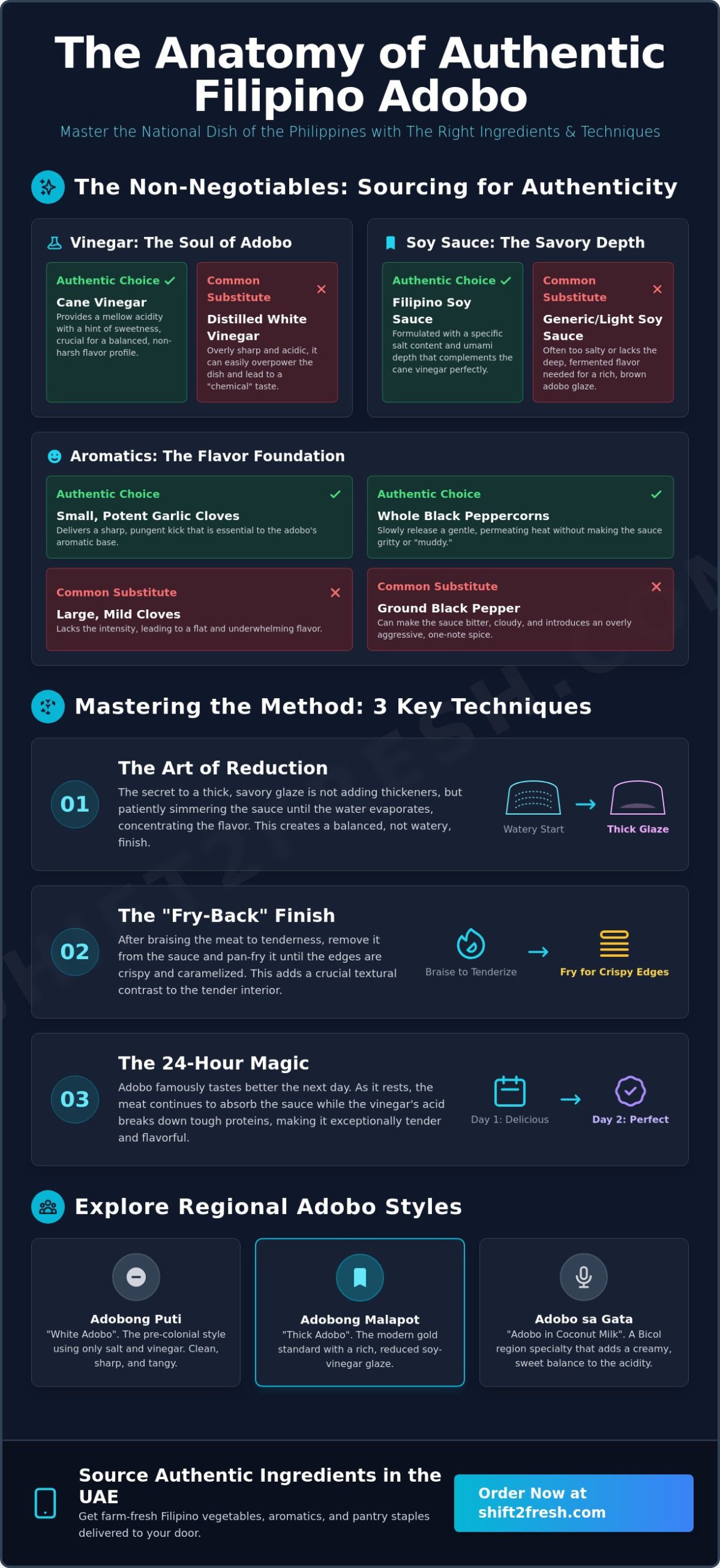
While most people recognize the dark, soy-infused version, there are several regional variations that offer unique experiences. Adobong Puti, or “White Adobo,” is the traditional pre-colonial style that relies solely on salt and vinegar, omitting the soy sauce entirely for a cleaner, sharper tang. In modern households, Adobong Malapot is the gold standard, characterized by a thick, reduced sauce that coats the meat like a savoury glaze. If you prefer a creamier finish, Adobo sa Gata from the Bicol region incorporates coconut milk to balance the vinegar’s intensity with a velvety sweetness.
Why Adobo Tastes Better the Next Day
Many home cooks agree that a filipino adobo recipe is best enjoyed 24 hours after cooking. This happens because of a natural curing process where the meat continues to absorb the flavours of the sauce as it cools and rests. When you’re ready for leftovers, reheat the dish slowly in a pan with a splash of water rather than using a microwave to keep the meat from becoming rubbery. Denaturation occurs when the acid in the vinegar breaks down the tough protein fibers in the meat, making it exceptionally tender over time.
The beauty of this dish lies in its flexibility. Every family has their own secret version, often passed down through generations. Some prefer a more sour kick, while others lean into the sweetness of caramelized onions or a touch of sugar. Regardless of the specific balance, the goal is always a harmony of flavours that makes you reach for an extra serving of steamed rice.
The Essential Ingredients for Perfect Adobo
The foundation of any legendary dish isn’t its complexity, but the quality of its basic components. Most generic recipes treat garlic or vinegar as interchangeable, but in a true filipino adobo recipe, these are the stars. You must start with specific Filipino Pantry Items like Silver Swan soy sauce or Datu Puti. These brands are formulated with a specific salt content and depth that local UAE alternatives often lack.
Cane vinegar is the only choice for an authentic profile. Unlike distilled white vinegar, which can be harsh, cane vinegar offers a mellow acidity with a hint of sweetness. This subtle difference is what prevents your sauce from tasting like a chemistry experiment. While many variations exist, following an Authentic Filipino Adobo Recipe starts with sourcing these specific liquids alongside whole black peppercorns. Using whole peppercorns instead of ground pepper ensures a slow release of heat and spice that permeates the meat without muddying the sauce.
The aromatics are where many home cooks in Dubai and Sharjah fail. You need pungent, fresh garlic and high-quality Asian Vegetables to build a proper base. Given that the UAE’s garlic imports were valued at approximately AED 297.27 million in 2024, the variety in local markets is vast, but for Adobo, you want the smaller, more potent cloves. You can easily find these specific items and more through our mobile app ordering service, bringing the farm-fresh taste of the Philippines straight to your door.
Choosing Your Protein
Pork Belly, known as Liempo, is the traditional favourite because the rendered fat creates a silky, luxurious sauce. If you’re looking for a lighter or faster option, chicken thighs are the best alternative as they remain juicy during the braising process. For the ultimate flavour experience, try a “Combo Adobo” using both chicken and pork. This combination allows the different fats and textures to meld into a superior, complex glaze.
The Aromatic Foundation
Don’t be shy with the garlic. You should use at least double the amount recommended in Western cookbooks. Crushing the cloves helps release the essential oils into the oil during the initial sear. Dried Bay Leaves, or Laurol, provide a necessary earthy undertone that ties the vinegar and soy together. For a modern UAE twist, some chefs add a splash of fresh Calamansi at the very end to provide a bright, citrusy lift that cuts through the richness of the meat.
Step-by-Step Filipino Adobo Recipe: The “UAE Method”
To get the best results from your filipino adobo recipe, you need to move beyond simple simmering. The “UAE Method” focuses on building layers of flavour through technique rather than just ingredients. Start by marinating your meat in a mixture of soy sauce, crushed garlic, and whole peppercorns for at least 30 minutes. While 30 minutes works for a quick weeknight meal, giving it more time allows the salt to penetrate the protein deeply, ensuring every bite is seasoned to the bone.
Once marinated, remove the meat from the liquid and pat it dry. Heat a heavy-bottomed pan with a little oil and sear the meat until a dark brown crust forms on all sides. This is the Maillard reaction, a chemical process that creates complex, savoury flavours that a simple simmer cannot achieve. This step is what separates a professional-grade dish from a basic home-cooked version. After browning, pour in the remaining marinade and add your bay leaves. Lower the heat and let it simmer until the meat is fork-tender.
The most critical step happens next. Pour in your cane vinegar, but do not stir it. Let it sit on top of the simmering liquid for at least five to seven minutes. This allows the raw, harsh bite of the acid to cook off and mellow into the sauce. If you stir too early, the vinegar remains sharp and can overwhelm the delicate balance of the dish. For those looking for a tried-and-tested ratio, following an Authentic Filipino Adobo Recipe can help you master these nuances.
The Marination Secret
Overnight marination remains the gold standard for anyone seeking maximum flavour depth. This extended time allows the soy sauce to act as a brine, keeping the meat juicy even after a long braise. When preparing your mix, a 2:1 ratio of soy sauce to vinegar is a safe starting point for most palates. Remember the “No-Stir” rule: stirring raw vinegar into the pot too early prevents the acid from mellowing, which ruins the velvety finish you’re aiming for.
Perfecting the Sauce
As the meat reaches tenderness, increase the heat slightly to reduce the liquid. You want the fat from the meat to emulsify with the soy sauce and vinegar, creating a glossy, rich coating. If the sauce feels too aggressive, a teaspoon of brown sugar or muscovado can bridge the gap between the salty and sour notes. The “sticky glaze” state occurs when the sauce has reduced enough to cling heavily to the meat, representing the peak of Adobo perfection.
By following these steps, you’ll create a filipino adobo recipe that rivals the best restaurants in Dubai. The key is patience during the reduction phase, as rushing the process will leave you with a thin, watery sauce instead of the thick, savoury glaze that defines the dish.
Mastering Adobo: Pro Tips for Texture and Flavour
Achieving the perfect texture is the final hurdle in mastering a filipino adobo recipe. While the simmering process ensures tenderness, the “Fry-Back” technique is what provides those coveted crispy edges. Once your meat is fork-tender, remove it from the pot and flash-fry it in a separate pan with a tablespoon of oil or its own rendered fat. This creates a delightful contrast between the crunchy exterior and the succulent, sauce-soaked interior before you return it to the reduction.
Moisture management is where many cooks lose the battle. A common mistake is adding too much water during the simmering stage, which results in a “washed out” sauce that lacks punch. You want to aim for a technical moisture-to-glaze ratio where the liquid reduces by at least two-thirds. The goal is a concentrated essence, not a soup. If you find your sauce is too thin, increase the heat and let it bubble rapidly without a lid. This evaporates excess water while intensifying the umami profile of the soy and vinegar.
For the busy expat in Dubai or Abu Dhabi, a slow cooker can be a lifesaver. You can set your ingredients in the morning and return to perfectly tender meat. However, slow cookers don’t allow for evaporation. To get that authentic thick glaze, you must transfer the sauce to a stovetop pan for a final ten-minute reduction. If you ever find your adobo is too salty, don’t panic. Adding a few wedges of raw potato will help soak up excess sodium, or you can gradually stir in small amounts of water until the balance is restored.
The Role of Potatoes and Eggs
Many Filipino families include hard-boiled eggs or potatoes to stretch the meal and add variety. Hard-boiled eggs act as sponges, soaking up the dark, savoury sauce until the whites turn a beautiful amber colour. Potatoes serve a dual purpose; they provide a soft texture contrast and release natural starches that help thicken the glaze. To avoid a mushy mess, add your potatoes during the last 15 minutes of simmering so they hold their shape while absorbing the flavour.
Storage and Meal Prep
Adobo is the ultimate meal-prep dish for a hectic working week. It stays fresh in the fridge for up to five days and actually improves as the flavours meld. If you’re freezing a batch, ensure the sauce completely covers the meat to prevent freezer burn. When reheating, the glaze often thickens into a jelly-like consistency. Simply add a splash of water and heat it slowly in a pan to loosen the sauce back to its original glossy state. You can easily order all your essential Filipino Pantry Items through our mobile app to ensure you’re always ready for a batch cook.
Sourcing Authentic Ingredients in Dubai and Sharjah
Finding the right components for an authentic filipino adobo recipe in the UAE can be a frustrating journey. While many Online Supermarkets in Dubai provide general groceries, they rarely stock the specific, high-potency aromatics that define Philippine cooking. Generic garlic often lacks the sharp, essential oils found in native varieties, and standard vinegars don’t always hit the correct acidity levels required for that signature tang. When you’re aiming for a restaurant-quality glaze, these small differences in ingredient quality become very apparent.
Shift 2 Fresh bridges this gap by importing seasonal produce directly from Filipino farms to the UAE. This direct-from-source model means you’re getting Asian vegetables that haven’t spent weeks sitting in generic wholesale warehouses. Whether you are in Dubai or Sharjah, having access to a specialized online Philippine Supermarket allows you to maintain the high standards required for a perfect braise. You can skip the long weekend queues at physical stores and trust that your pantry staples are the exact brands used back home.
Our local delivery network is designed to handle the unique climate of the Emirates. Maintaining a strict cold chain is essential for keeping fresh ginger, garlic, and onions at their peak. When you order through us, you aren’t just getting groceries; you’re getting ingredients that have been handled with the specific needs of Filipino cuisine in mind. This ensures that your aromatics remain pungent and your vegetables stay crisp until they hit the pan.
Why Freshness Matters for Adobo
Garlic is the soul of this dish. “Tired” supermarket garlic can turn bitter when seared, but freshly imported Asian varieties provide a sweet, nutty foundation that balances the vinegar. We support authentic importers who understand that the Filipino palate requires a specific punchiness. Shift 2 Fresh ensures top-tier quality for every delivery by selecting only the best seasonal items, so your filipino adobo recipe never tastes flat or uninspired.
Order Your Adobo Kit Today
Stocking your kitchen has never been easier thanks to the Shift 2 Fresh mobile app. You can browse through our selection of Filipino pantry items and fresh vegetables while on your commute and have them delivered directly to your door. For those who like to stay prepared, bulk pantry stocking often comes with free shipping benefits, making it cost-effective to keep your Silver Swan and Datu Puti supplies full. Get your fresh Adobo ingredients delivered by Shift 2 Fresh now!
Bring the Flavours of Home to Your UAE Kitchen
Mastering the perfect adobo isn’t just about following steps; it’s about the marriage of patience and quality. You’ve learned why the “Fry-Back” method is essential for those crispy edges and why letting your vinegar mellow without stirring is the secret to a balanced sauce. Most importantly, you now understand that the soul of a great filipino adobo recipe lies in the authenticity of your ingredients. Using the right cane vinegar and pungent, fresh garlic makes all the difference between a generic meal and a nostalgic masterpiece.
Don’t let your cooking suffer from tired, low-quality supermarket produce. Backed by 45 years of food industry expertise, we provide directly imported fresh Philippine produce and essential pantry items that guarantee an authentic taste. It’s never been easier to stock your kitchen with the brands you love while enjoying free delivery in the UAE on orders over AED 500. Ready to start cooking? Order Fresh Filipino Ingredients for Your Adobo Today!
Your journey to the ultimate national dish starts with the right foundation. Gather your aromatics, prep your protein, and get ready to enjoy a taste of the Philippines right here in the Emirates.
Frequently Asked Questions
Can I use balsamic or apple cider vinegar for Filipino Adobo?
Cane vinegar is the traditional choice, but apple cider vinegar is a suitable substitute if you’re in a pinch. Balsamic vinegar is too sweet and heavy, which ruins the delicate balance of a true filipino adobo recipe. If you use apple cider vinegar, expect a slightly fruitier note rather than the clean, sharp tang provided by authentic Filipino cane vinegar.
How do I make my Adobo sauce thicker and stickier?
The most effective way to achieve a sticky glaze is through slow reduction on the stovetop with the lid off. This allows the water to evaporate, concentrating the sugars and fats into a thick syrup. You can also add a teaspoon of brown sugar or muscovado to help the caramelization process, which creates that famous finger-licking texture.
Is it better to use pork shoulder or pork belly for Adobo?
Pork belly is the superior choice for a rich, silky sauce because its high fat content renders down during the braise. Pork shoulder is a great alternative if you prefer a meatier, leaner dish, but it may require a longer cooking time to become tender. Many cooks in the UAE use a mix of both to get the best of both worlds.
How long can I keep Filipino Adobo in the fridge?
You can safely store cooked Adobo in an airtight container for up to five days. In fact, many people find it tastes better after two or three days because the meat has more time to cure in the vinegar and soy sauce. Always ensure it is cooled to room temperature before placing it in the refrigerator to maintain food safety.
Why do I need to wait before stirring the vinegar?
Stirring the vinegar immediately after adding it prevents the harsh, raw acidity from cooking off properly. By letting it sit undisturbed on top of the simmering meat for several minutes, the acid mellows and integrates smoothly into the other flavours. This step is crucial for avoiding a sharp, “stinging” taste in your final sauce.
Can I cook Adobo in an air fryer?
An air fryer is perfect for the “fry-back” stage rather than the entire cooking process. After braising the meat on the stove until tender, you can pop the pieces into the air fryer for five minutes at 200°C. This gives you exceptionally crispy edges without the mess of traditional oil frying.
Where can I buy Datu Puti vinegar in Dubai?
You can find Datu Puti and other essential pantry items through our mobile app for direct delivery in Dubai and Sharjah. While some mainstream retailers carry Filipino products, specialized importers like Shift 2 Fresh offer a more consistent supply of authentic brands. This ensures your filipino adobo recipe always uses the correct ingredients for that home-cooked flavour.
Is Filipino Adobo gluten-free?
Standard Adobo is not gluten-free because traditional soy sauce contains wheat. To make a gluten-free version, you must replace the soy sauce with Tamari or a certified gluten-free liquid seasoning. The other core ingredients, like cane vinegar, garlic, and peppercorns, are naturally gluten-free and safe for those with sensitivities.
0 comments