

Last Tuesday, Sarah spent 20 minutes wandering the produce aisle of a major hypermarket in Abu Dhabi, searching for the green, pear-shaped gourd she grew up eating. She left frustrated because she couldn’t find a single crate labeled with the name she knew. You’ve likely experienced this same confusion when trying to find the sayote vegetable in english while shopping across the UAE. Whether you see it labeled as mirliton, christophine, or vegetable pear, the lack of consistency makes grocery runs harder than they need to be.
It’s understandable to feel overwhelmed by these different names, especially when you just want to cook a comforting bowl of Tinola. We’re going to settle the debate by confirming its official English name, chayote, and exploring why this low-calorie staple is a nutritional powerhouse. You’ll learn exactly how to spot the freshest imports in local shops and how to prepare it for your favorite traditional dishes. We’ll also show you where to find reliable sources for fresh sayote in the Emirates so your next meal is both authentic and delicious.
Key Takeaways
- Identify that the sayote vegetable in english is officially known as Chayote and learn about its global names and origins.
- Discover why this low-calorie superfood is a nutritional powerhouse, offering high levels of fiber and essential Vitamin B9 (Folate).
- Learn how to incorporate this versatile ingredient into your kitchen, from the classic Filipino Tinola to refreshing global salads.
- Master the selection process by knowing exactly what to look for—and what to avoid—to ensure you bring home the freshest produce in the UAE.
- Find out how to easily source authentic, high-quality Philippine sayote in Dubai and Sharjah through specialized fresh produce importers.
What is Sayote Vegetable in English?
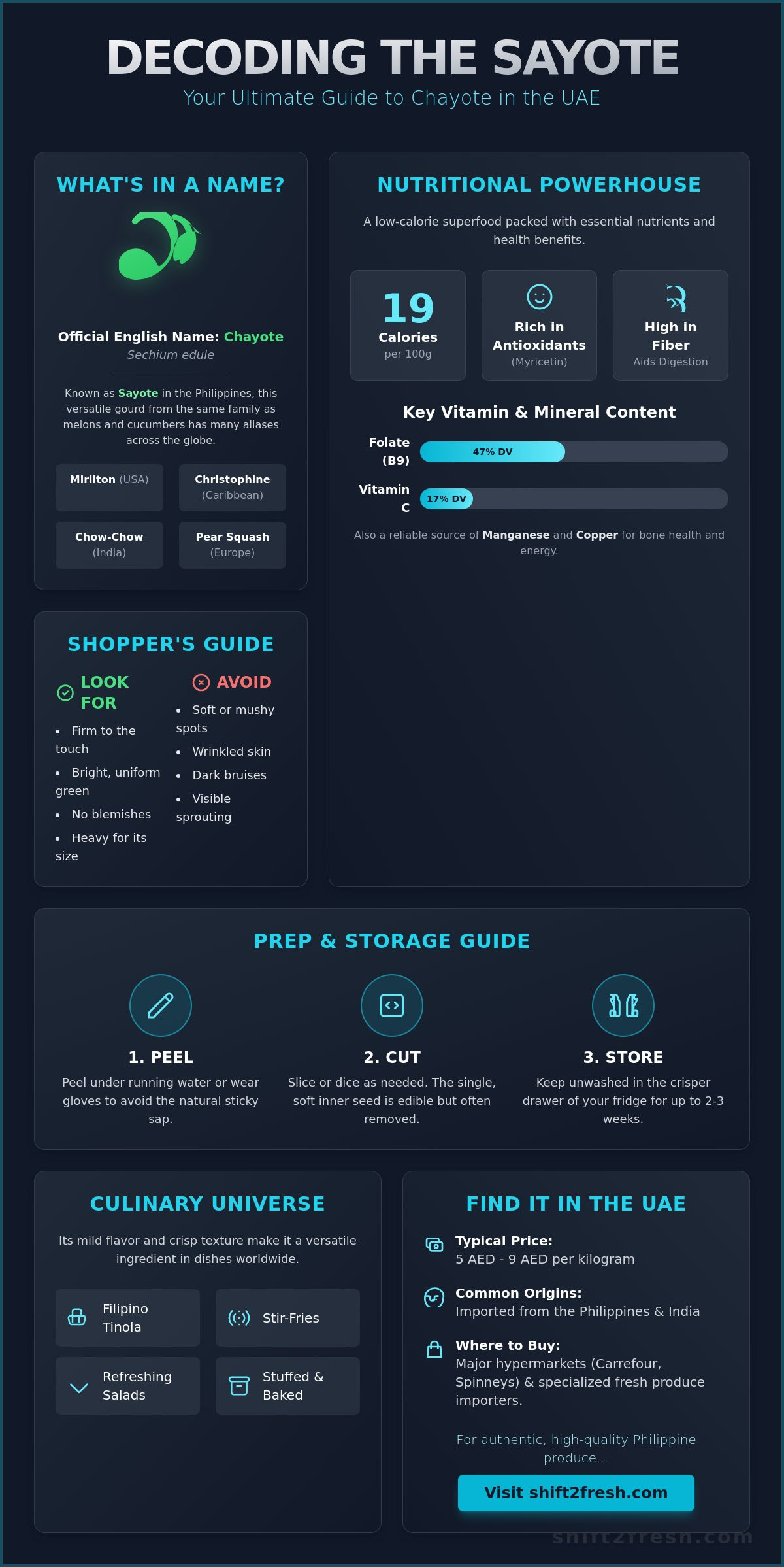
If you’re browsing the produce aisle in a Dubai supermarket and see a green, pear-shaped gourd labeled Chayote, you’ve found exactly what Filipinos call sayote. The most common term for sayote vegetable in english is Chayote (Sechium edule). While it originated in Central Mexico and Guatemala, it became a staple in Filipino, South Asian, and Latin American agriculture over centuries of trade. In the UAE market, you’ll typically find these imported from the Philippines or India, often priced between 5 AED and 9 AED per kilogram depending on the season.
This versatile ingredient belongs to the gourd family, Cucurbitaceae, making it a relative of melons, cucumbers, and pumpkins. You might hear people call it a mirliton or a vegetable pear because of its distinct shape and mild flavor. Understanding What is Chayote (Sayote)? helps clarify why it appears under so many different aliases. For instance, Indian expatriates in the UAE often refer to it as “chow-chow,” while those from the Caribbean might call it “christophine.” The name changes based on who’s cooking it, but the crisp, water-rich texture remains the same.
The Botanical Background of Sechium Edule
Botanically, sayote is classified as a fruit, though it’s almost exclusively treated as a vegetable in culinary contexts. It grows on vigorous perennial vines that can cover 10 to 15 square meters in a single season in tropical climates. Unlike many other gourds, every part of the plant is edible. Farmers in Southeast Asia often harvest the tender shoots and leaves for stir-fries, while the starchy roots can be eaten like potatoes. It’s a hardy plant that thrives in high humidity, which is why it’s so abundant in the mountainous regions of the Philippines.
Common English Names You Might Encounter
Depending on where you shop in the UAE, the labeling can be confusing. Here are the three most common English names you’ll see on price tags or in recipes:
- Chayote Squash: This is the standard term used in US and UAE supermarkets like Carrefour or Spinneys.
- Mirliton: You’ll see this name in Cajun and Creole recipes from the southern United States, where it’s often stuffed with seafood.
- Pear Squash: This descriptive name is common in European markets and highlights the fruit’s physical appearance.
Whether you’re making a traditional Filipino Tinola or a fresh salad, knowing the sayote vegetable in english name ensures you can find the right ingredient regardless of the store’s regional focus. Its ability to absorb flavors makes it a favorite for home cooks looking to add bulk and nutrition to their meals without overpowering other spices.
Nutritional Benefits: Why Sayote is a Superfood
Sayote is far more than a simple filler for stews and soups; it’s a dense source of nutrition that punches well above its weight. When you look for the sayote vegetable in english, you’ll find it widely referred to as chayote squash. This versatile plant is incredibly low in calories, containing just 19 calories per 100 grams. This makes it a perfect volume-eater’s dream. It provides a high concentration of fiber and antioxidants without the heavy caloric load of other starchy vegetables. One of its most impressive components is myricetin. This is a potent antioxidant that carries strong anti-inflammatory properties. It helps your body fight off oxidative stress, which is a major contributor to aging and chronic illness. Finding the sayote vegetable in english in local UAE markets is easy, and its benefits make it worth the search.
Heart health is another area where this vegetable shines. Regular consumption helps manage blood pressure by relaxing blood vessels and improving circulation. It also plays a role in managing cholesterol levels. For a comprehensive look at the nutritional benefits of chayote, experts point to its ability to support overall metabolic health. In the UAE, where lifestyle-related health concerns are a focus for many residents, adding sayote to your weekly meal plan is a smart, proactive choice for long-term wellness.
A Deep Dive into Vitamins and Minerals
The vitamin profile of sayote is particularly impressive for its variety. It offers about 17% of the daily value for Vitamin C, which is essential for skin elasticity and immune defense. It’s also a reliable source of Manganese and Copper. These minerals are the building blocks for strong bones and efficient energy production within your cells. Folate makes up nearly 50% of the daily value in one sayote, making it vital for DNA synthesis. This makes it an indispensable food for pregnant women or anyone focusing on cellular repair and growth.
Digestive and Weight Management Benefits
If you’re trying to manage your weight or improve your gut health, sayote is an excellent ally. It consists of roughly 93% water, which helps keep you hydrated and full. The high fiber content ensures that your digestive system moves smoothly, preventing bloating and constipation. Because it has a very low glycemic index, it doesn’t cause the rapid insulin spikes associated with high-carb foods. This makes it a perfect addition to a calorie-conscious Asian Vegetables diet. You can easily swap out heavier starches for sayote in your favorite recipes to reduce total calories while increasing nutrient density. If you’re ready to improve your kitchen habits, check out our fresh produce to find the best ingredients for your next healthy meal.
Culinary Uses: From Filipino Tinola to Global Salads
Sayote is a culinary chameleon. Its mild, slightly sweet profile makes it the perfect vessel for bold spices and savory broths. When you search for the sayote vegetable in english, you’ll discover it’s widely known as chayote. The texture is its most distinctive feature. It sits right between a crisp cucumber and a waxy potato. This unique quality means it won’t turn to mush in a long simmer, yet it remains refreshing when served raw.
The vegetable is prized for several reasons:
- Absorption: It picks up the flavors of garlic, ginger, and soy sauce effortlessly.
- Durability: It maintains its shape in high-heat stir-fries and slow-cooked stews.
- Versatility: It works in everything from spicy Mexican dishes to sweet dessert pies.
Traditional Filipino Recipes with Sayote
In Filipino kitchens across the UAE, sayote is indispensable. It’s the soul of Tinolang Manok. This ginger-infused chicken soup relies on the vegetable’s ability to absorb the spicy warmth of the ginger while providing a satisfying crunch. Many residents in Sharjah or Dubai use sayote as a practical alternative to green papaya. It’s often more accessible in local hypermarkets and offers a similar mouthfeel in traditional soups. You can easily integrate this vegetable alongside other Seasonal Filipino Fruits and vegetables to recreate the taste of home.
Ginisang Sayote is another staple. It’s a quick stir-fry featuring garlic, onions, and shrimp. It’s healthy, fast, and stays firm even after reheating. For many families living in the UAE, these dishes are more than just food; they’re a connection to cultural roots. Whether it’s a casual weeknight dinner or a festive gathering, it brings a familiar comfort to the table.
Global Ways to Prepare Chayote
The sayote vegetable in english is a global traveler with diverse applications. In Mexico, where it originated, it’s often halved, hollowed out, and stuffed with local cheeses or seasoned ground meat before being baked. Australian kitchens take a different approach. They often fry slices in butter or add them to heavy savory stews to provide bulk and nutrition. Some creative bakers even use it as a filler in “mock apple” pies because it mimics the texture of cooked fruit when paired with cinnamon and sugar.
If you want something lighter, use it raw. Thinly sliced sayote works beautifully in slaws. Toss it with fresh lime juice, a pinch of salt, and chili powder for a zesty side dish. Because it’s so versatile, knowing how to select and store chayote is vital for the best results. Look for firm, bright green skins without deep wrinkles or soft spots. In UAE markets, you’ll typically find these priced between 4 AED and 9 AED per kilogram. This price range makes it an affordable, nutrient-dense addition to any global recipe you want to try at home.
How to Choose, Peel, and Store Sayote
Finding the perfect produce in UAE supermarkets requires a keen eye for quality. When you’re searching for the sayote vegetable in english, look for fruits that feel heavy for their size. A heavy chayote indicates high water content and peak freshness. The skin should be a vibrant, bright green without any soft spots or large brown blemishes. If the skin has deep, woody wrinkles, the vegetable is likely older and will have a tougher, more fibrous texture after you cook it.
Handling this vegetable requires a specific technique because of its unique sap. Many varieties release a sticky, clear liquid when cut that can cause a mild tingling sensation or leave a thin film on your skin. To avoid this, try peeling the vegetable under cool running water or wear a pair of thin kitchen gloves. This simple step prevents the resin from sticking to your hands and makes the preparation process much cleaner.
The Peeling and Preparation Process
You don’t always need to remove the skin. If you’ve bought young, small sayote, the skin is tender and perfectly edible. It adds a nice bit of structure to quick stir-fries. However, for larger or more mature fruits, a standard vegetable peeler works best. Don’t discard the seed inside. The single, large seed is completely edible and offers a mild, nutty flavor that many people enjoy. You can slice the flesh into thin matchsticks for a crunchy salad or chop it into 2 centimeter cubes for traditional Filipino tinola or hearty vegetable stews.
Maximizing Freshness at Home
Proper storage is essential in the humid UAE climate to prevent premature spoilage. Place your sayote in the vegetable crisper drawer of your refrigerator where it can stay fresh for up to 14 days. It’s best to wrap the fruit in a dry paper towel before putting it in a reusable bag. This helps absorb excess moisture that often leads to mold. If you’ve bought a bulk supply, you can freeze it. Just ensure you blanch the pieces in boiling water for 2 minutes first to stop enzyme activity; otherwise, the texture becomes unpleasantly mushy when you thaw it later.
Watch for signs of spoilage like a slimy surface or dark internal browning. If the vegetable feels soft or hollow when squeezed, it’s past its prime. For the freshest local and imported produce delivered directly to your door, order your groceries from Shift2Fresh today. Keeping your kitchen stocked with fresh sayote vegetable in english is easy when you know how to pick the best ones from the batch.
Where to Buy Fresh Sayote in the UAE
Finding high-quality ingredients for a traditional Tinola can be a struggle when you live in the Middle East. While major supermarket chains in Dubai and Sharjah carry a wide variety of goods, finding authentic Filipino produce often feels like a treasure hunt. Many mainstream stores stock varieties that have spent weeks in transit or long-term cold storage, leading to a loss of flavor and texture. This is why many residents look specifically for the sayote vegetable in english, or chayote, from sources that understand the specific needs of the Pinoy kitchen.
Shift 2 Fresh has filled this gap by specializing in direct imports from the Philippines. By bypassing traditional multi-layered distribution networks, they ensure that seasonal vegetables don’t sit in warehouses for extended periods. This direct-to-consumer model means your sayote vegetable in english arrives at your door with the same crispness you would find at a market in Benguet or Cavite. It’s a reliable way to ensure your home-cooked meals maintain their authentic taste.
Why Source from Filipino Produce Specialists?
Choosing a specialist over a general retailer offers several advantages for your weekly meal prep. Freshness is the primary factor. General supermarkets often prioritize shelf life over taste, but specialists focus on the fast turnover of tropical goods. When you buy from experts, you’re also able to stock your pantry with essential Filipino ingredients that are rarely found in local corner shops. Trained staff at Shift 2 Fresh handle delicate items like sayote and leafy greens with care, preventing the bruising and wilting common in high-volume retail environments.
Convenient Delivery Across Dubai and Sharjah
Grocery shopping in the UAE heat is a chore that most people prefer to avoid. Shift 2 Fresh simplifies this process through a user-friendly website and a dedicated mobile app. You can browse the latest arrivals and place your order from your living room. The delivery infrastructure is built specifically for the local climate, using temperature-controlled vehicles to maintain the cold chain from the warehouse to your kitchen. You can shop fresh sayote and other Filipino favorites here to experience the convenience firsthand.
To help families manage their household budgets, there are several benefits to ordering in larger quantities:
- Free delivery options are available for bulk orders, which helps reduce the total cost per meal.
- Consistent delivery schedules allow you to plan your weekly menu without worrying about out-of-stock items.
- Access to seasonal bundles provides a variety of vegetables at a better value than buying individual pieces.
By using the app, you get real-time updates on your delivery status. This reliability ensures your sayote arrives exactly when you need it for your weekend cooking. It keeps your pantry stocked with the taste of home without the stress of navigating crowded aisles or settling for less-than-fresh alternatives in the local market.
Bring the Authentic Taste of Chayote to Your UAE Kitchen
You now understand that the sayote vegetable in english is widely known as chayote. This versatile superfood adds a unique crunch to traditional Filipino tinola and modern salads alike. It’s packed with essential nutrients that support heart health and digestion. Finding fresh, high-quality produce in the Middle East is now simpler than ever for your weekly meal prep.
Shift2Fresh leverages 45 years of food industry experience to bring you the best ingredients. We provide direct imports from the Philippines to ensure every vegetable meets strict quality standards. You’ll enjoy free delivery on all orders over AED 500 across the UAE. It’s time to stop searching and start cooking with the freshest ingredients available in the market today.
Order Fresh Sayote and Authentic Filipino Produce Today!
Your journey toward healthier, more flavorful meals begins with the right ingredients, so grab your fresh sayote now and enjoy a taste of home.
Frequently Asked Questions
Is sayote and chayote the same thing?
Yes, sayote is the Filipino name for the vegetable known as chayote in English and most Western countries. In the UAE, you’ll find it labeled as Chayote in major supermarkets like Carrefour or Lulu Hypermarket. It belongs to the gourd family, Cucurbitaceae, which also includes melons and cucumbers. This versatile sayote vegetable in english is a staple in both Southeast Asian and Latin American cuisines.
Can you eat sayote raw?
You can definitely eat sayote raw. It offers a crisp, crunchy texture that mimics water chestnuts or jicama. Many chefs in Dubai use thinly sliced raw chayote in salads or slaw to add a refreshing element to the plate. Since it’s 93 percent water, it’s incredibly hydrating during the hot summer months. Just peel the skin if it’s too thick and enjoy it with lime.
What does sayote taste like?
Sayote has a very mild, clean flavor that tastes like a mix of cucumber and zucchini with a subtle hint of sweetness. Because the flavor isn’t overpowering, it absorbs the spices and sauces of whatever dish you’re cooking. It’s a popular choice for Filipino tinola or stir-fries found in Satwa’s eateries. Its neutral profile makes it perfect for balancing spicy or salty ingredients in any recipe.
Is sayote good for weight loss?
Yes, sayote is an excellent food for weight loss because it’s very low in calories and high in fiber. A single fruit contains roughly 39 calories and provides about 3.5 grams of fiber, which is 14 percent of your recommended daily intake. This fiber content helps you feel full for longer periods. Including the sayote vegetable in english in your meal plan helps manage calorie intake without sacrificing volume.
Do I need to remove the seed from sayote?
You don’t have to remove the seed because it’s completely edible and has a pleasant nutty flavor when cooked. While many home cooks discard it for a uniform look in soups, others consider it a delicacy. If you’re making a smooth puree, removing the seed is better. However, in a standard sauté, keeping the seed adds an interesting texture to the 15 minute cooking process.
What is a good substitute for sayote in recipes?
Zucchini or green papaya are the best substitutes if you can’t find sayote at your local UAE grocer. Zucchini matches the mild flavor and soft texture when cooked, while green papaya provides the same firm crunch in raw preparations. Use a 1:1 ratio when swapping these vegetables in your recipes. These alternatives are widely available across the Emirates throughout the 12 months of the year.
0 comments