

What if the most rewarding meal you cook this week relies on a flavor balance you’ve never actually tried to replicate at home? Many home cooks in Dubai feel hesitant when they see unfamiliar produce like sitaw or calamansi in the supermarket aisles. You might worry that your attempt at a traditional stew will end up too salty or unpleasantly sour. Mastering filipino cooking for non-filipinos is easier than it looks once you understand the three pillars of the Pinoy palate. By 2026, the availability of niche ingredients in the UAE has surged, yet the specific techniques remain a mystery to many.
You’re about to discover how to balance those unique sweet, sour, and salty notes using fresh, authentic ingredients available across the Emirates. This guide provides a clear roadmap for your first successful Sinigang and teaches you how to identify every essential vegetable on your shopping list. We will explore the best local spots in Dubai to source your ingredients and give you the confidence to turn your kitchen into a hub of authentic Southeast Asian flavors.
Key Takeaways
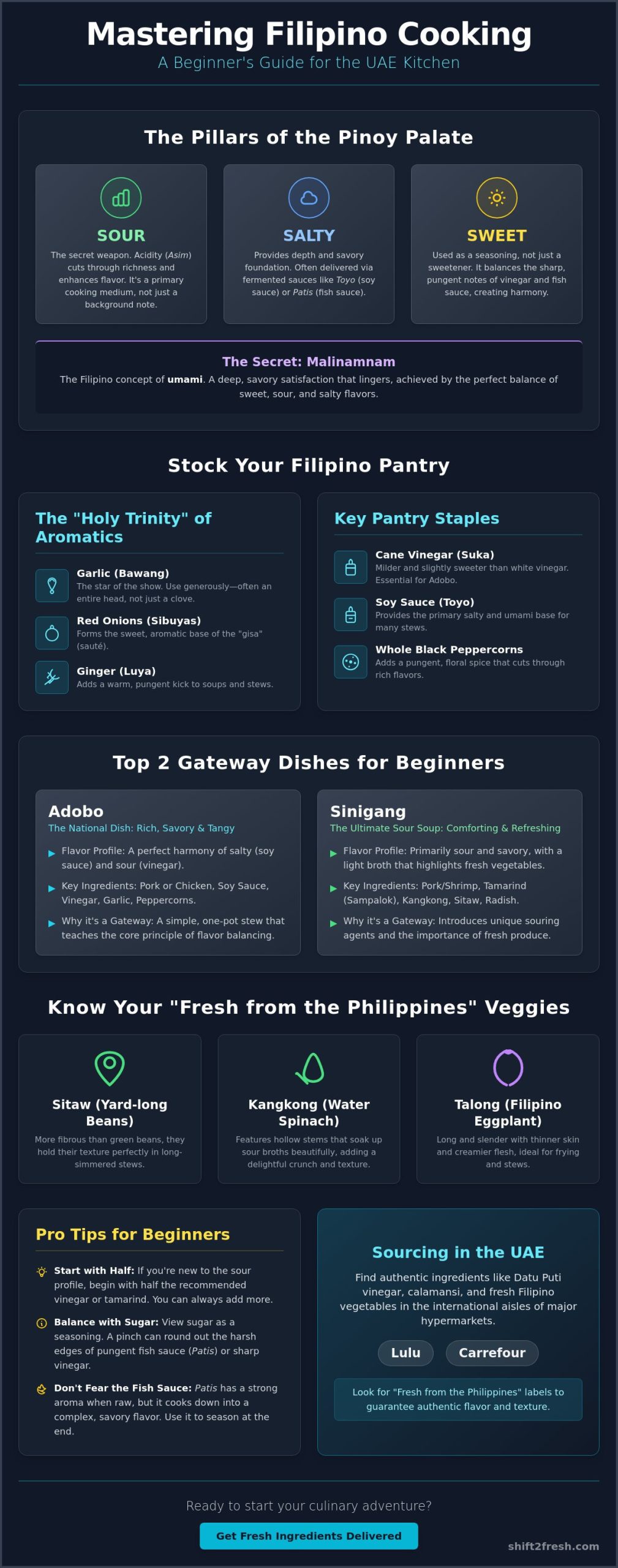
- Master the “sweet, sour, and salty” balance and the secret of “Malinamnam” to recreate authentic Filipino umami in your own kitchen.
- Stock your UAE pantry with the essential “Holy Trinity” of aromatics and key staples required for successful filipino cooking for non-filipinos.
- Get expert guidance on mastering “gateway” dishes like Adobo and Sinigang, which are designed to be foolproof for first-time cooks.
- Learn professional tips for balancing pungent ingredients like fish sauce (Patis) to ensure a perfectly seasoned, aromatic meal.
- Discover how to source premium, “Fresh from the Philippines” imported produce across the UAE to guarantee authentic flavour and texture.
What Makes Filipino Food Unique? Understanding the Flavour Profile
Filipino cuisine doesn’t follow the same rules as its Southeast Asian neighbors. While Thai food might lean heavily on chili heat or Vietnamese food on fresh herbs, the Philippine palate revolves around a complex “trinity” of sweet, sour, and salty flavors. This unique profile is the result of a long history of cultural exchange. You can find a comprehensive overview of Filipino cuisine that explains how indigenous Malay traditions blended with 333 years of Spanish colonization and centuries of Chinese trade. This fusion created a culinary identity that’s both familiar and exotic to the uninitiated.
For those starting their journey into filipino cooking for non-filipinos, the goal isn’t just to make food salty or sweet. It’s about achieving a specific balance. Native cooks often talk about “Malinamnam,” a concept that goes beyond simple taste. It describes a deep, savory satisfaction that fills the mouth and lingers after a meal. It’s the Filipino version of umami, but it’s often more robust and grounded in fermented ingredients and slow-cooked proteins.
The Role of Sourness in Filipino Dishes
Acidity is the secret weapon in any Filipino kitchen. It acts as a preservative in the tropical heat and serves as a vital flavor enhancer. Unlike Western cooking where vinegar is often a background note in a dressing, in the Philippines, it’s a primary cooking medium. This sourness, or asim, cuts through the richness of fatty meats like pork belly, which is a staple in many recipes.
- Natural Souring Agents: Traditional recipes use fruits like tamarind (sampalok), green mango, or the tiny, potent calamansi citrus.
- Vinegars: Cane, coconut, and palm vinegars each offer different levels of sharpness and sweetness.
- Palate Adjustment: If you’re used to milder flavors, start with half the recommended vinegar. In the UAE, you can find 1-liter bottles of Datu Puti cane vinegar at Lulu Hypermarket or Carrefour for approximately AED 6.50 to AED 9.00.
Sweet and Salty: The Perfect Counterpoints
The interplay between salt and sugar defines many of the most popular dishes. Savory stews often include a touch of brown sugar or fruit to round out the sharp edges of the salt. Salinity usually comes from Toyo (soy sauce) or Patis (fish sauce). These fermented liquids provide a layer of depth that salt alone cannot achieve. When mastering filipino cooking for non-filipinos, it’s helpful to view sugar as a seasoning rather than a sweetener. It bridges the gap between the pungent fish sauce and the sharp vinegar.
Malinamnam is the soul of Philippine gastronomy.
Essential Ingredients for Your First Filipino Kitchen
To master filipino cooking for non-filipinos, you must first stock your pantry with specific items that define the archipelago’s unique taste profile. It isn’t just about following a recipe; it’s about the specific chemical reaction between high-acidity vinegars and pungent aromatics. While many Western cuisines use garlic as a background note, Filipino dishes often make it the star. You’ll frequently use an entire head of garlic where other recipes might call for a single clove.
The “Holy Trinity” of Filipino aromatics consists of garlic, red onions, and ginger. These are sautéed together to form the “gisa,” the flavor base for everything from stews to stir-fries. Beyond the aromatics, your pantry needs three staples: cane vinegar, soy sauce, and whole black peppercorns. Cane vinegar is particularly important because it’s milder and slightly sweeter than synthetic white vinegar. In the UAE, brands like Datu Puti are widely available in the international aisle of major hypermarkets, often priced around 5.00 د.إ to 8.00 د.إ per bottle.
Fresh Vegetables You Need to Know
Authentic texture is just as important as flavor. Sitaw, or yard-long beans, are a primary example. They differ from standard green beans because they’re more fibrous and don’t get mushy during long simmering processes. Kangkong, or water spinach, is the ultimate leafy green for sour soups. It has hollow stems that soak up broth beautifully. For frying, always choose the long, slender Filipino eggplant (Talong). It has a thinner skin and creamier flesh than the bulbous Mediterranean varieties. You can explore these further in this guide to Essential Asian Vegetables for a deeper look at regional produce.
The Magic of Calamansi and Philippine Vinegar
Calamansi is a tiny citrus fruit that packs a massive punch. It tastes like a cross between a lime and a tangerine, offering a floral aroma that lemons simply cannot replicate. If you want true authenticity, don’t substitute lemon for calamansi. The juice is essential for “sawsawan” (dipping sauces) and marinades. Understanding how these acidic components interact with fats is a vital part of learning Filipino cooking techniques.
When choosing a vinegar for your braise, stick to cane or coconut varieties. Apple cider vinegar is often too fruity and lacks the sharp, clean finish required for a balanced Adobo. Using authentic Seasonal Filipino Fruits like mangoes or saba bananas for snacks will also help you understand the natural sweetness that balances the salty and sour notes of the main courses. If you’re looking to stock up, you can buy fresh Filipino ingredients through local specialty suppliers to ensure you’re getting the right varieties for your kitchen.
Top 3 Gateway Dishes for Beginners to Master
Mastering these three recipes provides a solid foundation for anyone exploring filipino cooking for non-filipinos. These dishes introduce the essential balance of salty, sour, and savory flavors that define the Pinoy palate. They rely on accessible ingredients found in major UAE supermarkets like Lulu, Spinneys, or Carrefour. For instance, a 500g pack of bihon noodles typically retails between 7 AED and 11 AED in 2024, making these meals affordable for any home cook.
Learning these classics helps you understand the core techniques of Filipino cuisine: braising, souring, and stir-frying. These methods are the building blocks for more complex recipes you might encounter later. By starting with these three, you’ll gain the confidence to host your first Filipino-themed dinner party in Dubai or Abu Dhabi with guaranteed success.
Mastering the Chicken or Pork Adobo
Adobo stands as the unofficial national dish because it’s incredibly forgiving for beginners. The “low and slow” braising technique is the secret here. By simmering meat in a mixture of soy sauce, vinegar, garlic, and peppercorns, you break down tough fibers to create a tender, savory masterpiece. This method ensures the flavors penetrate deep into the bone.
- The Vinegar Rule: A common mistake involves stirring the pot immediately after adding vinegar. You must let the vinegar “cook out” for at least 4 minutes without touching it. This allows the harsh acidity to mellow into a balanced tang.
- The Overnight Secret: Adobo tastes significantly better the next day. The oils and acids continue to tenderize the meat in the fridge, resulting in a deeper, more cohesive flavor profile.
Sinigang: The Art of the Sour Broth
Sinigang offers the ultimate introduction to Filipino vegetables like sitaw (long beans), labanos (daikon radish), and okra. While traditionalists might use fresh tamarind, most modern cooks in 2024 use tamarind paste or fresh calamansi juice for a consistent “sour kick.” The goal is a broth that makes your mouth water but remains refreshing.
Choosing your protein is the first step. Shrimp is a fast option, while salmon belly or pork ribs add a rich fattiness to the soup. You must layer your vegetables according to their cooking times. Add the hardy radish first, followed by the beans, and save leafy greens like kangkong or spinach for the final 60 seconds. This ensures every component maintains its distinct texture and color.
Pancit Bihon: The Crowd-Pleasing Noodle Dish
Pancit Bihon is the go-to starch for any Filipino celebration. This dish teaches you how to manage textures and moisture levels. You’ll soak thin rice sticks in water until they’re pliable, then toss them into a stir-fry of shredded chicken, cabbage, and carrots. It’s a versatile recipe that works for a quick weeknight dinner or a large gathering. The key is finishing the dish with a generous squeeze of fresh calamansi to brighten the savory soy notes. Mastering this noodle dish completes your basic repertoire of filipino cooking for non-filipinos, giving you a braise, a soup, and a starch to serve.
Common Challenges: Troubleshooting Filipino Flavours
The most frequent hurdle in filipino cooking for non-filipinos is the initial encounter with fermented ingredients. If you open a bottle of Patis (fish sauce) and feel overwhelmed by the pungent aroma, don’t throw it away. This “funk” is a culinary illusion. Once the liquid hits a hot pan or simmers in a broth, the sharp scent evaporates. It leaves behind a deep, savory umami profile that salt alone cannot replicate. In UAE supermarkets like Lulu or Carrefour, a 350ml bottle of quality Patis typically costs around 6.50 AED. It’s a small investment for a massive flavor payoff.
Balancing these strong profiles requires a steady hand. If you’re worried about over-salting, replace half of the required Patis with a pinch of sea salt until you’re comfortable with the intensity. When it comes to spice, the Siling Labuyo (bird’s eye chili) is the standard. These small peppers pack a punch of 80,000 to 100,000 Scoville Heat Units. If you prefer a milder experience, drop the chilies in whole rather than slicing them. This infuses the dish with a gentle warmth without releasing the searing oils from the seeds.
Managing Salt and Funk
The golden rule for fermented ingredients is to taste as you go. Patis and Bagoong (shrimp paste) continue to develop in saltiness as a liquid reduces. If your Adobo or Sinigang becomes too salty, don’t panic. You can mellow the dish by adding a splash of water or a small pinch of brown sugar to provide balance. It’s vital to distinguish between the two: Patis is a thin, salty liquid used for seasoning, while Bagoong is a thick, fermented paste used as a flavor base or a condiment. Using them interchangeably will ruin the texture of your sauce.
Texture and Presentation
Filipino food is traditionally served family style. This means large platters are placed in the center of the table for everyone to share. To get your stews right, aim for a consistency that’s saucy but not watery. If your sauce looks thin, let it simmer uncovered for an extra 10 minutes to concentrate the flavors.
The secret to a perfect meal lies in the “Sawsawan” or dipping sauce. This is a side bowl of vinegar, soy sauce, calamansi, or crushed garlic. It allows each person to customize the acidity and saltiness to their liking. Finally, remember that white Jasmine rice is the non-negotiable companion. The neutral, fluffy grains act as a canvas for the bold, vinegar-heavy sauces. Without it, the flavors can feel too aggressive for a beginner’s palate.
Ready to master these authentic techniques in your own kitchen? Explore our fresh ingredient kits to start your journey into Filipino cuisine today.
Sourcing Authentic Filipino Produce in the UAE
Finding the right ingredients is often the biggest hurdle when exploring filipino cooking for non-filipinos. While major supermarkets in Dubai and Sharjah carry a wide range of international produce, they often stock generic Asian varieties that don’t quite hit the mark. A standard eggplant found in a local hypermarket has a different texture and moisture content than the long, slender purple talong harvested in Luzon. This subtle difference can change the entire consistency of your Pinakbet or Tortang Talong.
Authenticity in Filipino cuisine relies heavily on specific acidity and sweetness levels found only in native cultivars. For example, substituting a standard lime for a kalamansi will result in a dish that lacks the floral aroma essential to Bistek Tagalog. Shift 2 Fresh solves this by importing produce directly from the Philippines. These “Fresh from the Philippines” imports ensure that home cooks in the UAE get the same nutritional value and flavor profile they would find in a Manila wet market. Using the right produce makes the transition to Filipino flavors much smoother for beginners.
From Farm to Dubai: The Shift 2 Fresh Difference
Shift 2 Fresh brings 45 years of agricultural and sourcing expertise to the UAE market. We understand that Filipino produce is highly seasonal. This means that delicacies like sweet Lansones or creamy Durian are only available during specific windows. We prioritize these seasonal harvests to bring a piece of the islands to your kitchen. To ensure your kitchen is fully equipped, you should also stock your pantry with essential Filipino ingredients like soy sauce and vinegar blends that complement our fresh vegetables.
Getting Started with Your First Order
The Shift 2 Fresh mobile app simplifies the shopping process for busy professionals. You don’t have to spend hours searching through crowded aisles for sitaw or labong. Our app allows you to browse the latest arrivals and have them delivered directly to your doorstep. We currently serve major residential zones across Dubai and Sharjah, ensuring that fresh produce arrives within peak freshness windows. Reliable logistics mean your malunggay leaves won’t wilt before they reach your pot. Authentic filipino cooking for non-filipinos starts with choosing the right Philippine Supermarket partner to supply your kitchen with genuine ingredients.
Bring the Heart of the Philippines to Your UAE Kitchen
Mastering the balance of sweet, sour, and salty is the secret to unlocking authentic tastes in your own home. You’ve learned how to identify essential ingredients and tackle common kitchen challenges. Now, you can confidently prepare gateway dishes like Adobo or Sinigang for your friends and family in Dubai or Abu Dhabi. In 2026, starting your journey into filipino cooking for non-filipinos is simpler when you have the right tools and produce. Shift 2 Fresh brings 45+ years of food industry experience to your doorstep. We source direct imports of seasonal Filipino fruits and vegetables to ensure you get the highest quality ingredients available in the UAE. Our user-friendly mobile app makes it easy to order everything you need in just a few taps. Start your Filipino cooking journey with fresh produce delivered to your door; Shop Shift 2 Fresh now! You’re ready to turn your kitchen into a vibrant hub of island flavours.
Frequently Asked Questions
Is Filipino food spicy for non-Filipinos?
Filipino cuisine isn’t naturally spicy compared to its Thai or Vietnamese neighbors. Most dishes focus on a balance of salty, sour, and sweet flavors rather than heat. While 85% of traditional recipes don’t use chilies in the base, you’ll often find “siling labuyo” or bird’s eye chilies served on the side as a condiment. This allows you to control the spice level according to your personal preference.
What is the best “first dish” to try cooking if I am new to the cuisine?
Chicken Adobo is the most recommended entry point for anyone starting with filipino cooking for non-filipinos because it uses familiar pantry staples. You only need five core ingredients: chicken, soy sauce, vinegar, garlic, and peppercorns. It’s a forgiving one-pot meal that demonstrates the classic Filipino technique of simmering meat in an acidic marinade until it’s tender and flavorful.
Can I substitute regular lemons for calamansi in recipes?
You can substitute lemons for calamansi using a 1:1 ratio, though the flavor won’t be identical. Calamansi is a small citrus fruit that’s more floral and sour than a standard lemon. To get closer to the authentic taste, mix two parts lemon juice with one part lime juice. In Dubai, you can find 500g bags of fresh calamansi for approximately 5.00 AED to 9.00 AED at most major hypermarkets.
What is the difference between Filipino soy sauce and regular soy sauce?
Filipino soy sauce, known as “toyo,” is saltier, darker, and more opaque than Japanese or light Chinese soy sauces. Brands like Silver Swan or Marca Piña are fermented for at least six months to create a concentrated flavor profile. This intensity is necessary because it serves as the primary seasoning for heavy meats. If you use a lighter soy sauce, you’ll likely need to add extra salt to achieve the same depth.
Why is vinegar so important in Filipino cooking?
Vinegar acts as a natural preservative and a crucial flavor balancer that cuts through the richness of fatty meats. In a tropical climate where temperatures often exceed 30 degrees Celsius, vinegar was historically used to keep food from spoiling without refrigeration. It defines the “asim” or sourness found in 70% of local stews. You’ll find it helps tenderize proteins while providing a bright contrast to salty components.
Where can I buy fresh Filipino vegetables like sitaw and kangkong in Dubai?
You can purchase fresh Filipino produce at West Zone Supermarket, which operates over 125 locations across the UAE. They specialize in Philippine imports and stock sitaw (long beans) and kangkong (water spinach) daily. For the best prices, visit the Waterfront Market in Deira. You’ll find a dedicated section for Asian vegetables where vendors sell fresh greens by the kilogram starting from 4.00 AED.
How long does it take to cook a traditional Filipino Adobo?
A standard batch of Chicken Adobo takes between 45 and 60 minutes from prep to plate. The actual simmering process requires 30 minutes for the chicken to cook through and absorb the marinade. Mastering this timing makes filipino cooking for non-filipinos a practical choice for busy weeknights. If you’re using pork, expect the cooking time to increase to 90 minutes to ensure the fat renders properly.
Is Filipino food healthy for those on a specific diet?
Filipino food can be very healthy if you focus on vegetable-heavy soups like Sinigang or Nilaga. A single serving of Sinigang contains roughly 4 grams of fiber from ingredients like okra, radish, and eggplant. While some festive dishes are fried, everyday home cooking relies on boiling and grilling. You can easily keep meals under 400 calories by choosing lean proteins and controlling your portion of white rice.
0 comments