

Last Tuesday, Sarah spent forty-five minutes scouring a high-end Dubai supermarket for the creamy, custard-like durian she first tasted in Thailand, only to find a single, bruised fruit priced at over 80 AED. You’ve likely felt that same disappointment when searching for authentic tropical flavors in the desert. It’s tough to find exotic produce that hasn’t lost its soul during a long shipping process. This guide to southeast asian fruits changes that by showing you how to source the freshest mangosteens, longans, and rambutans without leaving your home.
We’ll explore 12 must-try tropical treasures, their specific health benefits, and the secret to picking the perfect ripeness every time. You’ll also discover a reliable way to get these vibrant fruits delivered fresh to your doorstep in Dubai or Sharjah. From the spiked skin of the dragon fruit to the sweet segments of the pomelo, your journey into the heart of Southeast Asian flavors starts right here.
Key Takeaways
- Understand the unique “flavor triad” of intense sweetness, creamy textures, and pungent aromas that defines authentic tropical produce.
- Use this comprehensive guide to southeast asian fruits to master the nuances of regional delicacies like the creamy Durian and the succulent Mangosteen.
- Learn how to navigate the UAE import cycle to identify the freshest seasonal harvests traveling from Southeast Asian orchards to local markets.
- Discover how to boost your immunity and digestive health in the UAE climate using nutrient-dense tropical treasures like Calamansi and Guava.
- Find out how to source high-quality, authentic produce through a “Farm to UAE” connection backed by 45 years of industry expertise.
What Makes Southeast Asian Fruits Unique? An Introduction to Tropical Flavors
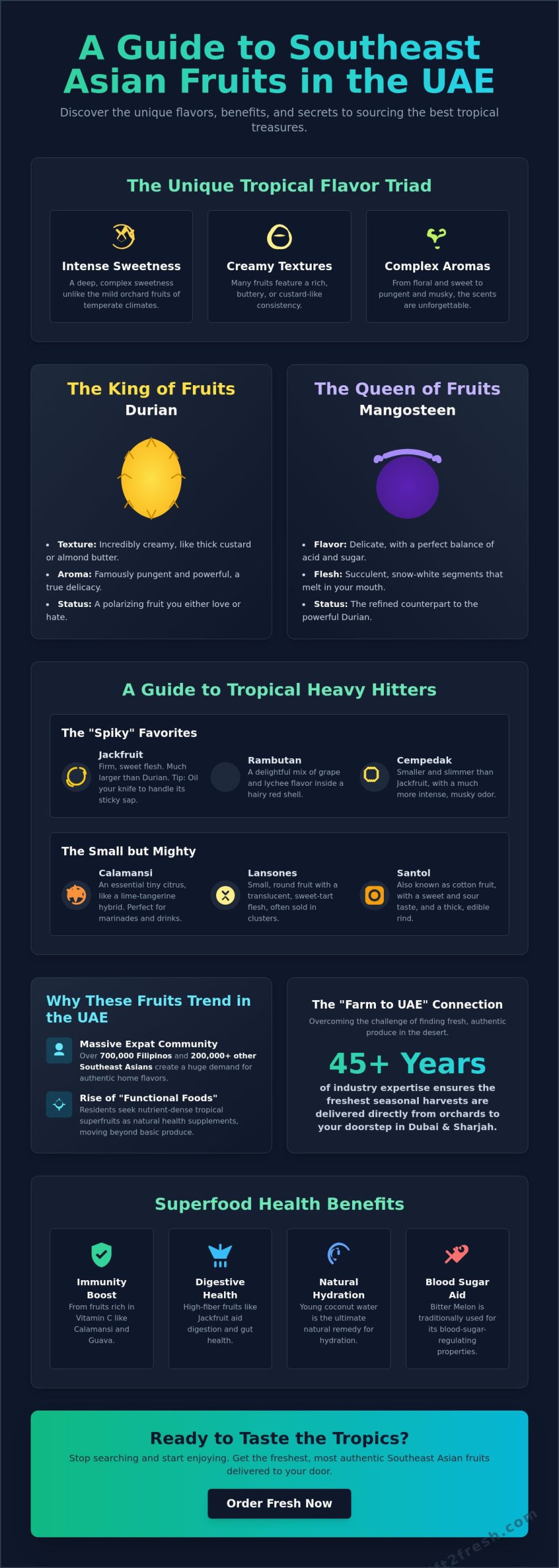
Southeast Asian fruits represent a vibrant category of produce originating from the humid, tropical climates of the Philippines, Thailand, Vietnam, and Indonesia. These regions provide the perfect environmental conditions for an extensive list of tropical fruits to thrive throughout the year. This guide to southeast asian fruits helps explain why these items stand out through a distinct “flavor triad.” This triad consists of intense sweetness, buttery or creamy textures, and complex, sometimes pungent aromas. These characteristics differ greatly from the mild profiles of temperate orchard fruits found in Europe or North America.
In the UAE, there’s a noticeable surge in demand for Seasonal Filipino Fruits. This interest often starts with the famous “King” and “Queen” of the region. The Durian, known as the King, offers a custard-like consistency with a smell so powerful it’s often restricted in public spaces in Asia. Its counterpart, the Mangosteen, is the Queen. It’s prized for its delicate, snow-white segments and a refined balance of acid and sugar. Together, they represent the extreme ends of the tropical flavor spectrum.
The Cultural Significance of Fruit in South Asia
Fruit is much more than a simple snack in Southeast Asian households; it’s a pillar of hospitality and celebration. During festivals or family visits, the tradition of “pasalubong” is vital. This involves bringing gifts, often fresh produce, to loved ones as a gesture of care. The Filipino expat community in Dubai keeps this tradition alive by sharing boxes of mangoes or calamansi during special gatherings. Beyond gifting, many of these fruits serve as functional ingredients in traditional wellness practices. For example, the bitter melon is frequently used for its perceived blood-sugar-regulating properties, while young coconut water is the go-to remedy for natural hydration.
Why These Fruits are Trending in the UAE
The UAE’s demographics play a massive role in this trend. With over 700,000 Filipinos and approximately 200,000 other Southeast Asians living in the Emirates as of 2023, the market for authentic produce has exploded. This shift is most visible in areas like Al Satwa in Dubai and various neighborhoods in Sharjah. The rise of gourmet food delivery Dubai platforms has bridged the gap between farm and table. Residents no longer need to visit specialized markets to find high-quality produce. Instead, they can order exotic superfruits that function as natural supplements. This move toward “functional foods” is a key reason why these tropical varieties are becoming permanent fixtures in UAE kitchens. This guide to southeast asian fruits shows that accessibility is finally matching the high local demand.
The Heavy Hitters: A Detailed Guide to Southeast Asian Fruit Varieties
The UAE has become a global hub for exotic produce, with shipments arriving daily at Dubai’s Al Aweer Fruit and Vegetable Market. This guide to southeast asian fruits explores the heavy hitters that have made the leap from tropical orchards to local supermarket shelves. These fruits offer a sensory experience that differs significantly from standard apples or oranges.
The “Spiky” Favorites: Durian, Jackfruit, and Rambutan
Durian is often called the “King of Fruits” for its intimidating thorns and pungent aroma. While the smell is strong, the texture is incredibly creamy, similar to a thick custard or almond butter. It’s a polarizing delicacy that you either love or hate. Jackfruit (Langka) is often confused with Cempedak, but you can tell them apart by size and smell. Jackfruit is much larger, sometimes weighing over 30 kilograms, and has a firmer, sweeter flesh. Cempedak is smaller, slimmer, and possesses a much more intense, musky odor. The flavor of Rambutan is a mix of grape and lychee. When you’re dealing with fresh Jackfruit, remember to coat your knife and hands in a little bit of cooking oil. This prevents the sticky, white latex sap from ruining your utensils.
The Small but Mighty: Calamansi, Lansones, and Santol
Calamansi is the essential Filipino Pantry Item for any kitchen in the UAE. This tiny citrus fruit packs a punch, acting as a cross between a lime and a tangerine. It’s used in everything from marinades to dipping sauces. Lansones, also known as Longkong, are highly seasonal. You’ll usually find the sweetest bunches between August and November. Look for skins that are clear and yellowish; dark spots often indicate the fruit is overripe. Then there’s the Santol, or Cotton Fruit. Eating this requires a specific technique. You suck the fluffy, white pulp off the seeds to enjoy the sweetness, but you must never swallow the seeds themselves. The outer rind is often sour and works well in savory Filipino dishes. If you want to try these authentic flavors, you can order fresh tropical produce for home delivery.
Exotic Gems: Dragon Fruit, Snake Fruit, and Soursop
Dragon Fruit, or Pitaya, is a staple in this guide to southeast asian fruits because of its striking appearance. The white-fleshed variety is the most common, while the red-fleshed version is sweeter and contains more antioxidants. The yellow variety is the rarest and sweetest of the three. Salak, known as Snake Fruit due to its scaly, reddish-brown skin, offers a surprising crunch. Its texture is dry and firm like an apple, with a flavor profile that hints at pineapple and lemon. Finally, Soursop (Guyabano) is prized for its creamy white interior and its reputation as a wellness superfruit. A 2023 study on tropical nutrients highlighted its high Vitamin C and potassium content, making it a popular choice for smoothies and juices in Dubai health cafes.
Seasonality and Sourcing: How to Find the Freshest Produce in the UAE
Getting tropical produce from the orchards of Davao to the markets of Sharjah involves a complex 7,000-kilometer journey. Most high-quality fruits arrive via air freight to minimize time spent in transit. This logistics choice is vital for preserving the high sugar content and delicate textures of Southeast Asian varieties. Specialized importers bridge the gap between freshness and food miles by using strict temperature-controlled environments. When you’re looking for the best quality, identifying a philippine supermarket that prioritizes air-flown stock is your best bet for authenticity.
Don’t just grab the first fruit you see on the shelf. Check the weight; a heavy fruit usually means it’s juicy and hasn’t dried out during shipping. Skin tension is another vital indicator. For example, a Mangosteen should have a slight give when pressed, not be rock hard. Aroma cues are essential too. A ripe Jackfruit or Durian will emit a strong, sweet scent even through its thick skin. This guide to southeast asian fruits helps you navigate these sensory markers to ensure you get your money’s worth in every bag.
The UAE Seasonal Calendar for Asian Fruits
Summer marks the peak for many favorites in the Emirates. From May to August, you’ll find the highest availability of Philippine Mangoes, Durian, and Mangosteen. Winter months shift the focus toward citrus like Calamansi or various root-based produce. Because these fruits are imported in limited batches, they often sell out within 24 to 48 hours of arrival at the warehouse. If you see them in stock, order immediately. Waiting even one day might mean missing out until the next shipment arrives 14 days later.
Online vs. Physical Markets in Dubai and Sharjah
Traditional wet markets in Deira or Sharjah offer a sensory experience, but they can be hit or miss regarding temperature control. Using an online supermarket dubai is often better for delicate items like Guyabano or Lanzones. These fruits bruise easily and suffer quickly in the heat. A reliable grocery delivery near me service uses refrigerated vans to maintain a consistent 4 to 8 degrees Celsius. This specialized handling prevents the rapid fermentation that happens when tropical fruits hit the 40-degree UAE summer air.
From Superfood to Table: Health Benefits and Culinary Inspiration
Eating according to this guide to southeast asian fruits does more than just satisfy a craving for exotic flavors; it provides a targeted nutritional boost that’s particularly useful for those living in the UAE. The intense summer heat and dust storms can tax the immune system. Calamansi and Guava serve as natural defenses here. A single guava contains over 200mg of Vitamin C, which is nearly four times the amount found in an orange. This high concentration helps repair skin tissue damaged by UV exposure and supports respiratory health.
Digestive wellness is another major advantage. Many tropical fruits and Asian Vegetables are packed with soluble fiber. This helps regulate blood sugar and keeps the gut healthy in a region where processed “on-the-go” meals are common. For a traditional flavor experience, try the Filipino pairing of green mango with Bagoong (fermented shrimp paste). The salty, umami kick of the paste balances the sharp acidity of the unripe fruit, creating a snack that replenishes electrolytes lost through perspiration.
The Nutritional Profile of Tropical Superfruits
Mangosteen is often called the queen of fruits because its rind contains high levels of xanthones, which are powerful antioxidants that fight cellular inflammation. Athletes and elderly residents in the UAE often turn to Durian for its dense nutrient profile. With roughly 436mg of potassium per 100g, it supports muscle function and provides a sustained energy release. If you’re focusing on weight management, Dragon fruit and Longan are excellent low-calorie choices. Dragon fruit offers roughly 60 calories per 100g, making it a filling snack that won’t exceed your daily caloric goals.
Simple Recipes and Serving Suggestions
You don’t need to be a professional chef to enjoy these ingredients. Making a DIY Halo-Halo at home is easy when you have the right Filipino Pantry Items like kaong and nata de coco. Just layer shaved ice, evaporated milk, and your favorite fruits in a tall glass. For a quick UAE summer refresher, squeeze five Calamansi into a liter of cold water and add a teaspoon of local honey. When you follow a comprehensive guide to southeast asian fruits, you’ll discover that Soursop is a powerhouse for smoothies, while Ube provides a natural, vibrant purple hue for desserts without artificial dyes. If you want something savory, use young Jackfruit to make Ginataang Langka. The fruit’s fibrous texture mimics pulled meat perfectly when simmered in coconut milk.
Shift 2 Fresh: Your Direct Connection to the Best of Southeast Asia
Shift 2 Fresh leverages 45 years of food sourcing history to bridge the gap between Southeast Asian farms and your table in the UAE. Our “Farm to UAE” promise is a logistics system designed for speed and quality. We’ve spent decades perfecting the supply chain so that delicate fruits like calamansi or lanzones arrive in your kitchen without losing their unique flavor profiles. Operating from our central hub in Sharjah, we serve the entire country with a focus on freshness that standard retailers cannot match. We understand that finding a reliable guide to southeast asian fruits is about more than just names; it is about knowing exactly where your food comes from.
Our commitment to quality starts at the source. We don’t just buy from wholesalers; we maintain active partnerships with growers who prioritize traditional farming methods. This allows us to monitor the fruit from the moment it is picked until it reaches our Sharjah facility for final inspection. By managing every step, we ensure that the vibrant colors and rich textures of the tropics are preserved during the journey to the Emirates.
Why We Are Different from Traditional Supermarkets
Most local supermarkets prioritize shelf life over flavor, often stocking generic varieties that lack the punch of true tropical produce. We take a different approach by sourcing specialty items that rarely make it to the big chains. Our staff are trained experts who know how to identify the highest grade of Online Supermarket produce. We look for specific indicators of ripeness and sugar content that others might overlook.
- Direct Farmer Relationships: We work directly with Filipino farmers to ensure fair trade and ethical sourcing.
- Specialty Focus: Our inventory includes hard-to-find items like premium durian and authentic Philippine mangoes.
- Quality Control: Every batch undergoes a rigorous multi-point check at our Sharjah operations center.
By bypassing typical wholesale delays, we cut down the time between harvest and delivery. This direct connection supports local farming communities while guaranteeing that your fruit is harvested at peak ripeness.
How to Order Your Tropical Favorites Today
Ordering is easy through the Shift 2 Fresh mobile app. It’s built for speed, allowing you to fill your cart and schedule a delivery in minutes. We provide free shipping for all orders exceeding AED 500, which is perfect for families or those hosting a weekend feast. Along with fresh produce, you will find a massive selection of pantry staples to round out your shopping. Whether you need soy sauce, noodles, or specific seasonings, we have everything required to complement your guide to southeast asian fruits and traditional recipes.
Our delivery team operates with precision to ensure your order arrives in temperature-controlled vehicles. This is vital for maintaining the integrity of tropical fruits in the UAE climate. You can track your order in real-time and choose delivery slots that fit your busy schedule. We make it simple to stock your home with the authentic flavors you miss the most.
Don’t settle for bland alternatives. Experience the real taste of the tropics with a curated fruit basket tailored to your preferences. Browse our latest arrival of seasonal fruits and vegetables here!
Bring the Tropics to Your UAE Kitchen
You’ve explored the vibrant world of tropical flavors, from the creamy texture of durian to the sweet tang of calamansi. This guide to southeast asian fruits proves that you don’t have to travel thousands of miles to enjoy authentic, nutrient-dense produce that supports your well-being. Finding these gems in the United Arab Emirates requires a reliable partner who understands the delicate nature of tropical shipping and logistics.
Shift 2 Fresh brings 45 years of food industry experience to your doorstep, ensuring every mango and mangosteen meets high quality standards. They specialize in authentic Filipino produce, filling a vital gap for expats and adventurous foodies across the Emirates. You’ll even receive free delivery on all orders over AED 500, making it simple to stock up on your favorites. Start your tropical journey now and taste the difference that direct sourcing makes for your family.
Order your fresh Southeast Asian fruits from Shift 2 Fresh today!
Frequently Asked Questions
What is the most popular Southeast Asian fruit in the UAE?
The Philippine Mango is the most popular Southeast Asian fruit in the UAE, representing a significant portion of tropical fruit imports during the peak season from March to June. Its sweet, buttery texture makes it a top seller in Dubai markets. This guide to southeast asian fruits highlights how its popularity stems from the large expatriate population that values authentic flavors from their home countries.
Can I get fresh Durian delivered in Dubai?
You can get fresh Durian delivered directly to your doorstep in Dubai through Shift 2 Fresh. They source premium varieties like Musang King and D101, ensuring the fruit arrives chilled and ready to eat. Most orders arrive within 24 hours, depending on your specific neighborhood. It’s a convenient way to enjoy this pungent delicacy without searching through multiple physical specialty grocers.
How do I know if a Mangosteen is ripe and fresh?
To know if a Mangosteen is ripe, press the purple outer shell gently; it should yield slightly to pressure without being mushy. If the shell is rock hard, the fruit is likely overripe or damaged inside. Check the sepals on top. Fresh fruit has vibrant green leaves, while brown or brittle leaves indicate the fruit was harvested more than 10 days ago.
Are Southeast Asian fruits available year-round in the UAE?
While many items in this guide to southeast asian fruits are seasonal, several varieties are available year-round in the UAE due to alternating harvest cycles in Thailand and Vietnam. For example, Dragon Fruit and Longan frequently appear on shelves throughout all 12 months. However, peak quality for specialty items like Mangosteen or Rambutan usually occurs between May and September when harvests are at their highest volume.
What are the health benefits of eating Soursop (Guyabano)?
Soursop provides 20 milligrams of Vitamin C per 100-gram serving, which significantly supports a healthy immune system. It contains high levels of antioxidants and dietary fiber that aid digestion and gut health. Many residents in the UAE consume it to help manage blood pressure, as a single fruit contains approximately 600 milligrams of potassium. It’s also a great source of natural energy.
Does Shift 2 Fresh deliver to Abu Dhabi or only Sharjah and Dubai?
Shift 2 Fresh delivers to Abu Dhabi, Sharjah, and Dubai, providing comprehensive coverage across the major emirates. You don’t have to worry about location restrictions since their logistics network spans the entire country. They maintain a strict cold chain process to ensure the fruit stays at 4 degrees Celsius during the transit from the warehouse to your home or office address.
How should I store exotic fruits like Rambutan to keep them fresh?
Store Rambutan in a perforated plastic bag inside the refrigerator’s crisper drawer to keep them fresh for up to 5 days. Keeping them at room temperature in the UAE’s humidity causes the hairy spines to turn black within 48 hours. If you need them to last longer, you can peel the fruit and freeze the white pulp in an airtight container for 6 months.
Is Calamansi the same as a regular lime?
Calamansi isn’t the same as a regular lime; it’s a hybrid between a citrus fruit and a kumquat. It’s much smaller, typically measuring 25 to 35 millimeters in diameter, and has a thinner peel that turns orange when fully ripe. While regular limes are purely acidic, Calamansi offers a unique aromatic profile that is both sour and slightly sweet, making it perfect for dipping sauces.
0 comments