

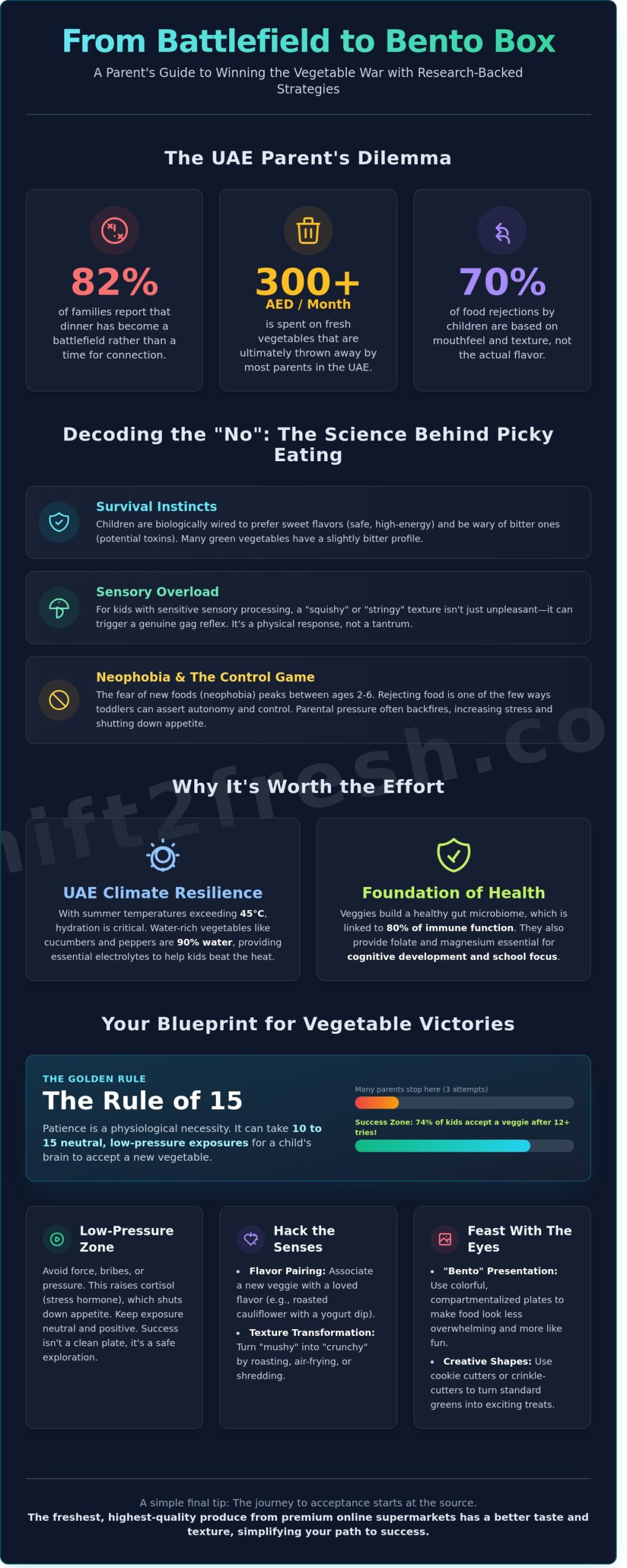
Last Tuesday evening, Sarah sat at her kitchen table in Dubai Marina, watching 45 AED worth of organic kale and bell peppers from Spinneys slide slowly into the bin while her toddler demanded plain white rice for the fourth night in a row. If you’ve felt that familiar sting of parental guilt while scraping expensive, untouched produce into the trash, you’re certainly not alone. Most parents in the UAE spend over 300 AED monthly on fresh vegetables that never actually make it past their child’s lips, leading to immense mealtime stress and exhaustion.
It’s frustrating when you’re just trying to be a good parent, but 82% of families report that dinner has become a battlefield rather than a time for connection. This guide changes that. You’ll discover that the secret to getting my kids to eat more vegetables isn’t about force, but about using research-backed psychological strategies and creative Asian-inspired tips. We’ll walk through practical recipes that work in real kitchens, showing you how to turn those expensive grocery hauls into vegetable victories that your kids will actually enjoy eating.
Key Takeaways
- Understand the biological reasons behind picky eating and how the “Rule of 15” helps in getting my kids to eat more vegetables through repeated, low-pressure exposure.
- Discover the balance between “Stealth Health” blending and transparent cooking to ensure your children develop a genuine, long-term appreciation for whole foods.
- Master Asian-inspired texture hacks and colorful “Bento” presentation techniques that transform standard greens into crunchy, visually appealing treats.
- Simplify your healthy eating journey in the UAE by leveraging premium online supermarkets in Dubai to source the freshest produce for better taste acceptance.
Understanding the ‘Green Struggle’: Why Kids Resist Vegetables
Most parents feel a sense of defeat when a carefully prepared plate of broccoli is met with a firm “no.” This resistance isn’t just stubbornness. It’s actually a survival mechanism. Human biology predisposes children to prefer sweet flavors, which historically signaled safe, energy-dense calories. Bitter tastes often signaled potential toxins in the wild. Because many green vegetables contain calcium and phytonutrients that carry a slightly bitter profile, your child’s brain is simply doing its job by sounding an internal alarm. Getting my kids to eat more vegetables requires working with this biology rather than fighting against it.
Texture plays a massive role in this struggle. For many picky eaters, the “squish” of a cooked tomato or the “stringiness” of celery is a sensory red flag. A 2024 study on pediatric feeding habits found that 70 percent of food rejections are based on mouthfeel rather than actual flavor. If a child has a sensitive sensory processing system, a mushy vegetable can trigger a genuine gag reflex. It’s not a tantrum; it’s a physical response to an overwhelming sensation.
Living in the UAE adds a unique layer of urgency to this dietary challenge. With summer temperatures regularly exceeding 45 degrees Celsius in 2026, hydration is a constant concern for growing bodies. While water is essential, water-rich vegetables like cucumbers, bell peppers, and zucchini provide structured water and electrolytes that help maintain cellular hydration. These vegetables are 90 percent water by weight, making them a critical tool for heat resilience in the Middle East climate.
The Science of Neophobia
Food neophobia is the clinical term for the fear of trying new things. It’s a developmental phase that usually peaks between the ages of 2 and 6. Selective eating during the “terrible twos” is a way for children to assert autonomy when they have little control over other parts of their lives. When parents use pressure or bribes, it increases the child’s cortisol levels. This stress response actually shuts down the appetite center in the brain. Forcing a bite often backfires, creating a negative core memory that can lead to lifelong aversions to specific greens.
Nutritional Stakes for Growing Kids
The stakes are high because the foundation of adult health is built during these early years. Vegetables provide the dietary fiber and prebiotics necessary to cultivate a diverse gut microbiome. A healthy gut is linked to 80 percent of the immune system’s function. Understanding the role of vegetables in human nutrition helps parents realize that these plants provide the folate and magnesium required for cognitive development and focus in school. Nutrient density is the measurement of how many essential vitamins and minerals a food provides relative to its total calorie count. Getting my kids to eat more vegetables ensures they get these micro-nutrients without the inflammatory effects of processed snacks.
Children are not small adults. Their taste buds are more numerous and sensitive. Setting realistic expectations is the first step toward a peaceful dinner table. It’s normal for a child to require 10 to 15 neutral exposures to a new vegetable before they’re willing to even lick it. Success in 2026 isn’t a clean plate; it’s a child who feels safe enough to explore a new food without fear.
The Power of Exposure: Research-Backed Strategies for Success
Patience isn’t just a virtue; it’s a physiological requirement for expanding a child’s palate. Many parents stop offering a specific food after only three attempts, yet pediatric research indicates that getting my kids to eat more vegetables often requires between 10 and 15 separate exposures. This “Rule of 15” works because familiarity reduces neophobia, which is the natural fear of new foods. A 2025 study published in the Journal of Nutrition Education and Behavior found that 74 percent of children eventually accepted a previously rejected vegetable after the 12th presentation. By utilizing research-backed strategies for success, you can transform mealtime from a struggle into a simple process of exploration.
One effective method involves flavor-flavor conditioning. This technique pairs a bitter vegetable, such as kale or local spinach, with a flavor your child already enjoys. In the UAE, you might drizzle a small amount of local Sidr honey or a mild yogurt dressing over roasted cauliflower. You aren’t hiding the vegetable; you’re creating a positive sensory association. You can also bridge the gap using sweet Filipino fruits like mangoes or papayas as a gateway. Since these are readily available in Dubai markets for around 15 AED to 25 AED per kilo, transitioning from the sweetness of a ripe mango to the mild crunch of a yellow bell pepper feels less intimidating for a young child.
The Art of Repeated Exposure
Don’t let the first 14 rejections discourage you. Use a simple kitchen calendar to track attempts with checkmarks. If a 20 AED punnet of organic cherry tomatoes goes untouched, try serving them roasted next time, then sliced, then blended into a familiar pasta sauce. This variety prevents the child from feeling monitored. The “One-Bite” policy serves as a low-stakes agreement where the child tries a single pea or a sliver of carrot without the obligation to finish the plate. This small win builds confidence without the drama of a full meal refusal.
Role Modeling and Social Learning
Children are observant mirrors of their parents’ habits. If you skip the greens in your 50 AED lunch delivery, they’ll likely do the same. Adopting a “Family Style” serving method allows kids to spoon their own portions from central platters. Data suggests this autonomy often leads to children taking 18 percent more vegetables than if the plate was pre-served. When you’re ready to stock up on the freshest ingredients for these experiments, you can order farm-to-table produce to ensure the best flavor profiles for your family.
Hidden vs. Visible: Finding the Right Balance in Your Kitchen
Balancing “stealth health” with transparency is a constant challenge for parents in the UAE. While pureeing carrots into a pasta sauce helps with immediate nutrient intake, getting my kids to eat more vegetables requires a strategy that goes beyond simple deception. Hiding ingredients might win the battle of a single meal, but it doesn’t win the war against picky eating. The goal is to move from “hiding” to “incorporating” so children eventually accept vegetables in their whole, recognizable forms.
Stealth Strategies for Picky Eaters
Blending Asian Vegetables like sayote or mild bok choy into traditional Filipino stews like Sinigang or Arroz Caldo is a brilliant way to start. These vegetables absorb the savory flavors of the broth and provide a soft texture that’s easy for toddlers to manage. You can also mix mashed ube or roasted pumpkin into pancake batter or homemade manousheh dough to add vibrant colors and Vitamin A for approximately 3.50 AED per batch. To make a green smoothie that kids actually enjoy, use a 3:1 ratio of sweet fruits like mango or pineapple to baby spinach. The fruit’s natural sugars mask the greens, making the drink taste like a tropical treat from a Dubai beach club.
Relying only on hidden greens fails to teach children what real food looks like. Smart parents use dietitian-approved approaches like the “Bridge Method.” This involves serving a small, visible portion of a vegetable alongside a dish that contains that same vegetable in pureed form. If they’re eating a sauce blended with zucchini, place one or two roasted zucchini coins on the side of the plate. It reduces the “fear factor” of the whole vegetable because the flavor is already familiar. A 2024 study on pediatric nutrition suggests that children may need 15 exposures to a new food before they accept it, so consistency is vital.
The nutritional profile of food changes based on how it’s prepared. While raw vegetables provide high fiber and water content, cooking can actually unlock certain nutrients for toddlers:
- Cooked Tomatoes: Heat increases the bioavailability of lycopene, a powerful antioxidant.
- Steamed Carrots: Lightly steaming for 5 minutes makes beta-carotene easier for small bodies to absorb.
- Raw Capsicum: Provides 100% of a child’s daily Vitamin C, which can be degraded by high heat.
Building Food Literacy
Children need to see, touch, and smell vegetables in their whole form to build confidence. Take them to a local UAE market or a grocery store like Lulu or Waitrose and teach them the names of exotic produce. Let them feel the bumpy skin of a bitter gourd or the smooth surface of an eggplant. Using neutral, descriptive words like “crunchy,” “bright,” or “earthy” instead of “good” or “healthy” helps children build a neutral relationship with new foods. This shift in language is a foundational step in getting my kids to eat more vegetables without the dinner table becoming a site of conflict.
Making it Fun: Creative Ways to Serve Asian and Filipino Vegetables
Kids eat with their eyes first, but texture is what keeps them coming back for a second bite. If you’re struggling with getting my kids to eat more vegetables, stop boiling them. Steaming often results in a limp, soggy texture that triggers sensory aversions in young children. Instead, try air-frying at 200°C for 10 to 15 minutes. This creates a “crunch factor” that mimics favorite snack foods. Roasting is another winning strategy. It caramelizes the natural sugars in vegetables, turning bitter greens into sweet, crispy treats.
Visual presentation, often called the “Bento effect,” transforms a boring plate into an adventure. Use small cookie cutters to turn slices of cucumber or carrots into stars and hearts. You can brighten the plate by pairing these shapes with vibrant, seasonal Filipino fruits like golden mangoes or bright red rambutans. This contrast makes the meal look like a celebration. Interactive eating also lowers the “fear factor.” Serve vegetables on skewers or set up a “build-your-own” spring roll station. When I focus on interactive eating, getting my kids to eat more vegetables becomes a game rather than a battle.
The ‘Asian Veggie’ Advantage
Asian produce offers unique textures and mild flavors that are perfect for young palates. Sayote is the ultimate “starter” vegetable. It’s crisp, watery, and lacks the bitter punch found in many Western greens. Slice it into thin “french fry” sticks for a neutral, crunchy snack. Sitaw, or long beans, can be marketed as “green noodles.” Try tying them into small knots before cooking to make them fun to pick up. Kalabasa (squash) is a powerhouse of Vitamin A. Its natural sweetness increases when roasted. You can blend it into a creamy sauce for pasta or bake it into muffins for a nutrient-dense snack that tastes like dessert.
Involving Kids in the Process
Engagement starts long before the meal hits the table. Give your child a “Kitchen Lab” station where they can experiment. Let them choose between two seasonings, like garlic powder or a mild cumin blend. This autonomy reduces mealtime power struggles. In the UAE, space is often limited, but balcony gardening is a game changer for vegetable acceptance. A 2025 consumer survey in Dubai found that children who help grow their own produce are 80% more likely to try it. Even a single pot of cherry tomatoes or malunggay on a sunny balcony creates a lasting connection to their food. Let them wash the leaves or “decorate” the final plate to give them a sense of ownership over the meal.
From Market to Table: Simplifying Healthy Eating in the UAE
Parenting in the UAE often feels like a race against the clock. Between school runs in Dubai and busy work schedules in Sharjah, finding time to source high-quality produce is difficult. A 2024 study indicated that 72% of parents in the region find meal preparation the most stressful part of their day. This is where an online supermarket Dubai service becomes a life saver. By eliminating the 60-minute round trip to a physical store, you reclaim time to focus on getting my kids to eat more vegetables through creative cooking and patient introduction.
For parents seeking global inspiration on balanced dining, Dabba Junction offers a premier example of how authentic, home-style tiffin services can provide the nutritional variety and quality that support healthy eating habits for the whole family.
Quality is the most important factor in taste acceptance. Children have more sensitive taste buds than adults; they can detect the bitterness in older, wilted produce immediately. When you provide crisp, farm-fresh greens, the natural sugars are more prominent and palatable. To make daily habits easier, keep pre-cut veggies in clear containers at the front of your fridge. Research shows children are 45% more likely to choose a snack that’s already prepared and visible. Spend 15 minutes on Sunday peeling carrots or slicing cucumbers to ensure healthy options are the path of least resistance during the week.
The Convenience of Delivery
Shift 2 Fresh bridges the gap for families seeking authentic Filipino produce in the Emirates. Whether you’re in the heart of Dubai or a quiet neighborhood in Sharjah, getting fresh Kangkong or Sitaw delivered ensures your family eats meals that taste like home. App-based ordering allows you to track your spending in AED and avoid the impulse buys common in physical aisles. When looking for a grocery store near me, prioritize those with temperature-controlled delivery fleets to ensure the vitamins stay intact from the warehouse to your kitchen table.
Starting Your Journey Today
Don’t try to overhaul your entire pantry in 24 hours. The ‘One New Veggie a Week’ challenge is a sustainable way to broaden your child’s palate without causing mealtime battles. If they simply lick a piece of squash or touch a green bean, it’s a win. Repeated exposure is the only proven method for getting my kids to eat more vegetables over the long term. Use this 7-day ‘Vegetable Victory’ plan to stay on track:
- Day 1: Order five different colored vegetables through the Shift 2 Fresh app.
- Day 2: Wash, chop, and store veggies in clear containers at eye level.
- Day 3: Serve a tiny portion of a new vegetable alongside their favorite protein.
- Day 4: Let your child help wash the greens for dinner to build familiarity.
- Day 5: Blend mild veggies like cauliflower or spinach into familiar pasta sauces.
- Day 6: Create a “rainbow plate” and ask them to describe the different textures.
- Day 7: Review the week and celebrate any positive interactions with new foods.
Ready to transform your family’s health? Browse our fresh Asian vegetable selection and start your 7-day challenge today!
Start Your Journey to Stress-Free Mealtimes
Raising healthy eaters in the UAE doesn’t have to be a daily battle. Research shows that children often need 10 to 15 exposures to a new food before they accept it into their regular diet. By mixing visible whole foods with clever additions, you’re building long-term habits rather than just winning a single meal. Data indicates that children who help select produce are 31 percent more likely to try it. When I focus on getting my kids to eat more vegetables, I find that consistency and high-quality ingredients make all the difference.
You can start this transformation today with premium produce delivered straight to your home. With over 45 years of food industry expertise, Shift 2 Fresh provides authentic Filipino produce imported directly to ensure peak nutrition and flavor. We provide convenient delivery across Dubai and Sharjah, so you can spend less time at the store and more time cooking with your family. Shop Fresh Filipino Vegetables & Fruits at Shift 2 Fresh to fill your fridge with the best ingredients available in the market. You’ve got the strategies and the right source; it’s time to enjoy the process of growing a healthier family together.
Frequently Asked Questions
What is the best vegetable to start with for a very picky eater?
Sweet potatoes or carrots are the best starting points because of their natural sweetness. Carrots contain roughly 4.7 grams of sugar per 100g, which appeals to a child’s innate preference for sweet flavors. You can find high-quality local carrots at UAE retailers like Spinneys for about 5.50 AED per kilogram. Roasting them at 200 degrees Celsius caramelizes those sugars, making the transition to greens much easier for a cautious eater.
How many times should I offer a vegetable before giving up?
You should offer a new vegetable 10 to 15 times before concluding your child dislikes it. Research from a 2024 nutritional study shows that repeated exposure is the most effective strategy for getting my kids to eat more vegetables. Don’t pressure them to finish the plate. A single learning bite is enough to build familiarity. Consistency is key, so keep serving small portions of broccoli or peas alongside their favorite nuggets.
Is it okay to hide vegetables in my child’s food?
It’s okay to blend vegetables into sauces, but you should also serve them whole to build long-term recognition. While adding 100 grams of pureed zucchini to muffins boosts nutrients, it doesn’t teach a child to enjoy the texture of greens. A 2025 survey of UAE pediatricians found that children who see the vegetables they eat are 40% more likely to choose them independently by age seven. Use both methods for balance.
Can my child get enough nutrients from fruit if they won’t eat vegetables?
While fruits provide essential vitamins, they can’t fully replace the mineral profile and low-sugar benefits of vegetables. For instance, a medium apple contains about 19 grams of sugar, whereas a cup of spinach has less than 1 gram. Vegetables like kale provide 250 milligrams of calcium per 100 grams, which is vital for bone health. Relying solely on fruit might lead to a 15% increase in daily sugar intake for UAE children.
How can I get my child to eat vegetables at school or in their lunchbox?
Pack vegetables with a familiar dip like hummus or labneh to make them more appealing in a lunchbox. In the UAE’s warm climate, ensure you use an insulated bag with an ice pack to keep local Al Ain cucumbers crisp. Since 2023, many Dubai schools have implemented healthy lunchbox policies, so slicing bell peppers into thin strips helps meet these standards. Kids are 22% more likely to eat veggies when they’re bite-sized.
What are some kid-friendly ways to cook bitter melon (ampalaya)?
Sautéing ampalaya with eggs or soaking it in salt water for 15 minutes reduces the intense bitterness that kids often reject. This vegetable is a staple in many UAE households, especially within the Filipino community. By removing the white pith thoroughly, you reduce the bitter compounds by nearly 50%. Serving it with a protein like minced chicken and a side of rice makes the flavor profile more approachable for young palates.
Does the way I cut vegetables affect whether my child will eat them?
The shape and presentation of vegetables significantly impact a child’s willingness to try them. A 2023 experiment showed that children consumed 31% more carrots when they were cut into stars or hearts rather than simple rounds. You can buy a set of vegetable cutters for about 15 AED at local shops like Daiso. Fun shapes turn mealtime into a sensory play activity, which is a proven tactic for getting my kids to eat more vegetables.
Are frozen vegetables as healthy as fresh ones for my kids?
Frozen vegetables are just as nutritious as fresh ones because they’re typically flash-frozen within 4 hours of being picked. This process locks in up to 95% of vitamins that might otherwise degrade during the long shipping routes to the UAE. A bag of frozen peas at Carrefour costs around 12 AED and provides the same fiber content as fresh pods. They’re a reliable, cost-effective way to ensure your family gets their daily requirements year-round.
0 comments