

Imagine standing in a busy Dubai supermarket aisle, staring at five different types of vinegar and wondering which bottle won’t ruin your first attempt at Adobo. It’s a common frustration for 85% of home cooks who want to recreate the tastes of home but feel intimidated by the complex balance of flavors. You probably agree that getting that perfect hit of sour and salty feels like a high stakes guessing game when you’re unsure which specific soy sauce to grab from the shelf.
We’re here to show you that mastering filipino food for beginners to cook is actually straightforward once you understand the basic pantry essentials. You’ll learn how to achieve that authentic restaurant quality taste without the stress of messing up the seasoning. This guide covers five foolproof recipes, explains the difference between traditional cane vinegar and local alternatives, and provides a clear shopping list of ingredients available for delivery across the Emirates. You’re about to transform your kitchen into a Pinoy fiesta with total confidence.
Key Takeaways
- Learn to balance the core Filipino flavor profiles of savory “Malinamnam” and sour “Asim” to create authentic dishes from scratch.
- Master five simple, one-pot recipes including Chicken Adobo and Sinigang, which are the perfect filipino food for beginners to cook.
- Identify the five essential pantry staples, such as cane vinegar and Filipino soy sauce, required to achieve a traditional taste profile.
- Discover how to avoid common cooking mistakes like over-seasoning or using the wrong produce varieties for classic recipes.
- Find out the easiest way to source authentic ingredients and fresh produce delivered directly to your home anywhere in the UAE.
Understanding the Filipino Flavor Profile: Sour, Salty, and Sweet
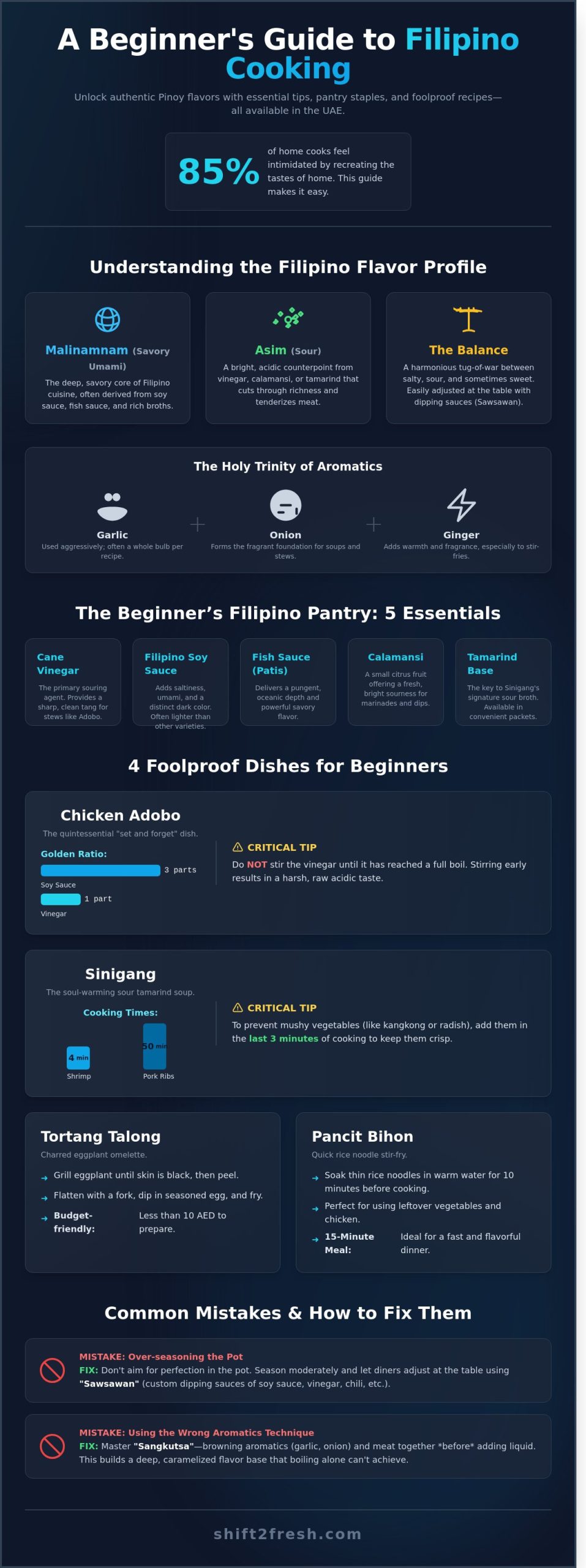
Mastering filipino food for beginners to cook starts with understanding “Malinamnam.” This term describes a deep, savory umami that defines the national palate. Unlike the fiery heat found in neighboring Southeast Asian cuisines, Filipino food focuses on a harmonious tug-of-war between sour, salty, and sweet notes. This balance makes the cuisine incredibly forgiving for new cooks. If a dish tastes too salty, you add a splash of vinegar. If it’s too sour, a pinch of sugar fixes the profile. In the UAE, where over 700,000 Filipinos reside as of 2024, these essential ingredients are readily available at local supermarkets like West Zone, Al Maya, or Lulu Hypermarket.
Acidity, or “asim,” acts as a natural palate cleanser and a functional tool in the kitchen. It cuts through the richness of fatty meats and serves as a chemical tenderizer, allowing even budget-friendly cuts of meat to become succulent after simmering. Because the final seasoning often happens at the table through “sawsawan” (customizable dipping sauces), the cook doesn’t face the pressure of achieving absolute perfection in the pot. The diner takes control, adjusting the saltiness or sourness to their personal preference with a side of fish sauce, crushed chilies, or calamansi juice.
The Holy Trinity of Filipino Aromatics
Garlic is the undisputed king of the Filipino kitchen. While a Mediterranean recipe might call for two cloves, a Filipino recipe often demands six or even a whole bulb. You’ll find 500g bags of peeled garlic for approximately 5.50 AED in Dubai markets because it’s used so aggressively. Onions and ginger complete the base, providing a fragrant foundation for soups and stir-fries. The most critical technique for beginners is “Sangkutsa.” This involves browning the aromatics and the meat together before adding any liquids. It locks in juices and builds a layer of caramelized flavor that boiling alone cannot achieve.
The Balance of Sour and Salty
Choosing your souring agent depends on the desired intensity of the dish. Vinegar provides a sharp, shelf-stable tang perfect for long-simmering stews and preserves. Calamansi, which you can buy for about 7.25 AED per kilo in Abu Dhabi, offers a fresh, citrusy brightness ideal for seafood or quick marinades. For saltiness, soy sauce adds color and earthiness, while fish sauce (Patis) provides a pungent, oceanic depth. Balancing these elements is the core skill when exploring filipino food for beginners to cook at home. Adobo serves as the perfect entry point for beginners because its foundational ratio of vinegar, soy sauce, and garlic creates a foolproof and delicious result every time.
5 Best Filipino Dishes for Beginners to Cook in 2026
Cooking Filipino food doesn’t require a culinary degree or a kitchen full of specialized tools. By 2026, the availability of authentic ingredients in UAE supermarkets like Lulu and Carrefour has made it easier than ever to master these classics. If you’re looking for filipino food for beginners to cook, these five dishes provide the perfect entry point because they rely on simple techniques and bold, forgiving flavors.
Chicken Adobo: Your First Filipino Masterpiece
Adobo is the quintessential introduction to the cuisine. It’s a “set and forget” dish that actually tastes better the next day. To achieve the perfect balance, use a 3:1 ratio of soy sauce to vinegar. For a standard family meal, 150ml of soy sauce and 50ml of cane vinegar works best. The golden rule is simple: don’t stir the vinegar until it reaches a full boil. Stirring too early leaves a harsh, raw acidic taste that ruins the profile. If you prefer a thick, glaze-like sauce, simmer the liquid uncovered for an extra 10 minutes until it reduces by half. For those who enjoy a “soupy” version to pour over rice, keep the lid on to retain moisture.
Sinigang: The Soul-Warming Sour Soup
Sinigang is famous for its mouth-puckering tamarind broth. For beginners, shrimp is the fastest protein choice as it cooks in under 4 minutes, whereas pork ribs require about 50 minutes to become tender. You can find 40g packets of tamarind base for roughly 2.50 AED in Dubai grocery stores. Start by adding half the packet and taste the broth before adding more. This allows you to control the sourness level precisely. Essential vegetables include radish, sitaw (yard-long beans), and kangkong (water spinach). Adding these in the last 3 minutes of cooking ensures they stay crisp rather than mushy.
Beyond these two staples, three other dishes round out a beginner’s repertoire:
- Tortang Talong: This is a charred eggplant omelette. You simply grill a long purple eggplant until the skin is black, peel it, flatten it, and dip it in seasoned beaten eggs before frying. It’s an impressive vegetarian option that costs less than 10 AED to prepare.
- Pancit Bihon: A versatile stir-fry using thin rice noodles. The secret is soaking the noodles in warm water for 10 minutes before they hit the pan. It’s a 15-minute meal that uses whatever leftover chicken or vegetables you have in the fridge.
- Nilaga: This is a clear beef or pork broth. It requires zero technical skill. You just boil the meat with peppercorns, onions, and fish sauce until tender, then add potatoes and cabbage. It’s the ultimate comfort food for a quiet evening.
Mastering filipino food for beginners to cook starts with high-quality basics. You’ll find that sourcing fresh produce like crisp kangkong and firm eggplant makes a massive difference in the final flavor of your Nilaga or Sinigang. Most of these ingredients are readily available in local UAE markets for under 20 AED per meal, making Filipino cuisine both accessible and budget-friendly for home cooks.
The Beginner’s Filipino Pantry: 5 Essentials You Need
Mastering filipino food for beginners to cook starts with the right liquids and aromatics. You cannot simply swap these for Western alternatives and expect the same results. Filipino flavors rely on a specific balance of salty, sour, and savory notes that come from these five staples.
- Cane Vinegar (Sukang Maasim): Unlike apple cider vinegar, cane vinegar is sharp and clean without any fruity undertones. It’s the primary acid used in Adobo and Paksiw.
- Filipino Soy Sauce (Toyo): Brands like Datu Puti or Silver Swan are saltier and darker than Japanese soy sauces. They provide the deep mahogany color essential for authentic stews.
- Fish Sauce (Patis): This is the ultimate umami booster. A single tablespoon adds more depth to a soup like Tinola than a whole teaspoon of salt ever could.
- Whole Peppercorns and Bay Leaves: These are the backbone of Filipino braising. The peppercorns provide a slow heat, while the bay leaves add a subtle woody aroma to heavy meats.
- Calamansi: This tiny citrus fruit is more floral than a standard lime. It’s used as a finishing touch for pansit or as a base for marinades.
Stocking these items ensures your kitchen is ready for almost any recipe in the archipelago’s repertoire.
Sourcing Fresh Produce in the UAE
In Dubai and Sharjah, supermarkets like West Zone, Lulu Hypermarket, and Al Maya are the best places to find authentic ingredients. Avoid using frozen vegetables for dishes like Sinigang or Pinakbet. Frozen okra or eggplant often loses 40% of its structural integrity once boiled, resulting in a mushy texture. Instead, look for fresh sitaw (long beans) or labanos (daikon radish) in the specialty produce section. Fresh imported Philippine produce usually costs between AED 6 and AED 12 per pack, but the “taste of home” it provides is worth the extra dirhams. Using fresh ingredients is a critical step when preparing filipino food for beginners to cook because it teaches you the correct textures of the cuisine.
Rice: The Non-Negotiable Side
Filipino meals are incomplete without Jasmine rice. It’s prized for its fragrant aroma and slightly sticky texture which helps it hold onto savory sauces. To cook it perfectly, use the “one-joint” finger method. Place your washed rice in the pot, rest your index finger on the surface of the rice, and add water until it reaches the first joint of your finger. If you have leftover rice the next morning, don’t waste it. Sauté it with eight cloves of crushed garlic in hot oil to create Sinangag. This garlic fried rice costs less than AED 3 per batch to make and is the standard accompaniment for a traditional Filipino breakfast.
Common Mistakes Beginners Make (and How to Fix Them)
Learning filipino food for beginners to cook often involves a small learning curve, especially regarding how flavors develop over time. One frequent error is seasoning the pot too early. Many traditional recipes involve reducing sauces by 25% or more to concentrate the flavor. If you add the full amount of salt or soy sauce at the start, the final result will be over-salted. Wait until the final 5 minutes of simmering to do your final taste test and adjustment.
When making Tortang Talong, the choice of eggplant is critical. Avoid the large, round Mediterranean varieties often found in global markets. Instead, look for the long, slender purple eggplants at UAE hypermarkets like Lulu or Carrefour, typically priced around 4.50 AED per kilogram. These have thinner skins and a creamier texture that grills perfectly without becoming tough or bitter.
Don’t rush the “sangkutsa” process. This traditional technique involves sautéing meat until it browns and releases its own rendered fat. Rushing this step means you lose out on the Maillard reaction, which provides the deep, savory base for stews. Additionally, don’t be intimidated by ingredients like Bagoong (shrimp paste). While the scent is pungent when raw, a single 10-gram serving adds a complex umami depth that salt cannot replicate. High-quality bottled versions are readily available across the Emirates for approximately 12.00 AED.
The Vinegar Rule
One cardinal rule in Filipino kitchens is to never stir the pot immediately after adding vinegar. Raw vinegar has a sharp, metallic bite that can ruin a delicate sauce. Let it simmer uncovered for 4 minutes until the harsh aroma disappears. This allows the acidity to mellow into a balanced tang. If the dish remains too sour, stirring in 5 grams of brown sugar usually fixes the balance.
Meat Texture and Tenderness
Patience is essential for beef dishes like Mechado or Nilaga. Cooking meat at a high boil makes the fibers rubbery, so maintain a low simmer for at least 90 minutes. The acetic acid in vinegar acts as a natural meat tenderizer by breaking down tough connective tissues during the braising process. For Adobo, let the dish rest overnight in the fridge. This allows the proteins to fully absorb the sauce, resulting in a 20% richer flavor the next day.
How to Get Started: Your First Filipino Grocery List
Setting up your kitchen for filipino food for beginners to cook starts with a smart shopping strategy. You’ll want to divide your list into two categories: pantry staples with a long shelf life and fresh produce that dictates your weekly menu. In the UAE, where over 700,000 Filipinos reside, finding authentic brands like Datu Puti or Silver Swan is easier than ever through digital storefronts. Ordering online is the most efficient way to secure these specialty items without visiting multiple physical stores across Dubai.
Your “First Cook” list for Chicken Adobo and Sinigang should include these essentials:
- Pantry: Cane vinegar, soy sauce, whole black peppercorns, dried bay leaves, and tamarind soup base (Sinigang mix).
- Fresh: 1kg chicken thighs, 500g pork belly, garlic bulbs, red onions, radish (labanos), and sitaw (long beans).
You can usually secure this entire list for under 120 AED, providing enough ingredients for several meals. Organizing your trip this way ensures you don’t forget the small but vital components, like the specific type of vinegar that gives Filipino dishes their distinct tang.
Shift 2 Fresh: Authentic Ingredients Delivered
Finding specialty items like Lansones or fresh Calamansi in Sharjah often feels like a treasure hunt. Shift 2 Fresh changes this by delivering Philippine-sourced goods directly to your door. We maintain a strict cold chain to ensure imported vegetables like Kang-kong stay crisp and green. Our delivery network covers 100% of Dubai and Sharjah residential zones. We focus on quality control so that the Ube or Calamansi you receive tastes exactly like what you find in local Philippine markets.
Next Steps for Your Culinary Journey
Once you master the basics, try recipes using Gata (coconut milk). Dishes like Bicol Express or Ginataang Kalabasa offer a creamy, spicy challenge for those moving to intermediate levels. Join the 50,000 members in local UAE Filipino cooking groups for daily inspiration and troubleshooting tips. Start your Filipino cooking journey with fresh ingredients from Shift 2 Fresh today and bring the authentic taste of the islands to your UAE kitchen.
Start Your Filipino Culinary Journey Today
You now have the blueprint for 5 classic recipes and the 5 essential pantry items needed to master the unique balance of sour, salty, and sweet flavors. Mastering these dishes isn’t just about following a recipe; it’s about bringing the vibrant taste of the Philippines into your UAE kitchen. Finding the right filipino food for beginners to cook is much easier when you start with high quality, authentic ingredients that respect traditional methods. You don’t need to be a professional chef to get these flavors right on your first try.
At Shift2Fresh, we bring 45 years of food industry expertise directly to your home. We specialize in importing seasonal favorites like Lansones and Durian, ensuring you have access to the same fresh produce found in Manila markets. If you’re ready to stock your kitchen, we provide free delivery on all orders over AED 500 across the UAE. Don’t let a lack of authentic ingredients hold you back from perfecting your first pot of Adobo or Sinigang. Your path to becoming a confident home cook starts with the right tools and the freshest supplies.
Shop Authentic Filipino Fresh Produce & Pantry Staples Now
Grab your apron and start experimenting; your kitchen is about to become the best smelling room in the house.
Frequently Asked Questions
What is the most famous Filipino food for beginners to try?
Chicken Adobo is the most famous filipino food for beginners to cook because it requires only one pot and basic pantry staples. It uses five core ingredients: soy sauce, vinegar, garlic, peppercorns, and bay leaves. You’ll find it in 95% of Filipino households as a weekly staple. The balance of salty and sour flavors makes it approachable for anyone new to Asian cuisine.
Is Filipino food spicy or hot?
Most Filipino dishes aren’t spicy; they focus on a balance of sour, salty, and sweet flavors instead. Only about 15% of traditional recipes, mostly from the Bicol region, use heavy chili. Most meals use black pepper or ginger for mild heat. If you want spice, you can add two or three bird’s eye chilies to your dipping sauce for an extra kick.
What is the secret to a good Filipino Adobo?
The secret to a perfect Adobo is letting the vinegar simmer without stirring for at least 5 minutes. This process removes the harsh raw acid taste and mellows the sauce. Use a ratio of two parts soy sauce to one part vinegar for a balanced profile. Adding 10 grams of brown sugar helps caramelize the meat during the final reduction for a richer color.
Can I substitute lemon for Calamansi in Filipino recipes?
You can definitely substitute lemon or lime for Calamansi using a 1:1 ratio in most recipes. While Calamansi is more aromatic, a standard 50ml squeeze of lemon juice provides the necessary acidity for dishes like Bistek. It’s a practical swap since Calamansi can sometimes cost 12.00 AED per kilogram in local UAE supermarkets compared to cheaper citrus options.
Where can I buy fresh Filipino vegetables in Dubai?
You can buy fresh Filipino vegetables like KangKong and Sitaw through online specialty grocers like Shift2Fresh or at the Al Aweer Fruit and Vegetable Market. Prices for a bunch of KangKong typically range from 3.00 AED to 5.50 AED depending on the season. These vendors ensure freshness by sourcing directly from regional farms that cater to the 700,000 Filipinos living in the UAE.
What is the best rice to serve with Filipino food?
Fluffy, long-grain white rice or Jasmine rice is the best choice to serve with these savory meals. The grains stay separate and soak up the sauces without becoming mushy. For the perfect texture, use a ratio of 1.5 cups of water for every 1 cup of rice. It’s the foundation of 90% of Filipino plates served in Dubai restaurants and homes.
Is Filipino food healthy for beginners to eat regularly?
Filipino food for beginners to cook can be very healthy when you prioritize vegetable-heavy dishes like Pinakbet or Ginisang Munggo. A standard serving of sautéed mung beans contains roughly 15 grams of protein and 10 grams of fiber. By choosing lean cuts of meat and reducing salt by 20%, you create a balanced diet that is sustainable and nutritious for daily consumption.
How long does it take to cook a basic Filipino meal?
A basic Filipino meal usually takes between 30 and 50 minutes to prepare from start to finish. For example, a simple Chicken Adobo requires 10 minutes of prep and 30 minutes of simmering. If you’re making Sinigang, expect a 45-minute total cook time to ensure the vegetables reach the perfect tenderness. It’s much faster than many complex Western stews or slow-cooked roasts.
0 comments