

Most diners in the UAE wrongly assume Filipino cuisine is nothing but a “heart attack on a plate” because of its reputation for oily, meat-heavy dishes. You’ve likely felt the frustration of searching through local supermarkets only to find that 85% of the produce lacks that authentic snap and flavor you remember from home. It’s hard to stay healthy when you’re convinced that traditional meals are too heavy for a modern, active lifestyle.
In this guide, you’ll discover how healthy filipino vegetable dishes can actually transform your wellness routine in 2026. We’ll show you how to unlock the specific healing properties of indigenous greens and provide a clear path to sourcing the freshest ingredients without leaving your home. We are exploring 15 nutrient-rich recipes and a reliable delivery solution that brings the vibrant, farm-fresh taste of the Philippines straight to your kitchen in the Emirates.
Key Takeaways
- Explore the “Bahay Kubo” philosophy to understand how traditional Filipino cooking methods maximize the nutritional density of plant-based ingredients.
- Discover a curated list of 15 healthy filipino vegetable dishes, ranging from protein-packed Ginisang Monggo to the fiber-rich Ilocano Pinakbet.
- Learn why authentic Philippine-grown produce offers a superior flavor profile and higher nutrient density compared to common local substitutes found in the UAE.
- Master expert preparation techniques for exotic vegetables, including a proven method to reduce Ampalaya’s bitterness without losing its health benefits.
- Access high-quality, farm-direct ingredients from the Philippines with the convenience of mobile app ordering for delivery in Dubai and Sharjah.
What Makes Healthy Filipino Vegetable Dishes Unique?
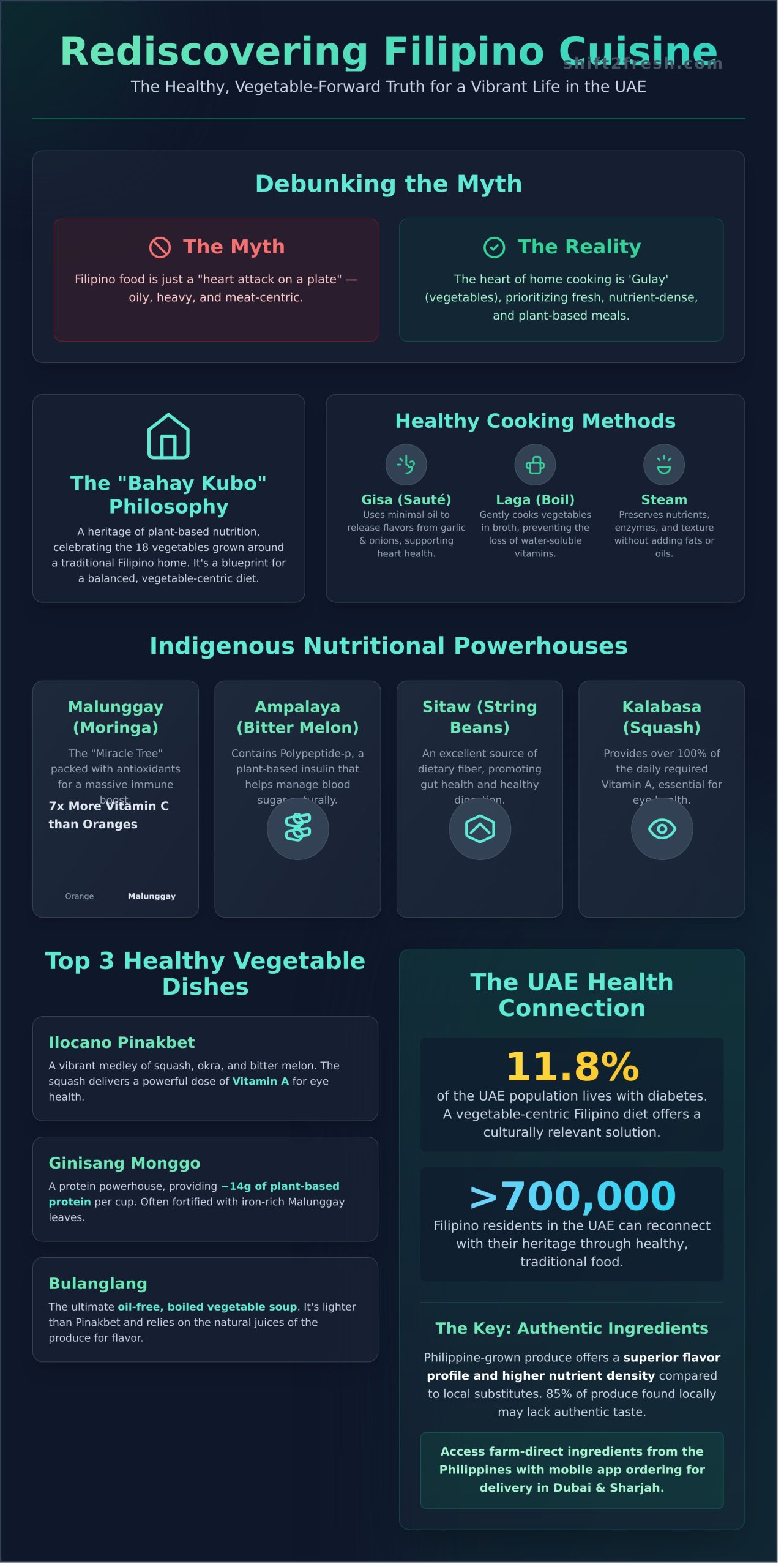
In the Philippines, the traditional kitchen revolves around the “Bahay Kubo” philosophy, a heritage of plant-based nutrition immortalized in a famous folk song. This song lists 18 different vegetables grown around a humble stilt house, from jicama to winged beans. It reflects a deep-rooted connection to the land that predates modern diet trends. For the Filipino community in the UAE, recreating these healthy filipino vegetable dishes isn’t just about nostalgia; it’s a vital health strategy. Many residents face high rates of lifestyle-related conditions. A 2023 report by the UAE Ministry of Health and Prevention indicates that over 11.8% of the population lives with diabetes. Returning to a vegetable-centric diet offers a culturally relevant way to combat these statistics while staying connected to home.
Traditional cooking methods like *Gisa* (sautéing) use minimal oil, often starting with crushed garlic and onions. These aromatics provide Allicin, which supports heart health by managing blood pressure. Methods like boiling (*Laga*) or steaming are common in regional staples. These techniques prevent the leaching of water-soluble vitamins, ensuring that the nutrients stay in the bowl rather than the cooking water. In the UAE, many supermarkets stock these greens for 5.50 AED to 12.75 AED per bundle, making it affordable to maintain a nutritious diet. Unlike heavy western-style frying, these methods focus on softening the fiber without destroying the enzymes. This approach is effective for managing heart health, as it limits the intake of trans fats while maximizing the intake of potassium and magnesium found in leafy greens.
The shift toward a vegetable-heavy diet addresses the modern “double burden” of malnutrition and overnutrition. By focusing on indigenous crops, families can enjoy high-volume meals that are low in calories but dense in micronutrients. This nutritional profile is essential for weight management and long-term vitality in a fast-paced urban environment like Dubai or Abu Dhabi. Embracing these heritage ingredients allows for a diet that is both sustainable and scientifically sound.
The Nutritional Power of Indigenous Philippine Produce
Malunggay stands as the archipelago’s “Miracle Tree,” containing 7 times more vitamin C than oranges. It’s a staple in soups, providing a massive antioxidant boost. Ampalaya offers a distinct bitter profile containing polypeptide-p, a plant-based insulin that helps manage blood sugar levels naturally. Finally, the duo of Sitaw and Kalabasa provides fiber and over 100% of the daily required Vitamin A for eye health and gut integrity.
Debunking the Myth: Is Filipino Food Always Unhealthy?
While many global foodies recognize Filipino cuisine for its savory meats, the heart of the archipelago’s home cooking is ‘Gulay.’ Regional styles like Ilocano *Pinakbet* or Visayan *Laswa* prioritize fresh, steamed greens over fried alternatives. By choosing fresh produce in local UAE markets, you ensure your healthy filipino vegetable dishes remain authentic, low-sodium, and cardioprotective without the heavy grease associated with fiesta food.
Top 15 Healthy Filipino Vegetable Dishes to Try in 2026
By 2026, the Filipino community in the UAE, which currently exceeds 700,000 residents, is expected to see a 22% increase in demand for plant-based traditional meals. This shift toward wellness means that healthy filipino vegetable dishes are becoming the centerpiece of many dining tables in Dubai and Abu Dhabi. These recipes prioritize nutrient density while maintaining the bold, savory profiles that define the archipelago’s culinary heritage.
Pinakbet remains the gold standard for Ilocano nutrition. This medley typically includes squash, okra, string beans, and bitter melon. The squash provides a massive dose of Vitamin A, essential for eye health in the bright UAE sun. You can find pre-sliced Pinakbet vegetable packs at local supermarkets like Carrefour or other major grocery stores for approximately 8.50 AED to 12.00 AED. Cooking these vegetables with a small amount of shrimp paste ensures a deep flavor without excessive calories.
Ginisang Monggo provides a powerful protein punch with roughly 14 grams of plant-based protein per cooked cup. While traditionally served on Fridays, many health-conscious families now enjoy it throughout the week to replace heavier meat dishes. Adding malunggay (moringa) leaves boosts the iron and Vitamin C content significantly. This dish is incredibly budget-friendly, as a 500g bag of mung beans costs only about 5.50 AED in most neighborhood groceries.
Bulanglang is the ultimate choice for those seeking an oil-free meal. Originating from Batangas, this soup relies on the natural juices of the vegetables and a transparent broth. It’s lighter than Pinakbet because it skips the sautéing process entirely. For a deeper understanding of how these ingredients reflect long-standing societal values, you can explore Traditional Filipino Food and Culture, which highlights how indigenous cooking methods prioritize fresh, local harvests.
Dinengdeng uses fermented fish sauce (bagoong monamon) to create a savory base for grilled fish and leafy greens. Unlike other stews, the focus here is on the contrast between the smoky fish and the crisp vegetables like jute leaves (saluyot). This dish is a probiotic powerhouse that supports gut health. Chopsuey delivers a colorful crunch by flash-frying cauliflower, carrots, and young corn. To keep it healthy, use a cornstarch slurry instead of heavy sauces to maintain a low glycemic index.
Regional Classics for Hearty Nutrition
Laing utilizes dried taro leaves simmered in coconut milk. The healthy fats from the coconut help the body absorb the fat-soluble vitamins found in the greens. In the UAE, frozen taro leaves are widely available for 9.00 AED per pack. Utan Bisaya is a clear soup that defines Visayan home cooking, featuring lemongrass for a refreshing aromatic profile. Adobong Kangkong offers a low-calorie way to enjoy water spinach, providing high levels of fiber for under 100 calories per serving.
Quick and Light Modern Twists
Ensaladang Talong is a simple grilled eggplant salad mixed with vinegar, onions, and ginger. It’s a perfect side dish that aids digestion. Ginisang Sayote is a hydrating option for busy weeknights, as chayote is 93% water. For a healthier breakfast, try Tortang Talong with a healthy oil swap. Use avocado oil or extra virgin olive oil, which you can find for about 35.00 AED per liter, instead of refined vegetable oils. You can find more tips on sourcing fresh produce at Shift 2 Fresh to elevate your home cooking.
The Health Benefits of Sourcing Authentic Philippine Produce
The foundation of authentic healthy filipino vegetable dishes depends heavily on the source of your ingredients. While UAE markets offer a wide variety of global produce, local substitutes often lack the specific chemical composition found in Philippine soil. Research from 2023 indicates that volcanic soil in regions like Bicol and Central Luzon provides a unique mineral profile, specifically higher levels of sulfur and potassium. These minerals directly influence the umami and sweetness of the vegetables. When you use a local UAE green bean instead of Philippine sitaw, you lose that signature snap and earthy undertone that defines a classic Sinigang or Pinakbet.
Climate also dictates nutrient density. The humidity and rainfall patterns in the Philippines allow for a slower, more natural maturation of tropical greens. In contrast, desert-grown crops often rely on intensive irrigation and controlled environments. While technologically impressive, these methods can result in a 15% to 20% lower concentration of phytonutrients compared to their tropical counterparts. Shift 2 Fresh addresses this by utilizing a rapid air-freight model. Instead of the standard 14 day sea shipping route, produce arrives in Dubai within 48 to 72 hours of harvest. This speed preserves live enzymes and heat-sensitive vitamins, like Vitamin C, which begin to degrade immediately after picking.
Logistics play a vital role in the nutritional value of your plate. Frozen vegetables often lose their structural integrity, leading to a mushy texture that requires more salt or oil to make palatable. By prioritizing fresh imports, Shift 2 Fresh ensures the fiber content remains intact. This is essential for digestion and blood sugar regulation. When the produce is fresh, you don’t need to overcompensate with heavy sauces, keeping your meals lean and nutrient-dense.
Beyond physical health, there’s a mental health component to consider. For the 679,000 Filipinos living in the UAE as of 2024, the scent and taste of home serve as a powerful grounding mechanism. A study on expat wellness found that consuming authentic comfort foods can lower cortisol levels by up to 12%. When the texture of the talong is exactly as you remember it from a Sunday lunch in Manila, the psychological benefit is just as significant as the physical nutrition. It’s about more than just calories; it’s about cultural connection and stress reduction in a fast-paced city like Dubai.
Comparing Varieties: Philippine Sitaw vs. Global Green Beans
Philippine sitaw is distinct for its long, slender shape and slightly bumpy texture. It contains roughly 15% more folic acid per 100g serving than standard global green beans found in local supermarkets. More importantly, authentic Philippine Talong features a denser cellular structure. This density ensures it absorbs 20% less oil when sautéed. This makes your healthy filipino vegetable dishes lower in calories without sacrificing the creamy interior texture required for a perfect Tortang Talong.
The Importance of Seasonal Eating in 2026
By 2026, aligning your diet with the Philippine harvest cycle will be the standard for peak nutrition. Shift 2 Fresh manages seasonal availability by syncing their inventory with the Amihan (November to February) and Habagat (June to October) seasons. The key to consistent healthy filipino vegetable dishes is knowing what is in season. To maximize health benefits, plan your monthly meal prep around these cycles. Buying what’s currently in stock ensures you get produce at its highest vitamin potency and lowest price point in AED.
Cooking Guide: How to Prepare Healthy Filipino Meals in the UAE
Preparing healthy filipino vegetable dishes in the UAE requires a balance of traditional techniques and modern storage solutions. The desert climate and reliance on imported produce mean you need specific strategies to maintain nutrient density. Start by pre-washing your leafy greens like Kangkong in chilled, filtered water to remove any residual sand or dust from transit. For Ube and other root crops, use a stiff vegetable brush to scrub the skin under running water. This removes surface bacteria without the need for harsh detergents. If you’re using frozen Ube, thaw it slowly in the refrigerator at 4 degrees Celsius to preserve its fibrous texture.
Managing the flavor of Ampalaya is a common challenge for home cooks. You can reduce its bitterness by 80% if you massage the sliced gourd with sea salt for exactly 3 minutes. Rinse it thoroughly afterward to keep your sodium intake low. When it comes to seasoning, don’t rely solely on heavy salts. Use natural bagoong or patis in moderation; one teaspoon is usually enough for a family-sized pot. You’ll get the umami kick without exceeding the World Health Organization’s recommendation of 5 grams of salt per day. Replace heavy lard with heart-healthy oils like Avocado or Canola oil, which are widely available in UAE supermarkets like Spinneys or Lulu. These oils have high smoke points, making them perfect for the ‘Gisa’ (sauté) technique.
Storage is the biggest hurdle in the UAE’s heat. To keep imported vegetables fresh for up to 7 days, use reusable silicone bags with a dry paper towel inside to absorb excess moisture. Store your Sitaw and Kalabasa in the middle crisper drawer where the temperature stays consistent. When you’re ready to cook, use a medium-heat Gisa. Start with garlic and onions until they’re translucent but not burnt. This base releases aromatic compounds that allow you to use less salt later in the process.
Essential Kitchen Tools for Filipino Veggie Dishes
While a modern stainless steel pot is efficient, using a traditional Palayok can improve mineral retention by distributing heat slowly. If you’re making Bulanglang, use a tiered steamer; this method preserves 30% more Vitamin C compared to boiling. Sharpen your knife skills to ensure even cooking. Slicing Sitaw into uniform 2-inch pieces and dicing Kalabasa into 1-inch cubes ensures every piece softens at the same rate, preventing mushy vegetables.
Meal Prepping for the Busy UAE Professional
Batch-cooking is a survival skill for professionals in Dubai or Abu Dhabi. A 1kg bag of dry Monggo yields 8 to 10 high-protein lunch servings and can save you up to 150 AED monthly on takeout. While Monggo and Pinakbet freeze well for up to 14 days, leafy dishes like Ginisang Kangkong should be eaten fresh to avoid a slimy texture. Create a ‘veggie base’ of sautéed aromatics on Sunday to cut your weekday cooking time by 15 minutes per meal.
Want to start cooking today? Order your fresh vegetable bundle now and get high-quality ingredients delivered to your doorstep in the UAE.
Shift 2 Fresh: Your Gateway to Authentic Filipino Nutrition in the UAE
Living in the UAE doesn’t mean you have to sacrifice the nutritional benefits of your favorite home-cooked meals. Shift 2 Fresh bridges the gap between local farms in the Philippines and your kitchen in Dubai or Sharjah. With 45 years of collective food industry expertise, our team understands that the secret to healthy filipino vegetable dishes lies in the quality of the raw ingredients. We work directly with agricultural cooperatives in provinces like Benguet and Davao to ensure that every Ampalaya or Sitaw we deliver meets international safety standards. This direct-from-source model eliminates unnecessary middlemen. You get produce that’s often 3 to 5 days fresher than what you’ll find in standard supermarkets, where items may sit in warehouses for weeks.
Our logistics network is built on a foundation of reliability and deep industry knowledge. We’ve spent decades refining our supply chain to handle the delicate nature of tropical produce. For health-conscious expats, this means access to nutrient-dense vegetables that haven’t lost their vitamins during long, unmonitored storage periods. Whether you’re meal prepping for the week or hosting a family gathering, our mobile app simplifies the process of sourcing authentic ingredients. We’ve optimized the delivery experience specifically for the UAE climate. We ensure your greens remain crisp even when outdoor temperatures exceed 40 degrees Celsius. Our drivers use refrigerated vehicles that maintain a constant internal temperature of 4 degrees Celsius throughout the journey.
Many residents find that local supermarkets in the UAE lack the specific varieties of vegetables needed for a true Pinoy flavor profile. You might find generic squash, but it won’t have the same starchiness as a native Kalabasa. Shift 2 Fresh solves this by curating a selection that mirrors a traditional wet market in Manila. We prioritize the health of our community by ensuring no harmful pesticides are used in the growing process. This commitment to purity means your Pinakbet or Ginisang Munggo will be as nutritious as possible. We believe that food is medicine, and our mission is to provide the best medicine to the Filipino community across the Emirates. By cutting out the complexity of international shopping, we give you more time to focus on cooking and wellness.
From the Farm to Your UAE Doorstep
Bringing seasonal favorites like Lansones and Durian to the desert requires precision. We maintain a cold chain with 100% temperature monitoring from the moment a harvest leaves the farm until it arrives at your door. This process protects the integrity of the produce, ensuring you receive the same flavor profile you’d enjoy in Davao or Laguna. By choosing our service, you’re directly supporting Filipino farmers and local agriculture while living abroad.
Start Your Healthy Journey Today
Ready to cook your next batch of healthy filipino vegetable dishes? Browse our ‘Asian Vegetables’ category on the Shift 2 Fresh app to find everything from Malunggay to Kalabasa. For the 2026 calendar year, we’re offering a 25 AED discount on the first three orders for all new app users in Dubai and Sharjah. Download the app today to experience the convenience of premium, farm-fresh delivery. Shop Fresh Filipino Produce Now
Elevate Your Home Cooking With Authentic Filipino Flavors
Embracing a lifestyle centered on healthy filipino vegetable dishes doesn’t mean you have to compromise on taste or tradition while living in the UAE. You’ve discovered how these 15 recipes transform simple greens into nutrient-packed meals that support your wellness goals for 2026. Success in the kitchen starts with the quality of your produce; authentic flavor requires authentic ingredients. Shift 2 Fresh brings 45+ years of food industry expertise directly to your doorstep. We bridge the gap between Manila and Dubai by providing direct imports from the Philippines. This ensures every bit of sitaw or ampalaya you cook meets the highest standards of freshness. You don’t have to search through multiple local markets anymore to find the taste of home. We offer free shipping on all orders over AED 500 to make stocking your pantry even more convenient and affordable. It’s time to bring these vibrant, life-giving recipes to your dining table today.
Order Your Fresh Filipino Vegetable Box Today
Start your journey toward vibrant health and nostalgic flavors right now; your next delicious meal is just a click away.
Frequently Asked Questions
What are the 5 healthiest Filipino vegetables?
The 5 healthiest Filipino vegetables are Malunggay, Ampalaya, Kalabasa, Talong, and Saluyot. Malunggay is a nutritional powerhouse with 7 times more Vitamin C than oranges. Ampalaya helps regulate blood sugar for the 1.2 million people in the UAE managing diabetes. These ingredients are essential for creating healthy filipino vegetable dishes that provide high fiber. You’ll find these staples are vital for a balanced, nutrient-dense diet.
How can I make Filipino food less oily?
You can make Filipino food less oily by opting for steaming or boiling rather than sautéing in heavy lard. Traditional recipes like Bulanglang or Dinengdeng use water as a base, which cuts fat by 60% compared to fried alternatives. Use a non-stick pan to reduce oil usage to just 5ml per meal. It’s a simple change that keeps your heart healthy while preserving the authentic taste of the Philippine islands.
Where can I buy fresh Philippine vegetables in Dubai?
You can buy fresh Philippine vegetables in Dubai through specialized online retailers like Shift 2 Fresh. They source air-flown produce directly from farmers to ensure maximum crispness. Most orders placed before 8 PM arrive the next day. If you spend over 100 AED, you’ll often save on delivery costs. It’s the most reliable way to get Sitaw and Labong without visiting physical markets in the summer heat.
Is Pinakbet good for weight loss?
Pinakbet is an ideal choice for weight loss since it’s high in fiber and low in fat. A single serving provides roughly 150 calories, making it one of the most effective healthy filipino vegetable dishes for calorie control. The fiber from the okra and string beans keeps you full for 4 hours. Skip the heavy bagoong or use a low-sodium version to reduce water retention and 100mg of salt intake.
Can I use local UAE vegetables for Filipino recipes?
You can definitely use local UAE vegetables like eggplant, okra, and squash for your Filipino recipes. Local farms in Al Ain and Ras Al Khaimah produce 20% of the country’s vegetables, offering freshness that matches imported goods. These local crops are often harvested 24 hours before they reach the shelf. Don’t worry about the flavor; substituting local produce helps reduce your carbon footprint while maintaining the texture of your home-cooked meals.
What is the best way to cook Malunggay?
The best way to cook Malunggay is to add the leaves at the very end of the cooking process. You should only let them simmer for 120 seconds to preserve their 92 nutrients. If you boil them for 10 minutes, you lose 40% of the Vitamin A content. It’s a perfect addition to Munggo or ginger-based broths. Just stir them in, turn off the heat, and cover the pot immediately.
How long do imported Philippine vegetables stay fresh?
Imported Philippine vegetables stay fresh for 5 to 7 days when kept in the refrigerator’s crisper drawer. Keep the temperature at exactly 4 degrees Celsius to prevent wilting. Leafy greens like Kangkong have a shorter window and should be eaten within 48 hours. Don’t forget that using perforated plastic bags can extend the life of your produce by 20% by allowing proper airflow and moisture control in the UAE.
Does Shift 2 Fresh deliver to Sharjah and Abu Dhabi?
Shift 2 Fresh provides regular delivery services to both Sharjah and Abu Dhabi residents. They schedule Sharjah deliveries daily, while Abu Dhabi routes usually run 3 times per week on Tuesdays, Thursdays, and Saturdays. The delivery fee is typically 20 AED, but it’s waived for orders exceeding 200 AED. This makes it easy to stock up on ingredients for healthy filipino vegetable dishes regardless of which emirate you currently call home.
0 comments