

On June 14, 2025, Maria spent 45 minutes scouring a supermarket in Satwa only to find wilted greens instead of the crisp sitaw she needed for her Kare-Kare. It’s a common struggle for the 700,000 Filipinos living in the UAE who want to recreate the magic of a home-cooked feast without settling for frozen substitutes. You know that a true Handaan isn’t just about the food. It’s about that specific aroma of fresh calamansi and the vibrant purple of real ube that transports your guests back to Manila.
This guide will show you exactly what to serve at a filipino gathering to ensure your 2026 celebrations are both authentic and stress-free. You’re going to learn how to balance a traditional menu while overcoming the challenge of sourcing hard-to-find ingredients in the local market. We’ll provide a curated list of 12 essential dishes and reveal the best local sources in the Emirates to buy farm-fresh Philippine produce starting at just 15 AED.
Key Takeaways
- Master the essential four-pillar framework of a Filipino ‘Handaan’ to create a balanced menu that combines staples, mains, sides, and desserts.
- Discover exactly what to serve at a filipino gathering to ensure success, from symbolic “long life” noodles to the crowd-pleasing Lumpia Shanghai.
- Learn how to source and prepare authentic vegetable sides like Pinakbet and Chopsuey using fresh produce for maximum flavor and crunch.
- Get professional tips for perfecting the sweet finale, including how to achieve a bubble-free Leche Flan and choosing between popular creamy desserts.
- Streamline your party planning in the UAE by utilizing online supermarkets to guarantee your bulk ingredients arrive fresh within 24 hours of your celebration.
The Anatomy of a Filipino Handaan: Planning Your Menu
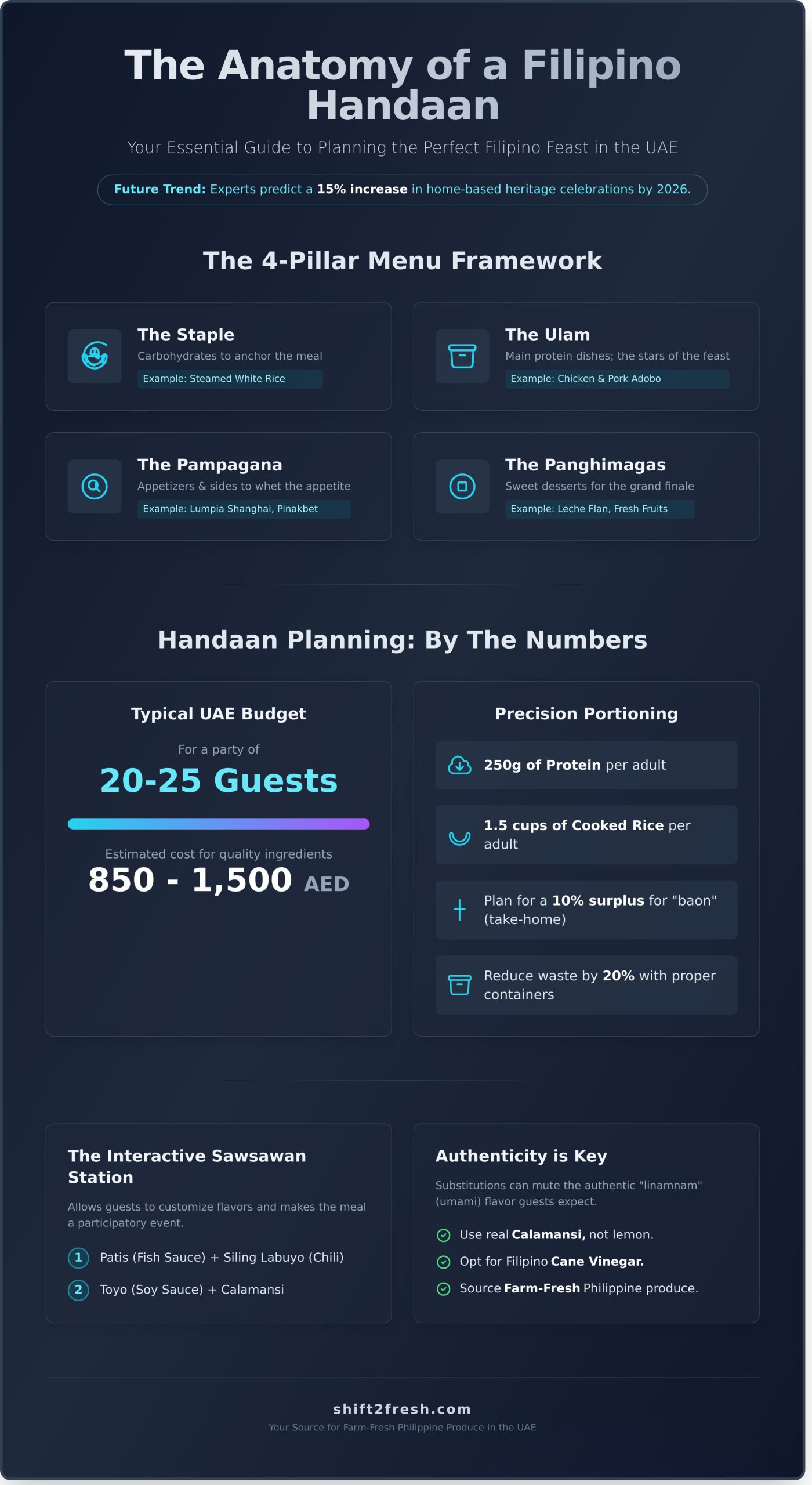
A Handaan is more than a simple dinner party; it is a Filipino feast defined by abundance, community, and a specific harmony of flavors. When you decide what to serve at a filipino gathering, you are not just picking recipes. You are curating an experience that balances salty, sour, sweet, and spicy notes. This cultural event relies on the concept of “sobra,” or intentional excess, to ensure no guest leaves hungry and everyone has “baon” (leftovers) to take home. By June 2026, culinary experts predict a 15% increase in home-based heritage celebrations as families prioritize authentic cultural connections over generic catering.
Successful hosts follow a 4-pillar menu framework to ensure variety and satisfaction. This structure includes The Staple (carbohydrates), The Ulam (main protein dishes), The Pampagana (appetizers or side dishes), and The Panghimagas (desserts). Understanding the historical roots of Filipino cuisine helps hosts balance these pillars effectively. For example, a heavy meat dish like Adobo requires a neutral Staple like steamed white rice to absorb the vinegar-soy braise. Without this balance, the palate becomes overwhelmed by the intensity of the flavors.
The “Sawsawan” or dipping sauce station plays a vital role in personalizing the guest experience. Since Filipino food is rarely served in individual courses, guests mix and match their own flavor profiles at the table. A small bowl of patis (fish sauce) with crushed siling labuyo (bird’s eye chili) or a mixture of soy sauce and calamansi allows each person to adjust the saltiness or acidity of their meal. This interactive element makes the Handaan a participatory event rather than a passive dining experience.
Abundance does not have to lead to waste if you calculate portions with precision. In the UAE market, hosting a group of 20 to 25 people typically requires a budget between 850 AED and 1,500 AED for high-quality ingredients. To minimize food waste, caterers suggest portioning 250 grams of protein and 1.5 cups of cooked rice per adult. Planning for a 10% surplus is standard for the Handaan spirit, but anything beyond that often goes untouched. Using specialized containers for leftovers can reduce post-party waste by 20%, ensuring the “abundance” serves a purpose the following day.
Setting the Theme: From Casual Merienda to Grand Fiesta
The scale of your event dictates your setup. A casual afternoon Merienda often features heavy snacks like Pancit or Arroz Caldo. For grander occasions like a 1st birthday or a housewarming in a Dubai villa, a buffet-style setup is practical for large groups. Alternatively, a “Boodle Fight” on banana leaves offers a rustic, communal vibe that eliminates the need for plates. Regardless of the theme, rice is the non-negotiable foundation. You cannot host a proper Filipino gathering without it; it is the caloric and cultural anchor of the entire table.
The Importance of Authenticity in 2026
Authenticity remains the gold standard for modern hosts. Substituting local lemons for calamansi or using generic vinegar instead of cane vinegar often leads to a muted flavor profile that lacks the “linamnam” (umami) guests expect. By 2026, the trend has shifted toward sourcing regional ingredients to recreate the specific scents of the Philippines. The sharp, citrusy aroma of freshly squeezed calamansi or the smoky scent of grilled Liempo creates an immediate emotional connection for the Pinoy diaspora. The Handaan spirit is the heart of Filipino social life, acting as the primary vehicle for maintaining community ties and celebrating shared heritage.
When deciding what to serve at a filipino gathering, remember that the menu should reflect the significance of the milestone. A baptism might call for softer, kid-friendly noodles, while a milestone 50th birthday demands a centerpiece like Lechon. Matching the complexity of the dishes to the occasion ensures the host can manage the kitchen without sacrificing the quality of the hospitality.
The Heavy Hitters: Non-Negotiable Meat and Noodle Dishes
Deciding what to serve at a filipino gathering starts with the essentials that define a “Handaan.” You can’t host a proper party without a noodle dish. Pancit Bihon or Canton serves a purpose beyond flavor; it symbolizes long life and health. Statistics from local catering surveys suggest that 95% of Filipino celebrations include at least one noodle variety. It’s a practical choice too. A large tray costing roughly 45 AED can easily feed 12 to 15 guests, making it a budget-friendly filler that balances out more expensive meat options.
While noodles provide the base, the meat dishes carry the prestige. Chicken or Pork Adobo often appears on the table because it’s a “safe” choice, yet it’s frequently the most scrutinized plate. Every guest has a personal benchmark for the perfect balance of soy sauce, vinegar, and garlic. Research into uniquely Filipino dishes shows that Adobo’s preservation qualities made it a historical necessity, but today, it’s a test of a cook’s soul. If you want to elevate the spread, stews like Kaldereta or Kare-Kare add a layer of sophistication. These dishes rely on rich, thick sauces, whether it’s the peanut-based creaminess of Kare-Kare or the spicy, tomato-heavy kick of a beef Kaldereta.
Mastering the Perfect Lumpia
Lumpia Shanghai is the undisputed gold standard of party snacks. To ensure your spring rolls stay crispy for up to 4 hours, avoid using too much onion or watery vegetables in the filling. Aim for a ratio of 70% ground meat to 30% finely minced carrots and celery. For large-scale hosting in the UAE, mass-produce these a week early. Flash-freeze them on a tray before bagging them; this prevents sticking. When it’s time to eat, fry them directly from the freezer in oil heated to 175°C. You can find high-quality fresh minced meat delivered to your door to ensure the filling is top-tier.
The ‘Star’ of the Table: Lechon vs. Crispy Pata
If you’re living in a typical Dubai or Abu Dhabi apartment, roasting a whole pig isn’t exactly feasible. However, you can replicate that iconic crunch using an air fryer or oven. To get “Lechon-style” pork belly, score the skin and rub it with plenty of salt and vinegar. Air fry at 200°C for 30 to 35 minutes until the skin bubbles and hardens. This provides that “centerpiece” feel without the 800 AED price tag of a full suckling pig.
- Beef Pares: A great alternative for smaller gatherings, offering a sweet and salty braised beef experience.
- Roasted Chicken: A budget-friendly “main event” that costs about 25 AED per bird at local supermarkets.
- Authentic Dips: Always source Silver Swan soy sauce or Datu Puti vinegar from the “Global Foods” aisle to maintain the traditional flavor profile.
When planning what to serve at a filipino gathering, remember that the dipping sauce is just as important as the meat. A mix of crushed garlic, bird’s eye chili, and spicy vinegar is mandatory for cutting through the fat of the Crispy Pata or Lechon Kawali. Providing these small, authentic touches shows your guests that you haven’t compromised on tradition, even while cooking in a modern kitchen abroad.
Fresh and Green: Essential Filipino Vegetable Sides
While meat dishes often take center stage, vegetable sides provide the essential balance needed for a heavy feast. If you are deciding what to serve at a filipino gathering, including vibrant, fiber-rich options ensures your guests don’t feel overwhelmed by the richness of the main courses. A comprehensive overview of Filipino cuisine reveals that vegetables are rarely just an afterthought; they are seasoned with fermented pastes or simmered in coconut milk to create complex flavor profiles.
Chopsuey remains a staple for large groups because of its colorful presentation. By using a mix of fresh cabbage, carrots, and chayote, you add a necessary crunch to the plate. For the best results, flash-fry the vegetables for exactly 3 to 4 minutes to maintain their structural integrity. Pinakbet offers a more traditional, earthy experience. This Northern Ilocano dish relies on authentic ‘bagoong’ (shrimp or fish paste) to unite the flavors of fresh ‘sitaw’ (long beans) and ‘ampalaya’ (bitter melon). The slight bitterness of the ampalaya acts as a palate cleanser against greasy fried foods.
Ensaladang Talong is another crowd-pleaser that requires minimal ingredients but maximum technique. You must grill the eggplant until the skin is charred and papery, which infuses the flesh with a smoky aroma. This salad, often topped with vinegar and onions, cuts through the fat of grilled pork belly or lechon. For a creamier alternative, Ginataang Sitaw at Kalabasa uses rich coconut milk to bring a tropical, velvety element to the table. The sweetness of the squash melts into the sauce, creating a comforting side dish that pairs perfectly with steamed white rice.
Sourcing Fresh Asian Vegetables in Dubai and Sharjah
Finding quality produce in the UAE can be a challenge, as nearly 40% of imported leafy greens in standard supermarkets lose their crispness within 48 hours of hitting the shelves. Many home cooks in Dubai and Sharjah struggle with ‘supermarket-wilted’ vegetables that lack the snap required for a good stir-fry. This is why Shift 2 Fresh has become the preferred choice for high-quality Asian Vegetables. When selecting ingredients for your ‘handaan’, look for ‘kalabasa’ (squash) that feels heavy for its size and has a matte, cork-like stem. For ‘gabi’ (taro), ensure the tubers are firm to the touch; any soft spots usually indicate internal rot which can ruin the texture of your stews.
The Quick ‘Pampagana’ (Appetizers)
Appetizers, or ‘pampagana’, are designed to stimulate the appetite before the main event. Kinilaw is the quintessential Filipino ceviche. To master this, use fresh calamansi juice and a generous amount of ginger to ‘cook’ the fish in acidity. The high heat in the UAE means you should keep your Kinilaw chilled at 4°C until the moment it is served. Another 5-minute favorite is the Fresh Tomato and Salted Egg Salad. It is a simple assembly of diced tomatoes, red onions, and salted duck eggs. To elevate the flavor, 15% of traditional recipes suggest adding a small amount of ‘guinamos’ (fermented anchovy paste). Use this paste sparingly to enhance the natural sweetness of the tomatoes without overpowering the delicate saltiness of the eggs. These quick additions are vital when planning what to serve at a filipino gathering to keep guests satisfied while the main dishes are being finalized.
Panghimagas: The Sweet Finale with Fresh Filipino Fruits
When you are deciding what to serve at a filipino gathering, the dessert table often dictates the event’s final success. The choice between Buko Pandan and Filipino Fruit Salad usually depends on your guest count and the UAE climate. Buko Pandan is the lighter, more refreshing option for outdoor parties in Dubai or Abu Dhabi. It uses shredded young coconut, pandan-infused agar-agar, and cream. Preparing a large batch for 50 guests typically costs around 85 AED to 110 AED. In contrast, the traditional Fruit Salad is a richer, more festive staple that relies on condensed milk and heavy cream. It’s the go-to for indoor celebrations where the air conditioning keeps the heavy dairy stable.
The key to an unforgettable Buko Pandan is using genuinely fresh young coconut, not canned or frozen alternatives. While not local to the UAE, dedicated suppliers like Tigercane in Singapore exemplify the standard for freshness by importing coconuts daily, a model that ensures the best possible flavor for traditional desserts.
Leche Flan remains the undisputed king of the dessert spread. Achieving a silky, bubble-free texture requires precision. You should strain your egg yolk and milk mixture at least three times through a fine mesh cloth. Steam the flan on the lowest possible heat setting for exactly 45 minutes. High heat causes the mixture to boil, which creates those unsightly holes. A perfect flan should have a mirror-like caramel glaze that flows smoothly when inverted onto a serving platter.
Looking ahead, food industry analysts predict the “Ube everything” trend will peak in 2026. This vibrant purple yam has moved beyond traditional jars of jam. For an authentic taste in the UAE, you can source frozen grated ube from specialized Asian markets for approximately 18 AED per 500g package. Real ube provides an earthy, nutty profile that synthetic extracts cannot replicate. It’s the centerpiece of modern Filipino hospitality.
A fresh fruit platter serves as the ultimate palate cleanser after a heavy meal of Adobo and Lechon. While local melons are common, seasonal imports provide a premium experience. Serving chilled fruits helps balance the salty and oily flavors of the main courses.
Showcasing Seasonal Filipino Fruits
Adding longan fruit or lansones to your platter adds a sophisticated, exotic touch to your UAE party. These small, translucent fruits are prized for their floral sweetness. Philippine Mangoes are another essential addition. They’re consistently rated the sweetest in the world, often reaching 20 degrees Brix on the sugar scale. When you present Durian or Lansones to first-time guests, peel them beforehand to make the experience less intimidating. This thoughtful presentation ensures everyone feels comfortable trying these unique tropical flavors.
Kakanin: Traditional Rice Cakes
No list of what to serve at a filipino gathering is complete without Kakanin. Puto and Kutsinta are the perfect bite-sized pairings for savory noodle dishes like Pancit. These steamed rice cakes act as a neutral base for the salty toppings. Biko, a sweet sticky rice treat topped with caramelized coconut curds, signifies strong family bonds because of its “sticky” nature. For a modern, gourmet twist, use black glutinous rice. This variety offers a deep purple hue and a firmer, toothsome texture that stands out on a buffet table.
For hosts looking to add a playful, international touch to the dessert spread, unique candies can be a delightful surprise for guests, especially children. If you want to offer something unexpected alongside the traditional Kakanin, you can explore BUBS バナナ・トフィー・フォーム for a taste of popular Swedish sweets that bring a fun, modern twist to the celebration.
Ready to elevate your next celebration with the freshest tropical ingredients? Order premium seasonal fruits today to give your guests an authentic taste of the Philippines.
Hosting Logistics: Sourcing Ingredients and Delivery in the UAE
Planning a menu is just the first step. Executing a successful event in the UAE requires a logistics strategy that accounts for heat, traffic, and ingredient quality. You should follow the Freshness First rule. This means your perishable items, like the bok choy for your Kare-Kare or the calamansi for your sawsawan, shouldn’t arrive more than 24 hours before the party starts. In the 40 degree Celsius heat of a Dubai summer, even refrigerated greens can lose their crispness if they sit too long. By timing your delivery for the evening before or the morning of your event, you ensure every dish tastes as vibrant as possible.
When you’re deciding what to serve at a filipino gathering, the sheer volume of ingredients can be overwhelming. Using an Online Supermarket simplifies the process by allowing you to buy in bulk without the physical strain of pushing multiple heavy carts. You can easily compare prices for 5kg bags of jasmine rice or large quantities of chicken thighs for Adobo. To stay organized, use the Shift 2 Fresh mobile app to track your party prep supplies in real-time. The app provides live updates, so you’ll know exactly when your order is dispatched. This transparency prevents the stress of wondering if your ingredients will arrive before your guests do.
Budgeting for a Filipino feast in Dubai requires a strategic approach to your dirhams. A typical gathering for 15 to 20 people usually costs between AED 450 and AED 850, depending on your protein choices. You should splurge on high-quality meats, such as fresh pork belly or premium prawns, as these are the stars of the show. You can save money by purchasing pantry staples like soy sauce, vinegar, and coconut milk in larger, institutional-sized containers. These items have a long shelf life and provide better value when bought in bulk rather than individual small cans.
The Convenience of Grocery Delivery
Fighting the notorious traffic between Sharjah and Dubai for specialty items isn’t a productive use of your party prep time. A single trip to a physical store can easily eat up 90 minutes of your afternoon. Most hosts prefer to maximize their orders to hit the free shipping thresholds, which often kick in at AED 500. Shift 2 Fresh’s 45 years of experience ensures produce quality, so you won’t have to worry about receiving bruised mangoes or wilted sitaw. This reliability lets you focus on the cooking rather than the sourcing.
Final Checklist for a Stress-Free Gathering
Your food is ready, but the atmosphere completes the experience. Don’t forget the beverage pairings. Traditional options like Sago’t Gulaman or iced Calamansi juice are essential for cutting through the richness of fried dishes. Set the mood by putting together an OPM playlist featuring classics from the 80s and 90s to spark nostalgia. True Pinoy hospitality is about the feeling of the home, not just the food on the table. If you’re ready to host, Download the Shift 2 Fresh app and start your party shopping today!
Host the Ultimate Filipino Handaan in 2026
Planning your menu requires a balance of heavy hitters like Pancit and savory meats paired with fresh, vibrant vegetable sides to keep the spread authentic. Choosing what to serve at a filipino gathering means prioritizing quality ingredients that transport your guests back to Manila with every bite. You’ve learned that the secret to a successful party lies in the logistics, especially when sourcing specialized imports in the UAE market. By focusing on seasonal fruits and authentic flavors, you ensure your 2026 celebration is more than just a meal; it’s a cultural experience. Shift 2 Fresh brings 45+ years of food industry experience directly to your kitchen, ensuring every mango and calamansi meets the highest standards. You can skip the supermarket crowds and enjoy free delivery on all orders over AED 500. It’s never been easier to secure the authentic Philippine imports your recipes demand. Ready to impress your guests? Shop Fresh Filipino Produce for Your Next Gathering at Shift 2 Fresh today. Your perfect celebration starts with the right ingredients, so get cooking and enjoy the feast.
Frequently Asked Questions
What is the most popular dish at a Filipino party?
Lechon remains the most popular dish at any Filipino party, often serving as the centerpiece for 100% of major celebrations like weddings or birthdays. If a whole roast pig is too large for your venue, Lumpiang Shanghai is the secondary go-to crowd-pleaser. These crispy pork spring rolls disappear quickly, so you should plan for at least 6 pieces per person to keep everyone satisfied.
How do I make my Filipino party food more authentic in the UAE?
To make your Filipino party food more authentic in the UAE, you must prioritize sourcing imported ingredients like Datu Puti vinegar or Silver Swan soy sauce. While local substitutes exist, using these specific brands ensures the flavor profile matches traditional recipes exactly. You should also visit specialized grocers in areas like Satwa or Al Karama where 85% of the produce is flown in directly from Manila weekly.
What are some vegetarian Filipino dishes for a gathering?
Several vegetarian Filipino dishes work perfectly for a gathering, including Pancit Bihon made with vegetable stock and fried tofu cubes. You can also serve Ginisang Monggo or vegetable-filled Lumpiang Sariwa with a peanut garlic sauce. Since 15% of guests in Dubai now prefer plant-based options, offering these traditional meat-free alternatives ensures every guest feels included at the dinner table.
How much food should I prepare for 20 guests?
When deciding what to serve at a Filipino gathering of 20 guests, aim for 5 to 6 different dishes including steamed rice and dessert. You’ll need approximately 8 kilograms of cooked rice and 10 kilograms of total protein to ensure no one goes home hungry. A budget of AED 450 to AED 650 typically covers high-quality ingredients for a group of this size when shopping at local hypermarkets.
Where can I buy fresh Philippine mangoes and calamansi in Dubai?
You can buy fresh Philippine mangoes and calamansi at the Waterfront Market in Deira or specialized aisles in West Zone Supermarkets across the city. Prices for Carabao mangoes usually range from AED 28 to AED 38 per kilogram depending on the harvest season. These retailers receive fresh shipments every Tuesday and Friday, so it’s best to shop on those days for the highest quality fruit.
What is a Boodle Fight and how do I set it up?
A Boodle Fight is a military-style feast where food is served on banana leaves and eaten with bare hands. To set it up, line a long table with cleaned banana leaves and spread a thick layer of garlic rice down the center. Arrange grilled tilapia, chicken inasal, and salted eggs directly on top of the rice. This communal style of eating originated in the Philippine Military Academy and serves as a great way to bond with friends.
Can I find authentic Filipino pantry staples like bagoong in Sharjah?
You’ll find authentic Filipino pantry staples like bagoong in Sharjah at Lulu Hypermarket or Al Maya branches located in the Al Qasimia and Abu Shagara neighborhoods. These stores stock various fermented shrimp paste brands for under AED 18 per jar. Having these essentials on hand is vital when you’re deciding what to serve at a Filipino gathering because they provide the necessary salty kick to dishes like Kare-Kare.
What is the best Filipino dessert for a large crowd?
Leche Flan is the best dessert for a large crowd because it’s rich, creamy, and easy to portion into small, decadent slices. Most hosts prepare 4 large llaneras to satisfy 20 guests comfortably. Alternatively, Buko Pandan is a refreshing choice for the UAE climate, especially since a 3-liter bowl costs less than AED 55 to prepare using local cream and young coconut strips.
0 comments