

Craving the rich, comforting taste of a home-cooked Filipino meal, but feel a little intimidated by the thought of making it in your own UAE kitchen? Perhaps you’ve seen recipes with long ingredient lists that seem complex, or you’re not quite sure where to find authentic items like tamarind or fish sauce. It’s a common hurdle, but one you can easily overcome. We believe everyone should be able to enjoy these incredible flavors, which is why we’ve created this ultimate guide to easy filipino recipes for beginners.
In this article, you’ll discover five simple, step-by-step recipes that require no special equipment and are perfect for those new to Filipino cuisine. We’ll demystify the process, from savory Chicken Adobo to tangy Sinigang, helping you build your confidence with every dish. Get ready to master the fundamentals, impress your family and friends, and bring the authentic, heartwarming taste of the Philippines right to your dining table. Your delicious journey starts here!
Key Takeaways
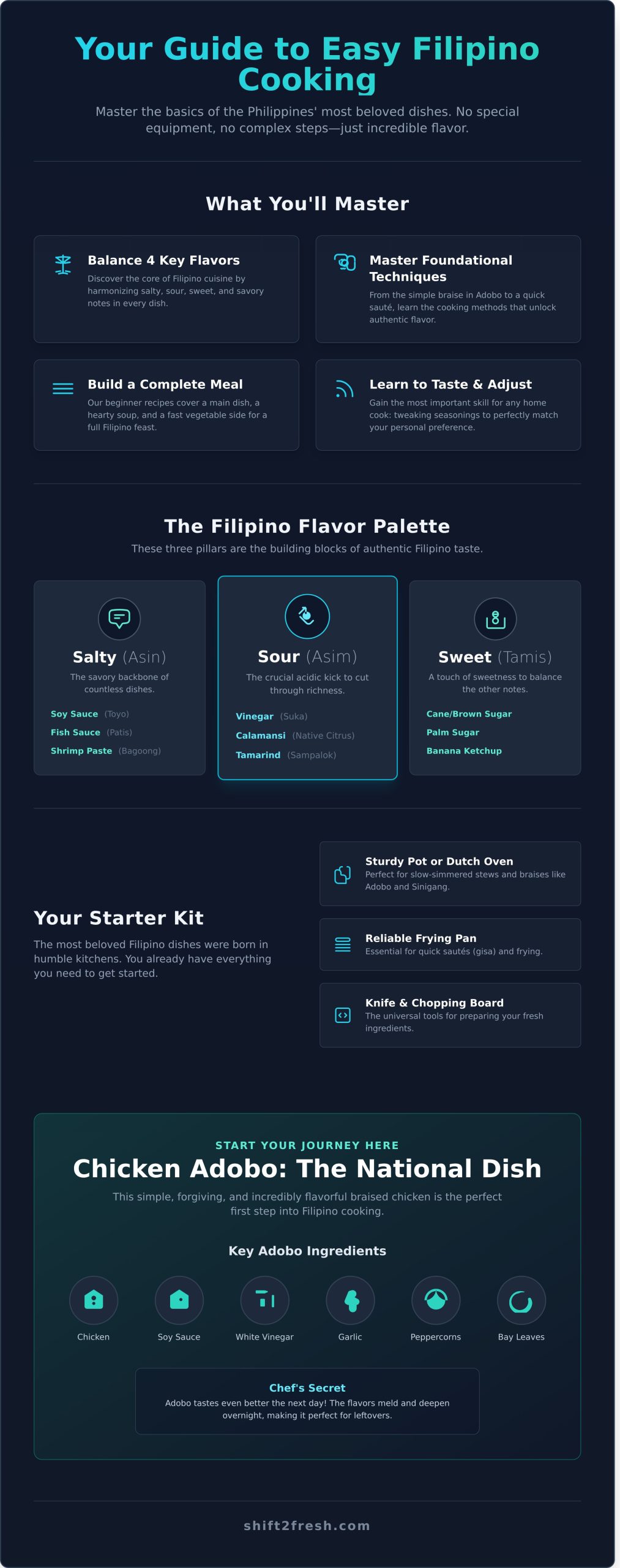
- Discover the core of Filipino cuisine by learning how to balance its four signature flavors: salty, sour, sweet, and savory.
- Master foundational cooking techniques, from the simple braise used in Chicken Adobo to the quick sauté for vegetable dishes.
- These easy filipino recipes for beginners provide a complete meal plan, covering a main dish, a hearty soup, and a fast vegetable side.
- Learn the most important skill for any home cook: how to taste and adjust seasonings to perfectly match your preferences.
Welcome to Filipino Cooking: Your Delicious New Hobby
Stepping into the world of Filipino cooking is like getting a warm hug for your taste buds. More than just a meal, Filipino food is about community, family, and the joy of sharing a generously laid-out table. If you’ve ever felt intimidated by new cuisines, let us reassure you: the beauty of Filipino cooking lies in its simplicity and heart. You don’t need complicated techniques or fancy gadgets to create incredible flavours. This guide to easy filipino recipes for beginners is your perfect starting point for a delicious new culinary adventure.
At its core, the magic of Filipino cuisine comes from a masterful balance of four key flavours: salty, sour, sweet, and savory. Unlike other cuisines where a dish might be one or the other, Filipino food loves to play with contrasts, often hitting all these notes in a single, satisfying bite. Once you understand this foundational palette and stock a few key ingredients, you’ll unlock the ability to cook dozens of classic dishes.
The Filipino Flavor Palette Explained
These are the building blocks of Filipino taste. You’ll find that most recipes call for at least one item from each of the first two categories. Getting familiar with them is the first step to cooking like a pro.
- Salty (Asin): This is the savory backbone. The essentials are soy sauce (toyo), fish sauce (patis), and the uniquely pungent fermented shrimp paste (bagoong).
- Sour (Asim): A bright, acidic kick is crucial for cutting through richness. This comes from vinegar (suka), the native citrus fruit calamansi, or tamarind (sampalok).
- Sweet (Tamis): To balance the salt and sour, a touch of sweetness is often added using cane sugar, palm sugar, or even the iconic sweet and tangy banana ketchup.
Essential Tools You Already Have in Your Kitchen
Forget about rushing out to buy specialty equipment. The most beloved Filipino dishes were born in humble kitchens, using tools you likely already own. To get started, all you really need is:
- A sturdy pot or Dutch oven for stews and braises.
- A reliable frying pan for sautés.
- A sharp knife and a chopping board.
That’s it! While a rice cooker is a staple in every Filipino household and a fantastic convenience (basic models are available across the UAE for under 100 د.إ), you can easily cook rice on the stovetop. The focus is on the ingredients and technique, not the gear, making these easy filipino recipes for beginners truly accessible to everyone.
Recipe 1: Chicken Adobo (The National Dish, Made Easy)
If you’re searching for easy filipino recipes for beginners, your journey must start with Chicken Adobo. Considered the national dish of the Philippines, Adobo is the perfect introduction to the country’s signature flavours. It involves a simple braising technique where chicken is simmered in a savory and tangy mixture of soy sauce, vinegar, garlic, and spices. The result is incredibly tender, flavour-packed chicken that is almost impossible to get wrong.
One of the best-kept secrets of Adobo is that it tastes even better the next day, as the flavours meld and deepen overnight. It’s also wonderfully versatile; while this recipe focuses on chicken, you can easily use pork, or even a combination of both, for a richer taste. Its simplicity and robust flavour make it a staple in every Filipino household and a fantastic starting point for your culinary adventure.
Ingredients for Classic Chicken Adobo
This recipe uses common pantry staples you can find in any well-stocked grocery store. The beauty of Adobo is its simplicity.
- Chicken: 1 kg, bone-in, skin-on pieces (like thighs and drumsticks)
- Soy Sauce: 1/2 cup
- White Vinegar: 1/2 cup
- Garlic: 1 whole head, cloves peeled and smashed
- Black Peppercorns: 1 tablespoon, whole
- Bay Leaves: 3-4 dried leaves
- Cooking Oil: 2 tablespoons
- Optional: 1 tablespoon brown sugar for a hint of sweetness
Step-by-Step Instructions
Following these steps will give you a delicious, authentic-tasting Adobo. The process is straightforward, focusing on building layers of flavour. Many versions of this classic exist, as seen in this popular Chicken adobo recipe, but our method is a guaranteed crowd-pleaser.
- Marinate the Chicken: In a large bowl, combine the chicken pieces, soy sauce, and garlic. Mix well to ensure the chicken is fully coated. Let it marinate for at least 30 minutes, or up to 4 hours in the refrigerator for a deeper flavour.
- Sear for Flavour: Heat the cooking oil in a large pot or Dutch oven over medium-high heat. Remove the chicken from the marinade (reserving the liquid) and place it skin-side down in the pot. Sear for 3-4 minutes per side until golden brown. Do this in batches if necessary to avoid overcrowding the pan.
- Simmer to Tenderness: Return all the seared chicken to the pot. Pour in the reserved marinade, vinegar, peppercorns, and bay leaves. Bring the mixture to a boil, then immediately reduce the heat to low, cover, and let it simmer for 20-30 minutes, or until the chicken is cooked through and tender.
- Reduce the Sauce: Uncover the pot, increase the heat to medium, and let the sauce simmer for another 5-10 minutes. This will allow the sauce to reduce and thicken into a rich, savory glaze. If you’re adding sugar, stir it in during this final step. Serve hot with steamed rice.
Recipe 2: Sinigang na Baboy (A Comforting Sour & Savory Soup)
If you ask any Filipino about their ultimate comfort food, Sinigang will almost always be at the top of the list. This hearty and savory soup is famous for its distinct sour broth, a flavor that can brighten up a gloomy day or cool you down in the UAE heat. Traditionally, the sourness comes from tamarind (sampalok), but for those just starting with easy filipino recipes for beginners, a pre-made Sinigang mix is a game-changer. Alongside the savory-soy profile of a Classic Chicken Adobo, Sinigang represents the heart of Filipino home cooking. It’s a wonderful one-pot meal, loaded with tender pork and a vibrant medley of fresh vegetables.
Ingredients for Simple Pork Sinigang
You can find these ingredients at most Filipino or Asian specialty stores in Dubai, Sharjah, and across the UAE. The Sinigang mix is your key to a perfect broth every time.
- Pork Belly or Ribs: 500g, cut into 2-inch cubes.
- Water: About 8-10 cups.
- Sinigang sa Sampalok Mix: 1 packet (40g).
- Tomatoes: 2 medium, quartered.
- Daikon Radish (Labanos): 1 medium, peeled and sliced into rounds.
- Sitaw (Long Beans): 1 bunch, cut into 2-inch pieces. Sitaw is a type of yardlong bean, tender and slightly sweet.
- Kangkong (Water Spinach): 1 bunch, leaves and tender stems separated. Kangkong is a leafy green common in Southeast Asian cuisine with a mild taste.
Easy Cooking Steps
The beauty of Sinigang is its simplicity. The main goal is to build flavor by cooking ingredients in the right order. First, in a large pot, place the pork and add enough water to cover it completely. Bring it to a boil, then lower the heat and simmer for 45-60 minutes, or until the pork is fork-tender. Skim off any scum that rises to the surface for a clearer broth.
Once the pork is tender, add the Sinigang mix and stir until it dissolves. Add the vegetables that take longer to cook, like the radish and tomatoes, and let them simmer for about 5-7 minutes. Next, add the sitaw (long beans) and cook for another 3-4 minutes until they are tender-crisp. The final step in this collection of easy filipino recipes for beginners is to turn off the heat and stir in the kangkong leaves. The residual heat will wilt them perfectly in just a minute. Serve hot with a side of steamed rice for a truly satisfying meal.
Recipe 3: Ginisang Kangkong (Quick Garlic Water Spinach)
If you’re looking for the ultimate fast, healthy, and flavorful vegetable side dish, Ginisang Kangkong is your answer. This dish is a perfect example of the Filipino ‘ginisa’ method, which simply means to sauté with garlic and onion as a flavor base. It’s incredibly simple but packed with savory goodness. Best of all, you can have this vibrant green dish on your table in under 15 minutes, making it a lifesaver for busy weeknights in the UAE. It’s a foundational recipe that proves how delicious and accessible Filipino cuisine can be.
What You’ll Need for Ginisang Kangkong
The beauty of this dish lies in its simplicity. You can find fresh kangkong (water spinach) in most major supermarkets like Lulu or Spinneys for just a few dirhams. This is one of the most budget-friendly easy filipino recipes for beginners you can make.
- 1 large bundle of fresh kangkong (water spinach)
- 3-4 cloves of garlic, minced
- 1 small red onion, thinly sliced
- 1 tablespoon of cooking oil
- Optional: 1 tablespoon of soy sauce or oyster sauce for extra umami
- Optional additions: Cubes of fried tofu (tokwa) or a small amount of minced pork or shrimp
Quick Stir-Fry Method
The key to perfect Ginisang Kangkong is preparation and speed. Don’t walk away from the pan! To prepare the vegetable, wash it thoroughly and then separate the tender leaves from the tougher, hollow stems. Cut the stems into 2-inch pieces.
- Heat the oil in a wok or large pan over medium-high heat. Add the minced garlic and sauté until fragrant and lightly golden. Add the sliced onions and cook until translucent.
- Add the kangkong stems first, as they take slightly longer to cook. Stir-fry for about 1-2 minutes.
- Toss in the kangkong leaves and your chosen sauce (soy sauce or oyster sauce). Stir continuously until the leaves are just wilted but still a vibrant green. This should only take about 1-2 minutes.
- Remove from heat immediately to avoid overcooking. Serve hot as a side dish with steamed rice.
Recipe 4: Tortang Talong (Filipino Eggplant Omelette)
If you think you know eggplant, prepare to be amazed. Tortang Talong, or Filipino Eggplant Omelette, is a brilliantly simple dish that transforms the humble vegetable into a smoky, savory, and incredibly satisfying meal. The unique two-step cooking process-charring the eggplant first, then pan-frying it in an egg batter-creates a creamy interior with a slightly crisp, golden-brown exterior. It’s a beloved staple for breakfast and lunch across the Philippines, proving that the most memorable dishes don’t need to be complicated. This is one of those easy filipino recipes for beginners that quickly becomes a household favorite.
Ingredients for Tortang Talong
One of the best parts about this recipe is its minimal and affordable ingredient list. You can find everything you need at any local UAE supermarket for well under 20 د.إ.
- Chinese or Japanese Eggplants: 2-3 pieces. Their long, slender shape is ideal for this dish.
- Eggs: 2 large, beaten.
- Salt and Black Pepper: To taste.
- Cooking Oil: For pan-frying.
- Optional Variation: For a heartier meal, create Tortang Talong with Giniling by adding 100g of cooked ground beef or chicken to your egg mixture.
- Dipping Sauce: Banana ketchup is the classic, tangy accompaniment.
For the freshest produce to make this dish, from vibrant eggplants to quality eggs, check out the selection at shift2fresh.com.
Preparing Your Eggplant Omelette
The magic of Tortang Talong lies in its preparation method. First, you must char the eggplant. You can do this by placing it directly over the flame of a gas stove or under your oven’s broiler, turning it occasionally until the skin is completely blackened and blistered. This step infuses the eggplant with a deep, smoky flavour.
Once it has cooled slightly, gently peel off the charred skin, leaving the stem on to act as a handle. Lay the soft eggplant flesh on a plate and use a fork to carefully flatten it into a fan shape. Finally, season your beaten eggs with salt and pepper, dip the flattened eggplant into the mixture, ensuring it’s fully coated, and pan-fry in hot oil over medium heat. Cook for 2-3 minutes per side, until the egg is set and beautifully golden. Serve immediately with a side of steamed rice.
Your Filipino Cooking Success Kit: Tips & Ingredients
You’ve now explored five fantastic dishes that prove anyone can create delicious Filipino food at home. The journey to mastering these easy filipino recipes for beginners is built on a simple foundation: start with the basics, don’t be afraid to experiment, and always taste as you go. Filipino cooking is famously intuitive, so feel free to adjust the seasonings to match your personal preference. A little more vinegar for extra tang, a pinch of sugar to balance the salt-make each dish your own!
Remember, the secret to unforgettable flavour always begins with high-quality, fresh ingredients. The vibrant taste of a perfect Sinigang or a crisp Adobong Kangkong comes directly from the quality of the produce and pantry staples you use.
Top 3 Tips for Beginner Cooks
Keep these core principles in mind, and you’ll build confidence with every meal you prepare:
- Prepare your ingredients first. The French call it ‘mise en place’ (everything in its place). Chop your garlic, measure your soy sauce, and wash your vegetables before turning on the heat. This simple habit prevents stress and makes the cooking process smooth and enjoyable.
- Don’t be afraid of fish sauce (patis). This umami-rich condiment is the heart of many Filipino dishes. If you’re new to it, start with a small amount. You can always add more later. It adds a savoury depth that salt alone cannot replicate.
- Master cooking rice perfectly. Fluffy, perfectly cooked rice is the essential companion to every Filipino meal. Whether you use a rice cooker or a pot, learning to get it right every time is a foundational skill for this cuisine.
Where to Buy Authentic Filipino Ingredients in the UAE
Finding authentic ingredients can be a challenge, but sourcing them in the UAE is easier than you think. For a reliable one-stop shop, look no further than Shift 2 Fresh. They specialize in importing the freshest Filipino produce, from leafy greens like kangkong (water spinach) to essential pantry items that form the backbone of these easy filipino recipes for beginners.
Forget hopping between different stores. With the convenience of online ordering from shift2fresh.com, you can have all your necessary vegetables and pantry staples delivered directly to your door anywhere in the UAE. It’s the simplest way to ensure you have everything you need to start your cooking adventure.
Get all your fresh ingredients delivered by Shift 2 Fresh and start cooking today!
Your Filipino Cooking Adventure Awaits!
You’ve now discovered that Filipino cuisine is not only bursting with flavor but is also incredibly welcoming to newcomers. From the savory depth of Chicken Adobo to the comforting tang of Sinigang, these easy filipino recipes for beginners prove that you don’t need to be an expert chef to create authentic, mouth-watering dishes. The key lies in simple techniques and, most importantly, high-quality, fresh ingredients that form the heart of every meal.
Ready to bring these vibrant flavors into your own kitchen here in the UAE? Finding authentic ingredients is simpler than you think. Shift 2 Fresh is your one-stop shop for authentic Asian ingredients, offering convenient online ordering and delivery across the Emirates. With fresh produce imported directly from the Philippines, you can be sure you’re getting the true taste of home for your culinary creations.
Don’t wait to start your journey. Shop for fresh Filipino vegetables and pantry staples now! We can’t wait to see what delicious meals you create. Happy cooking!
Frequently Asked Questions
What is the easiest Filipino dish for a beginner to cook?
Chicken Adobo is widely considered the easiest Filipino dish to master. Its simple ingredient list-chicken, soy sauce, vinegar, garlic, and peppercorns-is very forgiving. The cooking process mainly involves simmering, which requires minimal active attention. This makes it one of the best easy filipino recipes for beginners to try first. You can achieve a delicious, flavourful result with very little effort, building your confidence to explore other Filipino dishes from there.
What are the 3 main ingredients in Filipino cooking?
The undisputed holy trinity of Filipino cooking is soy sauce (toyo), vinegar (suka), and garlic (bawang). These three ingredients form the flavour base for countless iconic dishes, including Adobo, Paksiw, and Bistek. They provide the signature Filipino balance of salty (alat), sour (asim), and savoury tastes. Mastering how to balance these three core components is the key to creating authentic Filipino flavours right in your own kitchen.
Is Filipino food generally spicy?
Contrary to some beliefs, Filipino food is not inherently spicy. The cuisine focuses more on a balance of salty, sour, sweet, and savoury flavours. Spiciness is typically added by the individual diner through a side dipping sauce called “sawsawan,” which might contain chopped siling labuyo (bird’s eye chilies). This allows each person to customize the heat level to their preference without overwhelming the main dish’s intended flavour profile.
What kind of rice is best to serve with these Filipino dishes?
Steamed white rice is the essential companion to any Filipino meal. Fragrant Jasmine rice is a popular choice for its fluffy texture and subtle aroma. In the UAE, you can easily find excellent quality Jasmine or long-grain rice from brands like Tilda or India Gate at supermarkets like Carrefour or Lulu. A 5kg bag typically costs between 30-50 د.إ, making it an affordable staple for your Filipino cooking journey.
Can I make vegetarian versions of dishes like Adobo or Sinigang?
Absolutely! Many classic dishes can be adapted, making them versatile easy filipino recipes for beginners with dietary preferences. For a vegetarian Adobo, you can substitute the meat with firm tofu (tokwa), mushrooms, or jackfruit. For a hearty vegetable Sinigang, simply omit the meat and load it with taro (gabi), daikon radish, long beans, and kangkong (water spinach) in the classic sour tamarind broth. The core flavours remain beautifully intact.
How do I store ingredients like bagoong (shrimp paste) or patis (fish sauce)?
Proper storage is simple. Patis (fish sauce) is very shelf-stable due to its high salt content; just keep it in a cool, dark pantry away from direct sunlight. Bagoong (shrimp paste), especially the sautéed “gisa” variety, should be refrigerated after opening. Keeping it in the fridge in a tightly sealed jar will preserve its flavour and prevent spoilage, which is especially important in the warm UAE climate.
0 comments