

Craving that comforting, savory taste of home but struggling to find the right ingredients here in the UAE? If the thought of hunting down fresh ampalaya or using bagoong (shrimp paste) feels a little intimidating, you’re not alone. Many of us worry about turning vibrant produce into a mushy mess instead of a delicious stew. But what if you could confidently master this classic dish? Learning how to cook pinakbet vegetables perfectly is a culinary journey, and our step-by-step guide is your ultimate map to success, right from your kitchen in the Emirates.
This isn’t just another recipe; it’s your complete playbook for creating an authentic Filipino vegetable stew that tastes just like it came from your lola’s kitchen. We’ll demystify the entire process, from identifying the essential vegetables and where to find them, to achieving that perfect savory-salty balance with shrimp paste. Get ready to banish mushy vegetables forever and gain the confidence to cook a delicious Pinakbet that brings a comforting piece of the Philippines right to your table.
What is Pinakbet? Understanding the Essentials of This Classic Dish
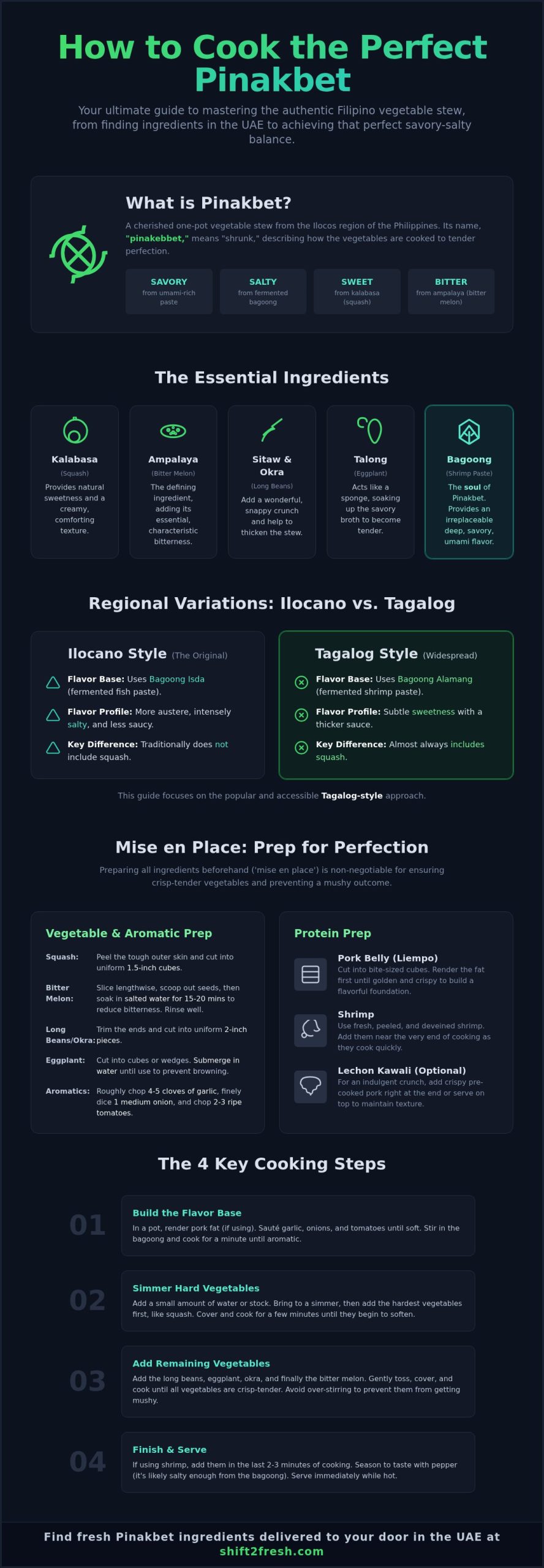
Pinakbet, also known as pakbet, is a cherished Filipino vegetable stew that stands as a testament to hearty, one-pot cooking. Originating from the northern Ilocos region of the Philippines, its name comes from the Ilocano word “pinakebbet,” meaning “shrunk” or “shriveled,” which describes how the vegetables are cooked down to tender perfection. Before you learn how to cook pinakbet vegetables, it’s helpful to explore the rich history of Pinakbet and its cultural significance. The dish strikes a unique and delicious balance of flavors-it’s deeply savory and salty from its unique seasoning, with a gentle sweetness from the squash and a characteristic bitterness that makes it truly unforgettable.
The Core Pinakbet Vegetables You’ll Need
The beauty of Pinakbet lies in its medley of simple, nutritious vegetables, each playing a vital role. While you can find these in many supermarkets across the UAE, Asian grocery stores are your best bet. The essential mix includes:
- Kalabasa (Squash): Provides a natural sweetness that balances the saltiness of the dish and cooks down into a creamy, comforting texture.
- Ampalaya (Bitter Melon): This is the defining ingredient. Its distinct bitterness is an acquired taste for some, but essential for an authentic Pinakbet flavor.
- Sitaw (Long Beans) & Okra: These add a wonderful, snappy crunch and help to thicken the stew slightly.
- Talong (Eggplant): Slices of eggplant act like a sponge, soaking up the savory broth and becoming incredibly tender and flavorful.
The Flavor Base: Bagoong (Fermented Shrimp Paste)
The soul of Pinakbet is bagoong, a pungent, salty condiment made from fermented seafood. Don’t be intimidated by its strong aroma straight from the jar; when sautéed with garlic and onions, its scent mellows into a deeply savory, umami-rich flavor that is absolutely irreplaceable. The most common type used is bagoong alamang (made from tiny shrimp), but the original Ilocano version uses bagoong isda (made from fermented fish).
Popular Variations: Ilocano vs. Tagalog Style
While the core ingredients remain similar, two main regional styles exist. The original Ilocano style is more austere, using bagoong isda and traditionally no squash, resulting in a saltier, less saucy dish. The more widespread Tagalog style, popular in Manila and beyond, uses bagoong alamang and almost always includes squash, which lends a subtle sweetness and thicker sauce. Our recipe will guide you on how to cook Pinakbet vegetables using the popular and accessible Tagalog-style approach.
Ingredient Preparation: Your ‘Mise en Place’ for Perfect Pinakbet
In professional kitchens, chefs live by the rule of ‘mise en place’-having every ingredient prepped and ready before the cooking begins. For a fast-moving dish like Pinakbet, this step is non-negotiable. It ensures you can add each vegetable at the perfect moment, preventing the dreaded mushy outcome and guaranteeing a vibrant, crisp-tender result. Mastering how to cook pinakbet vegetables starts long before you turn on the stove.
Follow this checklist to get all your components ready for a seamless cooking experience. If you find you’re missing a key ingredient, don’t worry. You can find fresh Pinakbet vegetables delivered to your door.
How to Choose and Cut Your Vegetables
The key to a visually appealing and perfectly cooked Pinakbet is uniform vegetable cuts. This allows everything to cook evenly.
- Squash (Kalabasa): Peel the tough outer skin and cut the flesh into consistent 1.5-inch cubes.
- Bitter Melon (Ampalaya): To manage its distinct bitterness, slice it in half lengthwise, scoop out the seeds and pith, and soak the slices in salted water for 15-20 minutes before rinsing.
- Long Beans (Sitaw) & Okra: Simply trim the tough ends and cut them into uniform 2-inch pieces for a pleasant bite.
- Eggplant (Talong): Cut into cubes or wedges. To prevent them from turning brown (oxidizing) while you prep other ingredients, submerge the pieces in a bowl of water until you’re ready to cook.
Preparing the Protein: Pork Belly or Shrimp?
The protein adds a rich, savory depth that defines this classic Filipino stew. Your choice of protein will slightly change the initial cooking steps.
- Pork Belly (Liempo): Cut into small, bite-sized cubes. The first step in cooking will be to render the fat until the pieces are golden and crispy, creating a flavorful foundation for the dish.
- Shrimp: For the best texture, use fresh shrimp that has been peeled and deveined. Shrimp cooks very quickly, so it’s typically added near the end of the cooking process.
- Lechon Kawali (Crispy Pork): A popular and indulgent addition. If using, add the crispy pieces right at the end or serve on top to maintain that satisfying crunch.
Getting the Aromatics Ready
These ingredients build the soul of your Pinakbet’s sauce. For more authentic Pinakbet Tagalog cooking tips, getting your aromatics right is a non-negotiable first step in learning how to cook pinakbet vegetables properly. Have them chopped and ready beside your stove.
- Garlic: Roughly chop or crush 4-5 cloves to release their potent flavor.
- Onion: Finely dice one medium-sized yellow or red onion.
- Tomatoes: Chop 2-3 ripe tomatoes. Their juices will break down to form the base of the sauce.
- Ginger (optional): For an extra layer of warmth and spice, have a few thin slices of ginger ready.
Step-by-Step Cooking Instructions for Authentic Pinakbet
Now for the exciting part! With your ingredients prepped, the cooking process is surprisingly fast, typically taking less than 30 minutes. This section will guide you through exactly how to cook pinakbet vegetables to achieve that perfect, authentic flavour and texture. Follow these steps closely for delicious results.
Step 1: Build the Flavor Base
In a heavy-bottomed pot or wok over medium heat, add the sliced pork belly. Cook, stirring occasionally, until the fat has rendered and the pork pieces are golden and crispy. Remove the crispy pork (known as chicharon) and set it aside for later, leaving about two tablespoons of rendered fat in the pot. Sauté the garlic, onion, and ginger in the hot fat until fragrant. Add the fresh tomatoes and cook until they break down and form a rich, paste-like base.
Step 2: Add the Bagoong and Liquid
Stir the bagoong alamang (shrimp paste) into the pot. Cook it for about a minute, allowing its deep, umami flavour to “bloom” and integrate with the aromatics. This is a crucial step for developing the signature Pinakbet taste. Next, pour in the water or traditional rice washing. Be mindful not to add too much liquid; you only need enough to create steam. Pinakbet is a stew, not a soup. Bring it to a gentle simmer.
Step 3: Layer the Vegetables Correctly
This is the most critical technique in making authentic Pinakbet. The secret to perfectly cooked vegetables lies in layering them according to their cooking time. Do not stir them together. Trust the process!
- Hardest First: Add the kalabasa (squash) directly into the simmering liquid at the bottom of the pot.
- Next Layer: Gently arrange the ampalaya (bitter melon) and sitaw (long beans) on top of the squash.
- Softest on Top: Finish by layering the talong (eggplant) and okra over everything else.
Step 4: Simmer to Perfection
Cover the pot tightly and lower the heat to medium-low. Let the vegetables steam and simmer for 7 to 10 minutes, or until they are tender-crisp. It is essential to avoid stirring, as this can crush the vegetables and make the bitter melon taste overpowering. If you need to mix, gently shake the entire pot. If using shrimp, add them during the last 2-3 minutes of cooking, just until they turn pink and opaque. Serve hot, garnished with the crispy pork you set aside earlier.
Pro Tips and Common Mistakes to Avoid
You have the recipe, now let’s elevate your dish from a simple weeknight meal to a Filipino classic you can be proud of. Mastering how to cook pinakbet vegetables perfectly is all about technique. These professional tips address the most common challenges beginners face, ensuring your pinakbet is a delicious success every single time.
How to Avoid Mushy Vegetables
The number one mistake with pinakbet is overcooking the vegetables into a mushy, unappetizing stew. The goal is a vibrant mix of tender-crisp textures. To achieve this, always follow the layering rule: add the hardest vegetables like kalabasa (squash) first, followed by sitaw (long beans) and ampalaya (bitter melon), and finally the most delicate ones like okra and tomatoes. Resist the temptation to stir constantly. Instead, gently shake the pot to mix the ingredients. This prevents the softer vegetables from breaking apart.
Balancing the Saltiness of Bagoong
Bagoong (fermented shrimp paste) provides pinakbet’s signature umami flavour, but its saltiness can vary significantly between brands found across the UAE. Always start with less than you think you need-about one tablespoon is a good starting point. You can easily add more later after tasting. If you find the dish is slightly too salty, a pinch of brown sugar is the secret weapon of many Filipino cooks. It doesn’t just mask the salt; it balances the overall flavour profile beautifully.
Making It Your Own: Easy Customizations
Once you understand the fundamentals of how to cook pinakbet vegetables, you can start experimenting. This dish is wonderfully adaptable to different tastes and dietary needs.
- Vegetarian Pinakbet: For a delicious plant-based version, replace the pork with firm, fried tofu and use fermented soybean paste (known as taucu in many Asian supermarkets) instead of bagoong for that savoury depth.
- Spicy Version: If you enjoy a bit of heat, add one or two sliced red chilies (siling labuyo) when you sauté the garlic and onions.
- Other Proteins: This recipe works well with other meats. Try it with bite-sized pieces of chicken breast or even add crispy fried fish on top just before serving.
By keeping these simple tips in mind, you’ll gain the confidence to cook authentic pinakbet that rivals what you’d find in any Filipino home. Enjoy the process!
Serving, Storing, and Pairing Your Pinakbet
Congratulations! You’ve successfully created a vibrant and flavorful Pinakbet. Now, the final and most rewarding step is enjoying your culinary creation. Mastering how to cook pinakbet vegetables is one thing, but serving it correctly elevates the entire experience from a simple dish to a memorable Filipino meal.
The Best Way to Serve Pinakbet
Pinakbet is traditionally served steaming hot, straight from the pot, as a main course. Its perfect partner is a generous bowl of freshly cooked white rice. The neutral, fluffy grains of rice provide the ideal canvas, soaking up the savory, umami-rich sauce and balancing the intense flavors of the bagoong (shrimp paste). Each spoonful becomes a perfect combination of tender-crisp vegetables, savory meat, and comforting rice.
Classic Pairings for a Complete Filipino Meal
While Pinakbet is a fantastic standalone dish, it truly shines as part of a larger spread. To create a classic Filipino meal that residents across the UAE will love, consider serving it alongside a simple, crispy protein. This creates a delightful contrast in textures and flavors.
- Pritong Isda (Fried Fish): A whole fried tilapia or galunggong offers a crunchy counterpoint to the soft, stewed vegetables.
- Grilled Meats: Inihaw na liempo (grilled pork belly) or grilled chicken adds a smoky dimension that complements the dish beautifully.
- Condiments: Offer a small dipping bowl of spicy vinegar (sinamak) or fresh calamansi halves to squeeze over the fish or meat for a bright, acidic kick.
How to Store and Reheat Leftovers
Don’t worry if you have leftovers; Pinakbet is one of those dishes that arguably tastes even better the next day! The flavors have more time to meld and deepen overnight. Store any remaining Pinakbet in an airtight container in the refrigerator for up to three days.
To reheat, gently warm it in a saucepan over low heat until heated through. We recommend avoiding the microwave, as it can overcook the vegetables and turn them mushy, undoing all your hard work. This gentle reheating method is a key part of knowing how to cook pinakbet vegetables for a second delicious meal, ensuring they retain their perfect texture.
By pairing and storing it properly, you transform this humble vegetable stew into a versatile and deeply satisfying meal. For your next culinary adventure, ensure you start with the best ingredients by sourcing fresh, quality vegetables delivered right to your door.
Bring the Authentic Taste of Pinakbet to Your Table
You now have all the knowledge you need to create a truly authentic Filipino vegetable stew. Remember, the secret to this classic dish lies in achieving that perfect balance of salty bagoong and fresh, slightly bitter vegetables. By following our guide and layering your ingredients carefully, you’ve learned that mastering how to cook pinakbet vegetables is a rewarding experience that brings a beloved Filipino comfort food right into your home kitchen.
Ready to put your new skills to the test? Finding the right ingredients in the UAE is now easier than ever. Shift 2 Fresh is your one-stop shop, offering authentic vegetables freshly imported from the Philippines, from ampalaya to sitaw. Experience the ultimate convenience with our simple online ordering and reliable home delivery service. Get everything you need for this recipe and all your other Filipino pantry staples in one place. Shop for fresh Pinakbet ingredients and get them delivered in the UAE!
Embrace the vibrant flavors and rich traditions in every spoonful. Happy cooking, and enjoy sharing this delicious, hearty dish with your loved ones!
Frequently Asked Questions About Cooking Pinakbet
Can I make Pinakbet without bagoong (shrimp paste)?
Yes, you can cook Pinakbet without bagoong. While bagoong provides the dish’s signature umami flavour, a good substitute is fish sauce (patis), which is widely available in UAE supermarkets. Start with a tablespoon and adjust to your taste. For a vegetarian option, you can use a small amount of fermented soybean paste (miso) or even just salt, though the final taste will be different from the traditional version. Adjust seasoning carefully to achieve a savoury balance.
What are the best substitutes if I can’t find a specific Pinakbet vegetable?
Finding the right ingredients in the UAE is easy, but substitutes work well. If you can’t find Filipino squash (kalabasa), butternut squash is an excellent replacement. For long beans (sitaw), regular green beans are a perfect swap. Can’t find winged beans (sigarilyas)? Omit them or add more okra. The key to learning how to cook pinakbet vegetables is flexibility; use fresh, seasonal produce like zucchini or capsicum available at your local Lulu or Carrefour.
Is Pinakbet a healthy dish to eat?
Pinakbet is a very healthy dish, packed with vitamins, minerals, and fibre from its diverse vegetable base, including bitter melon, eggplant, okra, and squash. Its nutritional value depends on the preparation. To make it healthier, you can use leaner cuts of meat or reduce the amount of pork fat. Being mindful of the sodium content from the bagoong or fish sauce also contributes to making this a nutritious and balanced meal perfect for any family dinner.
Why is my Pinakbet watery and how can I fix it?
Watery Pinakbet is usually caused by adding too much water or from the vegetables releasing their natural juices during cooking. Traditionally, Pinakbet should be stewed with minimal liquid, allowing the ingredients to steam in their own flavours. To fix a watery dish, simply remove the lid and let it simmer for another 5-10 minutes. This allows the excess liquid to evaporate and the sauce to thicken, concentrating the delicious flavours of the vegetables and bagoong.
How do I make the bitter melon (ampalaya) less bitter?
The strong bitterness of ampalaya can be easily reduced with a simple technique. After slicing the bitter melon, place it in a bowl and sprinkle it generously with salt. Gently massage the salt into the slices and let it sit for about 20-30 minutes. This process draws out the bitter liquid. Before adding it to your Pinakbet, make sure to rinse the slices thoroughly with cold water to wash away the salt and extracted bitter juices.
Can I use frozen vegetables to cook Pinakbet?
While fresh produce is always recommended for the best texture and flavour, you can use frozen vegetables in a pinch. When you’re learning how to cook pinakbet vegetables, it’s good to know your options. Be aware that frozen vegetables, particularly okra and squash, can become soft or mushy more quickly. To avoid this, add them towards the final 5-7 minutes of cooking time, ensuring they are heated through but not overcooked and retaining some of their texture.
0 comments