

Does the thought of a soul-warming bowl of sinigang or a perfectly savoury pinakbet make your mouth water, only to be met with the challenge of finding the right ingredients? That hunt for crisp kangkong, sour sampalok, or bitter-perfect ampalaya can feel like an impossible quest in Dubai’s standard grocery aisles. Navigating a sprawling vegetables dubai market can be overwhelming, and trusting online stores for freshness feels like a gamble. The dream of cooking authentic Filipino food often stops right there-at the missing ingredients.
Well, your search ends now. This guide is your ultimate map to unlocking the vibrant flavours of the Philippines right here in the UAE. We’ll walk you through the essential Filipino vegetables you absolutely need in your kitchen and, most importantly, reveal the best spots to buy them. From the hidden gems in bustling souks to the most reliable online delivery services, you’ll learn exactly where to go and what to look for. Get ready to fill your basket with the freshest produce and bring the true taste of home to your dining table.
Why Filipino Vegetables Are a Must-Try for Dubai Foodies
Dubai’s vibrant culinary scene is a global melting pot, and the complex, comforting flavours of the Philippines are carving out a well-deserved space. For the city’s large Filipino community, finding these ingredients is a taste of home. For the adventurous foodie, it’s a passport to a world of unique tastes-from the hearty bitterness of ampalaya (bitter melon) to the satisfying crunch of sitaw (long beans).
Filipino cuisine masterfully balances salty, sour, sweet, and savoury notes. Exploring the unique produce used to achieve this balance is the first step in understanding and recreating these incredible dishes in your own kitchen. Whether you’re a seasoned cook or a curious novice, the journey begins at the source: the fresh produce aisle.
A Taste of the Philippines in the Heart of the UAE
As Dubai’s appetite for authentic international food grows, so does the demand for specific ingredients that define a culture’s cuisine. Filipino vegetables are not mere additions; they are the heart and soul of iconic dishes like the sour and savoury Sinigang or the rich, stewed Pinakbet. This growing demand means the availability of quality Filipino vegetables Dubai market stalls and supermarkets offer is better than ever. These ingredients form the foundation of a culinary tradition celebrated for its communal and festive nature, a fact you can explore in this detailed overview of Filipino cuisine. They represent a vibrant culture of sharing and celebration, right here in the UAE.
More Than Just Ingredients: Health and Wellness
Beyond their distinct flavours, Filipino vegetables are nutritional powerhouses that play a key role in a healthy, balanced diet. Many are packed with essential vitamins, minerals, and fibre, contributing to overall well-being. Take, for instance, malunggay (Moringa), a leafy green often hailed as a superfood for its incredible density of nutrients.
Incorporating these vegetables into your meals can offer significant benefits, such as:
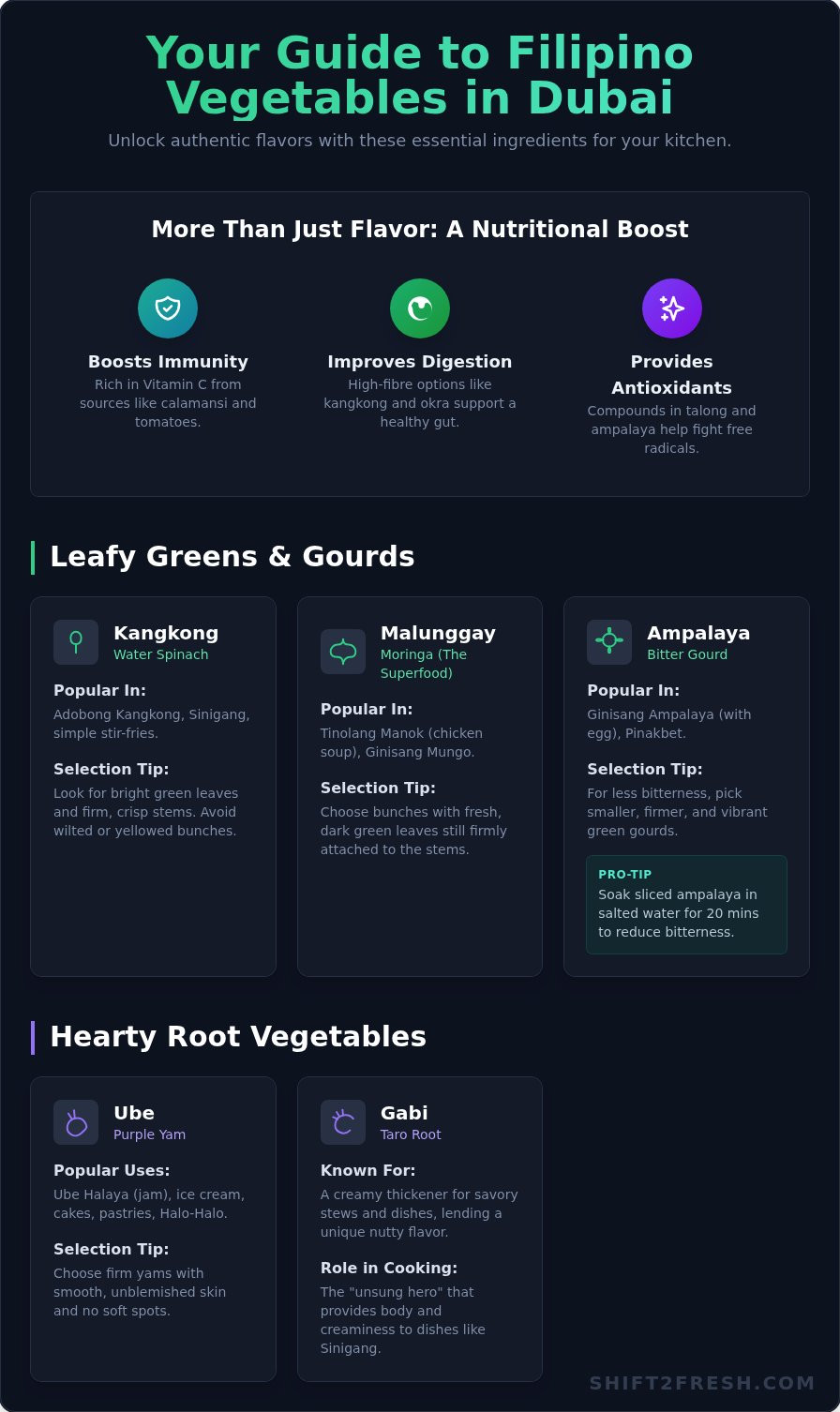
- Boosting Immunity: Many are rich in Vitamin C, like calamansi and tomatoes.
- Improving Digestion: High-fibre options like kangkong (water spinach) and okra support a healthy gut.
- Providing Antioxidants: Vegetables like talong (eggplant) and ampalaya contain compounds that help fight free radicals.
Essential Leafy Greens and Gourds for Your Kitchen
Filipino cooking is rich with vibrant green vegetables that form the base of many hearty soups, stews, and stir-fries. Navigating any vegetables dubai market becomes an exciting treasure hunt when you know which authentic greens to look for. These foundational ingredients are readily available and bring an unmistakable taste of the Philippines to your kitchen here in the UAE. Let’s explore three essentials that you can easily find and cook with today.
Kangkong (Water Spinach): The Versatile Staple
With its mild, slightly sweet flavour and satisfyingly crunchy stems, Kangkong is a beloved staple that cooks in minutes. It’s perfect for quick, healthy meals as it readily absorbs the flavours of sauces and broths, making it a go-to for busy weeknights.
- Popular Dishes: A star in Adobong Kangkong (braised in soy sauce and vinegar), a key addition to the sour soup Sinigang, and perfect for simple stir-fries with garlic.
- Selection Tip: Look for bunches with bright green leaves and firm, crisp stems. Avoid any that appear wilted or have yellow spots.
Malunggay (Moringa): The Nutrient-Packed Superfood
Often hailed as a superfood, Malunggay leaves are packed with vitamins and minerals. They have a distinct earthy flavour, similar to spinach, that adds a nutritious and flavourful depth to brothy dishes. The leaves are typically stripped from the stem and added to soups just before serving to retain their nutrients.
- Popular Dishes: A classic in Tinolang Manok (chicken ginger soup) and Ginisang Mungo (sautéed mung beans).
- Selection Tip: Choose bunches where the small leaves are fresh, dark green, and still firmly attached to the stems.
Ampalaya (Bitter Gourd): The Acquired Taste
True to its name, Ampalaya has a distinct bitter taste that is treasured in Filipino cuisine for its unique flavour profile and health benefits. Its crunchy, watery texture holds up well in stir-fries. To reduce bitterness, many cooks soak the sliced gourd in salted water for about 20 minutes before cooking.
- Popular Dishes: Most famously cooked as Ginisang Ampalaya (sautéed with egg and tomatoes) and as an essential component of the mixed vegetable stew, Pinakbet.
- Selection Tip: For a less bitter experience, select gourds that are smaller, firmer, and a vibrant green colour.
Hearty Root Vegetables and Essential Beans
No Filipino kitchen is complete without a stock of hearty root vegetables and versatile beans. These ingredients are the foundation of countless comforting dishes, providing substance, texture, and a unique depth of flavour. From the creamy thickness of taro to the vibrant sweetness of purple yam, these staples demonstrate the incredible versatility of Filipino cooking, seamlessly transitioning from savory stews to decadent desserts. They are essential finds for anyone looking to recreate authentic meals at home.
Ube (Purple Yam): The Vibrant Root
Instantly recognizable by its stunning violet hue, ube is more than just a colourful ingredient-it’s a cultural icon. Its unique flavour profile is sweet and nutty with delicate notes of vanilla, making it the star of Filipino desserts. While fresh ube can be a prized find, many stores in Dubai also offer it in frozen or powdered form, perfect for home bakers.
- Popular uses: The base for Ube Halaya (a rich purple yam jam), ice cream, cakes, pastries like hopia, and the classic halo-halo.
- Selection tip: When buying fresh, look for firm yams with smooth, unblemished skin and no soft spots or deep cracks.
Gabi (Taro Root): The Creamy Thickener
Gabi, or taro root, is the unsung hero of many savory Filipino dishes. When cooked, its starchy flesh breaks down, lending a wonderfully creamy consistency and nutty flavour that thickens soups and stews. When exploring the root vegetables Dubai market selections, gabi is a must-have for adding body and a comforting richness to your cooking.
- Popular dishes: A key ingredient in Laing (taro leaves in coconut milk), a souring agent in Sinigang, and the star of Ginataang Gabi.
- Selection tip: Choose roots that feel heavy for their size, are firm to the touch, and show no signs of mold or shriveling.
Sitaw (Yardlong Beans): The Everyday Bean
Longer and crisper than the common green bean, sitaw is a staple green vegetable in the Philippines. Its distinct, earthy flavour and satisfying snap make it a versatile addition to stir-fries, stews, and side dishes. It holds its texture well during cooking, providing a pleasant crunch that complements richer ingredients.
- Popular dishes: Famously used in Adobong Sitaw, a core component of the vegetable stew Pinakbet, and the spicy coconut milk dish Gising-gising.
- Selection tip: Look for vibrant green beans that are flexible but snap cleanly when bent. Avoid any that are limp or have blemishes.
By adding these root vegetables and beans to your shopping list, you’re well on your way to mastering the hearty and soulful side of Filipino cuisine. Keep an eye out for them in the fresh produce section of any well-stocked vegetables Dubai market or Filipino specialty store.
Your Guide to Finding Fresh Filipino Vegetables in Dubai
Craving the authentic taste of sinigang or a fresh pinakbet? Finding the right ingredients is the first step. Dubai offers a fantastic range of options for sourcing Filipino produce, from the bustling energy of traditional souks to the click-of-a-button ease of online delivery. Whether you enjoy the thrill of the hunt or prefer curated convenience, there’s a perfect solution for you in the diverse vegetables dubai market.
Exploring Dubai’s Physical Markets: The Souk Experience
For a truly immersive shopping experience, nothing beats a trip to one of Dubai’s traditional markets. The Waterfront Market in Deira is a prime destination, offering a vast array of produce. To make the most of your visit, go early for the freshest picks, bring cash (AED), and don’t be afraid to inspect the produce closely. While you can find great deals, especially when buying in bulk, the variety of specific Filipino vegetables can sometimes be hit-or-miss.
The Rise of Online Markets: Convenience and Quality
In a fast-paced city like Dubai, convenience is king. Online grocery platforms have transformed how we shop, offering significant benefits:
- Time-Saving: Skip the traffic and queues with delivery straight to your doorstep.
- Curated Selection: Easily find exactly what you need without searching through endless stalls.
- Guaranteed Freshness: Reputable online stores use temperature-controlled logistics to ensure produce arrives in peak condition.
Specialized online importers have a distinct advantage, often sourcing rare items directly from farms in the Philippines that you won’t find elsewhere.
Shift 2 Fresh: Your Direct Source for Authentic Produce
For those seeking the ultimate blend of authenticity and convenience, Shift 2 Fresh is the premier online destination. As specialists in Filipino produce, we bridge the gap between farms in the Philippines and your kitchen in Dubai. By directly importing our stock, we guarantee that every item-from crisp kangkong to vibrant kalabasa-is genuinely fresh and authentic. Our user-friendly website and mobile app make it effortless to browse, select, and order your favourite ingredients for home delivery. Stop searching and start cooking.
Shop for fresh, authentic Filipino vegetables now!
Pro Tips for Selecting, Storing, and Prepping Your Vegetables
You’ve successfully navigated the aisles and found your favourite Filipino greens. Now, the goal is to make them last, ensuring every dirham spent translates into delicious, nutritious meals. Extending the life of your produce is simple with the right techniques. From the moment you pick an item to the time it hits your plate, these pro tips will help you reduce waste and get the most value from the fresh vegetables Dubai market stalls have to offer.
How to Choose the Best Produce Every Time
Your journey to a perfect meal starts with selection. Trust your senses to guide you. Look for vegetables with vibrant, deep colours and a firm, crisp texture. A good talong (eggplant) should be smooth and taut, while kangkong leaves should be a lively green. Avoid anything with significant wilting, soft spots, or discolouration. Don’t be afraid to gently feel the produce and give it a light sniff-fresh vegetables should smell earthy and clean, not sour or musty.
Proper Storage for Maximum Freshness
Once home, proper storage is crucial to prevent your beautiful produce from spoiling. Different vegetables have different needs, but these general rules will keep them fresher for longer:
- Leafy Greens (e.g., Kangkong, Malunggay): Gently wash and thoroughly dry the leaves. Wrap them loosely in a paper towel to absorb excess moisture and place them inside a plastic bag or container in the refrigerator.
- Root Vegetables (e.g., Gabi, Kamote): Do not refrigerate. Keep them in a cool, dark, and dry place with good air circulation, like a pantry or a basket in a shaded corner of your kitchen.
- Beans and Gourds (e.g., Sitaw, Ampalaya): These do best in the crisper drawer of your refrigerator. Keep them in a breathable bag to maintain a balance of humidity.
Quick Preparation Tips
Prepping Filipino vegetables can be easy and efficient. For ampalaya (bitter gourd), you can significantly reduce its bitterness by slicing it, tossing it with salt, and letting it sit for 15-20 minutes before rinsing thoroughly. When cooking kangkong, separate the tougher stems from the tender leaves and cook the stems first for a minute before adding the leaves for perfectly even cooking. Lastly, when peeling gabi (taro), wear gloves to avoid the skin irritation its sap can cause.
Mastering these simple steps ensures you enjoy every bit of the fresh vegetables you bring home. For guaranteed freshness delivered right to your door, explore the handpicked selection at Shift2Fresh.
From Market to Mesa: Your Filipino Culinary Adventure Awaits
Exploring the vibrant world of Filipino vegetables opens up a new dimension of flavour right here in Dubai. From the peppery leaves of malunggay to the hearty substance of gabi, you’ve learned how these ingredients can transform your everyday meals. Navigating the vegetables dubai market scene for these specific items is no longer a challenge, especially when you know where to look and how to choose the freshest produce for that authentic taste.
Ready to skip the search and start cooking? Shift2Fresh makes it simple. With over 45 years of family experience in the food industry, we bring the farm-to-table experience to you. Our produce is directly imported from farms in the Philippines for peak freshness, ensuring you get the quality you deserve. Ordering is effortless through our user-friendly website and mobile app.
Explore our full range of fresh Filipino vegetables and get them delivered to your door! Embrace the rich, wholesome flavours of the Philippines and bring a taste of home to your kitchen in the UAE. Happy cooking!
Frequently Asked Questions
Are Filipino vegetables expensive to buy in Dubai?
While some imported Filipino vegetables might be priced slightly higher than locally grown produce due to shipping and logistics costs, they are generally affordable. Prices can fluctuate, but specialized Asian supermarkets and online stores often offer competitive rates in AED. Buying in season and comparing prices between vendors can help you find the best deals, making it easy to enjoy a taste of home without breaking your budget.
How can I be sure the vegetables I order online from Shift 2 Fresh will be fresh?
At Shift 2 Fresh, freshness is our top priority. We have a streamlined “farm-to-doorstep” process, working directly with suppliers to minimize transit time. Our team performs rigorous quality checks on all produce upon arrival and before packing your order. With our temperature-controlled storage and rapid delivery service across Dubai, we guarantee that the vegetables you receive are crisp, vibrant, and of the highest quality, just as you’d expect.
What is the easiest Filipino vegetable dish for a beginner to cook?
A fantastic and simple dish for any beginner is Adobong Kangkong (Water Spinach Adobo). It requires minimal ingredients: kangkong, soy sauce, vinegar, garlic, and a little oil. You simply sauté the garlic, add the kangkong stems then the leaves, and simmer them in the soy sauce and vinegar mixture for a few minutes. It’s a delicious, nutritious, and incredibly fast dish that perfectly captures classic Filipino flavours.
Can I find these vegetables in major supermarket chains like Carrefour or Spinneys?
You may find a limited selection of popular Filipino vegetables, like bitter melon (ampalaya) or long beans (sitaw), in the international sections of larger Carrefour or Spinneys branches. However, for a wider and more reliable variety, your best bet is to visit a specialized Filipino or Asian supermarket. For the most comprehensive range of options in the vegetables Dubai market, dedicated online grocers are an excellent and convenient choice.
How often do you get new shipments of fresh vegetables from the Philippines?
To ensure our customers always get the freshest produce possible, we receive multiple air-flown shipments directly from the Philippines every week. This frequent replenishment cycle means our stock is constantly being updated with high-quality, newly harvested vegetables. By maintaining this schedule, we can confidently offer items like fresh malunggay, kangkong, and sili with the authentic taste and texture you love, right here in the UAE.
What is the difference between Ube (purple yam) and regular sweet potatoes?
Although they look similar, ube and sweet potatoes are distinct. Ube is a true yam with a rough, bark-like skin and a deep, vibrant purple flesh. It has a unique flavour profile that is often described as nutty and vanilla-like. Sweet potatoes have a smoother, thinner skin and can be orange, white, or purple inside. They are generally sweeter and have a moister, less starchy texture compared to the denser, creamier ube.
0 comments