

Why a Well-Stocked Filipino Pantry is Your Secret to Authentic Flavor
Ready to dive into the vibrant world of Filipino cuisine? The secret to those incredible flavors isn’t just in the recipes-it’s in the pantry. A well-stocked collection of essential ingredients allows you to unlock the core tastes of Filipino food: the perfect balance of salty, sour, sweet, and umami. When you have these staples on hand, you can go beyond simply following recipes and start cooking by taste, just like a true Filipino home cook. This guide makes it easy to get started, especially for those of us in the UAE. We’ll cover the absolute must-haves for your first shopping list, helping you build a foundation for countless delicious meals.
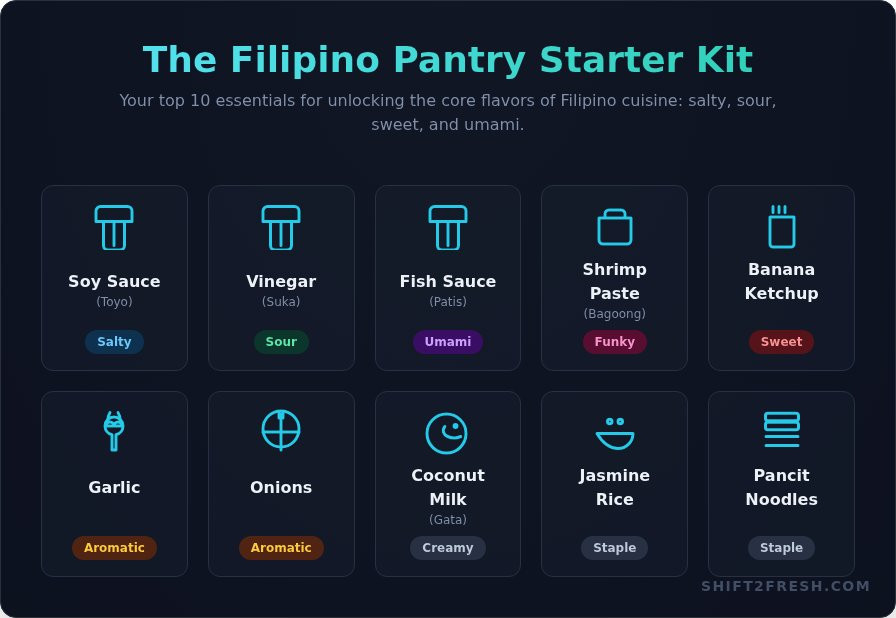
The Filipino Pantry Starter Kit: Top 10 Essentials
If you’re starting from scratch, this checklist covers the non-negotiable items that will get you cooking authentic Filipino dishes right away.
- Soy Sauce (Toyo): The cornerstone of salty and savory flavors.
- Vinegar (Suka): Provides the signature sour kick essential to many dishes.
- Fish Sauce (Patis): Delivers a powerful umami punch.
- Shrimp Paste (Bagoong): A uniquely funky and flavorful condiment.
- Banana Ketchup: The sweet and tangy sauce beloved by all ages.
- Garlic: The aromatic foundation of almost every savory dish.
- Onions: Works alongside garlic to build a deep flavor base.
- Coconut Milk (Gata): For creamy stews and rich desserts.
- Jasmine Rice: The essential fluffy companion to every meal.
- Pancit Noodles: The key to making classic Filipino noodle dishes.
The Foundation: Essential Filipino Sauces, Vinegars & Condiments
These liquids are the lifeblood of Filipino cooking, forming the distinct flavor base of most iconic dishes. It’s important to understand the difference between Filipino varieties and their other Asian counterparts, as they each bring a unique character to the table.
Soy Sauce (Toyo): The Salty, Savory Staple
Used in everything from the iconic Chicken Adobo marinade to savory stir-fries and simple dipping sauces (sawsawan), soy sauce is indispensable. Filipino soy sauce (toyo) is typically lighter and saltier than Japanese or Chinese varieties, giving it a distinct profile perfect for balancing other strong flavors. It’s the ultimate all-purpose seasoning you’ll reach for again and again. Shop for authentic Soy Sauce here and taste the difference.
Vinegar (Suka): The Signature Sour Kick
Sourness (asim) is a defining characteristic of Filipino cuisine, and vinegar is its primary source. It’s the key ingredient that tenderizes and preserves meat in adobo, “cooks” fish in kinilaw (Filipino ceviche), and adds a bright tang to paksiw. You’ll find several common types, including cane vinegar, coconut vinegar, and palm vinegar, each offering a slightly different level of acidity and complexity.
Fish Sauce (Patis): The Umami Bomb
Don’t be intimidated by its pungent aroma; patis is a flavor powerhouse. Made from fermented fish, it adds a deep, savory, and complex umami flavor that salt alone cannot provide. Use it to season soups like sinigang, enrich stews, or mix into a dipping sauce with calamansi and chili. Remember, a little goes a very long way in transforming a dish from good to great.
Shrimp Paste (Bagoong): Funky and Flavorful
Bagoong is a bold and beloved condiment made from fermented shrimp or fish. Its powerful, salty flavor is an acquired taste for some but is absolutely essential for classic dishes like the rich peanut stew Kare-Kare and the vegetable medley Pinakbet. It can also be sautéed with garlic, onions, and tomatoes to be served as a side dish with green mangoes or grilled fish. Find the perfect Bagoong for your kitchen and unlock a new dimension of Filipino flavor.
Building Your Dishes: Aromatics, Carbs, and Fats
No Filipino kitchen is complete without these everyday workhorses. From the fragrant beginnings of a sauté to the comforting base of rice and noodles, these items are the fundamental building blocks for countless recipes that bring warmth and satisfaction to the dining table.
The Holy Trinity: Garlic, Onions, and Ginger
Nearly every savory Filipino dish begins with the wonderful aroma of sautéing these three ingredients, a process known as “gisa.” Garlic, onions, and often ginger form the aromatic foundation upon which complex flavors are built. It’s crucial to always keep them fresh and on hand for daily cooking. At Shift 2 Fresh, we deliver the freshest produce right to your door, ensuring your meals always start with the best quality.
Rice and Noodles: The Heart of the Meal
A Filipino meal is not complete without rice. Fluffy, fragrant Jasmine rice is the standard for serving alongside saucy ulam (main dishes). Beyond rice, various noodles are essential for celebratory and everyday dishes. Be sure to stock Pancit Canton (flour-based egg noodles) and Pancit Bihon (thin rice vermicelli) for the most popular noodle preparations. For desserts and snacks (kakanin), glutinous or sticky rice (malagkit) is a must-have.
Coconut Milk (Gata): Creamy and Versatile
Coconut milk, or gata, adds a rich, creamy texture and subtle sweetness to both savory and sweet dishes. It’s the star ingredient in savory regional specialties like Laing (taro leaves in coconut milk) and Bicol Express (pork stew with chilies in coconut milk). For dessert, it’s used to create comforting dishes like Ginataan, a sweet stew of fruits and root crops. Having a few cans of high-quality coconut milk in your pantry is always a smart move.
Level Up: Specialty Items for Next-Level Filipino Cooking
Once you have mastered the basics, it’s time to introduce more specialty ingredients that will add complexity, color, and unique flavors to your cooking. These items will allow you to explore the exciting world of Filipino merienda (snacks) and desserts, taking your culinary skills to the next level.
Calamansi: The Filipino Citrus
Often described as a cross between a lime and a kumquat, calamansi is a small, round citrus fruit with a uniquely tart and fragrant flavor. It’s used extensively in marinades (especially for grilled meats), refreshing drinks, and as a key component in sawsawan, where its bright acidity cuts through rich flavors. While fresh is always best, high-quality bottled calamansi juice is an excellent and convenient alternative to keep in your pantry.
Annatto (Achuete): For Natural Color
Annatto seeds, known as achuete, are prized for the vibrant reddish-orange hue they impart to food. They are steeped in water or oil to extract their color, which is essential for giving dishes like Kare-Kare and some versions of pancit their traditional appearance. While the flavor is subtle and slightly peppery, its primary role is to make your food look as delicious as it tastes.
Ube and Tablea: For Unforgettable Desserts
No exploration of Filipino food is complete without its famous desserts. Ube, or purple yam, is a global sensation known for its beautiful color and sweet, earthy flavor, used in jams, ice cream, and countless pastries. Tablea are robust tablets of pure, ground-roasted cacao beans, perfect for making a thick, rich, and traditional Filipino hot chocolate (tsokolate).
Frequently Asked Questions
What are the 3 main condiments in Filipino food?
The three main condiments, often served together as a dipping sauce combination called “sawsawan,” are soy sauce (toyo), vinegar (suka), and fish sauce (patis).
What is the most important ingredient in Filipino cooking?
While it’s hard to pick just one, garlic is arguably the most fundamental aromatic, starting almost every savory dish. However, for flavor profile, vinegar (suka) is critical for the signature sour taste that defines much of the cuisine.
Can I find these Filipino pantry items in Dubai or Sharjah?
Yes! While some specialty stores exist, the most convenient way is to order online. Shift 2 Fresh offers a wide range of authentic Filipino pantry staples and delivers them directly to your home across the UAE.
What’s the difference between Filipino vinegar (suka) and white vinegar?
Filipino vinegars are typically made from sugarcane, coconut sap, or palm nectar, giving them a more complex and often milder flavor than the sharp, acetic taste of standard white distilled vinegar.
How do I store ingredients like bagoong (shrimp paste)?
Unopened jars of bagoong can be stored in a cool, dark pantry. Once opened, it should be kept tightly sealed in the refrigerator to maintain its freshness and contain its strong aroma.
Is Filipino soy sauce the same as Japanese soy sauce?
No, they are different. Filipino soy sauce is typically thinner, saltier, and less sweet than many Japanese soy sauces like shoyu, which is often brewed with wheat and has a more nuanced flavor.
Now that you have the ultimate checklist, you’re ready to create a kitchen that’s prepared for any Filipino culinary adventure. From a simple, comforting bowl of sinigang to a festive platter of pancit, having these essentials on hand is the first step to mastering the food you love. Build your complete Filipino pantry today. Shop all essentials at Shift 2 Fresh! We make it easy to get all the authentic ingredients you need delivered right to your doorstep anywhere in the UAE.
0 comments