

There’s nothing quite like the sweet, vibrant taste of a fruit picked at its peak freshness. For many Filipinos in the UAE, these flavors are more than just a snack-they’re a nostalgic taste of home. If you’ve ever found yourself missing the creamy sweetness of a ripe mango or the tangy burst of lansones, you’re in the right place. This guide will walk you through the peak seasons for your favorite Filipino fruits, helping you discover when they are available and how to enjoy them fresh, right here in the UAE.
A Taste of Home: Why Seasonal Filipino Fruits Matter
The joy of eating fruits that are in season is unparalleled. When produce is harvested at its natural peak, it offers the best flavor, the most nutrients, and often, a more affordable price. Seasonality is nature’s way of telling us what’s best to eat right now. At Shift 2 Fresh, we are dedicated to bridging the distance, bringing the very best of the Philippines’ bountiful harvest directly to your doorstep in the UAE, ensuring you never have to miss out on these authentic flavors.
Understanding the Philippine Climate and Harvest Seasons
The Philippines generally has two main seasons: the hot dry season and the rainy season. These distinct climates play a crucial role in determining when different fruits ripen and are ready for harvest. The long, sunny days of the dry season are perfect for developing the sugars in fruits like mangoes, while the rainfall during the wet season helps other tropical favorites like rambutan and durian to flourish. Our commitment is to work with these natural cycles, sourcing fruits only when they are at their absolute best to guarantee authentic taste and quality.
Your Year-Round Filipino Fruit Calendar (UAE Availability)
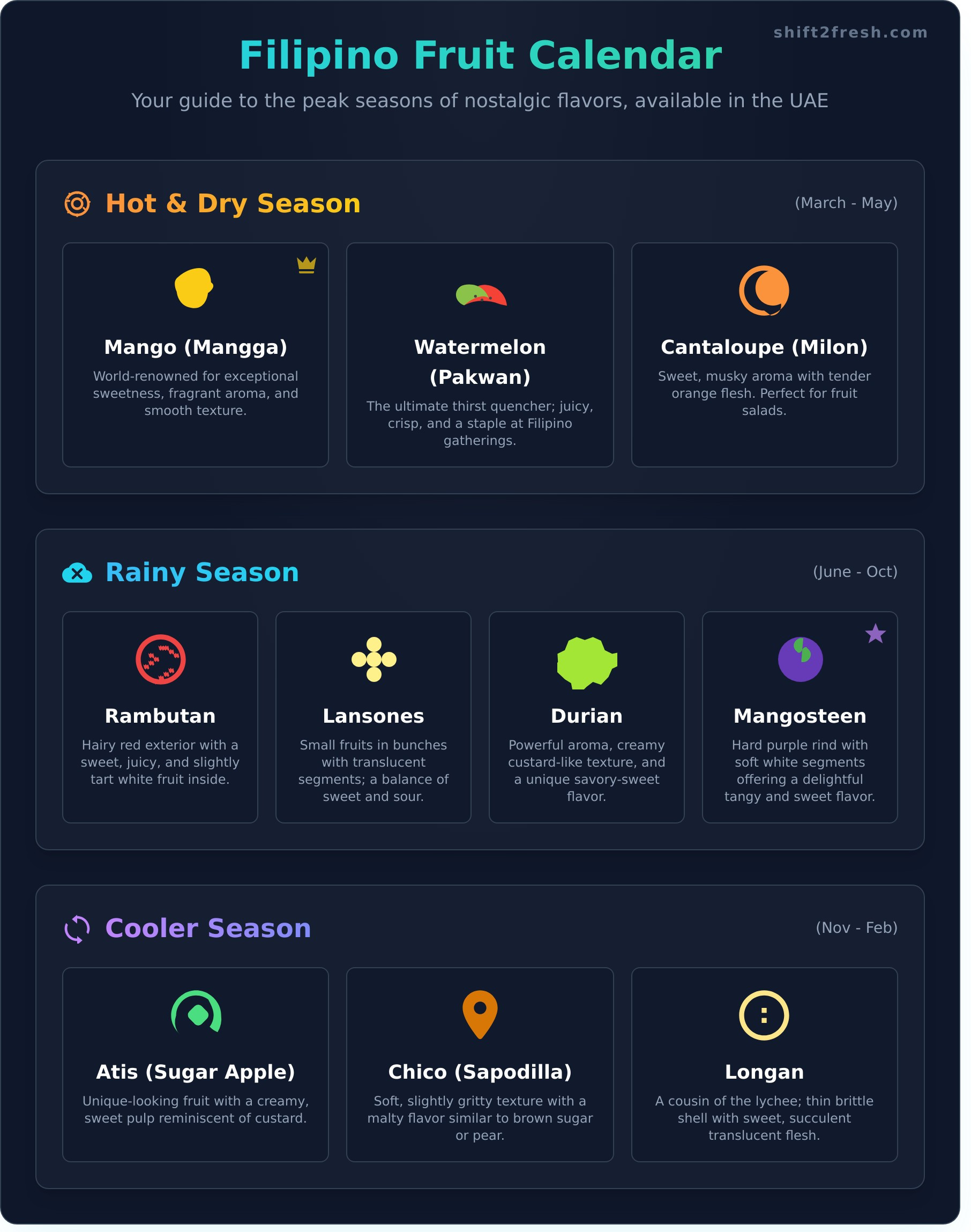
To make it easy for you to know what to look for and when, we’ve created a simple guide based on the traditional harvest seasons in the Philippines and their availability here in the UAE. Use this calendar to find your favorites and perhaps discover some new ones to try throughout the year.
Hot & Dry Season (March – May): The Sweetest Start
- Mango (Mangga): The undisputed king of Filipino fruits. The Philippine Carabao Mango is world-renowned for its exceptional sweetness, fragrant aroma, and smooth, non-fibrous texture. This is the season to indulge.
- Watermelon (Pakwan): Nothing beats the heat like a slice of juicy, crisp watermelon. It’s the ultimate thirst quencher and a staple at any Filipino gathering during the warm months.
- Cantaloupe (Milon): With its sweet, musky aroma and tender orange flesh, cantaloupe is another refreshing favorite perfect for fruit salads or simply enjoyed on its own.
Rainy Season (June – October): A Tropical Bounty
- Rambutan: Don’t be fooled by its hairy red exterior! Inside, rambutan holds a sweet, juicy, and slightly tart white fruit that is incredibly refreshing and fun to eat.
- Lansones: These small, round fruits grow in bunches and contain translucent segments that offer a perfect balance of sweet and sour. They are a beloved seasonal treat.
- Durian: Known for its powerful aroma, the “king of fruits” has a creamy, custard-like texture and a complex flavor that is savory, sweet, and utterly unique. For its fans, there is nothing better.
- Mangosteen: Often called the “queen of fruits,” mangosteen has a hard purple rind that opens to reveal soft, white segments with a delightful tangy and sweet flavor.
Cooler Season (November – February): Festive Favorites
- Atis (Sugar Apple): This unique-looking fruit has a creamy, sweet pulp with a taste reminiscent of custard. It’s a delicate treat often enjoyed during the cooler, festive months.
- Chico (Sapodilla): With a malty flavor similar to brown sugar or pear, chico has a soft, slightly gritty texture and a rich sweetness that is truly satisfying.
- Longan: A close cousin of the lychee, longan is a small, round fruit with a thin, brittle shell. The translucent flesh is sweet, succulent, and incredibly delicious.
Ready to taste what’s fresh? See what’s freshly picked and in season today!
How to Choose, Store, and Enjoy Your Tropical Fruits
Getting the most out of every fruit delivery starts with knowing how to spot perfect ripeness and how to store your produce correctly. With these simple tips, you can keep your fruits fresh and delicious for longer, ensuring nothing goes to waste.
Expert Tips for Picking the Best Fruit
- Look for vibrant colors and firm skin. A fruit’s color is often the best indicator of ripeness. Avoid fruits with dull skin, bruises, or significant soft spots.
- Use the ‘sniff test’. Many tropical fruits, like mangoes and cantaloupes, will have a sweet, fragrant aroma at their stem end when they are ripe and ready to eat.
- Check for signs to avoid. Steer clear of fruits with visible mold, mushy spots, or a shriveled appearance, as these are signs that they are past their prime.
Storing Your Fruits for Maximum Freshness
- Know what goes in the fridge versus on the counter. Bananas, mangoes, and atis should be ripened on the counter. Once ripe, they can be moved to the fridge to slow down further ripening. Berries, lansones, and rambutan should be refrigerated.
- Speed up or slow down ripening. To ripen fruits like avocados or chico faster, place them in a paper bag. To slow down ripening, keep them in a cool place away from direct sunlight.
- Freeze fruits to enjoy later. Many fruits, like mangoes and bananas, freeze beautifully. Simply peel, chop, and store them in an airtight container for smoothies or future desserts.
Beyond Fresh: Popular Ways Filipinos Enjoy Fruits
In the Philippines, fruits are much more than just a healthy snack-they are an integral part of desserts, drinks, and even savory dishes. Here are a few popular ways to turn your seasonal bounty into delicious and authentic Filipino treats.
Simple Desserts and Drinks
- Mango Graham Cake: A beloved no-bake dessert made by layering graham crackers, sweet cream, and slices of ripe mango. It’s simple, decadent, and a true crowd-pleaser.
- Avocado with Milk and Sugar: A surprisingly delicious and creamy treat. Just mash a ripe avocado, mix in condensed milk and a bit of sugar, and add ice for a refreshing dessert.
- Calamansi Juice: The Filipino version of lemonade. The unique tartness of calamansi makes for an incredibly refreshing and vitamin C-packed drink.
Savory Pairings
- Green Mango with Bagoong: The ultimate Filipino comfort snack. The crisp sourness of an unripe green mango paired with salty, savory shrimp paste is a flavor combination that is truly addictive.
- Fruits in Savory Dishes: Pineapple is often added to dishes like adobo or afritada for a touch of sweetness, while green papaya is a key ingredient in the classic soup, tinola.
To create these authentic dishes, you need the right ingredients. Find all your Filipino pantry staples to complete your meal and bring the true taste of the Philippines to your kitchen.
Frequently Asked Questions (FAQs)
What is the national fruit of the Philippines?
The national fruit of the Philippines is the Mango, specifically the Carabao Mango variety. It is celebrated for its exceptional sweetness and flavor and is a major agricultural export.
Where can I buy fresh Filipino fruits in Dubai or the UAE?
Shift 2 Fresh is an online grocery store specializing in importing fresh, seasonal fruits and vegetables directly from the Philippines and delivering them to your home across the UAE.
How can I tell if a rambutan or lansones is ripe?
A ripe rambutan will have a vibrant red color with soft, flexible spines. If the spines are dry or brittle, it may be old. For lansones, look for a pale yellow or light brown skin that is free of blemishes. The fruit should feel firm but not hard.
What is the best season to buy mangoes from the Philippines?
The peak season for Philippine mangoes is during the hot and dry months, typically from March to May. This is when they are at their sweetest, most plentiful, and most affordable.
Are durian and jackfruit (langka) the same thing?
No, they are different fruits. While both are large and have a spiky exterior, durian is known for its strong odor and creamy, custard-like flesh. Jackfruit (langka) has a milder, sweet flavor and a more fibrous, chewy texture.
How does Shift 2 Fresh ensure the fruits are fresh upon delivery?
With over 45 years of experience, we have perfected our sourcing and logistics. We work directly with farms to source fruits at their peak and use a streamlined process to ensure they arrive at your door fresh and ready to eat.
Ready to experience the authentic taste of the Philippines? Don’t wait for your next trip home to enjoy the flavors you miss. From the sweetest mangoes to the juiciest lansones, we bring the best of the season directly to you. Shop our collection of seasonal Filipino fruits today!
0 comments